Project overview
The Restoration Insurance and Financial Service Company (RISCO) is developing an integrated model that links insurance, lending and blue carbon restoration to strengthen the resilience of coastal communities in the Philippines. The model is designed around a simple but important proposition: insurance can do more than transfer risk after a disaster; it can also help create the financial conditions for ecosystem restoration and climate-resilient livelihoods before risks materialize.
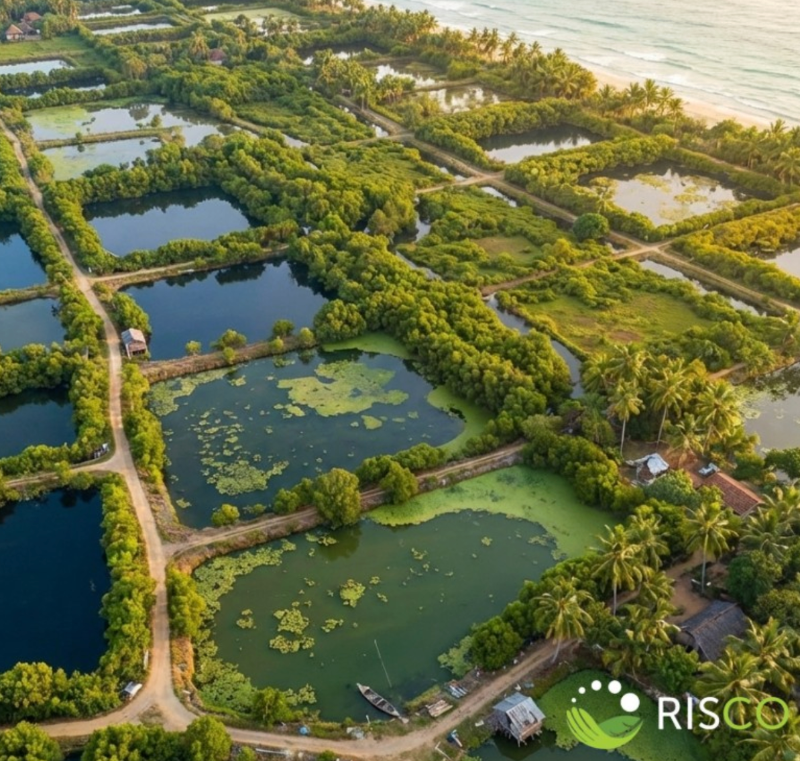
RISCO operates as a commercially structured institution focused on nature-based solutions, restoring mangroves, rebuilding livelihoods and creating resilient coastal communities. The case materials describe RISCO as a quasi micro-finance provider that pairs parametric insurance with low-interest loans, with repayment linked to revenue generation rather than fixed repayment schedules. Its lending activities target small coastal businesses and aquaculture operators, with finance typically offered in the order of approximately USD 25,000-50,000. For ACT Ocean, the case is relevant because it illustrates how insurance-linked finance can be connected to blue carbon restoration, community enterprise development and private capital mobilization.
Approach
RISCO's model is centred on community-level interventions. It combines financial products with the practical support needed for borrowers to make restoration-linked businesses viable. According to the case materials, RISCO partners with universities, including Western Philippines University, to provide technical support to borrowers. It also offers legal support and works with governments to help borrowers navigate permitting and formalization processes. In parallel, the model seeks to connect borrowers with supply chain actors so that restored or more sustainable production systems can access markets.
The financial structure uses philanthropic and internal capital as a first-loss tranche, seeking to attract impact investors looking for fixed, risk-adjusted returns. This approach is intended to reduce the perceived risk of lending to small coastal businesses and aquaculture operators, while creating a pathway for private finance to support blue carbon restoration and climate resilience. Premium revenues received by RISCO's insurance arm feed into its lending activities, creating a link between insurance operations and restoration finance.
A distinctive feature of the model is its connection to local public finance. RISCO is working with municipalities in Puerto Princesa to earmark a portion of their mandated disaster-risk budgets for parametric insurance premiums. This creates the basis for a repeatable public-private funding loop for resilience: public disaster-risk resources can support insurance uptake, insurance premium revenues can support lending, and lending can help communities and coastal enterprises invest in restoration-linked activities. The model therefore combines risk transfer, concessional or patient capital, community lending, technical assistance and ecosystem restoration within one financing architecture.
Business and economic value
RISCO's business and economic value lies in reframing insurance as a driver of investment into coastal resilience, rather than only a protective product. The restoration.finance materials highlight the scale of the opportunity and need: more than 250,000 hectares of abandoned fishponds in South-East Asia are awaiting restoration; more than 300 million people globally depend on mangrove coastal ecosystems; mangrove loss is associated with USD 42 billion in annual economic damage globally, citing UNEP; and mangroves store around four times more carbon per hectare than tropical forests. Within this context, RISCO's model seeks to turn the protective value of mangroves into a financeable proposition for communities, municipalities and investors.
For coastal businesses and aquaculture operators, bundled finance can help overcome affordability barriers by combining loans, insurance, technical assistance and market access support. For municipalities, allocating part of disaster-risk budgets to parametric insurance premiums may help shift spending towards prevention and resilience. For investors, first-loss capital and insurance-linked revenue streams can help create a clearer pathway to risk-adjusted returns while supporting ecosystem restoration.
The case also highlights that insurance-linked finance for blue ecosystems remains at an early stage. The case materials note that direct insurer funding for restoration remains elusive, and that technical, regulatory and market barriers continue to limit the scale-up of ecosystem-linked insurance products. Even so, RISCO demonstrates how bundled, community-oriented financial products can create investable pathways for resilience, local economic development and blue carbon restoration.
References
1. Restoration Insurance and Financial Service Company (RISCO) - restoration.finance
2. Turning the Tide: A Financier's Guide to Investing in Blue Carbon Ecosystems - World Economic Forum