Home
1 Billion Lives
Champions
Initiatives
Lighthouse Countries
Best Practices

Best practices

A curated experience to discover the best practices in the digital inclusion landscape, through Case Studies, Publications, and Data & Tools. 
Case studies

Show more
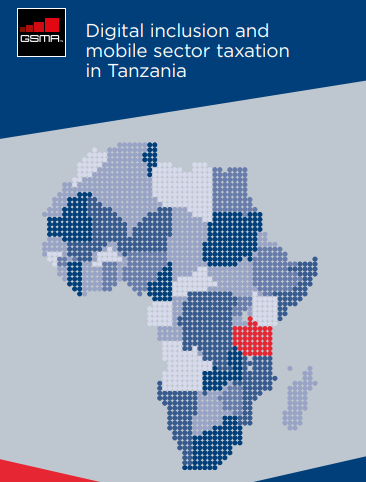
The increasing mobile phone ownership among Tanzanians has promoted digital and financial inclusion. Mobile services are creating economic activities in Tanzania. Mobile is the most effective way of extending access to ICT in Tanzania. Nevertheless, the article explains that the heavy taxation on mobile devices, subscriptions and usage could pose barrier of access
Kenya, Tanzania, Croatia, Uruguay | Financial services
Digital inclusion and mobile sector taxation in Tanzania
business GSMA
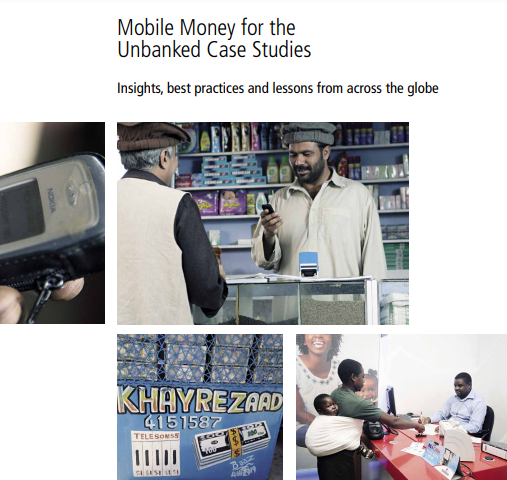
Today, mobile money services are available throughout much of the developing world. Most markets have a live offering and many have multiple services. In 2007, there were fewer than 20 mobile money services for the unbanked worldwide. Since then the number of deployments has ballooned to over 190, with another 115 planning to launch. How are these 190 services faring? Unevenly. Many mobile money services have yet to achieve significant scale, but a collection of stand-out services appear to have figured out the formula and are riding a steep growth trajectory.
This report is a compendium of case studies from the Mobile Money for the Unbanked Programme, discussing in detail many of the success stories and innovations from the mobile money industry.
Zimbabwe, Indonesia, Sri Lanka, Somaliland, Pakistan | Financial services
Mobile Money for the Unbanked Case Studies: Insights, best practices and lessons from across the globe – Zimbabwe, Pakistan and Somaliland, Indonesia, Sri Lanka

business GSMA
undefined
An Overview of ICTs and Sustainable Development
undefined
Antingi
undefined
Bridging the mobile gender gap
undefined
Comercio Digital
undefined
Computer and Online Essentials
undefined
Digital Citizen
undefined
Digital Government and Transformation
undefined
Digital Learning Centre (DLC)
undefined
Digital Literacy
undefined
Digital Skills Library
undefined
Digital kit for SMEs transformation
Digitizing payment of public sector wages and social protection benefits has prompted millions of previously unbanked women to open accounts in recent years, a trend that accelerated during the COVID-19 crisis with the digital payment of emergency relief and private sector wages. As governments and companies take steps to recover from the economic impacts of the pandemic, prioritizing women’s digital financial inclusion will ensure stronger, more resilient economies that recognize and advance the strengths of women. We discuss the programs implemented in Bangladesh and Colombia as great examples of good practices and learnings on responsible digital payments to strengthen data protections and build inclusive digital ecosystems to reach the still substantial numbers of unbanked and underserved households in low- and middle-income countries.
Financial services
Digital payments enabling financial inclusion
undefined
ESCAP Learning and Training Programmes
undefined
EU Digital Skills and Jobs Platform
The Equitable Internet Initiative supports and develops historically marginalized residents to build and maintain neighborhood-governed internet infrastructure that fosters accessibility, consent, safety, and resilience. We address Internet access in Detroit through neighborhood-governed community wireless networks. Since 2015, Detroit has been one of the country’s worst connected cities. In a city with a median household income of $26,249, 38% of homes have no Internet connection, 63% of low income homes have no in-home broadband, and 70% of school-age children have no Internet access at home. The goals of this initiative are to: 1) Increase Internet access in underserved neighborhoods 2) Increase Internet adoption through digital literacy programming 3) Train and develop residents as Digital Stewards 4) Strengthen neighborhoods through community organizing, participation, collaboration, and resiliency.
USA | IT and Communications (ICT)
Equitable Internet Initiative (ELL) - Detroit Community Technology Project
undefined
Frontier ICTs for Sustainable Development for Digital Leaders Submodule B: Blockchain
undefined
How AI Impacts You and Your Government
undefined
How ChatGPT could change how you work in government

The EDISON Alliance

A World Economic Forum Initiative
© 2026 All rights reserved
Privacy Policy & Terms of Service