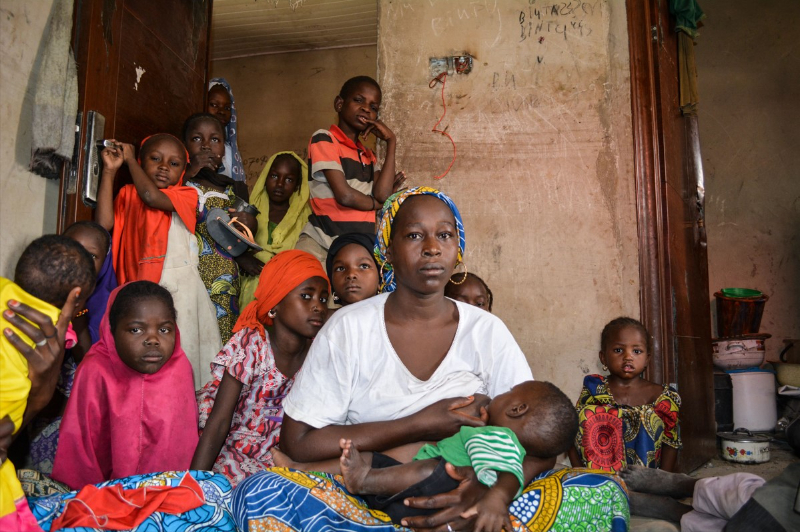
This article examines the growing influence of Informational Communication Technologies (ICTs) in less certain refugee contexts and the role of civil society groups. Drawing on an empirical case study of Somali refugees in Kenya, the article explores the grassroots use of ICTs by refugee women and local socio-economic dynamics in processes of inclusion. Adopting a micro-institutional perspective, the discussion looks at the emerging influence of mobile technology on refugee women’s precarious norms related to mobility and work, and the evolution of new digital norms. The article highlights the strategic role of women’s groups and proactive group members as ‘institutional entrepreneurs’, in aiding levels of ICT adoption among group members, motivated by connection, protection and collective enterprise, with potential effects far beyond the group. In a transitory and fragile refugee context however, constraints on civil society may lead to the exclusion of more isolated populations without formal institutional support.
Impact / Outcome Refugee women’s experience in an online refugee group through WhatsApp has led to new forms of social coordination and cooperation, as the group members use the app to arrange meetings through voice messages and post relevant updates. In a challenging physical context, where security is poor, this has permitted a virtual safe space for refugee women to connect and support each other. On a personal level, WhatsApp has provided a stronger sense of ‘social connectedness’, assurance and acceptability. This has contributed to refugee women’s self-motivation, a crucial much-emphasised dynamic, as many of the women were single mothers and feeling depressed and isolated without family support. Going beyond social media for maintaining transnational ties, this points to the role of social media as an enabling platform for growing new ties and friendships in displacement settings.
Key Metrics Foster communication and increase support and self-motivation of refugees’ women through the use of Information and Communication Technologies (ICT)