
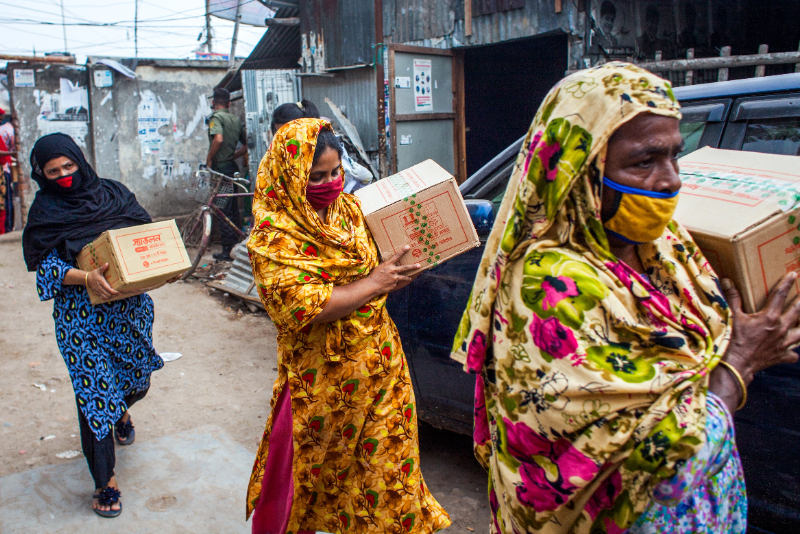
Digital financial services offer a gateway to financial inclusion, but women face barriers to accessing and using them. Digitising payment of public sector wages and social protection benefits has prompted millions of previously unbanked women to open accounts in recent years, a trend that accelerated during the COVID-19 crisis with the digital payment of emergency relief and private sector wages. This article shows case studies of how barriers on financial inclusion were removed, especially for women, in Bangladesh and Colombia.
Impact / Outcome
In the Colombian case, Ingreso Solidario transferred emergency relief payments to 2.5 million households affected by the pandemic, 60% of them headed by women. Among the financial beneficiaries were 1 million previously unbanked households, reached using an app and helplines to explain and build trust in digital payments. Further, 22% of recipients via mobile wallets used the account to make deposits, which further highlights the potential for digital transfers to deepen financial inclusion and increase the uptake of e-commerce.
Funding sources
Public
Key Metrics
Broaden women’s financial inclusion
Operating model
Public-private partnershipYear published
01 January 2021 
OECD