
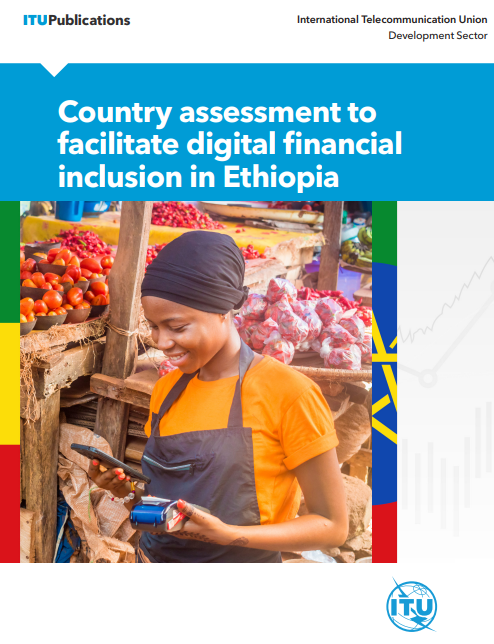
Digital technology provides an opportunity to reach the approximately 1.7 billion adults worldwide who remain unbanked. Digital financial services (DFS) can make a valuable contribution to the economic growth of a country. Digital financial inclusion (DFI) is key to the attainment of most of the Sustainable Development Goals (SDGs). Notably, DFI is pivotal for the achievement of SDG 5, on the economic empowerment of women and Gender Equality, as it promises to extend financial access to the 35 per cent of women globally – nearly 980 million – who remain excluded from the formal financial system. Digital financial services have also provided a viable strategy in the context of the coronavirus disease pandemic given the challenges created by the pandemic and the associated risks that threaten to expand existing digital and gender gaps. This report presents findings from a country assessment undertaken to facilitate digital financial inclusion in Ethiopia and gives an overview of the current DFS landscape in the country and how it was included and implemented into its National Financial Inclusion Strategy (NFIS). It also identifies some of the barriers to DFI and suggests how they might be removed.