
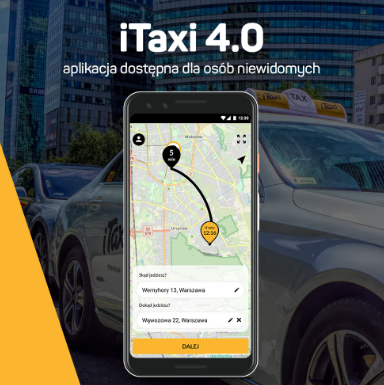
iTaxi is a platform that connects users and licensed cab drivers in major cities in Poland. The work on the app has been driven by the simple fact that accessibility is not a trivial problem. According to the World Health Organisation, globally there were 2.2 billion visually impaired or blind people (October 2018). Despite these numbers, the accessibility of digital content still has a long way to go. There have been some positive moves in recent times, in part driven by legal requirements, and big tech companies now have accessibility officers and accessibility teams. However, digital content is generally not designed and coded upfront so that people with disabilities can use it.
Impact / Outcome
The most crucial element in designing for accessibility is an understanding of the end-user’s perspective. We had to learn how the blind or visually impaired use our application, and we were quite surprised by how fast they managed it with assistive technologies. We had assumed that the more descriptive the application was, the easier it would be to use by those less able to see. We thought that these people use the app studiously, carefully going from one element to another. A blind person can hail a taxi almost instantaneously, provided that the app doesn’t stop them from doing so.
Funding sources
Private
Key Metrics
Improve accessibility of digital content so that people with disabilities can use it
Operating model
Fully privateYear published
01 January 2020