
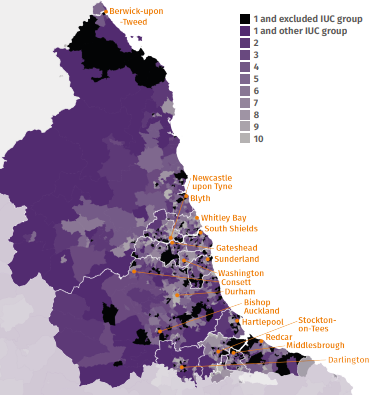
This document is a summary and proposed regional strategy drawn from a research programme undertaken during 2021. This research sought to explore the extent and nature of digital exclusion in the North East, to identify policy responses, and to outline a strategic framework for addressing digital exclusion in the North East. literature and policy reviews, interviews and case studies were among the methods used to collect data. Through this evidence-based strategy we seek to define digital exclusion, identify the impacts and some of the main groups who are affected, and look at the causes of digital exclusion, both in the North East where data exists, and nationally.
Impact / Outcome
National Government should play a role in defining a ‘digital life skills approach’ which sets out the necessary digital skills for modern life. These would not be just work focused but about accessing services like banking, applying for universal credit, and engaging in social and democratic life online. This could then support government interventions around adult learning, support the creation of a digital inclusion safety net set on a common but sufficiently broad definition of minimum skills, and to influence the design of education and schooling for young people to furnish them with the right skills for life, equipping them with the knowledge to undertake a range of tasks in the real world and the skills to adapt as necessary to any inevitable technological changes that we will see in the future.
Funding sources
Public/Private
Key Metrics
Need for significant intervention to support individuals who are digitally excluded
Operating model
Public-private partnershipYear published
01 January 2021