
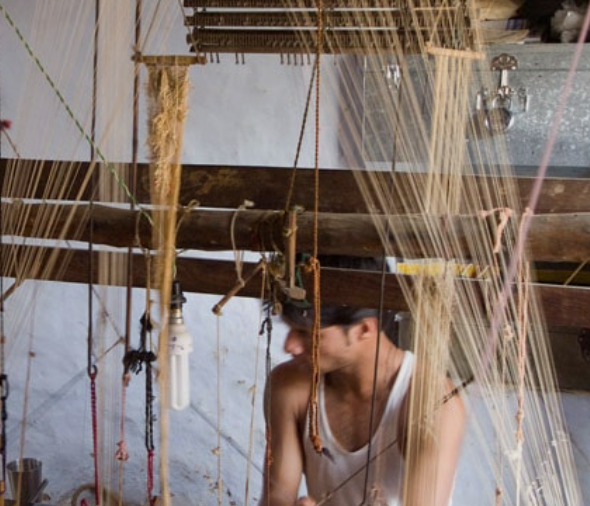
An idea expands from a single community to a web of engineers, connecting thousands to opportunities. Chanderi, a rural town in Madhya Pradesh, was one unconnected area in India struggling to survive while the country modernized. But in the past ten years, a lot has changed for this small town. In 2010, the Internet Society and the Digital Empowerment Foundation (DEF) joined forces to implement the Wireless for Communities (W4C) initiative and to establish its first Community network in Chanderi in terms of connectivity, digital literacy and the use of ICT.
Impact / Outcome
Once connected, W4C worked with the community to revive the handloom weaving industry. They enabled weavers to create new and attractive handloom designs through access to ideas and know-how online. Chanderi’s handloom designs and techniques—which date back to the 13th century—are also being digitally preserved. It’s significantly reduced production time—and more than doubled weavers’ income.
The Internet has also broadened the market through e-commerce and social media sites. Weavers no longer have to rely on intermediaries and can connect directly with buyers.
Internet connectivity benefited not only the weavers, but the entire community. Internet access propelled residents to build their digital skills.
Funding sources
Private
Key Metrics
Implementation of the Wireless for Communities (W4C) initiative and establishing its first Community network in Chanderi
Operating model
Fully privateYear published
01 January 2021