
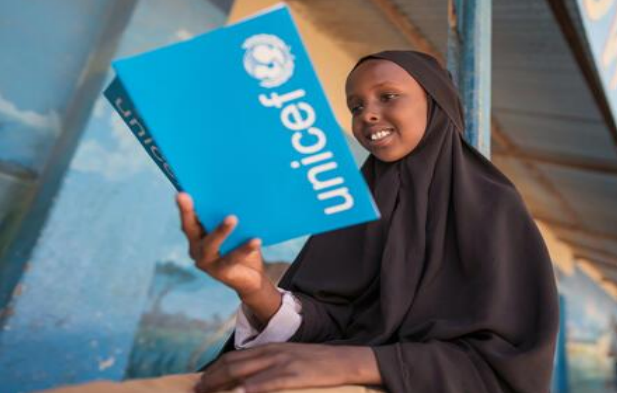
From March-August 2020, COVID-19 school closures disrupted the education of over 300,000 children and adolescents in Somaliland. In response, the Somaliland Ministry of Education and Science developed their own COVID-19 preparedness and response plan where various distance learning solutions were created to address the needs of all learners.
Impact / Outcome
The MoES, supported by UNICEF, provided 97,241 children (41,814 girls) access to distance learning through TV, radio and online platforms which included Somali sign language to ensure access for learners with hearing impairments. Of these, 12,200 were grade 12 students (5,124 girls) who were preparing for the secondary school final exams which took place in June 2020. When compared with individual schools and teachers taking the responsibility for providing alternative education, the newly formed partnerships reduced the sector’s unit costs for providing services and enabled more learners to access the digital learning resources.
Funding sources
Government or other public organization
Key Metrics
Implementation of various distance learning solutions to address the needs of all learners, including those most vulnerable: the internally displaced, refugees, as well as rural and pastoralist children
Operating model
Fully publicYear published
01 January 2021 
United Nations Children's Fund (UNICEF)