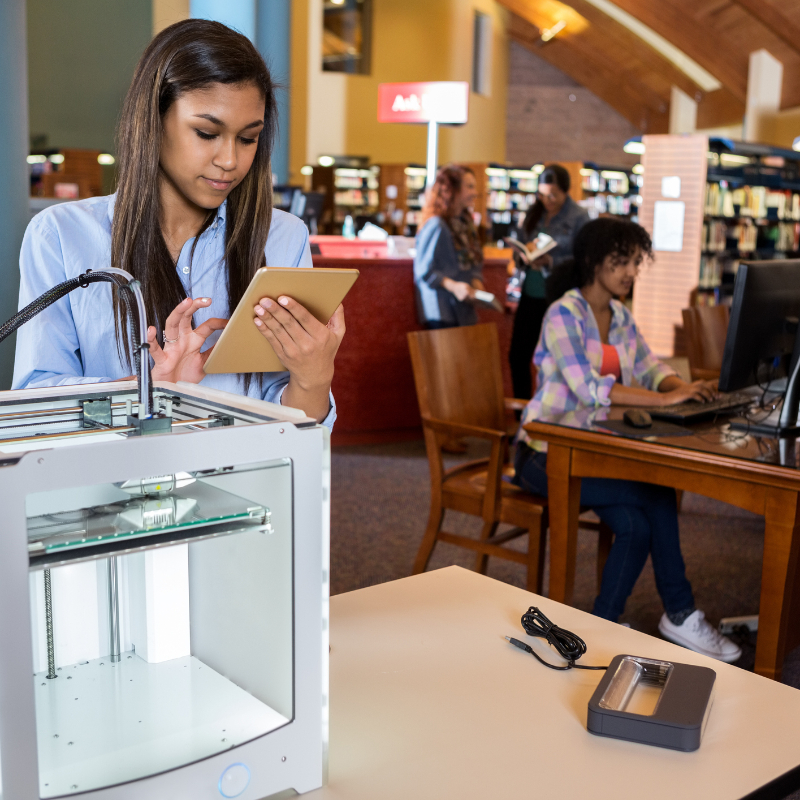
This report summarises findings from the 2020 Oxfordshire Digital Inclusion Project, which studied the digital assistance provided in Oxfordshire County Libraries. Public libraries are trusted, accessible community spaces that people rely on to cultivate relationships, exchange ideas, and learn. Today, libraries provide essential access to digital equipment, services, and skills training. They are vital bridges across the digital divide. In this report, we present findings from our research in the Oxfordshire County Libraries, focused on two themes: (1) Exploring the day-to-day role libraries are playing in our digital world; (2) Understanding the lived experience of digital exclusion, through observations and data on library computer users and digital help seekers.
Impact / Outcome Taken together, our findings point toward several clear policy suggestions for a stronger and more effective digital inclusion strategy. As the UK aspires to “build back better” after the COVID-19 pandemic, which has starkly exposed the inequities of digital poverty, it is more important than ever to develop a digital inclusion agenda driven by empirical data on limited and non-users in context and informed by the lived experience of the digital divide. On this context we recommend enhancing digital skills of library staff; recognising and support what libraries deliver; shifting the focus from digital skills to digital wellbeing and; increasing community outreach and awareness.
Key Metrics Improve the digital skills of library staff, meaning that staff need to be digitally fluent themselves in order to address the high volume of digital help requests from customers