
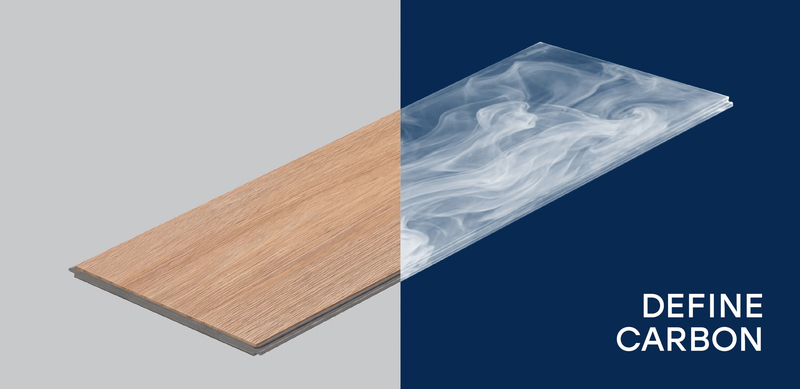
We develop and commercialize low-carbon building materials using CCU(Carbon Capture and Utilization) Calcium Carbonate, which is synthesized by reacting captured CO₂ with calcium derived from factory waste. This project represents a CCU-based material solution that converts CO₂ into valuable resources while storing carbon in practical products for a long period of time. Our primary application is SPC (Stone Plastic Compostite) flooring and other interior building materials. These products store approximately 10 kg of CO₂ per square meter, enabling long-term carbon fixation within durable construction materials. At the same time, they maintain practical performance required for construction use, including durability, design quality, and processability, while achieving price levels comparable to conventional products. Due to their long service life, these materials contribute to Scope 3 emissions reductions in the construction and real estate sectors, and adoption is expanding in building interiors and exterior materials. This project has gained international recognition. It has been introduced at the World Economic Forum Annual Meeting in Davos and contributed to a World Economic Forum Agenda paper discussing circular economy and CCU innovation. It has also been highlighted in Japanese government communications (Prime Minister’s Office of Japan) as an example of technology contributing to GX (Green Transformation) and circular resource strategies. In addition to finished products, we supply materials containing high concentrations of CCU calcium carbonate. Resin compounds with more than 50% mineral loading can be processed using existing manufacturing equipment and enable manufacturers to adopt low-carbon materials without major changes to production lines. These materials are being introduced in construction materials and other industrial applications where both environmental value and performance are required. To scale this solution globally, we are also developing a CCU plant deployment model. By installing CCU plants adjacent to major CO₂ emission sources such as thermal power plants and steel mills, captured CO₂ can be converted into materials locally. This “local production for local utilization” model integrates CO₂ capture, conversion, and material supply, enabling regional low-carbon material supply chains while reducing emissions from industrial sources. This project contributes to the creation of markets for innovative low-carbon materials aligned with the objectives of the First Movers Coalition.
Description of Technology:
Carbon Capture and Utilization (CCU) technology that mineralizes and fixes CO₂ derived from industrial flue gas into calcium carbonate, combined with material formulation and compounding technologies that ensure compatibility with resin blending, processing, and molding performance.
Sector:
Carbon Dioxide Removal (CDR), Cement & Concrete
Type of Supplier:
Value Chain Good
Supplier Geography:
Japan
Expected Capacity (Mt/Year):
CCU calcium carbonate produced in-house: 250,000 tons