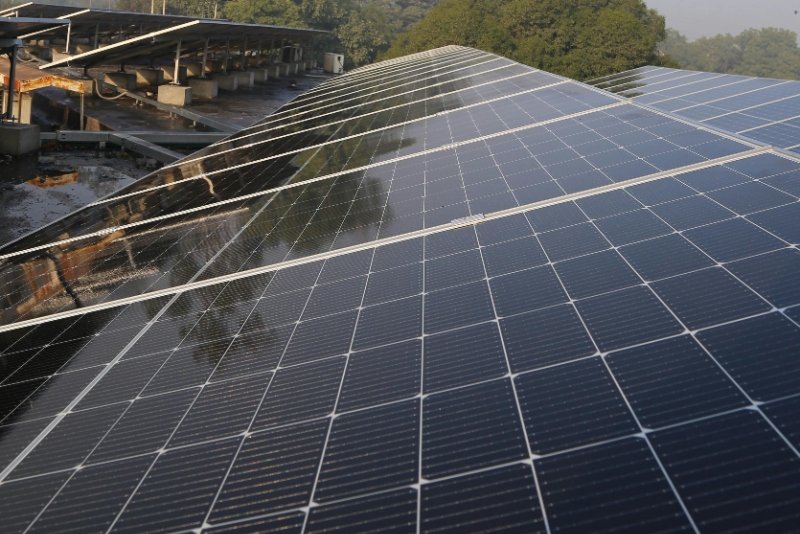
Automated climate-resilience systems for PV assets
Extreme weather events – including large hail – are becoming more frequent and severe, creating new operational risks for utility-scale solar assets. Traditional manual risk-mitigation approaches often cannot respond quickly enough to rapidly forming convective storms. Automated, data-driven climate-resilience systems use predictive meteorology, engineering insights and machine-to-machine automation to anticipate potential impacts and initiate protective actions ahead of damaging events.
These systems combine long-range weather monitoring, short-range storm prediction and automated tracker control to reduce exposure to hail-related damage and support asset availability. By embedding meteorological intelligence directly into operational workflows, operators can move from reactive, manual intervention toward more proactive, automated protection strategies that help preserve generation output and extend asset lifetimes.
Main outcomes of the solution
- Reliability & Flexibility: Reduces the likelihood of unplanned outages and asset damage by automatically positioning PV trackers in defensive stow configurations ahead of hazardous weather events.
- System Resilience: Improves the ability of solar plants to withstand extreme hail conditions through predictive weather modelling, rapid automation and enhanced operational standards.
- Business Value: Avoids or limits costly equipment damage and replacement, reduces post-event downtime and supports continuity of energy production during extreme-weather events.
Key deployment and scaling factors
- Integrate long-range and short-range meteorological intelligence to provide early situational awareness and precise storm-cell forecasting.
- Deploy automated tracker-control systems capable of receiving digital hazard signals and autonomously moving PV modules into predefined defensive stow positions.
- Develop geospatial visualization tools to support real-time monitoring, operator oversight and rapid event response.
- Embed engineering research and procurement specifications that reduce hail vulnerability at the module-design and operational-standards level.
- Establish operational protocols that link predictive alerts to automated actions while maintaining availability outside defined hazard windows.
Case Study
Lightsource bp (2021), USA
Lightsource bp developed Project Whiskeyball to address increasing hail risk for utility-scale PV assets. The program combines engineering research, predictive meteorology and automated control to shift hail-response operations from manual and reactive processes toward digital, anticipatory protection.
The system uses a multi-layered defense approach. Long-term storm pattern monitoring provides early awareness, enabling operations teams to proactively schedule defensive measures. Short-range automation approach where, if storms develop unexpectedly, predictive algorithms assess whether approaching cells will produce hail and calculate potential impact trajectories relative to solar assets. When credible risk is identified, PV trackers automatically move to a defensive stow position, typically 30 minutes before projected impact. Advanced geospatial visualization tools accelerate monitoring and response times, ensuring complete situational awareness during rapidly evolving weather events. Finally, ongoing collaboration with research laboratories continuously refines procurement specifications and operational standards, strengthening the system's resilience.
The system’s performance was demonstrated during a severe hail event in Pueblo, Colorado in July 2023. While surrounding areas experienced damage, the automated stow procedure was executed as designed and no material damage was reported at the protected site. Lightsource bp has also indicated that the presence of a documented, automated hail-mitigation framework supports risk discussions with insurers, although outcomes remain asset- and market-specific.[1]
References:
- Company information provided to World Economic Forum I Lightsource bp (December 2025)
