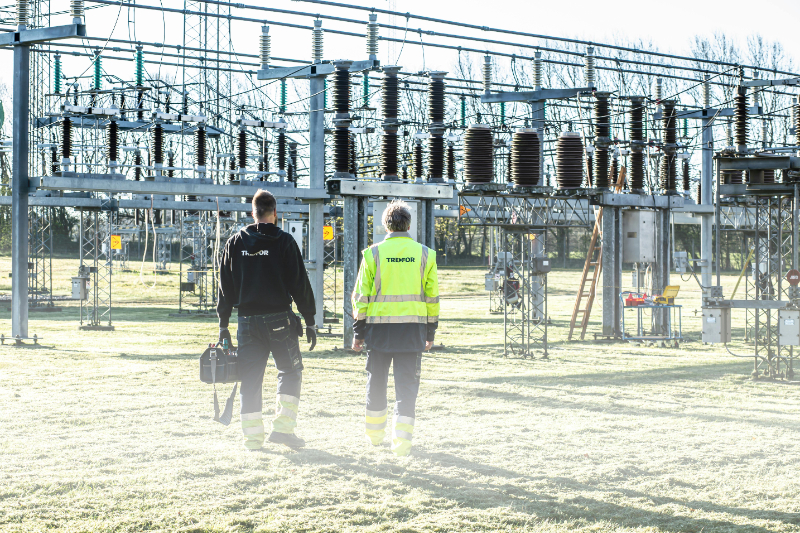
Eco-efficient switchgear
Eco-efficient switchgear refers to high-voltage electrical equipment – most commonly gas-insulated switchgear (GIS) – that replaces sulfur hexafluoride (SF₆), SF₆ has a global warming potential more than 20,000 times higher than CO₂ and remains in the atmosphere for more than a thousand years if released. As transmission systems expand and more substations are built in space-constrained environments, reducing dependence on SF₆ has become an important component of grid decarbonization efforts, especially as GIS deployment grows in urban, space-constrained and underground substations.
Alternative approaches typically use low-GWP insulating gases or redesigned insulation systems that maintain the required electrical performance without relying on SF₆. These developments allow network operators to modernize and expand grid infrastructure while reducing lifecycle emissions and aligning with emerging regulatory requirements that target high-GWP gases. [1]
Main outcomes of the solution
- Sustainability: Reduces or removes greenhouse-gas emissions associated with insulating gases in high-voltage equipment, supporting utilities in meeting climate objectives and complying with evolving SF₆-reduction policies.
Key deployment and scaling factors
- Ensure availability and supply chain readiness of low-GWP insulating materials and technologies that meet technical requirements across voltage classes.
- Validate performance at high-voltage levels (e.g., 420 kV and 550 kV) through type-testing, system validation and early operational experience.
- Assess compatibility with retrofit or replacement strategies, noting that retrofill solutions are more mature at medium voltage, while high-voltage GIS typically requires new equipment.
- Build industry acceptance through third-party testing, certification and the accumulation of operational field data across different climates and use cases.
- Align with regulatory frameworks that incentivize or mandate reductions in SF₆ use in transmission and distribution networks.
Case Study
Hitachi Energy and State Grid Corporation of China (SGCC) (2025), China
In 2025, Hitachi Energy announced delivery of a 550 kV SF₆-free gas-insulated switchgear (GIS) installation for SGCC’s Central China branch. High-voltage GIS at this rating is used for long-distance transmission and is traditionally reliant on SF₆ because of its strong technical properties. Replacing SF₆ at 550 kV therefore represents a significant technical milestone, demonstrating that alternative insulating gases and adapted insulation designs can meet the performance and reliability requirements associated with the highest voltage classes in transmission networks.
The installation replaces conventional SF₆-insulated GIS with equipment using an alternative insulating gas mixture and modified insulation geometry. It provides early evidence of the feasibility of SF₆-free GIS at one of the most demanding voltage levels and contributes to wider efforts in China and globally to lower the environmental footprint of high-voltage transmission assets.[2]
References: