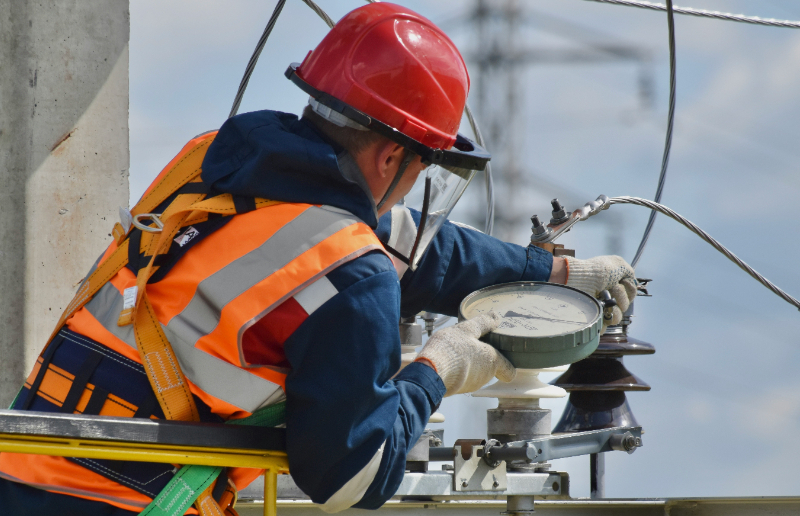
Real-time grid hazard detection
Real-time grid hazard detection via sensors gives utilities earlier visibility into physical, electrical and environmental risks across the distribution network. Instead of relying only on traditional electrical monitoring, customer outage calls or field inspections, utilities can install sensor devices on grid assets such as poles and feeders to detect conditions such as vegetation contact, conductor movement, damaged poles, abnormal vibrations and other emerging hazards. The sensor data is transmitted into operational systems, where it can be validated, prioritized and routed to dispatch teams through existing outage management workflows.
This matters because many grid risks begin outside conventional electrical parameters: a tree branch, storm impact or mechanical asset failure may develop before a fault or outage is visible in legacy systems. By reducing the delay between a hazard occurring and operator awareness, utilities can improve safety, target field crews more accurately, reduce manual triage and prevent minor incidents from escalating into outages, equipment damage or wildfire risk. As grids face higher electricity demand, more climate-driven stress and greater reliability expectations, real-time sensor intelligence helps shift grid operations from reactive outage response to proactive hazard management.
Main Outcomes of the Solution
- Reliability & Flexibility: Earlier visibility into faults and emerging risks across distribution networks, improving fault location, reducing manual triage and enabling faster response before issues escalate into wider outages.
- System Resilience: Stronger ability to identify and respond to hazards such as vegetation contact, damaged poles and storm-related asset stress before they trigger wider failures or outages.
- Affordability: Lower operating and restoration costs through more targeted maintenance, fewer avoidable truck rolls and better use of existing grid infrastructure.
Key Deployment and Scaling Factors
- Prioritize deployment on high-risk feeders and assets, especially areas exposed to wildfire risk, storm damage, vegetation contact and recurring outages, where earlier hazard detection delivers the greatest operational value.
- Integrate sensor intelligence into existing outage management, dispatch and utility operational workflows, because standalone monitoring systems are less likely to support timely operational response.
- Establish interoperable communications, data standards and cybersecurity protocols, because large-scale deployment depends on secure and reliable integration across utility systems and field devices.
- Develop alert prioritization and event-classification frameworks that allow operators to manage high volumes of sensor data during storms and other major grid events without overwhelming control-room operations.
- Ensure communications coverage, power supply resilience and utility data governance frameworks are in place, because real-time hazard detection depends on reliable field connectivity, secure data transmission and integration into utility operational processes
- Align deployment with utility regulatory and wildfire-risk management frameworks, because cost recovery, operational approval and data governance requirements can influence large-scale rollout.
Case study
Gridware and PG&E (2025), USA
Gridware integrated its Active Grid Response platform with Pacific Gas and Electric Company’s (PG&E) Continuous Monitoring systems to reduce hazard awareness delay across the distribution grid. Gridware worked with PG&E’s information technology and continuous monitoring teams to integrate real-time multi-sensor data into PG&E’s system through application programming interface connectivity.
The system processes data from distributed sensor devices through a unified interface and feeds hazard intelligence into PG&E’s Grid Data Analytics & Technology (GDAT) platform.. The Gridware sensors monitor physical, electrical and environmental conditions and formats the resulting data for operational use. Alerts are prioritized according to PG&E safety protocols and delivered to GDAT for use within the utility. GDAT evaluates current grid conditions and creates trouble tickets as appropriate in PG&E’s outage system with hazard type and location details included.
Gridware states that the integration reduced time to dispatch by removing manual data entry, validation steps and communication handoffs. The company also reports that the system supported continuous monitoring during storm and fire-weather conditions, helping operators identify and respond to issues earlier.
References:
- Unlocking Smart Grid Opportunities in Emerging Markets and Developing Economies - IEA
- Smart grids - IEA
- Gridware - How PG&E Addresses Hazard Awareness Delay with Gridware AGR Integration with OMS
