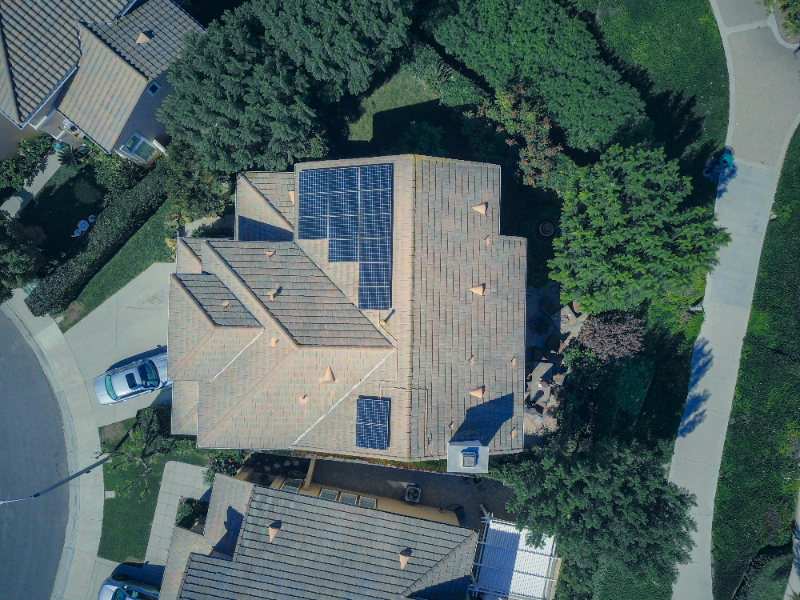
Small-scale residential battery energy storage systems (BESS) for solar power management
Small-scale residential battery energy storage systems (BESS) complement rooftop solar photovoltaic (PV) systems by storing surplus daytime generation and supplying electricity during evening peaks or outages. Most units use compact lithium iron phosphate (LiFePO₄) chemistry due to its stability and suitability for household settings. Residential BESS increases solar self-consumption, reduces exposure to peak-price imports and, when aggregated through virtual power plant (VPP) platforms, can provide distributed flexibility services.
According to the International Energy Agency (IEA), small-scale distributed battery storage plays an increasing role in accelerating electrification and reducing demand peaks by shifting household consumption to locally stored solar energy.[1] Modular system designs allow homeowners to expand storage capacity over time, supporting both individual resilience and broader grid-stability objectives in high-solar markets.
Main outcomes of the solution
- Affordability: Reduces electricity costs by increasing solar self-consumption and lowering peak-price imports, while enabling surplus export in jurisdictions that allow it. Economic performance depends strongly on local tariff structures, export rules and system utilization.
- Reliability & Flexibility: Provides backup power during outages and allows flexible load shifting across the day. Through aggregation platforms or virtual power plants, residential BESS can offer frequency response, demand reduction and local balancing services that strengthen overall grid flexibility.
- System Resilience: Enhances resilience at the distribution level by spreading flexible capacity across many households, helping mitigate congestion and variability in areas with high rooftop-solar penetration.
Key deployment and scaling factors
- Evaluate household energy profiles, rooftop PV output and local tariff schemes to size residential batteries appropriately.
- Apply standardized interconnection and smart-metering protocols to enable safe import/export operations and grid-service participation.
- Adhere to national safety requirements for LiFePO₄ installations, including fire-protection, ventilation and certified installer practices.
- Introduce intuitive energy-management software and mobile interfaces that help households optimize battery usage and monitor system performance.
- Strengthen local service networks by maintaining regional warehouses, certified installers and reliable maintenance channels to improve deployment speed.
- Link residential BESS to virtual power plants and demand-response schemes so aggregated systems can provide grid-support services and create new value streams.
- Work with distribution system operators (DSOs) to plan deployments in areas with high solar uptake and ensure alignment with local network capacity.
Case Study
Menred ESS (2023), Germany
Menred ESS has deployed modular residential LiFePO₄ solar-plus-storage systems across Germany, using household-scale inverters and stackable battery modules to support flexible sizing. Typical installations start with a 6 kW inverter and battery units that can be expanded from small capacities to larger multi-module configurations. In parallel operation, some systems can reach up to approximately 98 kWh of storage, enabling households with significant rooftop PV or electric-vehicle charging needs to tailor capacity to their usage profiles.
The systems are supplied jointly by Menred GmbH (Germany) and Menred ESS Co. (China), supported by regional warehousing and certified installer networks. Integrated IoT-enabled energy-management software provides real-time monitoring, automated charge–discharge scheduling and safety diagnostics. In regions where export or aggregation is permitted, these systems can participate in distributed-flexibility schemes such as virtual power plants. The German deployments illustrate how modular residential storage can increase solar self-consumption and provide additional flexibility within distribution networks with high rooftop PV penetration.[2]
References: