Network of Global Future Councils

Global Future Council on Neurotechnology
About the Global Future Council on Neurotechnology

While neurotechnology holds great promise for enhancing human capabilities and addressing various health challenges, it also necessitates careful consideration of the associated risks and ethical dilemmas. The rapid advancement in brain-computer interfaces, for instance, raises questions about privacy and informed consent in accessing neural data. 

How can we ensure their responsible development, integration, and deployment to unlock new avenues for human enhancement, medical treatment, communication, and cognitive augmentation?

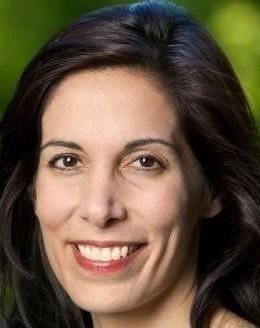
Co-Chairs

Nita Farahany

Robinson O. Everett Professor of Law and Philosophy; Director, Duke Science and Society, Duke University
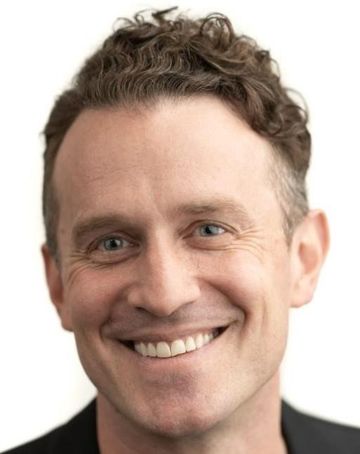
Thomas Oxley

Founder and Chief Executive Officer, Synchron

Members

AM
Ana Maiques
Chief Executive Officer at Neuroelectrics
AC
Anthony Costa
Director, Digital Biology at NVIDIA Corporation
BW
Brett Wall
CP
Camila Pintarelli
Head of the National Homeland Security Fund at Ministry of Justice and Public Security of Brazil
DP
David Putrino
Director, Rehabilitation Innovation at Icahn School of Medicine at Mount Sinai
FD
Frédéric Destrebecq
Executive Director at European Brain Council (EBC)
IC
I-han Chou
Deputy Editor at Nature Publishing Group
JF
Jennifer French
Executive Director and Founder at Neurotech Network
LF
Lee Fleisher
Professor Emeritus of Anesthesiology and Critical care at Perelman School of Medicine, University of Pennsylvania
MM
Mackenzie Mathis
Bertarelli Foundation Chair of Integrative Neuroscience at Ecole Polytechnique Fédérale de Lausanne (EPFL)
MS
Maryam Shanechi
Professor, Founding Director, USC Centre for Neurotechnology at University of Southern California (USC)
MH
Max Hodak
Founder and CEO at Science
MO
Mohammad Abdul Aziz Sultan Al Olama
Consultant Neurosurgeon at Dubai Health Authority (DHA)
NF
Nita Farahany
Robinson O. Everett Professor of Law and Philosophy; Director, Duke Science(...) at Duke University
OM
Olivia Matshabane
Neuroethics Researcher at Stellenbosch University
RC
Rafael Carbunaru
Chief Technology Officer, Neuromodulation at Boston Scientific Corporation
TL
Tan Le
Chief Executive Officer at EMOTIV Inc.
TO
Thomas Oxley
Founder and Chief Executive Officer at Synchron
XW
Xiaoqin Wang
Professor and Director, Tsinghua Laboratory of Brain and Intelligence at Tsinghua University
YD
Yotam Drechsler
Chief Executive Officer at BrainQ technologies

Council Manager

Jitka Kolarova

Centre for Health and Healthcare, World Economic Forum

Council's Outcomes

Forum Insights on Neurotechnology 
and Related Topics

Understanding the brain in a digital age

Brain–computer interfaces are beginning to move from research into early medical use. What benefits are realistic for health, and where should societies set limits to protect autonomy? 

Watch the session featured at the Annual Meeting 2026, led by Michael Mager (Co-Founder and CEO of Precision Neuroscience) and Irene Tracey (Vice-Chancellor of the University of Oxford).

Neurotechnology could help billions of people. Has its time come?

A new generation of neurotechnology could help billions of people, so what’s its real potential, and what are the pitfalls? On the latest #RadioDavos we speak to Jen French, who had a neurotech implant after a snowboard accident made her quadriplegic, and knows the benefits and drawbacks. And Tom Oxley, founder of startup Synchron explains the rise of ‘brain computer interfaces’

The neurotechnology stack: How we balance neurotechnology's opportunity with security

A holistic, layered security and governance framework is necessary to protect trust, safeguard identity and unlock the transformative potential of neurotechnology.

Is Neurotechnology Redefining Wellbeing?

What are the possibilities of BCI to improve our everyday lives and how accessible are they?

What Is Sci-Fi, What Is High-Tech?

What are the key future technologies that once seemed unbelievable and how are they poised to reshape everyday life in 2035?

Why decoding the brain's electrical language is the next frontier in precision medicine

Building the first “Human Neuroelectrome” — a reference map of brain signals — to transform diagnosis, treatment and predictive care.

Applying technology to neurological conditions could address global health challenges

Applying technology to neurological conditions could represent a paradigm shift with the potential to transform treatment, restore independence and redefine the possibilities for millions living with neurological impairments.

Brain gain: How improving brain health benefits the economy

The brain economy is an emerging economic belief system that asserts that brain health — both individually and collectively — is a meaningful driver of economic growth.

Explore all of the councils

The network convenes over 700 experts from academia, business, government, civil society and international organizations, operating as a time-bound think-tank, grouped in expertise-based thematic councils, to identify and disseminate transformative ideas with the potential for positive global impact. 

Part of Centre for Health and Healthcare

Learn more about the Centre's work.