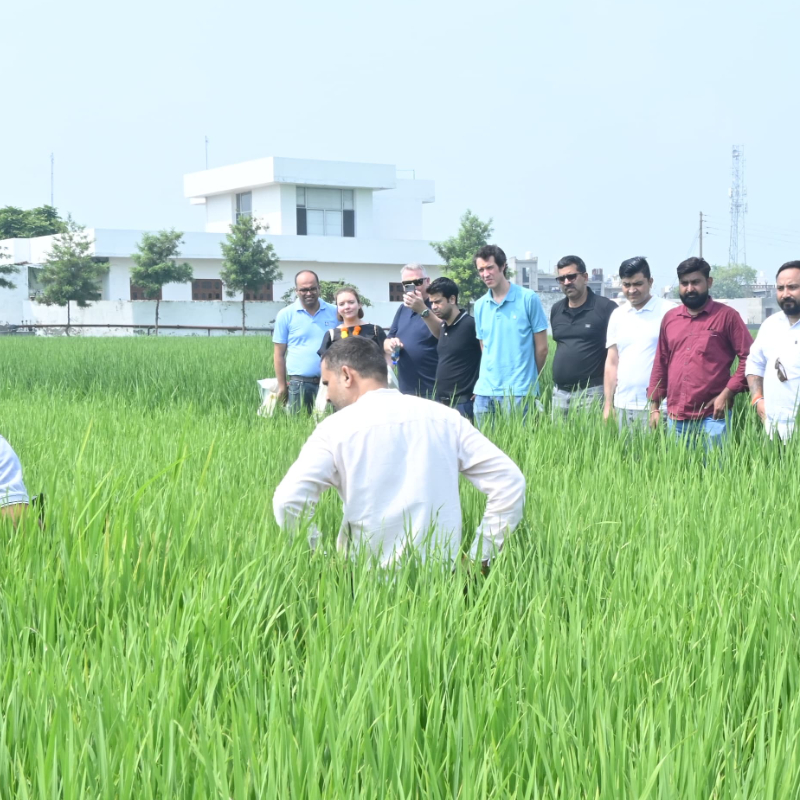
Food Value Chain - A partnership platform enabling sustainable, resilient agri-value chains through direct farmer-to-industry integration across multiple crops.
Challenges
The food industry faces increasingly fragmented supply chains, limited traceability, inconsistent raw material quality and growing pressure to meet sustainability and responsible sourcing commitments. These challenges are further compounded by climate variability, making it difficult to ensure resilient, transparent, and reliable agricultural value chains while improving farmer livelihoods.
Intervention
The Food Value Chain (FVC) Partnership, led by Bayer Crop Science addresses these challenges through an integrated, multi-stakeholder platform that directly connects farmers with food processors, retailers, exporters, and other industry partners. The model combines strong backward integration with Bayer's Regenerative Agriculture Framework, providing farmers with quality inputs, technical advisory, traceability systems, sustainable production practices, and market linkages. Operating across multiple crops, the partnership enables scalable, sustainable sourcing while supporting companies in achieving their sustainability and Scope 3 commitments.
