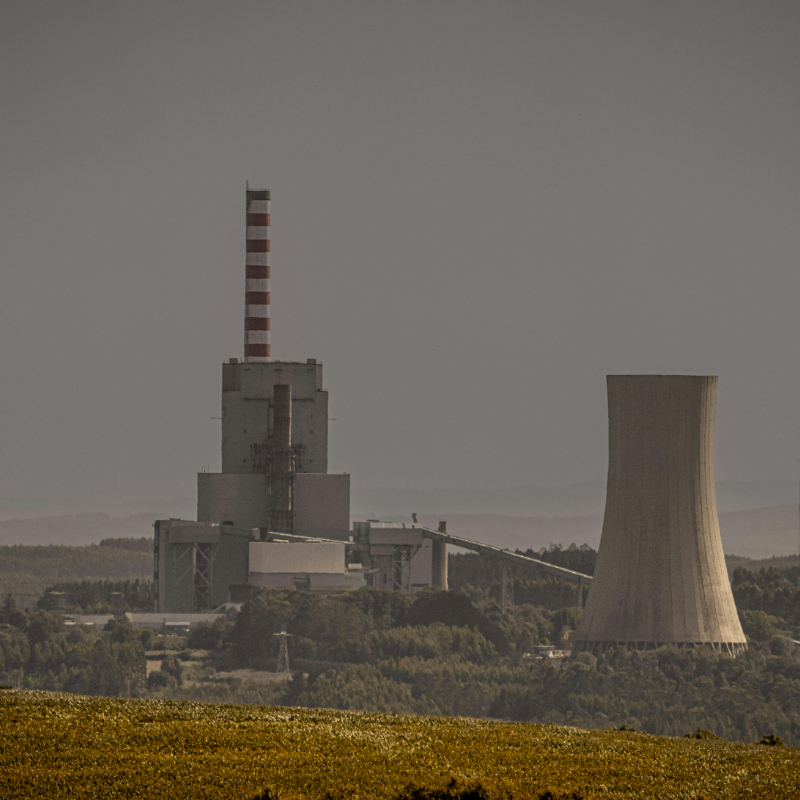
Uses economic and social measures such as infrastructure investments and retraining programmes, to manage impacts of coal phase-out on workers and communities.
Summary
Germany’s Coal Commission was established in 2018 as a multi-stakeholder coalition to negotiate and mitigate the impacts of a coal phase-out. It illustrates the combined use of economic (e.g., infrastructure investment projects) and social support measures (e.g., retraining programs) to manage the impact on workers and communities in coal-dependent areas.
Challenge
One of the goals of COP26 was to encourage countries to phase out coal. Yet, carbon emissions from coal-fired power generation grew by 2.1% in 2022 demonstrating that coal still plays a key role in energy production (IEA, 2022).
Coal has historically played a key role in Germany’s economic growth and energy security. In 2018, hard coal and lignite were used in 33% of German primary energy production, directly employing 32,800 people and involving as many as 86,000 across the value chain (Agora Energiewende).
The Coal Commission was established to drive social consensus on phasing out coal from power generation, including identifying the adverse impact on electricity prices, energy security, coal-reliant regions, and employment.
There are several equity challenges that were identified:
- Impacts on workers – the phase-out of coal puts jobs at risk, and a potential skills gap may prevent redeployment. Additionally, job losses could be concentrated in communities where alternative employment opportunities are not located.
- Impacts on access and affordability for consumers – the commission anticipated increases in electricity prices and a reduction in energy security.
- Impacts on community – communities which have an economy and cultural identity centred around a coal mine could be disrupted if that coal mine were to shut down.
Policy/Programme Goal + Expected Outcomes
The Coal Commission brought together stakeholders from across government, industry, labour unions, environmental groups, and affected regions to negotiate a consensus on the coal phase-out.
Following six months of deliberation, the commission published its recommendations, which included a roadmap for shutting down coal-fired power plants by 2038 and achieving a just transition for coal regions. To counteract the impact of the end of coal-fired power generation on energy supplies, the share of renewable electricity generation would have to be increased to 65% of gross electricity consumption by 2030 and 80% by 2050. The total cost of the measures proposed was estimated at 69 billion to 93 billion euros.
Key recommendations relating to a just transition include:
- New industrial value-add and employment in mining regions
- Modernise energy infrastructure in coal mining regions to support the adoption of renewables and storage technologies
- Invest in transport and digital infrastructure to enhance mining regions as locations for business and innovation, and develop them as ‘model regions’ where new industrial processes and systems can be developed
- Relocate federal government offices with more than 5,000 employees to coal regions by 2028
- Ensure socially acceptable phaseout
- Introduce social protections such as protection against early dismissal, enablement of early retirement, retraining, and reallocation measures
- Initiate a dialogue between regional governments and residents near mines
- Maintain affordability of energy
- Proposal to continue and further develop CO2 electricity price compensation at the European level to support the competitiveness of energy-intensive industries affected by coal phaseout
- Protect commercial, industrial, and household consumers from retail price volatilities by lowering transmission grid charges
- Protect household electricity consumers against possible increases in retail prices by lowering transmission grid charges
- Phase out in agreement with power plant operators
- Financially compensate power plant operators for shutdown to ensure completion of phase out in a just way
Enabling conditions
Three key conditions supported the implementation of the German Coal Commission’s coal phase-out:
- Strong cooperation and early engagement of key stakeholders: The commission consisted of stakeholders from the government, industry, labour unions, and environmental groups.
- Access to funds to allow coal regions to fully move away from coal: The federal government budgeted 69 – 93 billion Euros as additional costs to implement the commission’s recommendations including 40 billion Euros to provide support for coal regions such as retraining and early retirement up until 2038 (German Coal Commission). Additionally, power plant operators were compensated for the early shut-down of capacities – this compensation was determined using mechanisms such as competitive bidding.
- The commission was given a clear mandate by the government and had full independence to fulfil that mandate e.g. ministers could attend meetings but did not have voting rights.
Indicators of success
The coal phase-out is due to be completed by 2038 yet in 2022 Germany used 8.4% more coal-generated energy than in 2021 (Germany Official Statistics). However, the agreement of a phase-out and the relationship building required to do so is itself an achievement, including:
- The recommendations drawn up by the commission represent a pragmatic compromise between industrial manufacturers, energy providers, trade unions, and environmental associations. A high level of agreement was achieved within the commission with all (but one) voting in favour of the plan. The commission was able to solve pressing political dilemmas with negotiated solutions that brought all stakeholders to the table for phasing out coal.
- The work of the Coal Commission has served as a role model to inspire other governments to take similar action for example, Korea’s National Institute of Green Technology published a paper in 2024 on policy lessons that could be taken from the German coal phase-out.
Key Takeaways/Implications
- By considering the impact of a sector across the whole value chain, for example by not just accounting for employment impacts but also the impacts on consumers as well as communities can help build the buy-in needed from stakeholders to enable the implementation of transition plans.
- Ensuring sufficient government financing is allocated to the project is key to facilitating implementation, in the case of Germany, large-scale funding was needed to ensure the cost of closing coal mines was not passed onto consumers or the regions surrounding the mines.