Summary
Morocco's phased approach to fossil fuel subsidy reform showcases how early, gradual changes can lead to significant economic and environmental gains. Facing growing international fuel prices and an unsustainable subsidy burden, Morocco raised fuel prices incrementally, with major increases in 2012 and subsequent eliminations of fuel subsidies by 2015. These reforms contributed to reducing the budget deficit and reallocating funds to renewable energy investments. Alongside the reforms, Morocco implemented social protection programs to mitigate impacts on vulnerable populations. The subsidy phase-out has also supported Morocco’s transition to a greener economy, bolstered by ambitious renewable energy goals.
Challenge
Morocco’s heavy reliance on fossil fuel imports, covering 90% of its energy needs, presented a substantial challenge for the country's energy security and economy. Much of its energy consumption came from oil and coal, with limited contributions from renewable sources. As international fuel prices surged in 2013, the country's fossil fuel subsidies became an unsustainable burden on its budget – accounting for 6.5% of the GDP. Moreover, as much as 75% of the energy subsidies went to the richest 20% of the population, reflecting their inefficiency and regressive nature. Efforts to phase-out subsidies faced resistance due to concerns about their impact on the poor, particularly regarding essential fuels like butane, which is commonly used by lower-income households.
Policy Goal and Expected Outcomes
The key features of Morocco's subsidy reform included gradual price increases and a partial indexation of fuel prices to international markets. By January 2014, subsidies on gasoline and industrial fuel were eliminated, and reductions in diesel subsidies continued through quarterly adjustments. Morocco’s strategy aimed to reduce its subsidy bill, which had ballooned to 6.5% of GDP by 2012. The expected outcomes of the reform included a more sustainable budget, less reliance on fossil fuels, and a shift toward renewable energy investments.
Enabling conditions
Several factors enabled the successful implementation of Morocco’s subsidy phase-out, with a phased approach, including:
- Preparation phase: Identification of population groups adversely affected by subsidy reforms, and developing mitigation strategies.
- Partial fuel price indexation, allowing to automatic adjustment of domestic fuel prices in case of price volatilities beyond a threshold.
- Price liberalization: Removal of subsidies for gasoline and industrial fuel oil, followed by power generation.
The government ran an extensive public education campaign about the regressive nature of energy subsidies, demonstrating their disproportionate benefit to wealthier households, supported in building public acceptance for the reforms. Morocco also developed robust national strategies for renewable energy, including the National Energy Strategy and the Low-Carbon Development Strategy, which aligned with its subsidy reform efforts. Additionally, the government established technical commissions to assess the macroeconomic impact of reforms and develop alternative social protection measures to support vulnerable populations.
Indicators of success
Morocco's reforms yielded both economic and environmental successes. On the economic front, the country saw savings from reduced fuel subsidies, freeing up resources for renewable energy investments. These investments have not only supported Morocco’s shift towards a low-carbon economy but also contributed to substantial job creation. By 2020, job growth in the renewable energy and energy-efficiency sectors was significant:
- Renewable energies: 13,300 jobs created (+26.55%).
- Concentrated Solar Power: 6,100 jobs (+45.86%).
- Solar photovoltaics: 4,700 jobs (+35.34%).
- Biomass: 1,300 jobs (+9.77%).
- Wind: 1,100 jobs (+8.27%).
- Micro-hydro: 100 jobs (+8.27%).
- Energy efficiency: 36,800 jobs (+73.45%).
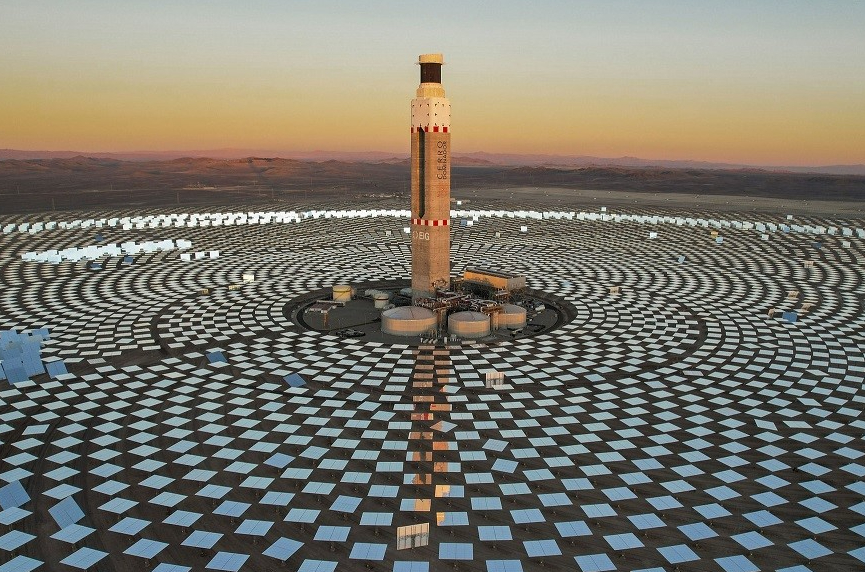
Socially, the reforms were accompanied by expanded social programs, such as health insurance and education support for low-income populations, mitigating potential negative impacts. Environmentally, Morocco’s renewable energy investments, including its flagship NOOR-Ouarzazate solar power project, contributed to significant reductions in greenhouse gas emissions and reduced dependency on imported fossil fuels.
Key Takeaways
Morocco's experience in phasing out fossil fuel subsidies highlights the importance of a gradual, well-communicated reform process that includes provisions for protecting vulnerable populations. The government’s efforts to simultaneously invest in renewable energy demonstrated how economic, social, and environmental objectives could be aligned. This case illustrates how other countries might approach fossil fuel subsidy reform by integrating energy policy with broader social and environmental goals, ensuring a just transition for all stakeholders.
With thanks to Mauricio Böhl Gutierrez, Researcher, German Institute of Development and Sustainability (IDOS) for contributions to this case study.