Summary
Plasticcycle, a social entrepreneurship project by the John Keells Group, addresses the growing issue of plastic waste in Sri Lanka through a comprehensive strategy aimed at fostering a circular economy. The program incorporates a variety of activities designed to reduce plastic use, improve waste management practices, and promote recycling, and seeks to promote equity in accessibility to circular economy services. It emphasizes community engagement, value chain collaborations, and awareness campaigns to develop sustainable and scalable plastic waste management solutions.
Challenge
Plastic pollution in Sri Lanka poses serious environmental and social challenges, with significant implications for vulnerable communities. The accumulation of plastic waste in rivers, coastal areas, and public spaces leads to ecosystem degradation, poses risks to wildlife, and releases harmful chemicals that threaten human health. According to the Ministry of Environment’s National Action Plan on Plastic Waste Management 2021-2030, only 38.5 metric tons (MT) of plastic waste are recycled daily out of the 938 MT generated, while 638 MT remain mismanaged.
Affected stakeholders include:
- Low-income communities near landfills who are exposed to health hazards from pollutants.
- Informal waste collectors and recyclers, who often operate in unsafe conditions without economic security.
- Coastal communities that depend on fishing and tourism for livelihoods, both of which are impacted by plastic waste in the environment.
The challenges are compounded by inadequate waste management infrastructure, low public awareness, and the financial burden on local authorities to manage plastic waste.
Programme Goal and Expected Outcomes
Plasticcycle aims to advance Sri Lanka towards a circular economy by decreasing plastic waste, boosting recycling capabilities, and engaging citizens in sustainable practices. The program’s supports John Keels Group’s pursuit of becoming plastic neutral and is a key component of their sustainability goals.
The Goal
The main objective of the initiative is to create a circular economy in Sri Lanka through plastic waste reduction, recycling improvements, and public engagement.
Key features of the initiative are:
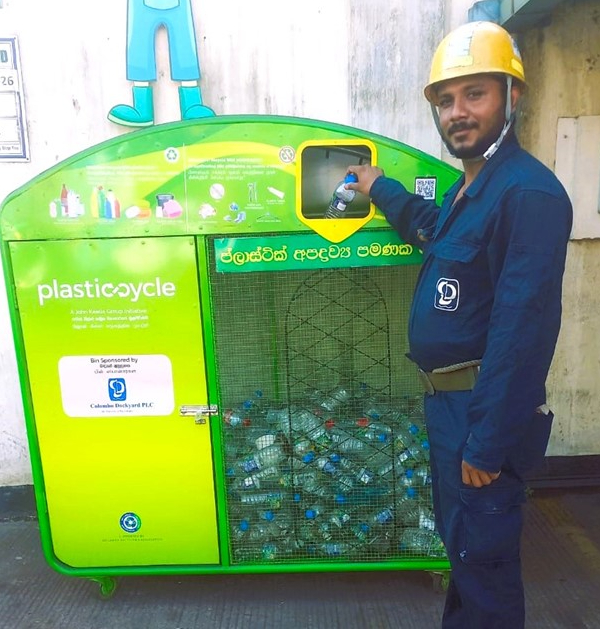
- Partnerships and collaboration: The program collaborates with government bodies, private companies, and NGOs to enhance waste management systems. This includes establishing collection points, supporting recycling businesses, and involving the informal sector.
- Awareness Campaigns: By promoting educational programs and media outreach, Plasticcycle encourages behavioural changes regarding plastic consumption. It advocates for the use of reusable products, proper waste segregation, and responsible usage.
- Technological Innovations: The initiative explores advanced recycling technologies, such as microbial degradation for flexible plastics. It engages in research partnerships to find scalable solutions for various plastic types.
- Policy Engagement: Plasticcycle is actively engaged in the discussions related to the Extended Producer Responsibility (EPR) framework. The initiative also serves as a platform for collaborative advocacy on disincentivizing single-use plastic usage through nationally applicable plastic bag charge based on “polluter pays” principle.
- Equity: Supports remote communities affected by marine pollution, and provides income stream to collectors and recyclers from informal sector.
Expected Outcomes
The initiative aims to achieve significant progress across two primary domains: Environmental and Social.
- Environmental: Reduced plastic waste leakage into the environment, increased recycling rates, and cleaner urban and coastal landscapes.
- Social: Enhanced livelihoods for waste workers through formal training, safer working conditions, protecting livelihoods of remote communities affected by marine pollution, and overall improvements in public health due to a cleaner environment.
Enabling conditions
The success of the initiative is dependent on several enabling factors that created a supportive ecosystem for impactful change:
- Regulatory Support: The Sri Lankan government’s commitment to combating plastic pollution through supportive policies has been crucial.
- Corporate Influence: John Keels Group’s extensive networks and resources enable the facilitation of large-scale partnerships and stakeholder engagement, from local communities to global research institutions.
- Community Participation: Local support has been vital, with grassroots involvement in recycling efforts and awareness programs. Collaborations with local innovators are underway for developing compostable plastic alternatives through the Start-Up-Cycle accelerator, which aims to identify innovative solutions and compostable alternatives for various plastic products within the John Keels Group.
- Research and Technological Support: Partnerships with academic and research institutions, such as those focused on microbial degradation technologies, are providing innovative methods for managing hard-to-recycle plastics.
- Incentive for maintenance: To ensure accountability and reliability of the collection service, the program includes provision of cash incentives by registered collectors to caretakers of the strategically located collection bins, to encourage segregated waste and clean plastic waste. The incentive mechanism has led to 50% increase in recycle waste collection.
- Reuse of plastic waste: To create a sustainable operating model, the initiative also collaborates with other actors in the value chain to transform the collected waste into post-recycling products such as yarn and mono-filaments.
Indicators of success
Plasticcycle has achieved notable successes in both the environmental and social domains:
Environmental Achievements:
- Reduced plastic accumulation on coral reefs including the areas attractive to tourism, with subsequent improvements in marine habitats following underwater cleanups.
- The program’s initiatives have spurred business opportunities in waste collection and recycling, leading to the establishment of multiple waste collection points and expanded infrastructure.
- Positive shifts in public behaviour, with decreased reliance on single-use plastics and increased adoption of sustainable alternatives.
Social Achievements:
- Formalization of waste workers’ roles has led to safer work environments and more stable income.
- Heightened public awareness and active participation in environmental conservation, demonstrated by increased involvement in clean-up activities and recycling initiatives.
- Health improvements in communities that previously suffered from improper waste disposal practices.
Key Takeaways and Implications
The Plasticcycle case study offers the below valuable insights for developing equitable corporate strategies:
- Multi-stakeholder collaboration is essential: Effective waste management solutions require the concerted efforts of governments, businesses, NGOs, and communities. Collaborating with other companies, for instance, on projects like placing recyclable plastic waste collection bins, has highlighted the need for joint efforts.
- Integrating social equity in environmental programs: Supporting vulnerable groups, such as informal waste workers, is key to promoting equitable development. Behavioural changes in coastal and fishing communities have reduced abandoned fishing gear (ALDFG) in coral reefs and popular tourist areas. For example, the “Cleaner Seabeds for Sri Lanka Expedition,” implemented by The Pearl Protectors with Plasticcycle as the main partner, has significantly contributed to these outcomes.
- Innovative solutions for hard-to-recycle plastics: Utilizing advanced technologies like microbial degradation can open new avenues for recycling and waste management.
- Introducing Alternatives to Plastics: The Start-Up-Cycle challenge platform, initiated by Plasticcycle, is focused on providing compostable, natural alternatives to certain plastic packaging in line with the Refuse concept of the 4Rs. Three startup companies are being accelerated through this platform to develop solutions that can be supplied to large-scale hotel chains and retailers.
- Driving behavioural change through awareness: Public education is critical to fostering sustainable practices, especially in regions where recycling infrastructure is still developing.
Additional information can be found at:
Website: https://plasticcycle.lk/
Facebook: http://www.facebook.com/plasticcycle
Instagram: http://www.instagram.com/plasticcycle/
Videos:
https://youtu.be/ASgDN4dIOko?si=xIVbWIzN7TTlF2aR
https://youtu.be/krMDoJL7wt8?si=2mR0fJrHVwot4oA8