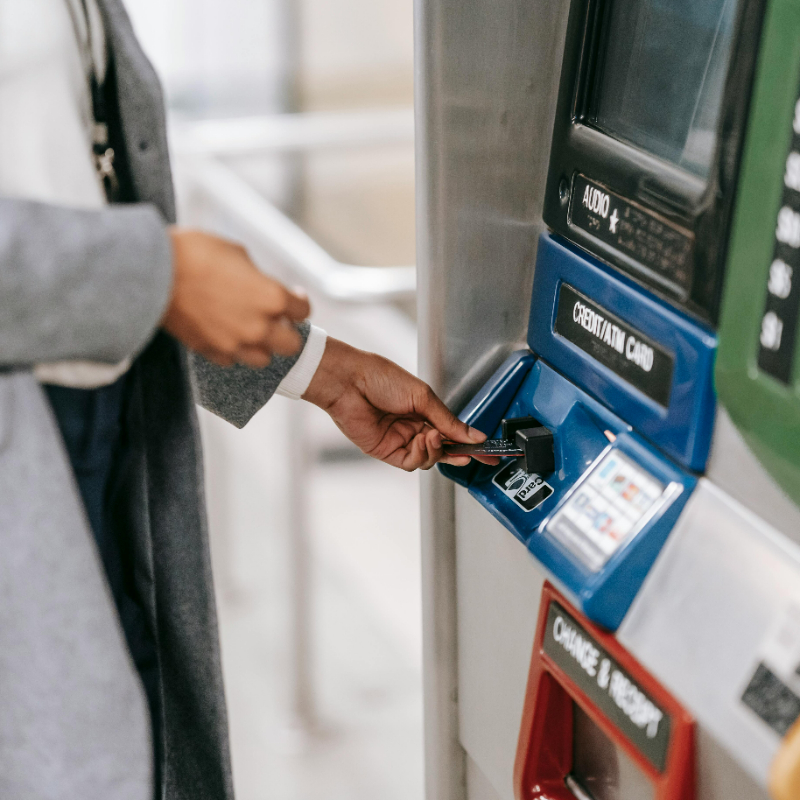
Designing and constructing a new rail line to reduce vehicles on roads, while ensuring accessibility for vulnerable groups such as women and those with limited mobility
Summary
Zhengzhou, the capital of Henan Province China, initiated the Zhengzhou Urban Rail project in 2014. It involved the opening of a new rail line in 2020 to tackle the rise in vehicle emissions due to urban sprawl. This project illustrates how investment in public transport, with consideration for vulnerable groups (e.g. women, disabled), can lead to increased access and use of public transport.
Challenge
Transport accounts for approximately 20% of global CO2 emissions, with road passenger vehicles responsible for 45% of that total (Our World in Data). China significantly contributes to this issue, in 2019 its transport emissions constituted 11% of the global figure (World Resources Institute). As well as contributing to global warming, road vehicle emissions also pose a detriment to public health. In 2014, China ranked 128th out of 133 countries in air quality (National Library of Medicine). Therefore, there is a need for road journeys to be replaced by low-carbon transport alternatives. This requires the development of an extensive public transport network. China is already a leader in this area, with four of the world’s top ten busiest metro networks (by annual ridership) located within the country (WEF).
The population of Zhengzhou grew by, on average, 4% per year from 2000-2018 (World Population Review). This growth led to more vehicles on the road, exacerbating traffic congestion. Consequently, travel speeds on major roads dropped to below 18km/h during peak times. Simultaneously, public transport use was low, accounting for just 13.6% of all journeys taken (World Bank).
From an equity perspective, the challenge for Zhengzhou was to design and construct a rail line with environmental considerations that also considered the needs of vulnerable groups, in particular the elderly, disabled, and women, to ensure universal accessibility.
Programme Goal + Expected Outcomes
In 2014, when the rail project was initiated, Zhengzhou had a population of 5.17 million (World Bank, 2022).
The rail project was designed to improve urban mobility within Zhengzhou. Originally, the Zhengzhou metro featured only two lines, which did not adequately connect the city. The rail project included designing and constructing Line 3, which would link the city centre with the northwest and southeast regions. In total 25.5km of track and 21 stations were to be built, with an average distance between stations of 1.29km. The success of the project was to be measured against Line 3 ridership, the travel time savings for public transport users on Line 3, the proportion of urban rail commuters on Line 3 with access to a car, and the proportion of Line 3 users that rated the service as satisfactory or better. The project included the resettlement 239 households with a compensation mechanism applied to their relocation (Coalition for Human Rights in Development).
Aspects of the project that are of particular importance to a just transition include:
- Ensuring universal access for the disabled and elderly
- All stations are equipped with escalators, elevators, and ramps.
- At every exit there is an elevator directory and tactile paving.
- Ramps are well-lit to ensure visibility at night.
- Discounts are provided to people with disabilities.
- Free rides are provided to elderly residents above 60 during non-peak hours.
- Creating a safe and equitable environment for women
- There are two women-priority cars on every train.
- All 21 stations have nursing rooms.
- The ratio of female toilet cubicles is 1.5 to 1.
Enabling conditions
Three main conditions enabled the successful implementation of Zhengzhou’s Urban Rail project:
- Users were consulted on the design: The station and facilities designs were reviewed by local women’s associations and disability associations. To test the accessibility of the line, trial rides were run for people with reduced mobility.
- Public engagement: two rounds of public consultation were undertaken, in 2012 and 2013. The first survey included 267 respondents with 92% of them supporting the project, and the second included 714 respondents with 89% supporting the project. Participants were selected across a variety of groups, genders, socioeconomic, and educational backgrounds (Coalition for Human Rights in Development).
- Partnerships with international organisations to secure financing: The overall project cost was 2.5 billion dollars. The project was partially funded by the World Bank, which provided 250 million dollars in IBRD financing, and partly from other sources, including a private capital investment of $809 million secured through a public-private partnership which was advised by the Global Infrastructure facility (a fund managed by the World Bank) (World Bank). The World Bank also provided technical assistance to the Zhengzhou finance bureau, planning bureau, land bureau, transport bureau and urban rail company. This partnership was initiated by the leadership of Zhengzhou Municipality and Henan Project.
Indicators of success
The Zhengzhou rail line was able to increase public transport use and decrease road use whilst ensuring barrier-free accessibility for all passengers and an equitable experience for women. Key achievements include (World Bank):
- Emissions reduction: In 2021, the project was estimated to have mitigated 33,960 tons of CO2 emissions.
- Decreased road use: The percentage of urban rail commuters along Line 3 with access to a car was used to measure how effective the system was in attracting car users to public transit for sustainable mobility. 45.1% of passengers using the line were in households with car ownership who could have otherwise chosen private mobility, well above the project target of attracting 25% of its passengers from this cohort.
- Equitable experience: User satisfaction was 92.7% overall, with female users giving a slightly higher rating than men.
Key Takeaways/Implications
- Highlights the importance of the user experience, gender considerations and barrier-free accessibility to ensure widespread accessibility.
- Shows the importance of working in partnership with diverse stakeholder groups to test the design and facilities to ensure accessibility e.g. the designs underwent review from local women’s federation and disability association.
- Illustrates the significance of global/international aid to support large infrastructure projects.