
- Businesses are increasingly having to operate under disruptive geopolitical pressures.
- “We are seeing a big evolution in how companies are assessing risks,” said Simon Evenett, founder of the St. Gallen Endowment for Prosperity Through Trade.
- A new white paper offers insights for companies and policymakers grappling with the geopolitical pressures that continue to fragment the global economy.
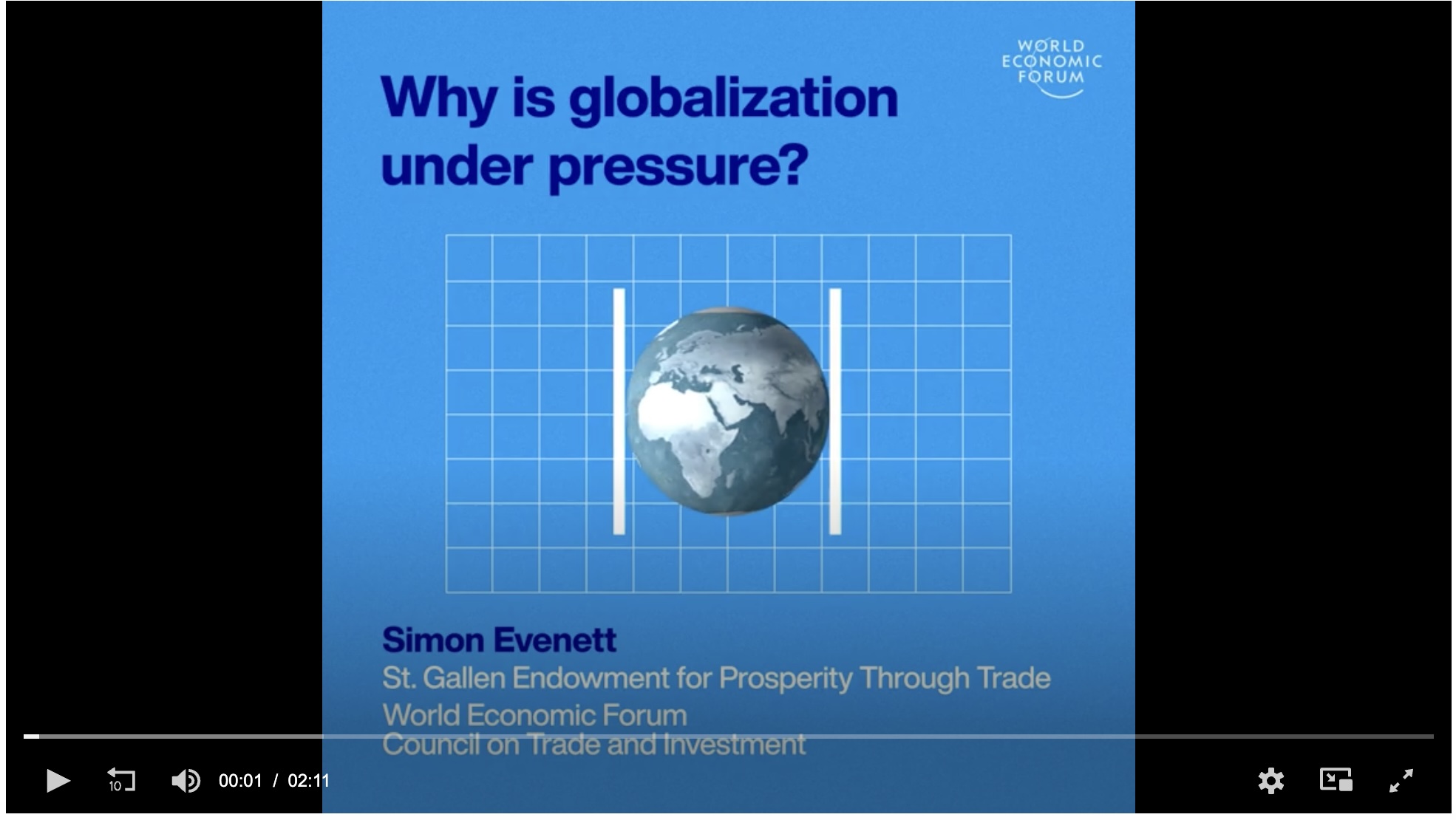
International trade is under extraordinary pressure, experts warn, as crises ranging from continued supply chain disruptions to heightened geopolitical rivalries compound stains on the global economy. Moreover, the merits of free trade are increasingly being questioned in economies around the world.“We've had a sequence of shocks which have hit the world economy,” Simon Evenett, the founder of the St. Gallen Endowment for Prosperity Through Trade, a Switzerland-based trade policy think tank, said in an interview with the World Economic Forum.
The benefits of globalization, Evenett added, are “potentially at risk if geopolitical rivalry gets too far out of control.”Evenett, who is also a member of the World Economic Forum’s Trade and Investment Council, is a contributor to a new white paper, The Costs of Geopolitical Rivalry for Business: Ten Lessons for Better Policy Design, which provides analysis on how corporations and policymakers can best prepare for and respond to the various geopolitical pressures fragmenting the global economy. The paper is based on interviews with over a dozen senior executives from international businesses representing a range of manufacturing and service sectors.
How are businesses being affected by geopolitical pressures?
“One of the things we did in the paper was to identify 12 different ways in which firms take advantage of globalization. That could be seeking out new revenue streams abroad, lowering your costs, reconfiguring how you organize yourself internally, and how a firm finances and acquires resources. All of those things can be jeopardized in different ways by geopolitics.
“You could be shut out of foreign markets because of a trade war; you could find the costs of the energy that you were buying from Russia suddenly surges; if you're a German company, you could find that you're unable to hire Chinese scientific talent as much as you used to be able to; and you might find that you can't finance your company as well as in the past because you can't tap into foreign capital markets — all of this is potentially at risk if geopolitical rivalry gets too far out of control.”
How are companies responding to geopolitical pressures?
“The response across different industries is very varied. So much depends on how fast a company tapped into overseas markets to start with.
“We're certainly seeing some companies moving production out of China, often going maybe to Vietnam and Mexico. This is often linked to companies which are trying to supply the North American market. We're also seeing other companies rethinking their innovation strategies, perhaps localizing innovation for certain markets and/or moving some sensitive innovation projects outside of geopolitical hotspots.
“We're also seeing some firms trying to essentially liquidate and withdraw from certain key geopolitical hotspots. The responses were quite diverse, but this reflects the fact that the commercial footprints of so many companies differ so much across sectors.”