
Global food supply chains are under pressure from geopolitical shifts, population growth, and climate impacts, necessitating a demand for resilient solutions in food procurement. This report emphasizes the need for bold demand-side leadership to unlock finance and encourage investment in proven practices like regenerative farming and water management. It highlights pathways to improve procurement practices, drawing on interviews with chief procurement officers and case studies, showing how leaders can manage supply chain risks, enhance sustainability, and create value for organizations, suppliers, and the food system.
Health
First Movers Coalition for Food: CEO Lessons for the Future of Food Procurement

Global food supply chains face challenges from geopolitical shifts, population growth, and climate impacts, driving urgent demand for resilient solutions. Effective food procurement must balance quality, availability, cost, and supply continuity while addressing sustainability and nature preservation. Proven approaches like regenerative farming, water management, and low-methane rice cultivation are ready to scale but often stall without strong demand-side leadership. This leadership provides credible market signals that unlock financing, align value chain partners, and encourage farmer investment. CEOs and senior leaders can leverage procurement strategies to manage supply chain risks, accelerate sustainability, and create value for organizations, suppliers, and the global food system.
First Movers Coalition for Food: CEO Lessons for the Future of Food Procurement

Forced labour affects nearly 28 million people in global supply chains, with progress in combatting this issue stalled due to fragmented data, misaligned incentives, and limited trust among stakeholders. The Global Data Partnership Against Forced Labour is a platform that facilitates collective action through a federated data infrastructure and artificial intelligence, allowing privacy-preserving collaboration. A Proof of Concept in Thailand shows how interconnected data can reveal unseen risk patterns, offering a scalable approach to make forced labour preventable rather than an ongoing issue.
Health
Harnessing Data and Intelligence for Collective Advantage: Ending Forced Labour in Global Supply Chains

Forced labour affects nearly 28 million people globally, remaining a significant challenge in supply chains due to a fragmented response ecosystem with siloed data and misaligned incentives. The Global Data Partnership Against Forced Labour is a multistakeholder platform that promotes collective action through a trusted, federated data infrastructure, allowing for privacy-preserving collaboration. A proof of concept in Thailand illustrates how interconnected data can reveal hidden risk patterns and offers a scalable solution to prevent forced labour, transforming it from an ongoing issue into a manageable risk.
Health
Harnessing Data and Intelligence for Collective Advantage: Ending Forced Labour in Global Supply Chains

Day 2 of Davos 2026 features discussions on artificial intelligence (AI), the U.S. economy, and global cooperation. Key sessions include a conversation on the societal impact of AI with Yuval Noah Harari and Irene Tracey, and a discussion on the path to artificial general intelligence (AGI) led by Demis Hassabis and Dario Amodei. Special addresses from leaders like French President Emmanuel Macron, China's Vice-Premier He Lifeng, and European Commission President Ursula von der Leyen focus on economic challenges, globalization, and energy security strategies. China emphasizes cooperation and market expansion, while the EU addresses geopolitical challenges and trade relations.
Egypt, Ghana, India, Kenya, Russian Federation, Ukraine, United Arab Emirates, United Kingdom | ICT, Health, Financial services, Education
Live from Davos 2026: What to know on Day 2

Higher voter turnout in Iraq's recent parliamentary elections indicates advancements in infrastructure, security, and political stability. Prime Minister Mohammed Shia al-Sudani's coalition emerged as the largest, amid a reshuffling of power among entrenched elites. However, independent and civil society-linked representation significantly declined. The elections highlighted an "Iraq First" sentiment among the elite, focusing on stability over reform amidst regional turmoil. The Shia Coordination Framework solidified its dominance, emphasizing the importance of elite alliances in government formation. Challenges ahead include balancing relations with the US and Iran, managing domestic tensions, and addressing climate change impacts.
Bahrain, Egypt, Germany, Jordan, Pakistan, Saudi Arabia, Ukraine
Reclaiming Iraqi Agency
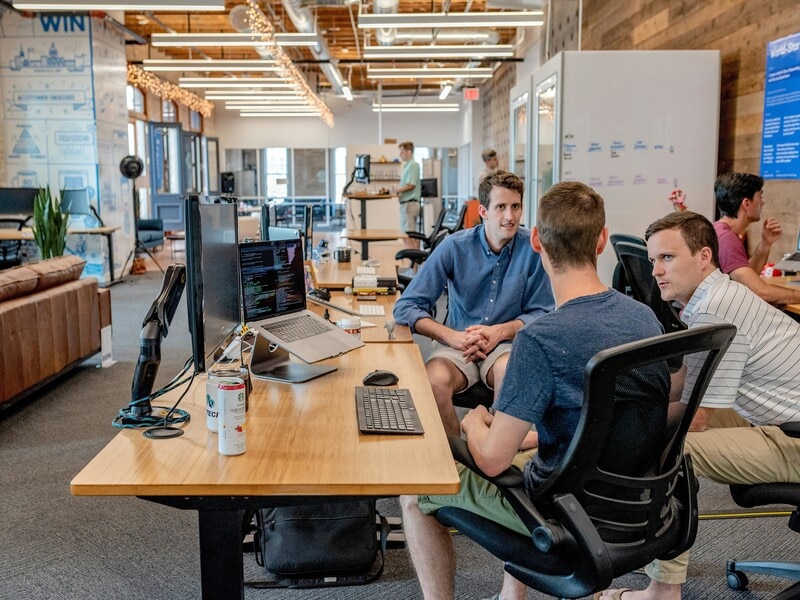
AI is reshaping work by transitioning from automation to amplification, enabling employees to focus on meaningful tasks and enhancing creativity and decision-making. Leaders play a crucial role in this transformation by intentionally applying AI to elevate human contributions. Effective leadership in an AI-driven environment involves transparency, upskilling, reinforcement, and empathy while maintaining human oversight in HR and payroll processes to mitigate risks. Incorporating employee insights into AI development fosters a sense of ownership and trust, ensuring that intelligent tools genuinely support and empower the workforce.
Education
How AI can elevate human potential, if the industry gets it right
Artificial intelligence (AI) can effectively tackle critical global challenges such as climate change, humanitarian crises, and food insecurity, according to a UNU report. Highlighting robotics, geospatial AI, and communications networks, the report illustrates AI's applications in healthcare, disaster response, and biodiversity conservation. However, it warns that the benefits of AI require proper governance and investment to avoid exacerbating inequalities. Five key pathways for fostering an enabling environment for AI include improving data governance, enhancing digital infrastructure, expanding AI literacy, developing responsible AI policies, and building collaborative digital ecosystems. These pathways aim to ensure AI contributes meaningfully to human and planetary well-being in line with Sustainable Development Goals.
Health, Education
Unlocking AI’s Potential to Serve Humanity: Robotics, Geospatial AI and Communications Networks
Sovereignty in the age of AI requires a realistic understanding of interdependence rather than a false sense of isolation. It is characterized by agency and choice, allowing states to make informed decisions about AI integration in line with national goals. Countries must navigate a trilemma of control, access to global capabilities, and coherence across various strategies, as no state can fully maximize all three. Effective AI sovereignty involves deliberate negotiation rather than isolation, aiming to preserve strategic autonomy and enhance national agency over time.
Sovereignty in the Age of AI: Strategic Choices, Structural Dependencies and the Long Game Ahead

The High Seas Treaty, approved in 2023 after two decades of negotiations, establishes a comprehensive legal framework for governing the high seas, which constitute over two-thirds of the ocean. It addresses critical challenges such as the equitable distribution of marine genetic resources, the establishment of marine protected areas, and enhanced environmental impact assessments. The treaty aims to foster collaboration among governments, civil society, and the private sector to achieve Sustainable Development Goal 14, protecting marine biodiversity and supporting global economic resilience. It also opens avenues for ocean industries to promote sustainable practices while contributing to ocean conservation efforts.
Health
Why the High Seas Treaty entering into force matters for public-private action

Multilateral paralysis is undermining global health, severing essential connections needed to address health challenges. Gavi, the Vaccine Alliance, exemplifies effective 'minilateralism' by fostering collective solutions that prioritize last-mile health needs in vulnerable Global South communities. Amid declining multilateralism, Gavi's approach has successfully vaccinated over 1.2 billion children and created new vaccine markets. A coordinated global health response, exemplified by the 'Gavi Leap,' aims to support nations in developing self-sustaining health systems while preserving capacity to protect vulnerable populations. This model serves as a promising alternative to traditional multilateral frameworks in a fragmented global landscape.
Africa | Financial services, ICT, Education, Health
Multilateral paralysis is harming global health. Gavi's 'minilateralism' can get us back on track
The book "Generative AI-Powered Urban Digital Twins" by Ali Cheshmehzangi reimagines urban futures by integrating generative artificial intelligence with digital twin technologies. It positions AI-powered digital twins as tools for systemic change, civic empowerment, and environmental regeneration in response to climate stresses and social inequality. The book explores the evolution from data-driven models to adaptive systems capable of learning and simulating urban environments. It discusses the role of AI in climate simulation, participatory planning, and ethical governance, proposing a new urban paradigm focused on regeneration, intelligence, and diverse perspectives rather than mere efficiency.
Education
Generative AI-Powered Urban Digital Twins

Keir Starmer's response to US actions in Venezuela and Greenland highlights the challenges of balancing pragmatic international relations with progressive principles. Initially ambiguous about Venezuela to maintain US cooperation for Ukraine's peace, Starmer later condemned Trump’s Greenland comments, emphasizing national self-determination. He asserted that compromising with the US on Venezuela was necessary but drew a line at Greenland, arguing that its annexation serves no strategic purpose. Starmer aims to uphold multilateral cooperation and transatlantic solidarity while navigating a complex relationship with an increasingly unilateral Trump administration.
Why Keir Starmer had to speak out against Trump over Greenland after staying quiet on Venezuela

CEOs face the challenge of balancing short-term pressures with long-term reinvention in a rapidly changing global economy influenced by fragmented digital ecosystems, AI adoption, and talent shifts. Investment is reshaping global competitiveness, with many CEOs planning international investments, particularly in India and the Middle East. The intertwining of technology and geopolitics necessitates strategic public-private collaborations to ensure secure and trustworthy infrastructures. While AI investments grow, extensive application remains limited, with many organizations still early in AI integration. The evolving landscape signals a new talent economy, driven by AI's potential to enhance productivity and create new job opportunities.
Financial services, ICT, Health, Education
Reinvention in a fragmenting world: What CEOs are saying (and need to know) in 2026

Employees support their companies' green transitions, yet they experience significant stress related to economic instability and job security, especially due to advancements in AI. While 70% of white-collar and 57% of blue-collar workers are ready for this shift, leaders face challenges such as rising energy costs and unequal access to green technologies. The World Economic Forum emphasizes the need for strategies that center around socioeconomic impacts, enhance internal capabilities, and foster collaboration across various stakeholders. Ultimately, creating roles that align with sustainability goals is crucial, as many organizations struggle with a shortage of skilled talent in this area.
Education
Employees value the green transition, but leaders must balance cost, capability and impact

Autonomous vehicles have made significant advancements, yet they still struggle with rare, unpredictable “long-tail scenarios” on the road, such as unexpected roadwork or unusual behavior from other drivers. These situations require vehicles to reason about uncertainty rather than merely reacting to sensor data. Nvidia's new open-source platform, Alpamayo, aims to address these challenges by combining perception, reasoning, and vehicle actions. It provides a framework for developing reasoning-based autonomous systems, enabling better decision-making in complex, ambiguous situations. While promising, vehicles using Alpamayo technology, like the upcoming Mercedes CLA models, will not be fully autonomous at launch.
The next generation of driverless cars will have to think about what’s on the road, not just see it

Food systems are essential for health and wellbeing in urban areas, but they face significant challenges such as diet-related diseases, food insecurity, and environmental impact. Innovation in food systems is necessary to address these issues, focusing on local solutions that enhance resilience and access to nutritious food. Cities like Boston are testing strategies such as mobile markets and climate-resilient storage to improve food access. Successful transformation requires collaboration between innovators, local governments, and communities to align priorities and secure funding for sustainable solutions. Without systemic innovation, urban growth may exacerbate inequality.
Financial services, ICT, Education, Health
How food systems innovation can enable healthier, more resilient cities
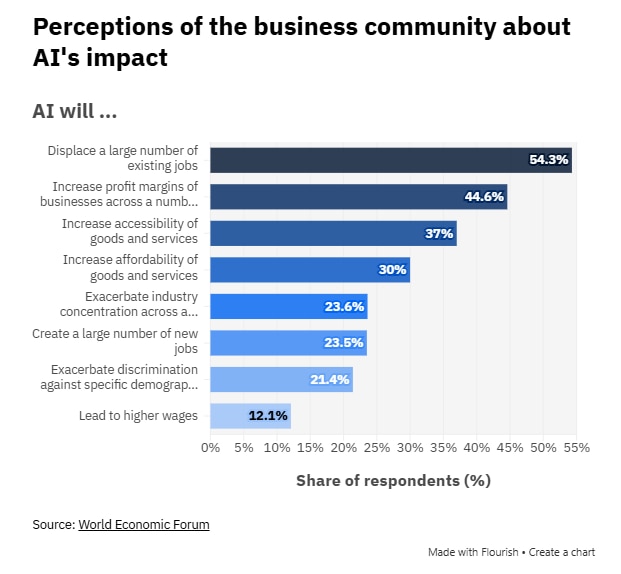
AI is fundamentally transforming jobs and skills, which will be a central topic at the World Economic Forum's Annual Meeting in Davos 2026. Businesses are facing geoeconomic volatility, influencing talent management and strategies. Four potential future scenarios for AI's impact on jobs include: "supercharged progress," where AI enhances productivity but ethical considerations lag; "age of displacement," highlighting reskilling challenges; "co-pilot economy," showcasing gradual AI integration; and "stalled progress," marked by uneven growth. Emphasis on human-centric skills is increasing, with a significant rise in demand for AI technical skills, creating recruitment challenges.
ICT, Education
Jobs and skills transformation: What to know at Davos 2026
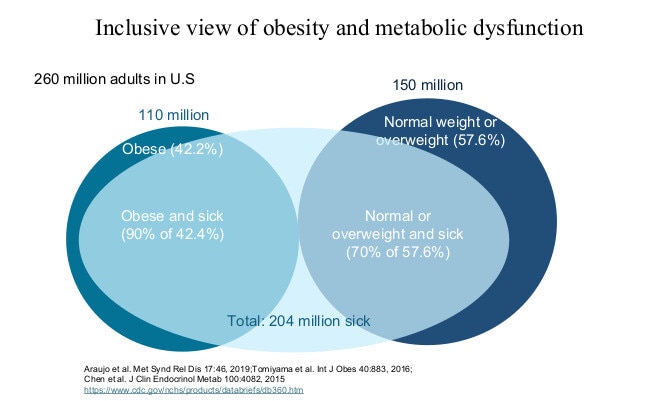
Metabolic health, crucial to tackling the obesity epidemic, affects many individuals of normal weight who are still at risk. Poor metabolic health arises from various factors including diet, physical activity, and environmental influences, leading to chronic conditions like cardiovascular disease and diabetes. Obesity serves as a visible marker of metabolic dysfunction, but not all at-risk individuals are overweight. A range of fat types, especially visceral and ectopic fat, can indicate health issues without corresponding weight gain. Structural issues in healthcare and food industries hinder prevention efforts. There is a growing public demand for solutions to improve metabolic health.
ICT, Health
Beyond obesity: what is metabolic health and why does it matter?

Japan's AI governance model integrates ethics, innovation, and cultural values through the AI Act and Hiroshima AI Process, promoting responsible progress while driving innovation. Although voluntary governance has spurred advancements, stronger data governance and enforcement are needed for accountability. Key challenges include improving data sharing practices, ensuring legal enforcement of ethical standards, and aligning cultural values with global norms. The World Economic Forum’s Responsible AI Playbook outlines frameworks for embedding responsible AI practices, demonstrating how Japan’s model can serve as a guide for other nations.
Japan | Education
Global leadership, local action: What Japan’s path to responsible AI can teach us