
Digitization alone is insufficient for overcoming rising healthcare costs and chronic disease burdens. A system-level leap that embeds health intelligence at its core is necessary. Abu Dhabi has set a precedent by developing an integrated, intelligence-driven health system supported by real-time, AI-enabled infrastructure to enhance prevention, equity, and personalized care on a large scale. The paper draws comparisons to transformations in banking and energy sectors, advocating for intelligence as a foundational service in health systems. It outlines the necessary conditions, governance, and investment strategies for countries to transition towards this model, inviting collaboration with private-sector leaders.
United Arab Emirates | Education, Health, ICT
A New Era for Digital Health: Abu Dhabi’s Leap to Health Intelligence

Rising costs and chronic disease burdens challenge health systems globally, necessitating a transition from mere digitization to embedding intelligence at their core. Co-authored by the Department of Health – Abu Dhabi and the World Economic Forum, the paper highlights Abu Dhabi's integrated, intelligence-driven health system, leveraging real-time, AI-enabled infrastructure for enhanced prevention, equity, and personalized care. It draws comparisons to transformations in other sectors and outlines the necessary conditions for countries to achieve this shift, inviting collaboration with private-sector leaders to co-create resilient health systems on a global scale.
United Arab Emirates | Financial services, Health, ICT, Education
A New Era for Digital Health: Abu Dhabi’s Leap to Health Intelligence
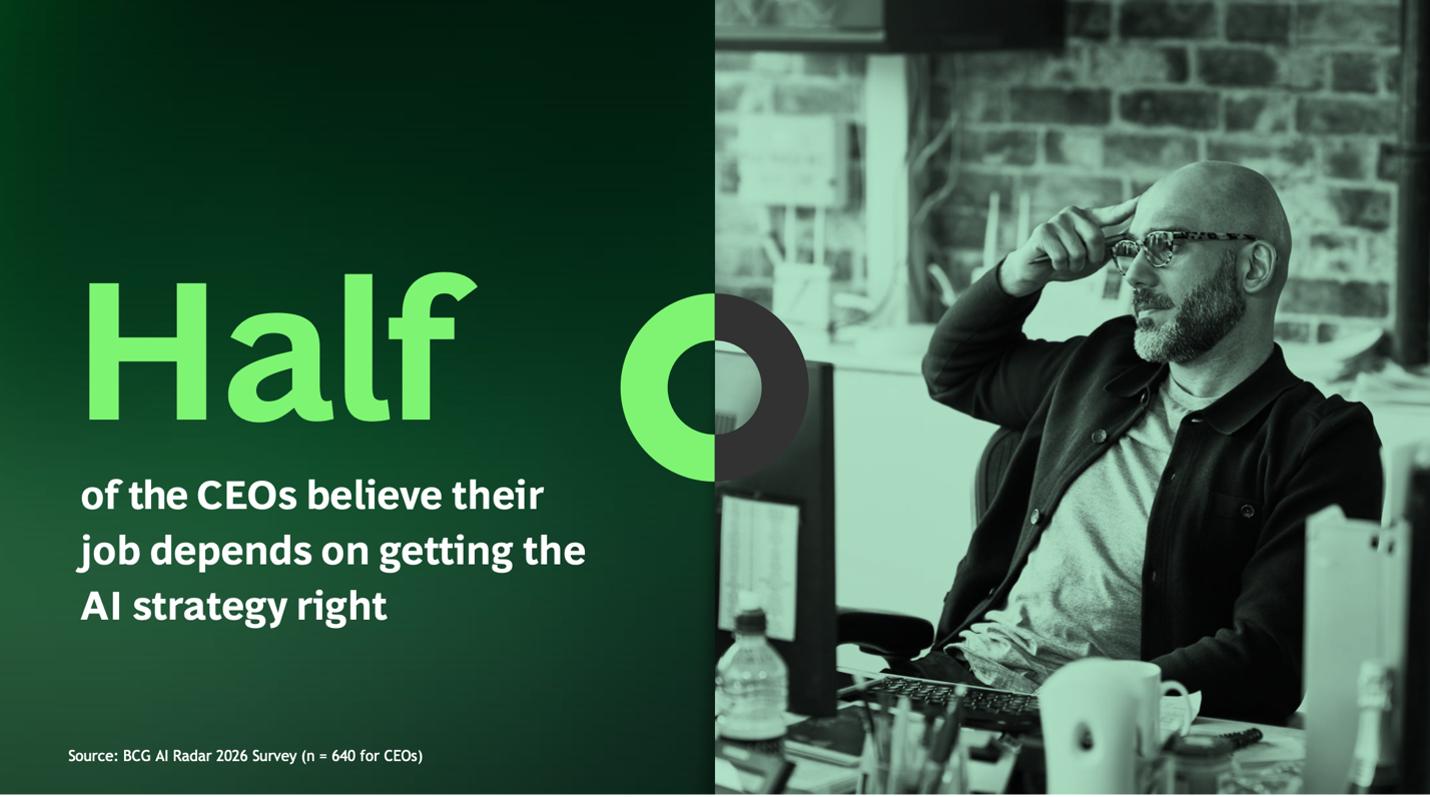
CEOs are increasingly leading AI investments, viewing AI transformation as a core business strategy rather than just IT innovation, according to BCG’s AI Radar survey. Nearly half of CEOs believe their job stability hinges on successful AI integration by 2026. Despite concerns over near-term ROI and potential AI fatigue, optimism persists, with 82% of CEOs more confident about AI than the previous year. A majority plan to maintain or increase investments regardless of short-term failures. The survey indicates a growing recognition among CEOs of their role as primary decision-makers in AI strategy, reflecting their preparedness for substantial organizational changes necessary to leverage AI effectively.
Education
CEOs are all in on AI but anxieties remain: What leader confidence indicates for 2026

The World Economic Forum's 2026 Annual Meeting in Davos, themed "A Spirit of Dialogue," aims to unite leaders from various sectors to foster cooperation in addressing global challenges. Amid rapid geopolitical, climate, and technological changes, the Forum's Strategic Intelligence platform helps combat information overload by providing shared, factual insights. This facilitates constructive dialogue, allowing decision-makers to navigate complex issues such as energy transition, food security, and public health. The platform evolves continuously, extending year-round collaboration and supporting the development of informed, cooperative solutions.
ICT, Education
How strategic intelligence powers the spirit of dialogue

Henry Markram, a neuroscience professor at EPFL, has revolutionized brain research through initiatives like the Brain Mind Institute and the Blue Brain Project, aimed at simulating the brain. He founded the Human Brain Project, a €1 billion European Commission initiative to advance neuroscience and computing. In 2025, Markram and his wife launched the Open Brain Institute to freely share their 18-million-line software for building digital brains. Additionally, he co-founded INAIT, developing a digital brain operating system and launching iAM in fintech and robotics, in partnership with Microsoft. Markram's work focuses on leveraging 40 years of research to create brain-based artificial general intelligence (AGI).
Education
Interview Of The Week: Henry Markram On Brain-Based AGI
Brain capital, encompassing brain health and skills, is anticipated to be a major topic at Davos this year amidst geopolitical and technological shifts. A January 15 report emphasizes the importance of enhancing cognitive performance and resilience in the face of AI and misinformation. The Global Brain Economy Initiative aims to encourage investments in brain health as critical infrastructure, with potential to contribute $6.2 trillion to global GDP. Businesses are urged to integrate brain health into their models to combat challenges like talent shortages and burnout, aligning with five key strategies for activating brain capital.
Africa | Financial services, ICT, Education, Health
Building Brain Capital: The 21st Century’s Critical Infrastructure
The UK government plans to upgrade rail infrastructure in Northern England through the Northern Powerhouse Rail project, linking cities like Liverpool, Manchester, and Leeds. This initiative aims to improve capacity and journey times while promoting regional collaboration in transport planning, marking a potential shift towards a more devolved transport system. The project will require the Department for Transport to adapt to regional needs and digital advancements, moving away from traditional, mode-centric approaches to a focus on social and economic value. If successful, Northern Powerhouse Rail could lead to an integrated and effective transport system across England.
Northern England’s rail upgrade could signal change in direction fo public transport

The UK government's Northern Powerhouse Rail initiative aims to enhance train travel in northern England by introducing new and upgraded routes connecting key cities like Liverpool and Manchester. The project emphasizes a hybrid funding model, integrating local authority contributions, and reflects a shift towards regional collaboration in public transport. However, the Department for Transport (DfT) faces challenges regarding centralization and effectiveness. There is potential for redefining transportation strategies based on societal and economic value, with examples from initiatives like Manchester’s “Bee network.” Overall, this initiative could catalyze a more integrated and adaptive transport system across England.
Northern England’s rail upgrade could signal change in direction for public transport
Successful restoration of degraded ecosystems is significantly enhanced when local communities lead initiatives. Research indicates that top-down restoration efforts often misalign with local needs, leading to ineffective outcomes. By involving local input, restoration can better address degradation causes and yield benefits for communities. Four levels of community involvement have been identified: exclusionary, managerial, collaborative, and just and transformative, with the latter proving most effective. Examples from around the world, such as Indigenous-led projects and community-based forestry in India and Canada, show the importance of local values and stewardship in achieving successful restoration and environmental justice.
Why restoring nature can work so much more effectively when led by local people
Women’s health is currently under-resourced and poorly defined, resulting in significant health inequities throughout their lives. This study created a comprehensive topic map and identified ten priority questions to guide future research and innovation in women’s health. Utilizing a participatory methodology with 77 global experts, the research clustered 113 submitted questions into 56 themes and prioritized them. The highest-ranked questions address reframing women’s health, enhancing investment, and tackling evidence gaps. The topic map serves as a framework to inform research, policy, and investment in women's health.
Africa | Education, Health
Reimagining Women’s Health: Crowdsourcing Topics and Questions that Matter

The next decade of business will pivot towards AI-native models centered on subject-matter experts. Companies that reorganize around scalable intelligence will fundamentally differ from past structures. Generative AI enhances productivity but often within outdated workflows. The key to transformation lies in addressing the 'context gap' between generic AI and specific expert judgment. Successful examples, like a telecommunications provider and a healthcare institution, demonstrate the shift from reactive to proactive operations through AI. By 2030, AI-native enterprises will exhibit flatter structures, integrated decision-making, and continuous learning. Leaders should engage AI-native builders and redefine expert roles to lead this change.
Education
Why won't the next decade of business resemble the last century?
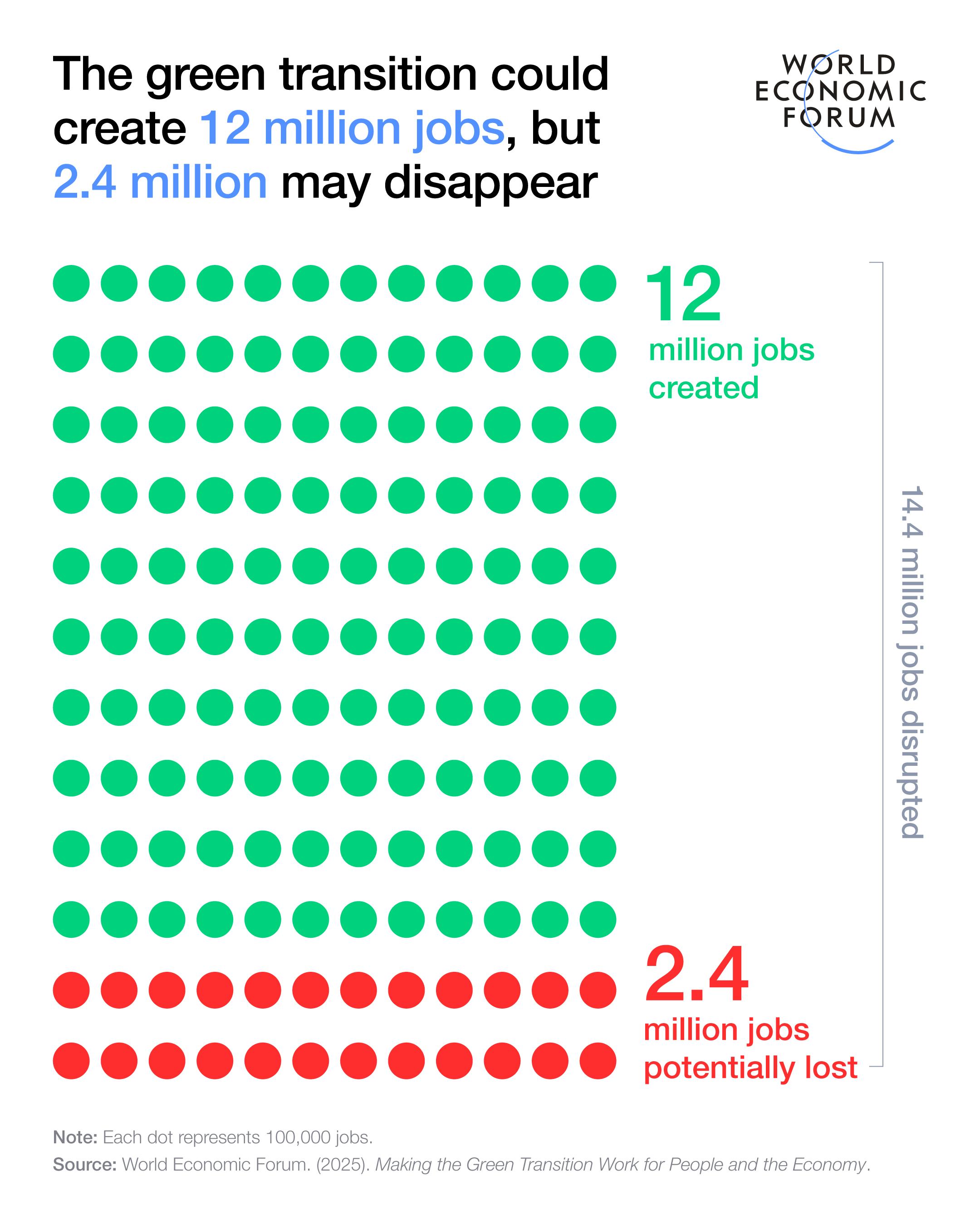
The green transition is projected to disrupt over 14 million jobs worldwide by 2030, with net job creation but also a potential loss of about 2.4 million roles. Different countries will experience varying impacts, categorized into four scenarios: optimistic disruption, talent shortage concerns, high disruption without economic benefits, and stability masking decline. Effective social protection can mitigate displacement risks, enabling smoother transitions. The report emphasizes the need for tailored support mechanisms and workforce reskilling to maintain competitiveness amidst these shifts, highlighting the significant role of labour institutions in managing the transition.
Algeria, Angola, Argentina, Armenia, Australia, Austria, Bahrain, Barbados, Belgium, Benin, Bolivia, Bosnia and Herzegovina, Botswana, Brazil, Bulgaria, Burkina Faso, Cambodia, Cameroon, Canada, Chad, Chile, Colombia, Costa Rica, Croatia, Czech Republic, Democratic Republic of the Congo, Denmark, Dominican Republic, Ecuador, Egypt, El Salvador, Estonia, Eswatini, Ethiopia, Finland, Gabon, Georgia, Germany, Ghana, Greece, Guatemala, Guinea, Honduras, Hungary, Iceland, India, Indonesia, Ireland, Israel, Italy, Jamaica, Japan, Jordan, Kazakhstan, Kenya, Kyrgyz Republic, Latvia, Lebanon, Lesotho, Lithuania, Luxembourg, Madagascar, Malawi, Malaysia, Mali, Malta, Mauritania, Mauritius, Moldova, Mongolia, Morocco, Mozambique, Namibia, Nepal, Netherlands, New Zealand, Nicaragua, Nigeria, Norway, Oman, Pakistan, Panama, Paraguay, Peru, Philippines, Poland, Portugal, Republic of Korea, Romania, Russian Federation, Rwanda, Saudi Arabia, Senegal, Singapore, Slovakia, Slovenia, South Africa, Spain, Sri Lanka, Sweden, Switzerland, Taiwan, China, Tajikistan, Tanzania, Thailand, Trinidad and Tobago, Tunisia, Uganda, Ukraine, United Arab Emirates, United Kingdom, Uruguay, Venezuela, Viet Nam, Yemen, Zambia, Zimbabwe | Financial services, ICT, Education, Health
How the green transition will affect labour markets around the world

Digital transformation drastically reshaped the global labor market by 2025, presenting both challenges and opportunities for workers and employers. Unemployment rates remained low, yet regional wage disparities emerged, with some countries seeing wage increases and others experiencing declines. The World Economic Forum projected 78 million new roles by 2030, although many existing jobs faced structural changes due to AI. Entry-level job postings dropped 29%, with youth unemployment particularly high in various regions. As AI agents rapidly integrate into workplaces, organizations must navigate their deployment effectively while addressing skill gaps.
Africa, Latin America | ICT, Education
The top jobs and labour market stories of 2025
Clean fuels are essential for addressing the energy trilemma by ensuring secure, affordable, and cleaner energy sources. Current projects are transitioning from pilot phases to industrial scales, but progress is insufficient. Clean fuels can significantly reduce emissions in hard-to-abate sectors, create jobs, and diminish dependence on fossil fuel imports. Investment of $100 billion annually by 2030 is crucial for scaling up supply to meet 40-55% of global energy demand by 2050. Collaboration among industry, policy, and finance is vital, leveraging existing infrastructure to accelerate clean fuel adoption and reduce costs.
These leaders are shaping the transition to clean fuels
Europe's energy transition is progressing rapidly despite economic concerns. The region has developed significant renewable energy infrastructure, ranking second globally in capacity. However, rising energy costs and volatility, exacerbated by the loss of Russian gas supplies due to the Ukraine conflict, challenge its economy. While Europe has reduced emissions, it faces pressure to balance ambitious green policies with economic stability. Key leaders advocate for integrating energy markets and predictable demand signals to ensure a clean, competitive, and secure energy future, highlighting the complexities of measuring productivity and economic health across diverse European nations.
Armenia, Austria, Barbados, Belarus, Belgium, Benin, Bolivia, Bulgaria, Burkina Faso, Cameroon, Croatia, Cyprus, Czech Republic, Denmark, Ecuador, Egypt, Estonia, Ethiopia, Finland, France, Gabon, Georgia, Germany, Ghana, Greece, Guatemala, Hungary, Iceland, India, Indonesia, Ireland, Israel, Italy, Jamaica, Japan, Jordan, Kazakhstan, Kenya, Latvia, Lithuania, Luxembourg, Malaysia, Malta, Moldova, Namibia, Netherlands, New Zealand, Norway, Pakistan, Paraguay, Peru, Poland, Portugal, Republic of Korea, Romania, Russian Federation, Senegal, Singapore, Slovakia, Slovenia, South Africa, Spain, Sweden, Switzerland, Taiwan, China, Thailand, Tunisia, Uganda, Ukraine, United Arab Emirates, United Kingdom, Venezuela, Yemen, Zambia | Financial services
Europe’s economies are too slow, right? Not when it comes to energy
Citizens' assemblies and democratic innovations are expanding globally, supported by scaling catalyst organizations that facilitate their growth through capacity building, networking, advocacy, and ensuring quality standards. This report identifies six features of effective catalyst organizations, explores key tensions they encounter, and highlights five future frontiers for promoting democratic innovations and deliberative cultures. It aims to provide insights for practitioners, funders, and researchers in the field.
Scaling Democratic Innovations: Features of Effective Catalyst Organisations & Future Frontiers

AI has contributed to the creation of 1.3 million new jobs globally, including over 600,000 roles in AI-enabled data centers. While global hiring has declined by 20% since pre-pandemic levels due to economic factors, the demand for AI-related positions, such as AI Engineers, remains strong. This evolving job market emphasizes the necessity for upskilling in AI literacy, with 70% year-over-year growth in roles requiring these skills. As organizations adapt, blending AI proficiency with human qualities like empathy will be crucial for success in the new-collar era of work.
Latin America | ICT, Education
AI has already added 1.3 million new jobs, according to LinkedIn data

The Global Lighthouse Network (GLN) marks eight years as a premier community for achieving world-class operational performance, now encompassing 224 sites across over 30 countries and 40 industries. The Network introduces new award categories for customer centricity and talent, alongside established pillars like productivity and sustainability. Key themes include enhancing operational resilience amid disruption, implementing AI for cognitive networks, and scaling initiatives from pilot projects to enterprise-wide systems. Transformation is framed as an ongoing capability that harnesses volatility for advantage, emphasizing purposeful action and prioritizing people at the center of progress.
Education
Global Lighthouse Network: Rewiring Operations for Resilience and Impact at Scale

The Global Lighthouse Network (GLN) has evolved over eight years into a premier community focused on achieving world-class operational performance across 224 sites in over 30 countries and 40 industries. It emphasizes concrete impacts on people, planet, and performance. In 2025, new award categories for customer centricity and talent were added alongside existing pillars of productivity, supply chain resilience, and sustainability. Key themes include fostering operational resilience amid disruptions, leveraging AI for cognitive networks, and scaling from pilot projects to enterprise-wide systems. Successful Lighthouses exemplify that transformation is a continuous capability essential for navigating volatility and maximizing value.
Global Lighthouse Network: Rewiring Operations for Resilience and Impact at Scale
UNICEF has launched the Alliance for Children in Emergencies to address the escalating humanitarian needs of children affected by conflict and disasters. With an estimated 200 million children requiring assistance in 2023, the initiative aims to foster public-private partnerships to ensure effective, flexible funding and rapid responses. The current decline in international aid jeopardizes children's safety, highlighting the urgent need for investments that benefit not only children but entire communities and economies. The Alliance seeks to leverage business expertise in addressing crises and improving children's resilience against climate and conflict-related challenges.
Africa | Education, Health
As the humanitarian needs of children rise, new alliances are key for a stable future