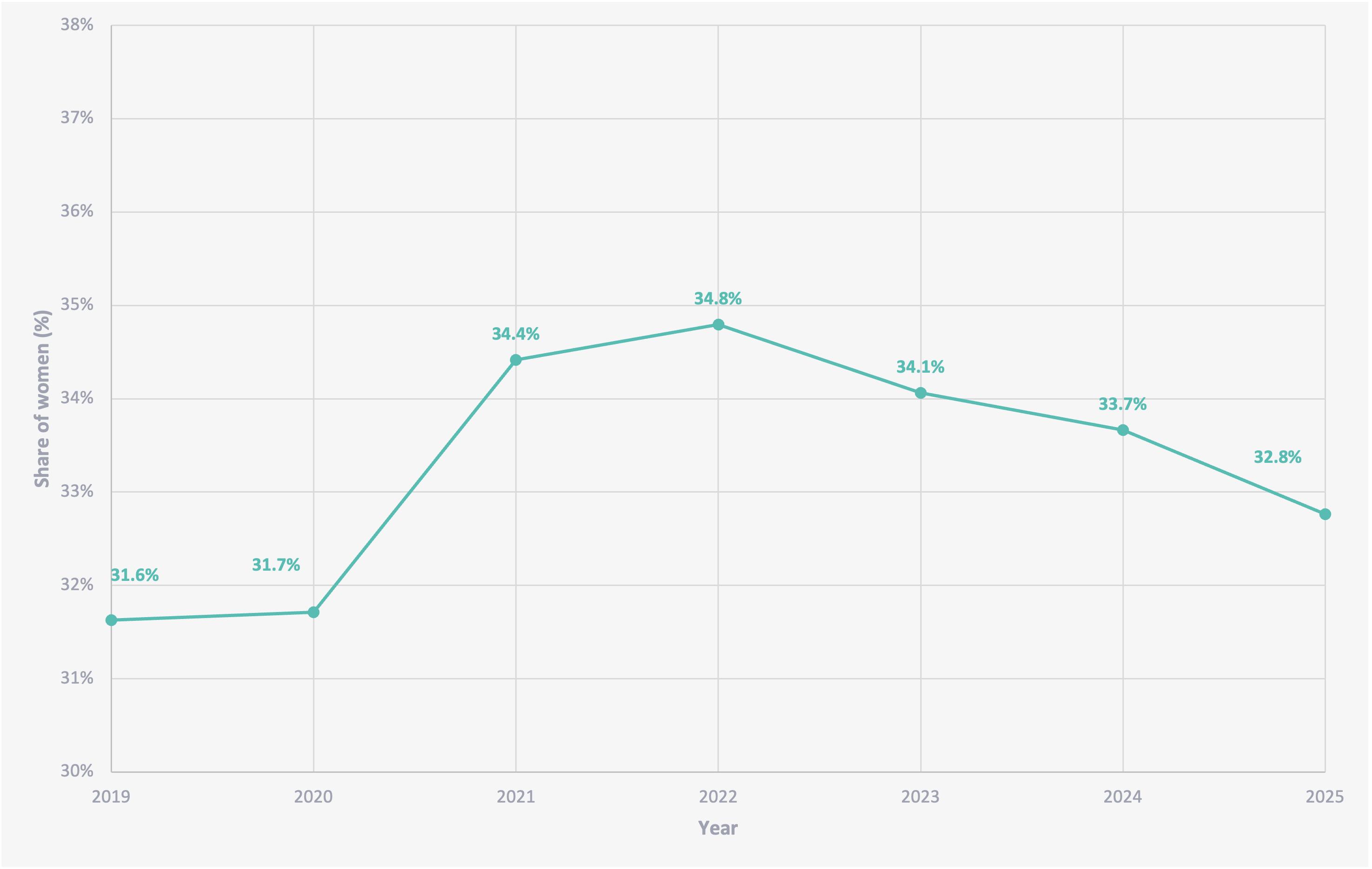
Gender-balanced leadership is crucial for organizational resilience, especially in uncertain and complex environments. Women's representation in senior roles has declined to 32.8% in 2025, despite their significant presence in the workforce (41.2%). Research shows that diverse leadership teams better navigate shocks, retain talent, and adapt to changing conditions, critically impacting performance and governance. As industries face increasing challenges, fostering gender equity is essential not only for fairness but also as a strategic necessity for competitiveness and innovation. Initiatives like the World Economic Forum’s Global Gender Parity Sprint aim to accelerate progress in achieving equitable leadership.
Africa | Financial services
Why gender-balanced leadership matters in uncertain times

Public-private partnerships (PPPs) facilitate collaboration between governments and businesses to develop essential infrastructure, enhancing services like water and internet access. They address challenges posed by constrained public budgets while leveraging private sector innovation. By aligning long-term goals with expertise and investment, PPPs provide a stable framework for tackling societal issues. These partnerships are evolving to also meet modern infrastructure needs, such as establishing efficient data centers for AI and building resilient water systems in response to climate change. Overall, PPPs offer a pragmatic solution for sustainable national development amidst increasing global complexity.
Financial services, Health
Building the future: What are PPPs and how do they help drive economic growth?

Malaysia's defence ministry is set to adopt an environmental, social and governance (ESG) framework to enhance transparency and accountability amidst a corruption investigation involving military procurement. Defence Minister Mohamed Khaled Nordin emphasized the need for the ministry to learn from the private sector and overhaul its Anti-Corruption Plan, citing corruption as a threat to national security. Recent investigations have led to the detention of several army officers and company directors related to procurement contracts. The ministry plans to develop a comprehensive procurement framework to restore credibility and safeguard public trust.
Eswatini, Malaysia
Malaysia’s defence ministry to adopt ESG framework amid corruption probe
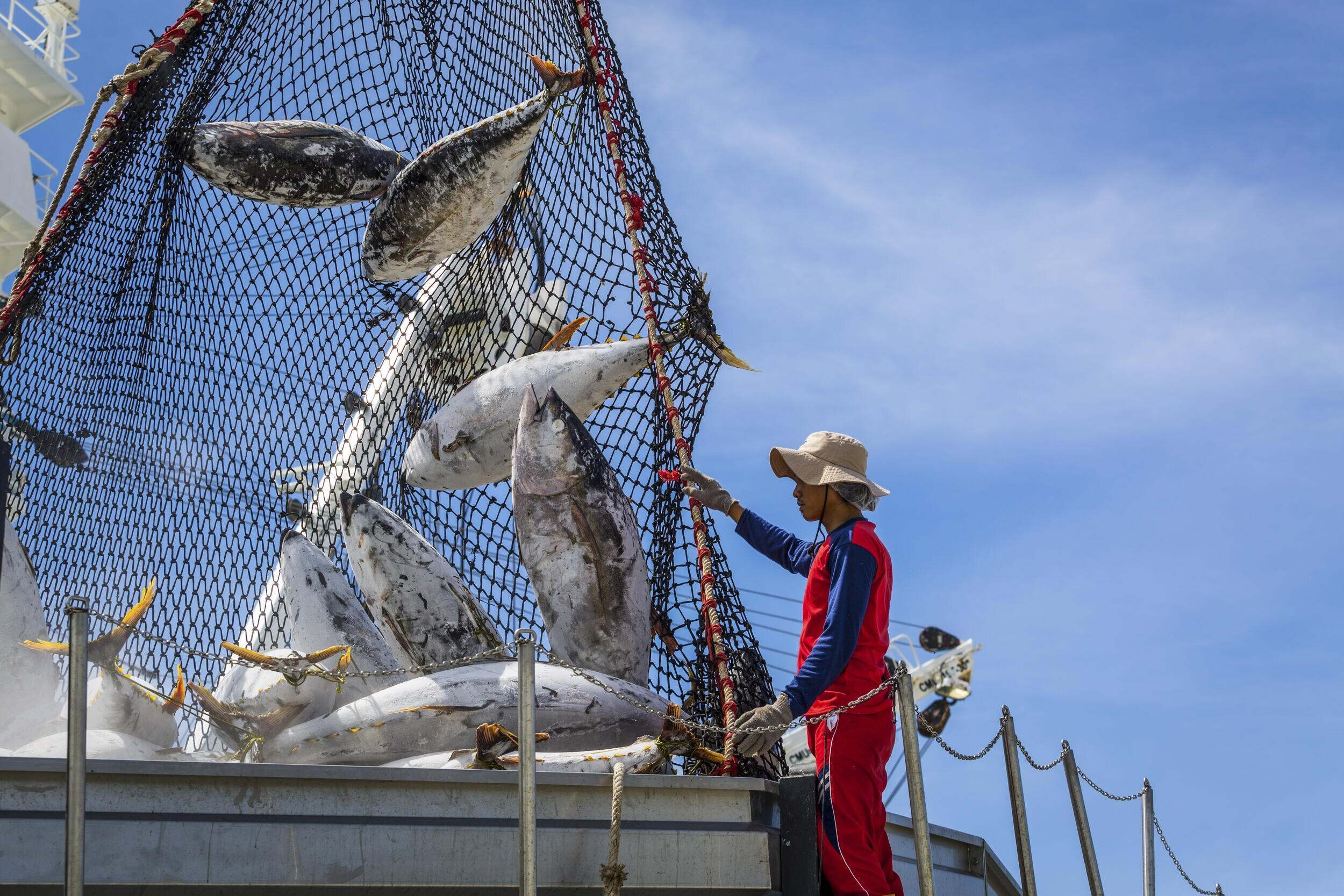
AI and big data have the potential to transform food systems and enhance sustainability, addressing urgent challenges in both marine and agricultural sectors. Initiatives like The Nature Conservancy's collaboration with partners are implementing AI for improved oversight of fisheries, reducing illegal fishing and supporting Pacific Island economies. In agriculture, AI technologies are being deployed to monitor and improve food security, particularly during crises. Collaborative efforts aim to generate actionable insights for policy makers and farmers, emphasizing the urgency to deploy these tools effectively to protect vital food resources.
Education
AI can be harnessed to protect nature and strengthen food security. Here's how
The World Trade Organization (WTO) is essential for global trade and is undergoing significant reforms to adapt to modern challenges, particularly in the realms of artificial intelligence (AI) and digital trade. A new framework is emerging that aims to standardize data flows, enhance algorithmic transparency, and support small and medium-sized enterprises (SMEs) in international trade. Despite criticism, about 72% of global goods trade continues under WTO rules, which offer vital customs and market access protections. The WTO's modernization seeks to create a more inclusive market, enabling easier access for SMEs and maintaining open markets essential for long-term economic growth.
Ethiopia, Kenya, Rwanda, Sweden, Switzerland, Taiwan, China, Tanzania, Uganda, United Arab Emirates, United Kingdom | Financial services, ICT, Education
The world still needs the WTO - and it's being reformed for the age of AI

The shipping industry is transitioning from fossil fuels to electric and hybrid propulsion systems, driven by regulatory pressure and climate commitments, including the International Maritime Organization's goal of net-zero emissions by 2050. The electric ship market is projected to grow significantly by 2032. Achieving a zero-emission ecosystem will require coordination across various stakeholders, including clean propulsion technologies, robust energy storage, retrofitting existing vessels, port charging infrastructure, and clean energy sources. Public-private collaboration is essential for building the necessary infrastructure for widespread adoption, along with early action from adopters to establish confidence in new technologies.
What it will take to create a financially sustainable, zero-emission electric shipping ecosystem
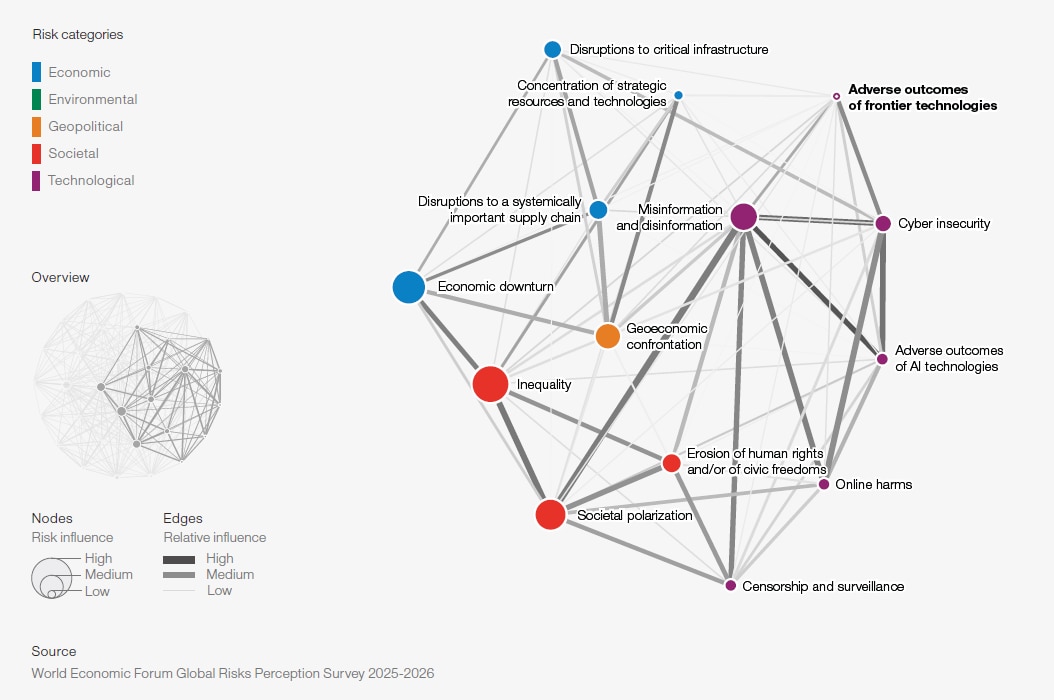
Businesses must navigate significant technological risks and opportunities, particularly concerning AI, cybersecurity, and critical infrastructure. The World Economic Forum’s Global Risks Report 2026 emphasizes that AI presents both productivity gains and labor disruptions, potentially deepening societal inequality. Cyber insecurity has become a major threat, with increasing cyberattacks on critical infrastructure. Meanwhile, the global expansion of digital infrastructure faces risks from physical and cyber threats alike. Companies that prioritize robust cybersecurity, modernize infrastructure, and responsibly harness AI can turn these challenges into competitive advantages while fostering resilience and growth.
ICT, Financial services, Education
How can businesses navigate technology risks and opportunities in a competitive age?

The mobility sector faces demands for safer, more durable, and cost-efficient products amid rising energy costs and supply chain challenges. Tyres play a crucial role in vehicle efficiency and total cost of ownership, necessitating a shift from transactional sales to lifecycle performance management. This approach emphasizes total ownership costs, boosting uptime and predictability for customers and fostering long-term manufacturer partnerships. Giti's structured capability system enhances efficiency through integrated practices in tyre development and manufacturing, leading to substantial cost savings and reduced environmental impact via optimized production processes and improved resource management.
Education
Why engineering value first is key to product and system excellence in the mobility sector
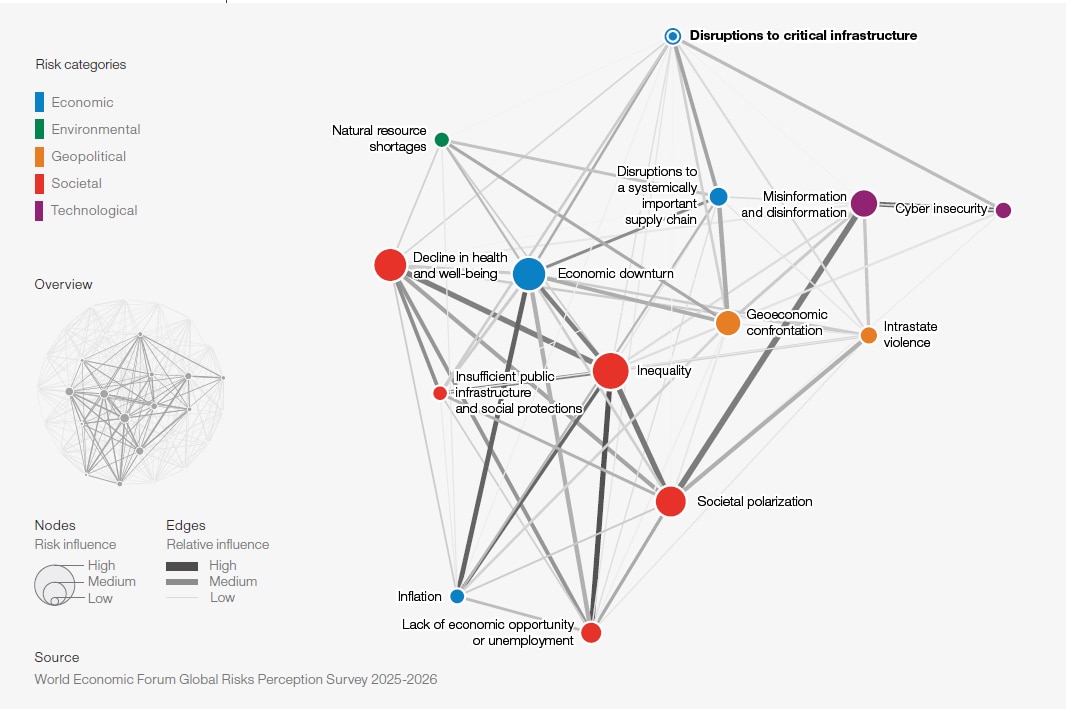
Critical infrastructure is increasingly vulnerable to significant risks, including extreme weather and cyber threats, according to the Global Risks Report 2026. Despite these dangers, public attention towards disruptions is alarmingly low, ranked 23rd among global risks for the next decade. The report emphasizes potential cascading effects on essential services when infrastructure fails, particularly highlighting climate challenges and geopolitical conflicts. Furthermore, a lack of sufficient public financing hampers necessary upgrades, leaving aging infrastructure exposed. A holistic understanding of risk, integrating climate and economic concerns, is crucial for effective management and mitigation of these threats.
Burkina Faso, Germany, Ghana, Haiti, Indonesia, Kenya, Nigeria, Russian Federation, Rwanda, Ukraine, United Kingdom | ICT, Financial services, Health, Education
Critical infrastructure is at critical risk: It’s time to treat it as such
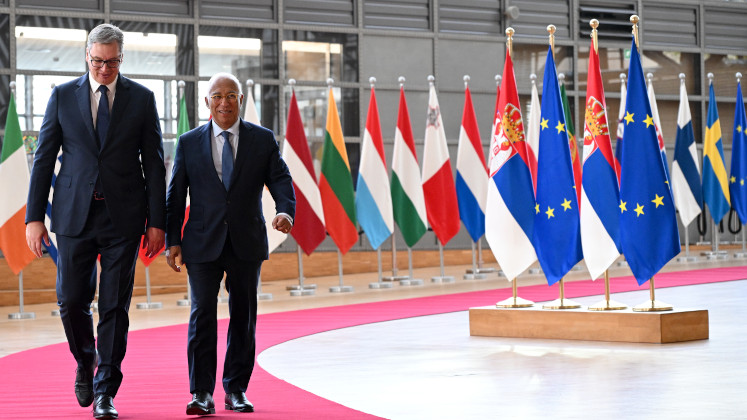
Recognition of a country's Europeanness significantly influences citizens' support for European cooperation. Research by Sandra Obradović highlights that nations like Romania, Serbia, and Türkiye, often viewed as "in-between," grapple with their self-identity in relation to European ideals. A study showed that stronger recognition of Europeanness by more prototypical nations, particularly Germany, enhances support for EU and NATO membership in Romania and Serbia, while having little effect on Türkiye, which has distanced itself from Europe. The findings emphasize the dialogical nature of European identity, where recognition shapes geopolitical attitudes.
Hungary, Poland
Why being “European enough” matters for cooperation

Geoeconomic confrontation has topped the 2026 global risk report, overshadowing environmental concerns due to rising geopolitical tensions, economic instability, and technological anxieties, particularly regarding AI and misinformation. The report indicates that economic risks, such as downturn fears and high debt levels, are significant pressure points, alongside societal polarization and inequality. While environmental risks have slipped in urgency short-term, long-term projections still view them as critical. The report warns that geopolitical fragmentation may undermine climate cooperation, potentially leading to greater instability. Four structural forces—technological acceleration, geostrategic shifts, climate change, and demographic bifurcation—are reshaping the risk landscape.
Bahrain, Bolivia, Colombia, Ecuador, Egypt, Ethiopia, Georgia, Ghana, Guinea, Haiti, Iceland, Indonesia, Jamaica, Japan, Jordan, Kenya, Kyrgyz Republic, Malaysia, Mongolia, Montenegro, Namibia, Nigeria, Peru, Philippines, Republic of Korea, Russian Federation, Rwanda, Senegal, Singapore, Sweden, Taiwan, China, Tanzania, Ukraine, United Arab Emirates, United Kingdom, Venezuela, Yemen, Zimbabwe | ICT, Financial services, Health, Education
Geoeconomic conflict overshadows climate in WEF risk report

The 2026 Global Risks Report outlines an 'age of competition' marked by escalating global risks related to technology, society, geoeconomics, economy, and the environment. Key findings include a heightened urgency regarding geoeconomic confrontation, which has shifted from a long-term concern to a top risk in the next two years. Societal polarization remains a stable and significant risk, threatening social cohesion and trust. Environmental risks, while still a concern, show a decline in priority for the short term. Overall, the findings highlight changing perceptions of risk and the need for collaborative strategies in a fragmented global landscape.
Georgia, Guinea, Haiti, Nigeria, Qatar, Russian Federation, Singapore, Sweden, United Kingdom | Financial services, Health
Global risks in 2026 and over the past 5 years: What’s changed and what hasn’t?

Collaboration is essential for industrial leaders navigating the challenges of a VUCA (volatile, uncertain, complex, ambiguous) world. With a $94 trillion infrastructure gap projected by 2040 and intensified supply chain vulnerabilities, strategic partnerships are critical for balancing resilience and economic growth. Key areas necessitating cooperation include geopolitical tensions, energy transition, and rapid digital transformation. Effective cooperation models include ecosystem collaborations that foster innovation, cross-border supply chain partnerships for stability, and public-private alliances to scale sustainable solutions. Together, these strategies are vital for turning challenges into competitive advantages and driving responsible innovation.
Belgium, Bolivia, Bulgaria, Colombia, Ethiopia, Finland, Germany, Ghana, Indonesia, Japan, Kenya, Mozambique, Paraguay, Peru, Philippines, Republic of Korea, Russian Federation, Rwanda, Senegal, Sweden, Switzerland, Tanzania, Uganda, Ukraine, United Arab Emirates, United Kingdom, Uruguay, Venezuela, Viet Nam | Financial services, ICT, Health, Education
Cooperation as a competitive edge: Thriving in a VUCA world

Electrification and automation are pivotal for enhancing competitiveness and sustainability in industry amidst rising energy costs and shifting supply chains. These technologies can significantly reduce energy consumption and costs, aiding in decarbonization and energy independence. Upgrading electric motors with drives can cut global energy use by 10%, while automation enhances productivity and reduces downtime. The transition to locally generated electricity addresses concerns over energy security and volatility, with advances in energy storage and digital controls mitigating challenges in integrating renewables. Embracing these innovations positions businesses to thrive in a more efficient, resilient industrial future.
Egypt, Ethiopia, Germany, India, Indonesia, Kenya, Republic of Korea, Rwanda, Senegal, Tanzania, Uganda, Ukraine, United Arab Emirates, United Kingdom | Financial services, ICT, Education
Electrification and automation for a more competitive and sustainable industrial future

CEOs face pressure to adapt strategies swiftly due to geopolitical changes and supply chain issues, particularly in commercial real estate. Companies can succeed by treating real estate decisions with the same strategic foresight as other major investments. The availability of high-quality office spaces is dwindling, complicating timely decisions. Real estate teams should be integrated into early strategic discussions rather than being brought in post-factum. By investing in analytics and flexible lease structures during initial planning phases, organizations can enhance their agility and better align real estate commitments with evolving business needs.
How companies can make real estate decisions at the speed of business

The cybersecurity landscape is evolving with the integration of AI technologies, which present both opportunities and new vulnerabilities. As AI agents become integral to business operations, securing the interaction between humans and these agents is critical. Workforce Trust Management addresses this need by establishing four key pillars: reliability, accountability, transparency, and ethical alignment. Organizations must ensure that employees understand AI outputs and maintain skepticism, while cybersecurity teams shift focus towards monitoring AI behavior and responding to anomalies. Without a robust framework, businesses risk exposing themselves to sophisticated cyber threats that exploit AI dependencies.
Education
The cybersecurity paradox: training the next generation workforce

Insufficient data on modern labor markets, particularly regarding self-employment and informal income, threatens the accuracy of economic reporting and monetary policy. The rise of side hustles and technology-driven businesses complicates traditional labor force measurements, leading to underreported household incomes. This distortion risks misjudging inflation and fiscal strategies, as policymakers may perceive consumer spending power inaccurately. Furthermore, the aging population contributes to measurement challenges, as economic contributions from retirees are often overlooked. The gap in accurate data could lead to misguided economic policies and a misunderstanding of income distribution dynamics.
Latin America | Financial services
The labour-market data hole that threatens to skew monetary policy
Healthcare systems must undergo a fundamental redesign to address challenges posed by demographic shifts, STEM talent scarcity, and rapid technological advancements. This requires moving beyond mere upskilling to a comprehensive overhaul of operational models. Key strategies include developing a shared skills taxonomy, rethinking work structures, and fostering collaboration across sectors to enhance talent mobility. Supporting organizational resilience and employee engagement through purpose and passion is crucial for navigating ongoing changes. A collective approach to workforce design is essential to sustain innovation and meet the evolving demands of healthcare.
ICT, Health, Education
The science of workforce design: how to build the talent engine for healthcare
Healthcare systems are outdated, designed for a younger population and acute conditions. As the global population ages and health demands rise, workforce shortages and high costs challenge current models. Artificial intelligence (AI) offers solutions, capable of enhancing capacity and efficiency without increasing labor. AI can reduce the administrative burden on clinicians, improve focus on patient care, attract talent, and facilitate early detection of health issues. These advancements can transform healthcare delivery, making it more sustainable and effective in addressing modern health challenges.
Education, Health
Reimagining healthcare: how to increase care without increasing costs
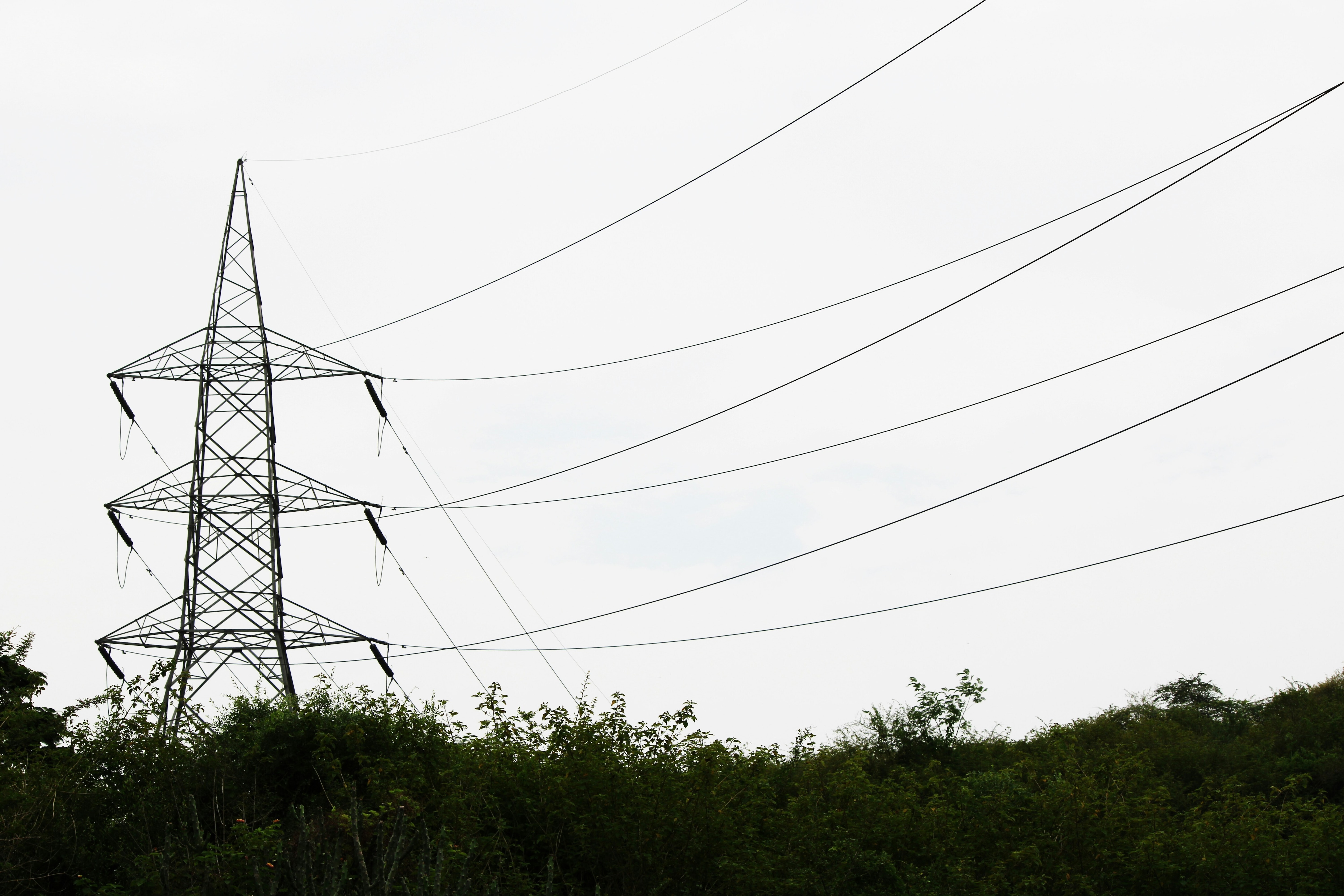
Surging electrification necessitates a doubling of global grid capacity within the next two decades, driven by a 4% increase in electricity demand in 2024 and significant growth in renewable energy. Current slow investment, planning delays, and connection bottlenecks hinder progress. Strategic long-term planning, anticipatory investments, streamlined permitting, and a programmatic approach to grid development are vital for timely infrastructure updates. Enhanced investment is crucial, with projections indicating a need for $650 billion per year by 2035. Shifting perceptions to view electricity networks as strategic assets rather than costs is essential for achieving sustainable and affordable energy access globally.
Financial services, ICT, Education
How to accelerate grid infrastructure deployment for an electrified future