AI currently lacks effectiveness in fighting corruption due to the unique and hidden nature of corrupt practices, which leads to insufficient and non-comparable data. Different regulations across regions further complicate AI's applicability. While future advancements in AI may provide better tools for combatting corruption, the current models, primarily large language models, are inadequate for compliance needs. However, AI can assist in identifying red flags in transactions and analyzing large datasets when applicable.
What We Know About AI Fighting Corruption | Philip Nichols

Trimethylbenzoyl diphenylphosphine oxide (TPO), a photoinitiator used in gel manicures, has been banned by the EU due to potential cancer risks and reproductive harm. Alternatives like benzophenone and TPO-L also pose environmental and health concerns. The regulation of chemicals in the EU, governed by the REACH system, requires companies to provide detailed safety data before market access. While this system is comprehensive, concerns remain about its effectiveness, leading to interest in a "safe and sustainable by design" approach. Artificial intelligence is being explored to improve toxicity predictions for chemicals before production.
From nail bars to firefighting foams: how chemicals are deemed safe enough or too harmful

Humanity has breached seven of the nine planetary boundaries, highlighting the need to align economic growth with ecological stability. Achieving resilience within these limits requires integration of science, policy, finance, and culture. Technologies like AI, circular manufacturing, and regenerative agriculture can promote ecological intelligence if combined with inclusive governance. A focus on valuing natural capital in economic systems, as demonstrated by Costa Rica's reversal of deforestation, can drive sustainable growth. To promote planetary health, markets must adjust incentives through policies that support sustainable practices and equitable transitions, aiming for a balance between abundance and resource stewardship.
Nigeria, United Kingdom | ICT, Financial services, Education, Health
How science, technology and governance can drive prosperity within planetary boundaries

The green transition must progress despite geopolitical divides, focusing on durability rather than harmony in global cooperation. Current great power rivalries are reshaping energy and technology landscapes, yet competition can drive clean-energy advancements. A multipolar framework is emerging where regions like Africa, Latin America, and Asia are forming coalitions for sustainability. This shift allows for greater agency among nations, encourages South-South cooperation, and fosters regional experimentation, showing that inclusive sustainability can thrive amid complexity rather than perfect alignment.
Colombia, Germany, Indonesia, Japan, Jordan, Kenya, Mozambique, Nigeria, Pakistan, Peru, Philippines, Republic of Korea, Russian Federation, Seychelles, South Africa, Ukraine, United Kingdom | ICT, Financial services, Education, Health
From rivalry to resilience: Geopolitics in the green transition
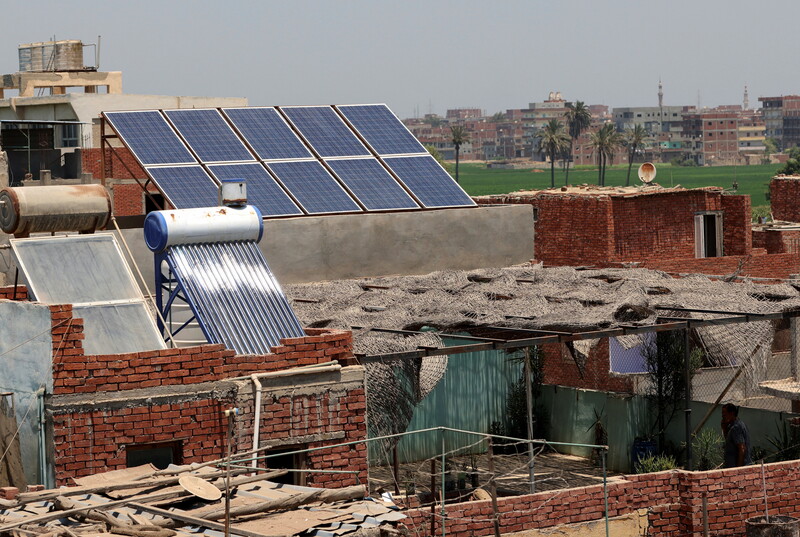
Emerging markets are poised to become key testing grounds for effective climate solutions due to their rapid population growth and economic activity. Although these economies contribute about 25% of global GDP, they receive only 14% of international climate finance and require an additional $450–$550 billion annually to meet net-zero goals by 2030. Successful climate innovations are being developed locally, utilizing cost-efficient, context-specific strategies that outperform traditional models. Examples include battery-as-a-service platforms in India's transport sector and solar solutions in Africa, which illustrate a shift towards grounded innovation that addresses local needs and fosters scalable, sustainable development.
Nigeria | Financial services, Health
Why emerging markets will be the testing ground for decarbonization

A just energy transition in South Africa requires addressing energy poverty, which extends beyond mere access to electricity to include affordability and meaningful use. Despite a high electrification rate exceeding 90%, many households struggle with electricity costs, highlighted by a 720% increase in prices since 2008. Energy poverty must be understood through various dimensions, including basic needs, modern services, and social capabilities. Effective policies should redefine success to include affordability, reliability, and safety of energy use. Additionally, municipalities need new financing models to support low-income households, and energy planning must consider the realities of urbanization and informal settlements.
South Africa
Ending energy poverty in South Africa: the key to a just energy transition

Carbon credit portfolios enable companies to navigate the complexities of climate action by integrating various types of credits, balancing reductions and removals effectively. Companies should prioritize emissions reductions, yet also gradually increase the share of carbon removals over time. Durability of credits is crucial; initially, portfolios may focus on scalable solutions with less durability, but should evolve to incorporate more durable options as they develop. Emphasis must be placed on maximizing all available mitigation strategies, irrespective of their nature or technological source, and effective portfolio management requires transparency and adaptability to new information.
Guest Post: Why Carbon Credit Portfolios Bring Balance for Companies in an Emerging Market

Since August 2025, the U.S. has intensified military actions against Venezuela, viewing it as a priority adversary under President Maduro, whom they accuse of leading a drug cartel. The Biden administration has laid the groundwork for a military intervention, referencing parallels to counter-terrorism efforts against ISIS. Key figures like Stephen Miller signal a potential escalation aimed at removing Maduro. This approach is influenced by historical U.S. doctrines, particularly the Monroe Doctrine, reflecting a longstanding strategy to oppose perceived anti-American regimes in the region.
Latin America
Trump vs. Venezuela: Scenarios for an Impending War
Meeting the targets of the Paris Agreement remains challenging a decade later, despite some emission reductions and increased investment in renewables. Digital intelligence is crucial for decarbonization and enhancing resilience in future energy systems. The COP30 conference in Brazil aims to align strategies and capabilities to further progress. Renewables are now the fastest way to add capacity, with significant growth in regions like the UK and India. However, improved digital infrastructure is essential, as highlighted by recent grid failures. Substantial investments are needed globally, with many governments stepping up funding to transition to net-zero effectively.
ICT
Energy tech and digital intelligence key to scaling progress on Paris climate goals
Transitioning Industrial Clusters (TICs) are essential for achieving net zero goals, particularly in Malaysia. These clusters enable collaboration among co-located industries to develop shared decarbonisation solutions, thereby promoting low-carbon operations while stimulating economic growth and job creation. The TIC initiative, launched at COP26, encompasses 38 clusters across 18 countries, with the potential to reduce carbon emissions by 877 million tonnes, support 4.6 million jobs, and contribute over US$500 billion to global GDP. Digital transformation is vital for this transition, which involves addressing various challenges and leveraging green financing mechanisms.
Belgium, Colombia, Germany, Indonesia, Kenya, Mozambique, Philippines, Seychelles, Thailand, Trinidad and Tobago, Türkiye, United Arab Emirates, United Kingdom | ICT, Financial services
Transitioning industrial clusters: Decarbonising Asia’s economy via digitalisation

Developing nations require over US$310 billion annually until 2035 for climate adaptation, yet in 2023, developed countries supplied only US$26 billion, falling short of their COP26 commitment to double adaptation finance by 2025. The UN Environment Programme (UNEP) indicates that current trends indicate a likely failure to meet these goals, exacerbated by declining aid and rising costs of climate impacts. While 87% of countries have national adaptation strategies, implementation gaps remain. The report highlights that funding from multilateral development banks has declined, contributing to the overall shortfall.
Financial services
UN report: Five charts which explain the ‘gap’ in finance for climate adaptation
Experts have identified significant flaws in over 440 tests assessing the safety and effectiveness of newly released artificial intelligence models. A study conducted by computer scientists from the British government’s AI Security Institute and universities such as Stanford, Berkeley, and Oxford revealed that nearly all benchmarks examined have weaknesses in at least one area. These deficiencies undermine the validity of claims derived from these tests, leading to potentially irrelevant or misleading scores.
Experts find flaws in hundreds of tests that check AI safety and effectiveness
Cities globally are facing a significant housing shortage worsened by disjointed and proprietary data practices. Recent advancements in artificial intelligence (AI) can enhance data integration and decision-making for improving housing supply. However, effective use of AI requires a shared infrastructure, including data and models, alongside institutional capabilities. The proposed "Home Genome Project" aims to create a collaborative framework among cities to establish open standards and datasets, ultimately enabling accelerated housing supply development through AI-driven insights and accountability by 2030.
A home genome project: How a city learning cohort can create AI systems for optimizing housing supply

The varying attitudes towards AI stem from psychological perceptions of risk and trust. Many individuals embrace AI for its efficiency, while others feel anxious and distrustful due to its opaque decision-making processes. This phenomenon, known as algorithm aversion, arises as people prefer human judgment over flawed algorithms, especially when expectations of objectivity are violated. Moreover, the lack of emotional cues from AI, akin to the uncanny valley effect, exacerbates discomfort. Trust in AI can be cultivated through transparency, accountability, and user agency, addressing existing biases and fostering understanding.
Why do some of us love AI, while others hate it? The answer is in how our brains perceive risk and trust
Future technologies are poised to redefine humanity by potentially eliminating death and enhancing life through transhumanism. Nayef Al-Rodhan emphasizes the ethical and geopolitical implications of pursuing radical longevity and cognitive enhancement, warning that without careful preparation, these advancements could exacerbate social inequalities. The transformation of life expectancy, from an average of 30 years a century ago to over 80 today, signifies that significant changes in human existence are possible. However, the challenge lies in evolving governance and moral frameworks to manage the consequences of these scientific breakthroughs responsibly while fostering human well-being.
Education, Health
Transhumanism and enhanced longevity risks a new age of inequality

COP30 emphasizes the need for concrete action on climate finance following last year's agreement to triple global finance targets. Developing countries are committed to ambitious climate plans, but require external support to implement these strategies effectively. For instance, Bangladesh aims to reduce emissions significantly but needs $116 billion in investment. The COP30 goals include mobilizing $300 billion per year in international climate finance, ensuring accountability, and prioritizing grants over loans to prevent fiscal instability. Climate finance is characterized as a strategic investment that can yield substantial long-term benefits, supporting global stability and resilience.
Nigeria | Financial services
What COP30 Must Do
To effectively meet global goals, local leaders must be empowered, as nearly 70% of the world's population will live in cities by 2050. Cities drive over 80% of global GDP, making local leadership crucial for addressing challenges like climate change and housing. Key shifts include enhancing public-private collaboration, redefining urban development metrics to prioritize social and environmental value, and fostering digital trust for smart services. Immediate efforts show promise, with cities like Copenhagen and Bogotá implementing sustainable innovations. To fully leverage urban potential, global decision-making must include city participation, increase local investment, and encourage private-public partnerships.
Nigeria, United Kingdom | Financial services, Education, Health
We must empower local leaders to meet global goals – here’s why
Africa's mineral wealth is crucial for the global energy transition, yet historical exploitation threatens local economic benefits. A World Bank study highlights the urgent need for reforms, proposing six strategies to generate 211 million jobs for young Africans. These strategies include enhancing community involvement, investing in infrastructure, improving workforce development, formalizing artisanal mining, strengthening governance, and implementing effective local content policies. Failure to act may exacerbate environmental degradation, create job shortages, and perpetuate a cycle of raw material export without local processing, deepening inequalities.
Australia, Belgium, Burkina Faso, Cambodia, Cameroon, Democratic Republic of the Congo, Eswatini, Ghana, Jamaica, Kenya, Lesotho, Malawi, Mozambique, Namibia, Nigeria, Rwanda, Senegal, South Africa, Tanzania, Zambia, Zimbabwe
How Africa’s energy transition can break the resource curse

The COP30 summit in November will highlight the Amazon's crucial role in global climate regulation amidst pressures from extractive industries, particularly fossil fuels. Brazil plans to explore oil in sensitive areas like the Foz do Amazonas basin, raising concerns about environmental protection and Indigenous territories. The Brazilian government aims to present initiatives like the Open Coalition for Carbon Market Integration and the Tropical Forests Forever Fund (TFFF) to promote conservation-related income opportunities. However, there is skepticism regarding the gap between environmental commitments and actionable outcomes, especially concerning fossil fuel exploration, which remains a significant threat to the Amazon.
Antarctica, Bolivia, Brazil, Colombia, Nigeria
Global asset or frontier for extraction? COP30 is a reckoning for the Amazon

Bangladesh's textile industry is advancing its transition to renewable energy by utilizing rooftop solar power, driven by global fashion brands pushing for greener practices. Collaboration between brands and energy companies is enabling small and medium-sized manufacturers to overcome financing challenges for solar installations. Initiatives like the Greener Garments Initiative (GGI) have installed over seven megawatt-peak (MWp) of capacity in two years, with plans for further expansion. While large manufacturers can self-finance solar projects, smaller suppliers benefit from brand partnerships, which enhance financial viability and operational support necessary for sustainable energy transitions.
Fashion brands help textile suppliers boost solar power