
Hostage diplomacy involves governments detaining foreign nationals as bargaining chips to gain concessions, exemplified by Brittney Griner's 2022 case. This complex scenario features multiple stakeholders with differing interests, making it fundamentally a negotiation challenge. Cynthia Wang and Danielle Gilbert developed a framework emphasizing perspective-taking—understanding the viewpoints of all parties involved, including political leaders, bureaucracies, families, and cultural contexts. They identify four types of perspective-taking: strategic, emotional, cultural, and moral. Applying this approach helps negotiators anticipate actions, manage power dynamics, and reach agreements, with lessons that extend beyond hostage cases to everyday business negotiations involving multiple stakeholders and cultural differences.
What Hostage Diplomacy Can Teach Us About Everyday Negotiation
AI-generated synth personas offer marketers a faster, cost-effective way to create composite customer profiles by simulating demographic behaviors. While useful for preparing research—such as refining interview questions and gaining initial insights in unfamiliar markets—they lack the nuance, emotional depth, and unpredictability of real individuals. Synth personas smooth over the quirks and contradictions that define actual human behaviors, making them insufficient for capturing the full picture. Optimal consumer research leverages both synth personas for initial exploration and direct engagement with real people to uncover deeper motivations and detailed insights.
What AI “Synth Personas” Can and Can’t Reveal About Real Customers
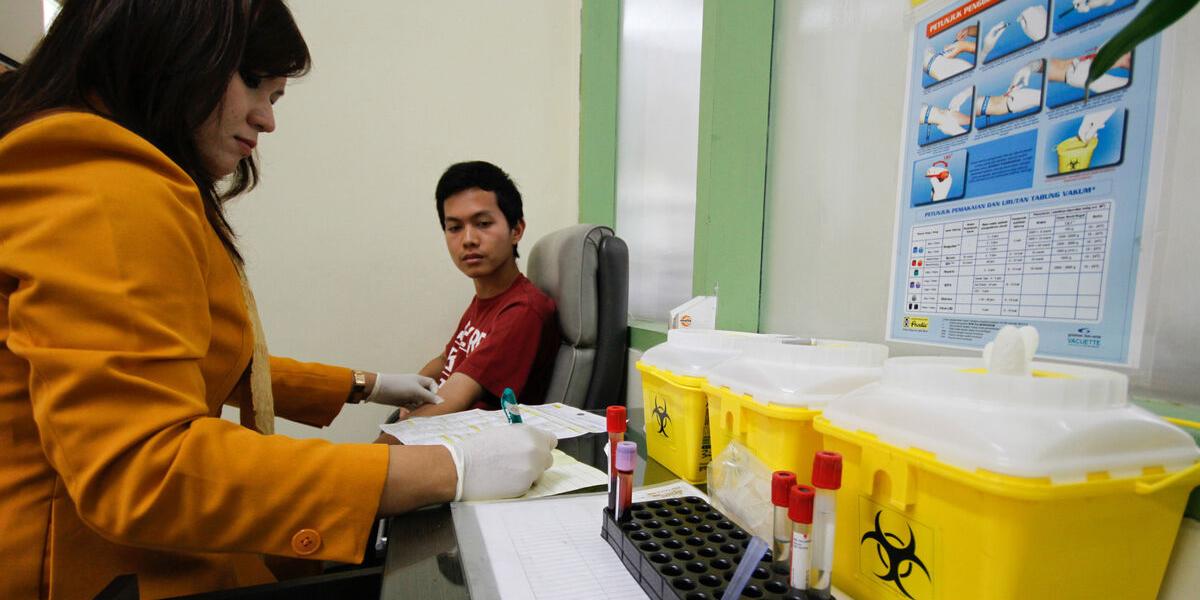
Indonesia faces significant health risks from climate change, including increased infectious diseases, respiratory illnesses, food insecurity, and displacement. Vulnerable populations such as low-income families and coastal communities are disproportionately affected. The government addresses these challenges through coordinated policies linking climate adaptation and health, such as the National Action Plan for Climate Change Adaptation and the Health National Adaptation Plan. Inter-ministerial collaboration involves agencies like the Ministries of Health, Environment, and Energy, alongside data support from meteorological and disaster agencies. Technical assistance from partners like the Asian Development Bank furthers implementation. Despite progress, challenges remain in data integration and multi-level coordination, underscoring the necessity of comprehensive, cross-sectoral approaches to climate-health resilience.
Africa, ASEAN | Health, Financial services
Development Asia: How Indonesia Is Linking Climate Action and Health

Limited access to timely and reliable diagnostics affects about 47% of the global population, with significant disparities between and within regions. In Southeast Asia, gaps in diagnostic capacity hinder effective management of diseases like diabetes, hypertension, HIV, tuberculosis, hepatitis B, and syphilis, causing substantial preventable deaths and disability. The COVID-19 pandemic exposed weaknesses in diagnostic systems, prompting initiatives to expand laboratory capacity, strengthen coordination, and foster public-private partnerships, such as the Philippines' Task Force T3. Closing the diagnostic gap requires investments beyond laboratory expansion, including workforce development, integrated information systems, governance frameworks, and regional cooperation to enhance disease surveillance and response across borders and health sectors.
Africa, ASEAN, Latin America | Health, Financial services, ICT
Development Asia: Increasing Access to Diagnostics in Southeast Asia
Data governance is essential for organizations to create public value, manage risk, and deploy AI responsibly as data integration and AI capabilities expand. Key concerns include clarity of responsibilities, authority, data access, and alignment with organizational priorities and stakeholder needs. The Data Governance Self Assessment, developed from the UNESCO Data Governance Toolkit, is an interactive tool that helps organizations evaluate the maturity of their data governance, identify gaps, and prioritize actions. It is most effective when used collaboratively across different organizational roles, fostering dialogue and revealing varied perspectives to improve governance practices. This tool supports context-appropriate data governance in the digital and AI era.
Health
Introducing the Data Governance Self Assessment
AI co-scientists, like Google's Co-Scientist, are transforming research by assisting in tasks such as identifying drug combinations to kill leukemia cells and regenerating damaged liver tissue. Multiple AI labs and startups are developing similar systems that perform complex scientific tasks, allowing human researchers to concentrate on critical questions and decisions. This shift emphasizes the increasing value of human scientific judgment in determining which questions and research paths are worth pursuing.
AI co-scientists are revolutionizing how research is done
Urban analytics is an interdisciplinary field aimed at understanding and addressing urban complexity but remains fragmented with conceptual and interdisciplinary challenges. A systematic review of 427 studies reveals issues such as definitional confusion, data overload and bias, fragmented integration, and institutional limitations. The research highlights gaps in methodology and ethics, calling for more responsible, context-aware, and actionable approaches. Emerging directions emphasize integrating theory and practice to support equitable and sustainable urban futures through innovative, ethical, and practical urban analytics frameworks.
ICT, Health
Urban analytics: Definitions, disciplines, diversity and data
Efforts to promote the secondary use of health data in Canada and the European Union reveal shared ambitions and challenges despite differing institutional contexts. Both regions aim to make health data interoperable and comparable for clinical care, research, policymaking, and innovation, emphasizing scale across jurisdictions. However, tensions arise between sovereignty and integration, access and control, and private versus public interests. These competing valuations shape negotiations around health data use, gradually reorienting health systems with significant implications for public value, equity, and political governance.
ICT, Health
Secondary Use of Health Data in Canada and the European Union: Expectations, Frictions and the Politics of Scale
The handbook by the United Nations Democracy Fund provides a practical guide to commissioning, designing, and operating citizens’ assemblies—deliberative forums combining random selection of diverse participants with structured discussion. These assemblies foster informed, inclusive, and representative decision-making by enabling members to learn, deliberate, and reach consensus on public issues. The guide covers when to use deliberative approaches, designing processes, running assemblies, and implementing their recommendations to enhance democratic governance beyond traditional elections.
Democracy beyond elections: a handbook on citizens’ assemblies
People frequently use public administrative services (PAS) for tasks like registering births or obtaining IDs, especially during major life events involving multiple services. The quality of PAS impacts citizens' lives and trust in institutions. Serving Citizens 2026 reviews how PAS are organized in OECD and partner countries, providing guidance to improve their accessibility, responsiveness, and proactivity. Key findings include that 87% of OECD countries have strategies to enhance PAS, 55% use performance data or user feedback for improvement, yet only 20% of common life events are supported by integrated services across agencies.
Health
Serving Citizens 2026: Delivering Better Public Administrative Services

Algorithms originated as precise, rule-based procedures in mathematics, exemplified by the work of al-Khwarizmi and formalized in the 20th century by figures like Alan Turing. Today, the term "algorithm" has evolved beyond its technical meaning to symbolize opaque, personalized decision-making systems, especially in social media and advertising. This shift reflects growing public exposure to algorithms as pervasive yet inscrutable forces that shape individual experiences ("my algorithm") without user control. The contemporary usage highlights a paradox: algorithms are both universally applied and intimately tailored, illustrating how societal relationships with mathematical concepts have transformed alongside the word’s meaning.
From equations to Instagram feeds: how ‘algorithm’ changed its meaning

Long-acting medicines release drugs gradually, reducing dosing frequency from daily to monthly or less, which can improve treatment adherence for long-term conditions. This approach helps prevent missed doses, reducing risks such as antimicrobial resistance and disease progression. Notably, long-acting HIV treatments and preventive injections, like cabotegravir combined with rilpivirine, offer alternatives to daily tablets and improve outcomes. While not suitable for everyone due to personal preferences, cost, or access, interest among patients and healthcare providers is high. Ongoing research aims to expand long-acting therapies to more diseases, enhancing management by making medicine use simpler and potentially reducing waste and healthcare costs.
Long-acting medicines could make daily tablets a thing of the past for some patients
Simple conflict narratives are easily spread but often oversimplify complex realities, which can hinder sustainable peace efforts. By introducing more nuanced and complex narratives into peace processes, practitioners and policymakers can foster deeper mutual understanding, especially when negotiations on power-sharing, economic, and security arrangements reach deadlock. Despite its potential, narrative analysis is not yet standard practice in peacebuilding, and addressing polarizing stories remains a critical yet underutilized strategy for achieving durable conflict resolution.
Narratives in Peace Processes: Breaking the Binaries

Artificial intelligence is increasingly integrated into children's learning, creativity, communication, and play, offering new educational and accessibility opportunities. However, AI’s personalization, persuasion, memory, and autonomous actions can heighten risks for children. Ensuring their safety requires balancing protection with agency, privacy, inclusion, development, and human connection. Best practices across the AI lifecycle include age-appropriate design, beneficial use, privacy, accountability, and inclusion. Strengthening these practices through regulation, procurement, investment, and organizational accountability promotes safer, more empowering AI experiences that support children's rights and well-being.
Education
Children’s Safety and Well-Being in the Age of AI: Best Practices and Incentives

Artificial intelligence is increasingly integrated into children's learning, creativity, communication, and play, offering new educational and accessibility opportunities. However, generative and conversational AI also brings risks related to personalization, persuasion, privacy, and autonomy. Ensuring children's safety requires balancing protection with promoting agency, inclusion, development, and human connection. Best practices across the AI lifecycle emphasize age-appropriate design, beneficial use, privacy, accountability, and inclusion. Additionally, regulatory, procurement, investment, and organizational measures are crucial to incentivize safe and responsible AI use, enabling children to benefit while exercising their rights securely.
Education
Children’s Safety and Well-Being in the Age of AI: Best Practices and Incentives

AI has the potential to accelerate idea generation, but economic growth depends equally on how governments support the sharing, testing, and development of knowledge. Current knowledge ecosystems are constrained by organizational structures, restrictive intellectual property practices, and underinvestment in open data infrastructure. These barriers limit the flow of ideas, hinder innovation, and concentrate knowledge within a few large firms, slowing overall progress. To fully realize AI’s benefits for economic growth and sovereignty, governments must treat open knowledge as critical infrastructure by enforcing data sharing standards, limiting patent restrictions in early-stage research, and supporting transparent, collaborative scientific environments.
Education
AI is only half the solution to economic growth, the other half depends on how governments support science
A study by researchers from the University of California, Irvine and McGraw Hill analyzed a decade of data from an online learning tool, spanning millions of math sessions from fifth graders to college students. They compared performance before and after the arrival of ChatGPT in 2022 to investigate concerns that reliance on AI chatbots might reduce cognitive engagement or slow thinking. The research seeks to understand the actual impact of AI on learning and brain function amid widespread fears that AI could make people intellectually lazy.
Education
Will A.I. Make Your Brain Lazy? Here’s What the New Research Actually Shows.

Global higher education is experiencing a historic, permanent shift of academic power from the West to Asia. The 2027 Times Higher Education World University Rankings reveal three Asian universities, including National University of Singapore and China’s Tsinghua and Peking Universities, ranking in the world top 15 for the first time. China now has a record 17 top-200 universities, surpassing Germany, and Tsinghua overtakes Europe’s highest-ranked institution. Meanwhile, US and UK university representation in the top 200 has hit historic lows due to stagnant funding and decreasing research strength. Asian excellence is also rising outside East Asia, with countries like Malaysia and Indonesia achieving records in global rankings.
ASEAN
The tectonic plates of global higher education are shifting permanently

England faces social care funding challenges, prompting proposals like Andy Burnham's National Care Service, akin to the NHS, though funding details remain unclear. Germany’s model uses mandatory long-term care insurance funded by monthly income contributions, with state support for those unable to pay, while families may also contribute. Scandinavia, particularly Norway and Sweden, relies on high-tax-funded, well-organized social care, with social security contributions shared between employers and employees, facilitating accessible care services. These European approaches suggest that a mixed contribution system combined with government savings could sustain England’s social care, ensuring equitable, comprehensive support for aging and dependent populations.
How should England pay for social care? Germany, Norway and Sweden take very different routes

Preventing falls, promoting physical activity, and expanding access to hearing aids are three affordable, effective investments that support healthy ageing. Fall prevention through home modifications and programs like Tai Chi can save lives and reduce healthcare costs, as evidenced by successful initiatives in the US. Just two hours of moderate weekly exercise can prevent millions of type 2 diabetes cases worldwide and improve strength, balance, and mental health. Addressing hearing loss with accessible, affordable hearing aids maintains cognitive health and independence, reducing reliance on assisted living. These interventions collectively enhance quality of life, reduce healthcare expenses, and boost economic productivity as populations age.
Health
3 affordable investments that would help people age well