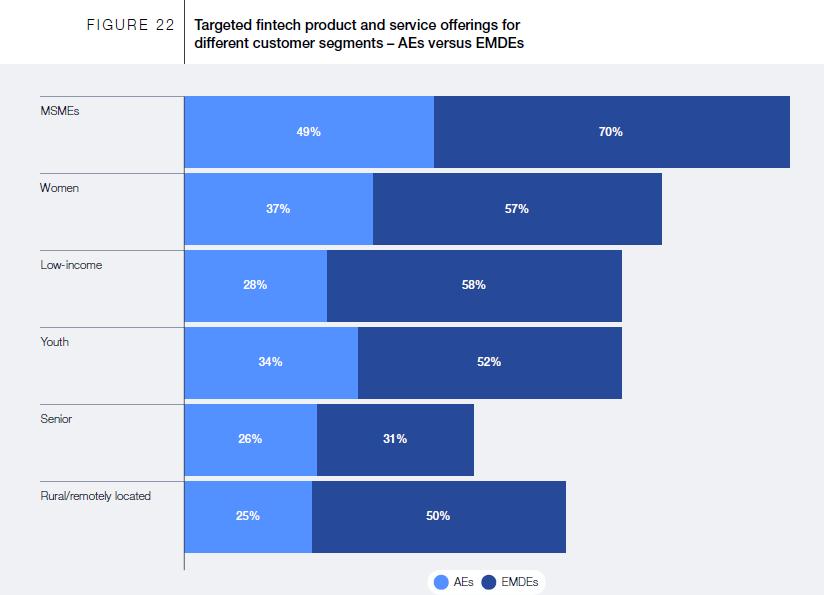
The fintech industry is experiencing stable growth and remains integral to expanding financial access, particularly for underserved groups such as small businesses and low-income populations. A World Economic Forum report highlights a 37% customer growth rate, with revenue and profit increasing by 40% and 39%, respectively. Fintechs are prioritizing marginalized segments, particularly MSMEs, and bolstering digital strategies through social media and tailored approaches, especially in emerging markets. The adoption of AI enhances customer experiences and operational efficiency, while partnerships with traditional financial institutions support innovation and credibility.
Education, ICT, Financial services
Stable growth and broader access: Here’s how fintech is reshaping finance

Private equity firms are leveraging technological innovations, particularly AI and machine learning, to enhance operations, improve exit strategies, and facilitate quicker investment decisions. These tools are transforming due diligence, portfolio monitoring, and buyer analysis while promoting sound ESG practices. However, the sector faces challenges such as economic uncertainty and fundraising pressures. A substantial portion of firms is adopting AI to streamline deal sourcing and management, with many intending to increase AI investments. Despite the potential for significant operational efficiencies, risks related to data reliability and cybersecurity remain concerns, necessitating robust governance frameworks.
Education
How tech innovations are transforming private equity

Impact investing is rapidly growing, with over $1 trillion in assets under management globally. Katherine Klein and Tyler Wry emphasize the importance of their book, "An Introduction to Early-stage Impact Investing," which provides practical guidance and academic insights for individuals interested in impact investing. Key considerations for investors include understanding various impact sectors, geographic focus, and the stage of company investment, from pre-seed to growth equity. While traditional funds are beginning to integrate impact strategies, a distinction remains between ESG investing, which focuses on internal operations, and impact investing that targets positive societal outputs.
An Introduction to Early-stage Impact Investing | Katherine Klein and Tyler Wry
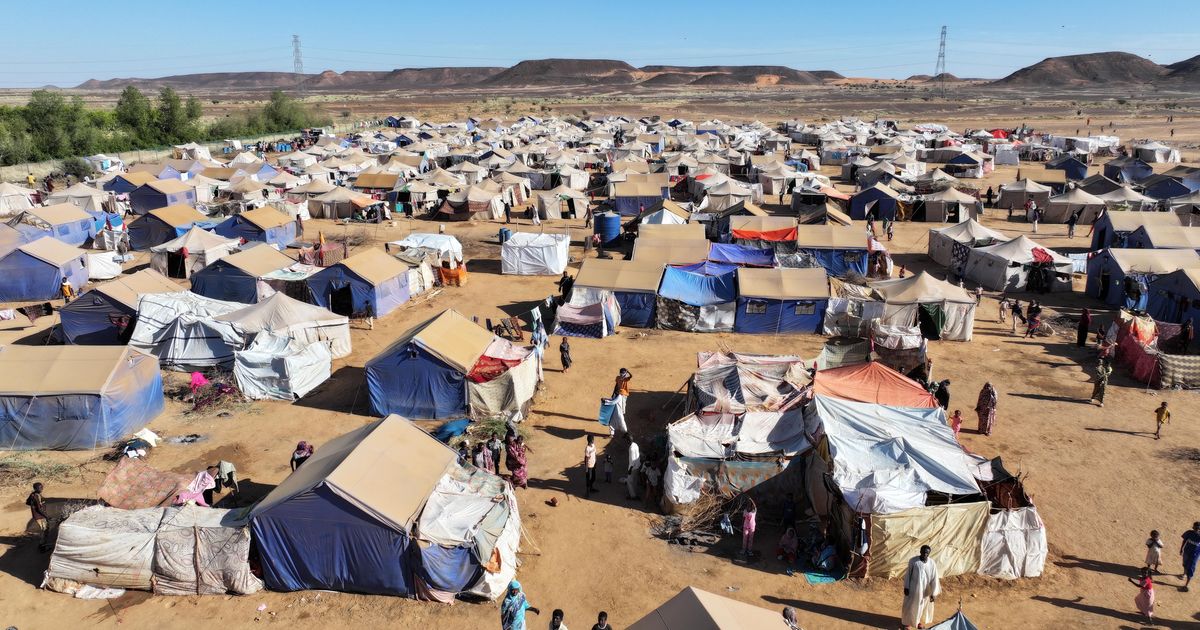
The war in Sudan, which began on April 15, 2023, between the Sudanese Armed Forces (SAF) and the Rapid Support Forces (RSF), has caused a vast humanitarian crisis marked by direct attacks on civilians, destruction of infrastructure, and obstruction of aid. The RSF recently captured the Zam-Zam IDP camp, resulting in significant civilian casualties and mass displacement. Both conflict parties falsely claim to protect civilians while engaging in violence that targets specific identity groups and non-combatants. International response has been insufficient, highlighting the need to support local efforts to protect civilians amidst ongoing violence.
Protecting Civilians in Sudan
Northern Mexico faces a critical water-energy nexus crisis, jeopardizing its industrial growth amid manufacturing and energy expansion. With over 45% of aquifers overexploited, the region grapples with water scarcity affecting project viability, including shale gas extraction and semiconductor production. The area’s high water demand for industrial initiatives, like data centres and breweries, underscores the urgent need for sustainable practices and improved water governance. Additionally, transboundary water treaty obligations between the U.S. and Mexico complicate resource management, necessitating institutional cooperation for a secure and innovative future.
Mexico
Addressing Northern Mexico's water-energy nexus amid an industrial boom

The rapid advancement of digital technologies, notably artificial intelligence, has highlighted significant vulnerabilities, evidenced by a staggering increase in data breaches. Current tech regulation is fragmented, with a predominant focus from the Global North, leading to concerns over digital colonialism. Ethical considerations must be integrated from the start, and effective standards are necessary for safety, transparency, and trust. Recommendations for action include incorporating ethics in design, linking standards to incentives, and fostering global coordination through multistakeholder platforms to ensure diverse values are represented and integrated into digital governance.
Financial services, Education, Health, ICT
The digital world is accelerating and it’s time for tech standards to catch up

Taiwan plays a crucial role in the global semiconductor industry, particularly in the AI revolution, due to its tightly integrated ecosystem that includes companies like TSMC. Key advantages include efficient geographic concentration, allowing quick access to supply chain participants, and a highly skilled workforce developed over three decades. While TSMC has expanded operations in the U.S., concerns are rising in Taiwan about potential long-term impacts on its strategic position and investment levels. The U.S. is increasingly prioritizing domestic manufacturing, which may dilute Taiwan's dominance in the semiconductor field.
Taiwan, China | ICT
Three Questions to Cheng Ting-Fang: Semiconductors as the Hardware of AI - The Case of Taiwan

Africa is likely to become a key battleground for the deployment of autonomous weapons as global tensions rise and military technology evolves. The introduction of lethal autonomous systems, powered by AI, has already been tested, notably in Libya. Proponents argue these weapons can minimize collateral damage and reduce human-related war crimes, while critics warn that automation could incentivize aggression and lack accountability. The influx of foreign arms suppliers, particularly from China and Russia, is expected to accelerate the adoption of these technologies across the continent, raising concerns about their potential misuse and the exacerbation of existing conflicts.
Is Africa the next frontier for autonomous weapons?
The UK aims for net zero greenhouse gas emissions by 2050 to meet global climate goals. Effective climate action revolves around three Rs: reduce, remove, and reflect. Major emissions reduction is crucial and must involve all sectors to transition from fossil fuels to renewable energy. Greenhouse gas removal methods are necessary to offset lingering emissions, while emerging sunlight reflection techniques, though promising, present challenges. These interventions are not substitutes for emission reductions but could aid in cooling the planet. A comprehensive approach that includes rigorous assessment of all strategies is essential for meeting climate targets.
Reduce, remove, reflect — the three Rs that could limit global warming

Japan faces significant water security challenges due to ageing infrastructure, demographic shifts, and regional disparities. The government is enhancing oversight through data transparency and public-private partnerships. Major cities are implementing ambitious environmental plans focused on decarbonization and ecosystem conservation. In rural areas, digital technologies are introduced to improve efficiency and monitor water use. Collaboration among governments, businesses, and communities is essential for creating resilient and sustainable water systems that address local realities and climate challenges.
Japan | ICT, Financial services, Education, Health
Reimagining water infrastructure for resilience and sustainability in Japan

Stronger laws and institutions are essential for closing the global gender gap and enhancing economic growth. Gender parity is identified as both a moral imperative and an economic necessity, capable of increasing GDP per capita by 20% and adding $5–6 trillion to the global economy. However, significant legal and policy barriers persist, with many countries lacking protections against gender discrimination and requiring women to obey husbands. Utilizing comprehensive data, like the Global Gender Gap Index and the Women, Business and the Law report, policymakers can identify barriers and implement necessary reforms to foster gender equality, leading to improved economic outcomes.
Guinea | Health
How stronger laws and institutions can help close the global gender gap and boost the economy
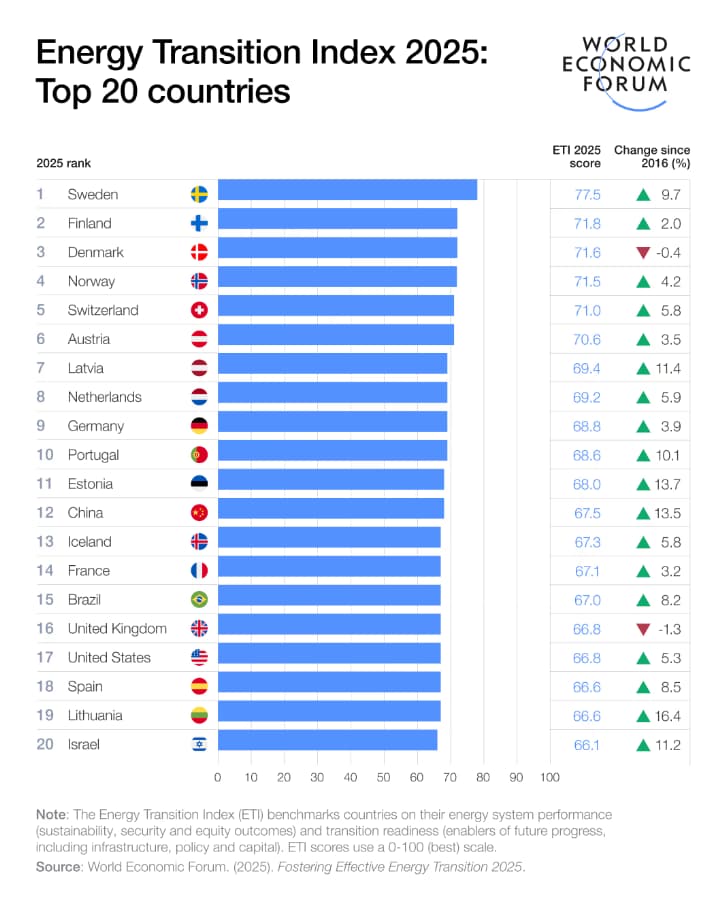
The 2025 Energy Transition Index (ETI) highlights a modest global improvement in sustainable energy transition, with Nordic countries leading the way. Sweden, Finland, Denmark, and Norway rank highest, benefiting from diversified clean energy sources and supportive government policies. Latvia and the UAE are notable fast risers, achieving significant improvements through equitable energy access and investments in renewable capacity. Despite attracting over $2 trillion in clean energy investments in 2024, global funding remains below the required $5.6 trillion annually to meet net-zero goals. Knowledge sharing and cooperation are emphasized as key strategies for accelerating the transition.
Algeria, Angola, Argentina, Armenia, Austria, Belgium, Benin, Bolivia, Bosnia and Herzegovina, Botswana, Bulgaria, Burundi, Chad, Chile, Costa Rica, Croatia, Cyprus, Czech Republic, Denmark, Ecuador, Egypt, Estonia, Eswatini, Ethiopia, Finland, Georgia, Germany, Greece, Guinea, Hungary, Iceland, India, Indonesia, Ireland, Israel, Japan, Jordan, Kenya, Kuwait, Latvia, Lesotho, Lithuania, Luxembourg, Malaysia, Mali, Malta, Mauritania, Mauritius, Mongolia, Morocco, Namibia, Netherlands, New Zealand, Norway, Oman, Panama, Peru, Philippines, Portugal, Qatar, Romania, Russian Federation, Rwanda, Saudi Arabia, Singapore, Slovakia, Slovenia, Spain, Sweden, Switzerland, Taiwan, China, Tajikistan, Thailand, Tunisia, Türkiye, Uganda, United Arab Emirates, United Kingdom, Venezuela
What can we learn from the top performers and fastest risers in the global energy transition?
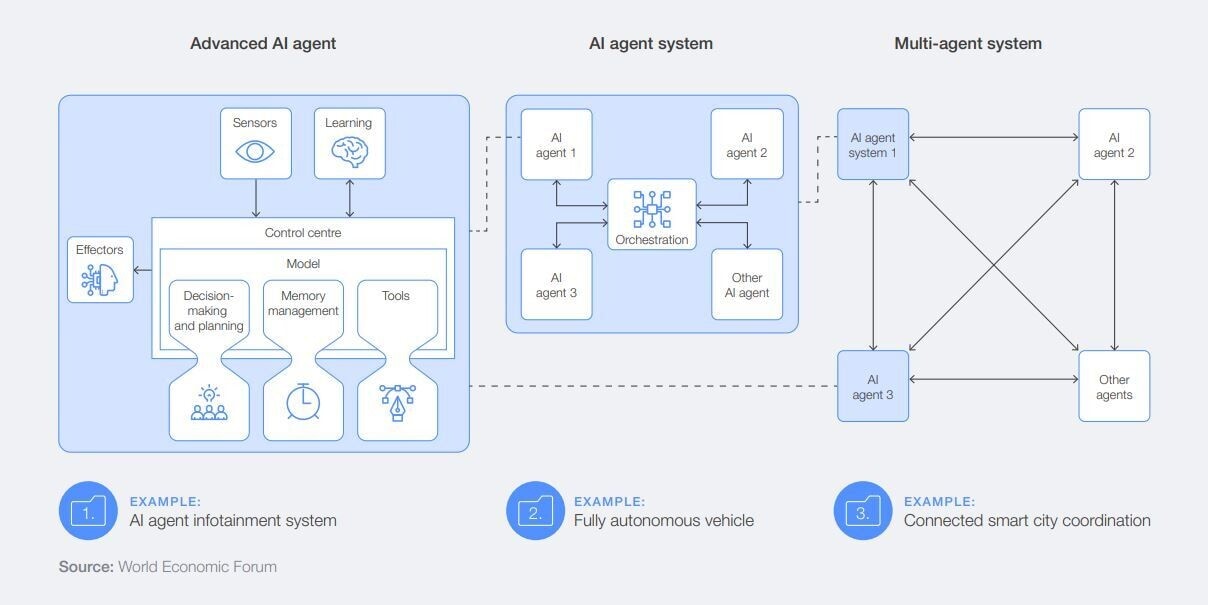
Leaders will need new skills to manage AI agents, projected to become significant 'digital workers' by 2030. Key competencies include effective prompting, verifying AI-generated answers, and establishing boundaries of trust. Experts emphasize the importance of checking the accuracy of information provided by AI, as misinformation can lead to serious consequences. Leaders must also learn when to trust these systems and implement safeguards for governance. As AI agents operate autonomously, understanding their limitations and ensuring they align with organizational values will be crucial.
Education
Leaders will soon be managing AI agents – these are the skills they'll need, according to experts

Cities can leverage their substantial budgets through innovation-friendly procurement to address climate change effectively. The G20 Global Smart Cities Alliance has introduced resources to guide city officials toward this approach, emphasizing outcome-based strategies rather than traditional rigid specifications. Successful integration of innovative technologies, such as AI-powered energy grids and eco-friendly construction materials, is critical for resilience against climate impacts. Key factors for effective procurement include clear paths for scaling solutions and engaging service delivery managers early in the process. Adapting legal frameworks and enhancing procurement team capacities is essential for fostering innovation and improving public services.
Health, Education
Innovation-first purchasing at the city level can scale climate adaptation

Effective negotiation requires emotional intelligence, recognizing that emotions are integral to the process. Success hinges on self-awareness—understanding emotional triggers and responses. Tools like a detachment journal and metamorphosis map aid in developing emotional clarity. Key skills include thorough preparation, flexibility, and practice to build confidence. In contexts like hiring, emotional management becomes essential as unspoken feelings can heavily influence interactions. Overall, successful negotiation strikes a balance between strategy and empathy, enhancing both negotiation outcomes and leadership capabilities.
Negotiating with emotional intelligence
In the 1990s, nongovernmental organizations (NGOs) experienced significant growth and influence, expanding their budgets and global reach, exemplified by groups like Amnesty International and Oxfam. From 1990 to 2000, the number of international NGOs surged by 42%, enabling them to shape state policies and advocate successful initiatives, such as the Anti-Personnel Mine Ban Convention. Influential figures highlighted the shift of power towards NGOs post-Cold War. Currently, however, the status and impact of NGOs have diminished, indicating a stark change in their role within global civil society.
Health
The End of the Age of NGOs? How Civil Society Lost Its Post–Cold War Power
Europe is facing persistent economic stagnation, with the IMF downgrading growth forecasts and the World Bank predicting this decade will be the weakest for growth since the 1960s. The UK economy contracted by 0.3% in April 2025, highlighting ongoing challenges. A long-term forecast suggests an annual growth of only 0.9% through 2040, hindered by declining competitiveness, poor productivity, and an ageing population. Experts warn that Europe may need to consider a "post-growth" reality due to these structural issues and the pressures of climate change, prompting questions about political viability in embracing this new economic landscape.
Denmark, Germany, Italy, South Africa, United Arab Emirates, United Kingdom | Health, Financial services, Education
Welcome to post-growth Europe – can anyone accept this new political reality?
Undersea cables and pipelines form a critical infrastructure, facilitating around $9 trillion in global trade daily. While concerns about potential sabotage arise, actual attacks require significant expertise and specialized equipment, making them complex undertakings. Identifying and targeting cables, especially in deeper waters, demands detailed seabed surveys and accurate sonar technology. Although suspicions exist regarding attacks on cables, definitive evidence remains elusive. The threat, particularly from nations like Russia, is genuine, focusing on vulnerable coastal areas. Prioritizing the protection of these chokepoints and maintaining vigilant monitoring capabilities are essential for defense.
ICT
Undersea cables are vulnerable to sabotage – but this takes skill and specialist equipment
US energy companies are investing record amounts in power plants to meet the growing electricity demand from data centres, driven largely by artificial intelligence. Utility capital expenditure is expected to rise 22.3% year-over-year to $212.1 billion by 2025, reaching $228.1 billion in 2027. The energy sector's transition requires localized approaches tailored to regional challenges. Noteworthy developments include Google's agreement to purchase power from a planned nuclear fusion plant and measures to expand green power access in Malaysia. Additionally, the EU is enhancing grid development cooperation and launching a platform for efficient energy sourcing.
India
US energy firms spend record sums on power plants for data centres – and more top energy stories
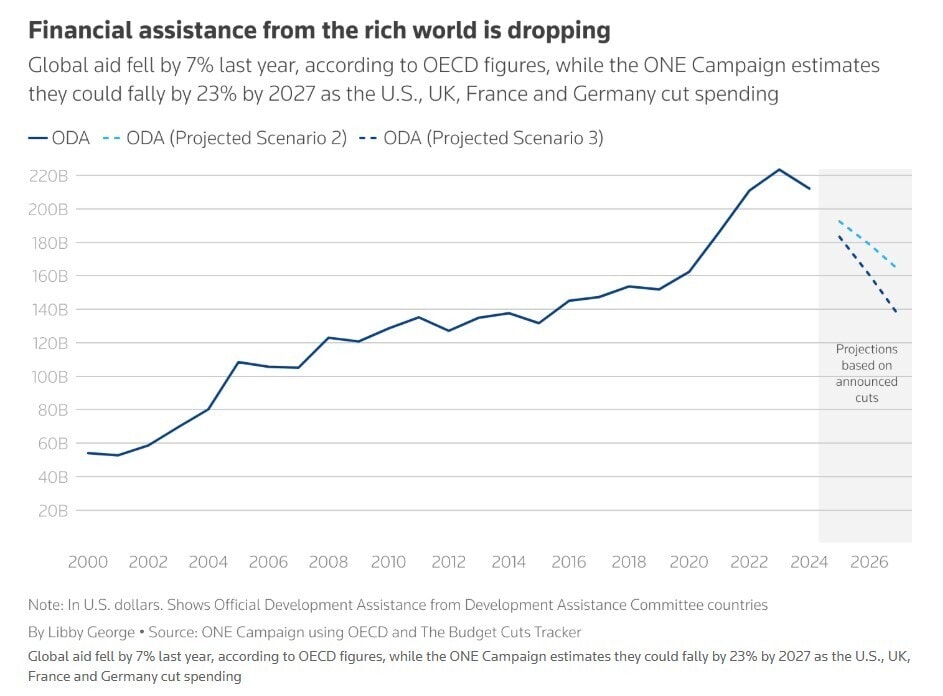
The UN summit in Seville aims to address urgent health financing gaps and reshape global financial strategies for universal health coverage, highlighting a $4 trillion annual development financing shortfall. A key outcome, the "Seville Commitment," calls for tripling multilateral lending and increasing tax revenues in developing countries. Concurrently, Gavi secured over $9 billion in pledges towards its $11.9 billion target for 2026-2030, crucial for vaccinating 500 million children. Suriname has also achieved a milestone by being certified malaria-free by the WHO, marking significant progress in global health initiatives.
Africa | Health
Urgent health gaps targeted at UN financing summit, and other health stories