
Forum Spaces
Product
Use Cases
Get involved

Insights

Specialized AI development increasingly relies on human expert input, including expert judgment, difficult examples, and institutional feedback, to fine-tune models for professional tasks. Organizations with access to proprietary knowledge—such as internal decisions, workflows, and edge cases—gain significant competitive advantage, as these nuanced judgments cannot be easily replicated. A growing market connects AI developers with specialists like doctors, lawyers, and scientists who provide domain-specific data, evaluation, and benchmarks. While large language models can handle vast amounts of information, integrating organization-specific expertise and continuously recorded expert feedback is crucial for enhancing AI performance and sustaining differentiation in the AI era.
Education
Why the next AI data race will be for human expertise and knowledge
Academic peer review is facing a structural crisis characterized by reviewer fatigue, inconsistent editorial decisions, declining response rates, and an overburdened quality assurance system unsuited to current demands. These challenges directly impact journals like Data & Policy, which operate across diverse disciplines within evolving fields. The stress on peer review processes underscores the urgent need to rethink scholarly publishing to sustain academic integrity and support emerging research areas.
Health
The peer review crisis and the future of scholarly publishing: notes from the editorial frontline
Nursing is a vital economic driver beyond healthcare, creating skilled jobs for women, enabling household investment, and stimulating growth across Asia and the Pacific. With 29 million nurses globally, nursing transforms secondary education into formal employment, addressing a global shortage of 5.8 million nurses. It particularly empowers women, who hold 85% of nursing roles, improving their economic participation and career prospects, despite persistent wage gaps and underrepresentation in leadership. Nursing income supports families over generations and contributes significantly to national economies via remittances, especially in countries like the Philippines and India. Strengthening domestic nursing capacity alongside global labor mobility fosters health systems and economic multipliers, positioning nursing as essential infrastructure for development and gender equality.
Africa | Health
Asian Development Blog: Beyond Health: The Economic Case for Investing in Nursing
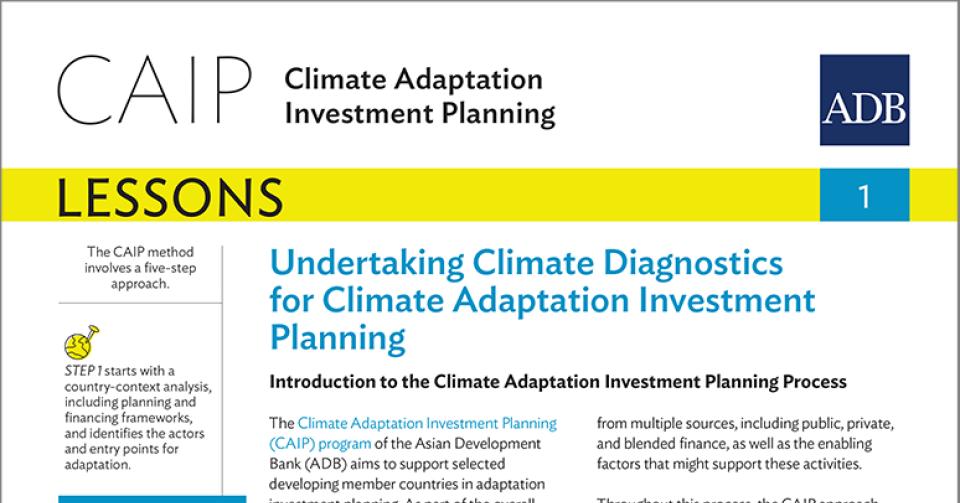
The Climate Adaptation Investment Planning Lessons Series No. 1 to 3 provides practical guidance for developing countries to convert climate adaptation priorities into strategic investment plans and viable projects. Drawing from experiences in Armenia, Bhutan, Cambodia, Indonesia, Mongolia, and Nepal, it emphasizes the use of strategic climate diagnostics to identify key risks, economic and financial analyses to justify investments, and financial matchmaking to connect projects with appropriate funding. The series underscores the critical roles of local knowledge, climate data, and supportive policies and institutions in advancing adaptation initiatives toward implementation.

Climate Adaptation Investment Planning Lessons Series No. 1 to 3
ASEAN’s digital economy is advancing with improved connectivity, digital trade facilitation, cybersecurity, and digital payments strengthening regional integration. However, over 4,500 Southeast Asian businesses report ongoing challenges in cross-border trading, payments, authentication, document signing, and data transfer, especially impacting micro, small, and medium-sized enterprises (MSMEs). The ASEAN Digital Economy Outlook 2026 highlights five priorities within the ASEAN Digital Economy Framework Agreement (DEFA): end-to-end digital trade, interoperable payments and e-invoicing, trusted digital identity and e-signatures, practical data governance, and MSME support. These priorities aim to foster inclusive, trusted, and seamless digital cross-border growth in the region.
Africa, ASEAN, Latin America | Financial services, ICT
ASEAN Digital Economy Outlook 2026
At a time of shrinking civic engagement and declining trust between governments and civil society, the UN-hosted Collaborative on Citizen Data has united diverse stakeholders—including civil society organizations, national statistical offices, human rights institutions, and academia—to develop practical guidance for forming national partnerships on citizen data. This step-by-step guide consolidates lessons from various collaborators to promote inclusive, cross-sector data systems that strengthen cooperation between governments and non-governmental actors.
Health
Building stronger partnerships through citizen data
Human progress is driven by the psychological state called agency, which consists of efficacy (confidence in accomplishing immediate goals), optimism (expectation of long-term success), and imagination (ability to envision broad goals). Martin E. P. Seligman argues that these three capacities explain why innovation flourishes in some eras and stalls in others, regardless of material conditions. Drawing on 2,500 years of history, Seligman shows how surges and declines in agency have influenced civilizations—from ancient Athens to modern movements—and suggests that embracing agency can lead to a new era of human flourishing, especially in an AI-transformed future.
Education
Agency
The CIVIC-AI Collaboration develops a framework to evaluate AI’s value in the workplace by focusing on human-agent collaboration across entire workflows rather than isolated tasks. This framework defines AI augmentation through six conditions, including durable net value, meaningful human control, accountability, recovery mechanisms, and support for long-term human development such as learning and career growth. The approach is demonstrated via a case study on AI-mediated social surveys, providing guidance for organizations, researchers, and policymakers to navigate and shape the future of work enhanced by AI.
Education
When Does AI Augment Work? A Workflow-Level Framework for Human-Agent Collaboration

New fossil fuel extraction, including North Sea drilling, contradicts the goal of keeping global temperatures safe and will not stop the decline of the UK oil and gas industry. The real challenge is building a low-carbon economy that provides well-paid, secure green jobs to replace those lost in carbon-intensive sectors, especially in affected communities like Aberdeen and Grangemouth. Government leadership is crucial to coordinate long-term investment in strategic green industries, reshape ownership of renewables to benefit citizens, and support economic security beyond traditional employment. A just transition requires social reforms such as affordable housing and tackling energy poverty to ensure equitable and sustainable change.
North Sea drilling is a distraction: low-carbon transition hinges on prioritising people and jobs

Synthetic data, generated by computer models mimicking real datasets, offers a way to use data while reducing privacy risks, as seen in the NHS's synthetic cancer dataset that protects patient records. However, synthetic data still relies on original data access, shifting privacy concerns upstream. It embeds human judgments about what counts as typical or acceptable, which can introduce bias and obscure minority experiences. Used widely in sectors like healthcare, finance, and policing, synthetic data can create an illusion of objectivity, masking underlying assumptions. Effective governance requires institutions to transparently explain how synthetic data is created, its limitations, and safeguards, ensuring public trust, especially when impactful decisions depend on it.
Health, Education, ICT
Synthetic data could ease people’s concerns about privacy breaches. But who gets to create it?

China is advancing humanoid robot technology, exemplified by Tiangong Ultra's 8.64-second 100-meter sprint, surpassing human capabilities. These robots combine advanced hardware like carbon fiber bodies and high-torque actuators with sophisticated AI-driven software using reinforcement learning, enabling agile, real-world navigation and balance. While tracked robots dominate open-field combat due to durability and payload capacity, humanoid robots offer unique advantages in urban warfare, such as maneuvering in human-designed environments to conduct rescues or neutralize threats, potentially reducing human casualties. However, their dual-use nature raises ethical concerns since the same capabilities serve both defensive and offensive military purposes.
China is exploring humanoid robots for war – but what role could they play?
Artificial intelligence is transforming quantitative finance by enabling more advanced analysis of large datasets, thereby expanding opportunities for quantitative investors while highlighting the ongoing importance of human judgment. Quantitative finance, which traditionally focused on mathematical modeling of complex securities and later evolved to emphasize statistical prediction of asset returns, is now increasingly integrating AI technologies. Experts from Wharton and Goldman Sachs discuss how AI is reshaping investment research, data analysis, and the skills required for future finance professionals, marking a significant evolution in both academic and industry practices within quantitative finance.
Education
How AI Is Reshaping Quantitative Finance

The transition to an "empty nest" occurs when adult children leave home, often marking a difficult emotional phase for parents, particularly those single, widowed, or living alone. This can lead to loneliness, loss of purpose, and in severe cases, symptoms akin to depression. Companionship is a key factor in mitigating negative effects. The phenomenon remains understudied and lacks social recognition or formal rituals, despite its impact on wellbeing. Changes in family structures, rising divorce rates among older adults, and increased longevity make understanding and supporting parents during this transition increasingly important for health and social care.
Why the consequences of the ‘empty nest’ can be real – and serious
International agreements are fundamentally political processes emerging from mixed-motive situations where parties have both shared goals and conflicting interests. This handbook, produced by the Geneva Centre for Security Policy's Processes of International Negotiation program, offers a detailed analysis of the dynamics shaping negotiations and the political nature of reaching agreements.
Handbook on the Politics of International Agreements

Resilience is widely recognized as a critical attribute for employee success and the future of work, yet many employers select for it without strategies to develop or sustain it, leading to burnout. Resilience should be viewed as a process built during stable times, emphasizing support systems and relationships rather than individual toughness. True resilient cultures involve leaders modeling vulnerability, providing proactive support, and encouraging help-seeking. Treating resilience as solitary "grit" and expecting employees to endure dysfunction fosters exhaustion, not strength. Organizations must actively cultivate resilience through positive, team-based approaches rather than waiting for crises to test employees.
Employers look for resilient staff – then leave them to burn out

Gradient descent methods, particularly Yurii Nesterov’s Nesterov Accelerated Gradient approach, are fundamental mathematical tools enabling the efficiency and rapid development of large language models (LLMs) and AI systems. These optimization techniques, developed through decades of publicly funded academic research, underpin the transformative impact of AI across sectors like healthcare, home management, and mathematics. Despite substantial public investment driving foundational AI knowledge, private companies often control the resulting technology and profits, raising ethical and legal questions about ownership and intellectual property rights. Efforts in regions like the EU aim to maintain public access and reinvestment into AI research, highlighting tensions between public contributions and private commercialization in the global AI landscape.
Education
Who should own the knowledge that underpins AI technology?
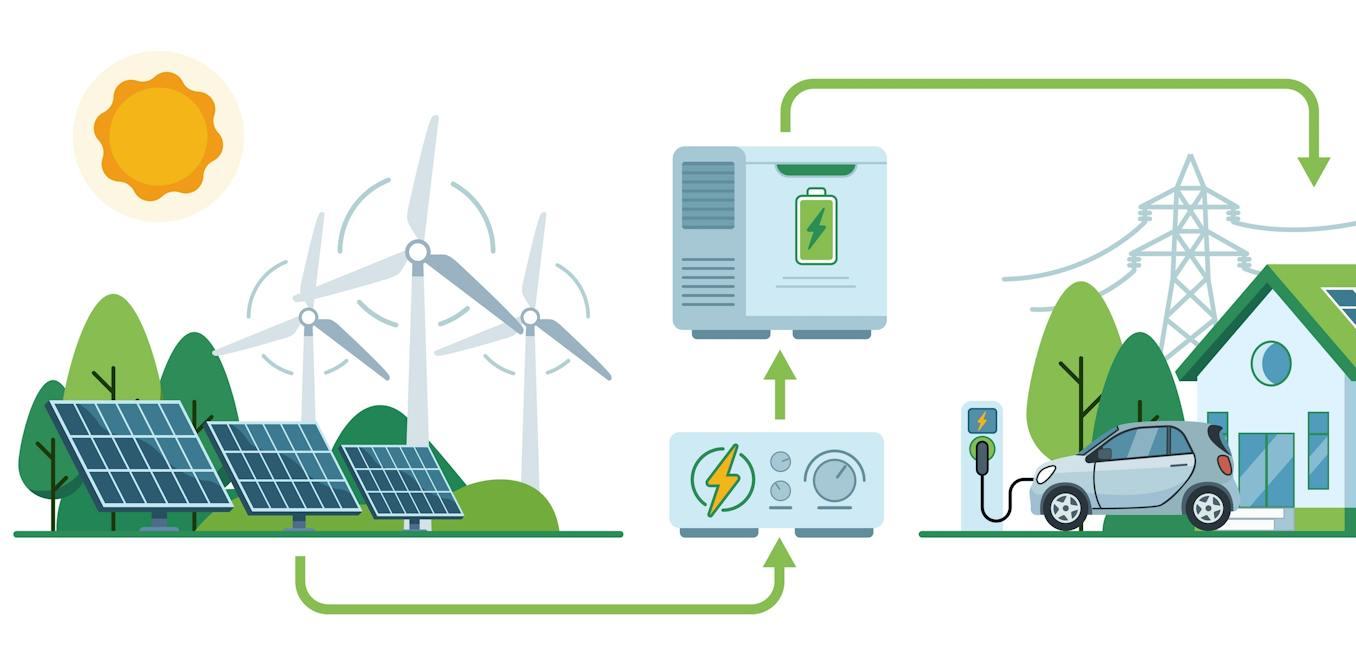
Extreme weather and geopolitical conflicts significantly disrupt UK transport and energy systems, causing service cancellations, infrastructure damage, and fuel shortages. Transport and energy resilience requires proactive adaptation, such as heat-tolerant rail materials, increased urban greenery, and shifting freight to varied transport modes like e-cargo bikes to reduce fossil fuel reliance. The transition to electric vehicles (EVs) stresses the power grid, especially during climate-induced peak demands. Research from the Fever project explores off-grid EV charging powered 100% by renewables with onsite solar, wind, and hybrid storage, enabling resilient, financially viable charging solutions. This approach can protect transport operations from grid failures and fuel price volatility, fostering a more climate-resilient transport system.
How to build climate-resilient transport systems

Artificial intelligence is diminishing essential human soft skills as workers increasingly rely on AI to perform tasks, leading to a decline in judgment, critical thinking, problem recognition, collaboration through intellectual friction, and deep domain knowledge. Research shows frequent AI use correlates with reduced critical thinking, especially among younger workers. While AI boosts productivity at lower skill levels, it may cap expertise development. Jobs requiring complex human interaction and abstract thinking are least likely to be automated, highlighting the growing value of interpersonal and creative leadership skills. To address this soft skills crisis, employers and policymakers must invest in nurturing these uniquely human capabilities alongside technical training.
Education
We are sleepwalking into a soft skills crisis caused by AI
Growing calls to restrict children's access to social media risk targeting the child rather than addressing harmful digital environments. Recent EU Kids Online data reveals increased online harms: 23% of children report frequent upsetting experiences, feelings of online safety have dropped from 65% to 48%, and difficulties controlling internet use have doubled since 2020. Parental mediation is shifting from conversation to technical controls. AI-driven features like infinite scroll contribute to reduced control. Blanket restrictions could widen inequalities by limiting online opportunities essential for communication, education, and digital skill development. Children’s concerns prioritize broader life issues over screen time, highlighting the need for redesigning platforms to ensure safer, rights-respecting digital environments rather than banning access.
Africa | Health, Education, ICT
Protecting children online should mean redesigning platforms, not banning access
Turkey’s defence engagement in Africa primarily serves industrial and strategic purposes beyond geopolitics and conflict. Africa is key to Turkey’s defence-export strategy, helping to sustain production, reduce internal competition, and generate external demand for its export-reliant defence industry. The growing integration between Turkish and European defence companies will increasingly influence Germany and the EU’s defence sectors and their presence in global markets beyond Europe.
Africa
Arms at the Frontier
Show more

Forum Spaces

© 2026 All rights reserved
Privacy Policy & Terms of Service