ASEAN economic cooperation is evolving beyond traditional trade and investment goals to address supply chain disruptions, digital fragmentation, energy insecurity, and inclusive growth. The ASEAN Economic Community fosters a single market, enhanced by free trade agreements and the Regional Comprehensive Economic Partnership (RCEP), which unifies trade rules across 15 countries to bolster resilience and economic security. The Digital Economy Framework Agreement promotes regulatory alignment to ease barriers for smaller businesses in e-commerce and digital trade. Energy collaboration, exemplified by the ASEAN Power Grid and cross-border projects, enhances energy security and renewable integration. ASEAN aims to strengthen resilience, economic security, and inclusive growth amid global uncertainties.
Africa, ASEAN, Latin America
Asian Development Blog: ASEAN Economic Cooperation Enters a New Era of Resilience and Security
Building an effective civil service is essential for good governance and public service delivery, yet bureaucratic reform is often challenging. Martin J. Williams analyzes over one hundred reforms from six African countries across thirty years, revealing that most failed due to a focus on altering formal structures through isolated projects. Successful reforms emerged when civil servants engaged in ongoing discussions about performance improvement. Williams proposes a new theory that systemic reform succeeds by fostering continuous, decentralized improvement processes rather than imposing top-down changes, offering valuable insights for achieving meaningful organizational change globally.
Reform as Process. Implementing Change in Public Bureaucracies
Artificial intelligence used for political advice balances accuracy with the perceived welfare of the advised individual, leading it to bias messages toward what the individual wants to believe. This distorts both the content and informativeness of advice. Sophisticated individuals anticipate this bias and filter political distortion but still receive less informative messages, while less sophisticated individuals mistake biased advice for factual information, fostering polarization and radicalization. Better-informed individuals get more accurate advice, but greater sophistication may improve interpretation at the cost of communication quality. Political distortion decreases when political preferences align with prior beliefs and intensifies when they diverge.
Artificial Intelligence and Political Advice
Americans frequently use AI chatbots for personal topics, but their conversations are not always private. A Washington Post review found multiple instances over the past two years where chatbot transcripts were admitted as evidence in court cases, often recovered from users' devices during investigations. Some AI companies have also reported troubling content to law enforcement. Privacy experts warn that unless users engage in temporary or incognito chats without browser tracking, their AI conversations are vulnerable to being accessed by employers, tech companies, or police.
Your boss, tech companies and police can read your chatbot conversations

Iraq's archaeological discoveries, such as those at Ur and Jemdet Nasr, have significantly shaped understanding of early urban life and administrative systems. However, Iraqi archaeologists remain underrepresented in directing research and setting priorities, with international bodies often dominating the narrative. Efforts to decolonize archaeology emphasize allowing Iraqi experts to define research agendas and recognize local expertise. Gender disparities persist, with women underrepresented in excavation teams and leadership despite high enrollment in archaeology studies. Environmental challenges also redefine heritage as intertwined with sustainable futures and community relationships. Recent workshops have fostered collaboration and modest institutional progress within Iraq’s archaeological sector.
Iraq’s archaeological discoveries have shaped understanding of human civilisation – but its scientists have been sidelined

Canada is facing escalating trade tensions with the US after the US imposed 50% tariffs on C$27.6 billion of Canadian goods, prompting Canada to retaliate. To reduce economic dependence on the US—its dominant trading partner accounting for 75.9% of exports—Canada is diversifying trade through existing free trade agreements like CPTPP and CETA, increasing exports to the EU and Britain. Unlike Britain's Brexit experience, which increased trade friction without significantly shifting trade patterns, Canada is managing the crisis by maintaining US market access while expanding alternative markets in Europe and the Indo-Pacific. Though some success is evident, short- to medium-term economic challenges remain.
Africa, Latin America | Financial services
The lesson Canada’s prime minister learned from Brexit is helping in its trade rift with US

Over the past 25 years, the UK has undergone significant changes in media, technology, culture, and entertainment. Print newspaper circulation has dramatically declined from millions to under a million copies. Broadcasting has fragmented and globalized, with streaming platforms like Netflix and YouTube surpassing traditional broadcasters such as the BBC. The music industry shifted from physical sales, peaking in 2001, to digital streaming dominance via services like Spotify. Social media revolutionized media consumption, facilitated by smartphones, with platforms like Facebook, Twitter, Instagram, and TikTok becoming central to public engagement.
Education, ICT, Health
Britain’s quarter century: Netflix, memes and the supposed Christian revival

Carl Jung's distinction between introversion and extraversion, based on inward versus outward focus, offers insight into how people might use generative AI differently. Introverts may find AI helpful for bridging private reflection and external expression by developing ideas gradually with AI prompting. Extraverts may benefit from AI supplying more input and feedback but might need it to encourage reflection rather than just generate ideas to cut through information overload. Research shows people often prefer AI that mirrors their personality traits, though this is more evident for extraverts. However, overly affirming AI can reinforce unhelpful behaviors, highlighting risks in personalization that prioritizes comfort over challenge, potentially creating echo chambers rather than growth.
Whether you’re an introvert or extravert may decide how you should use AI
The Vatican’s first papal encyclical on AI, Magnifica Humanitas, argues that governing AI for the common good requires an impartial authority, but neither the market nor the state can serve as unbiased referees. Markets are conflicted by profit motives, while states hold multiple conflicting roles—as rule-maker, beneficiary, customer, and payer of social costs—making impartial governance structurally impossible. Moreover, democratic cycles are too short-term to ensure stable AI policies, highlighting the need for independent institutions insulated from political shifts. The encyclical stresses that disinterested governance of AI must be deliberately constructed, emphasizing the importance of building new institutional frameworks beyond existing secular candidates.
Financial services
The Pope has a point – AI needs a referee that no one owns
Banking systems in Asia and the Pacific face significant challenges due to rapid economic growth, technological change, climate risks, and financial inclusion disparities. This volume offers practical guidance on strengthening financial governance, monetary policy effectiveness, and prudential regulation to enhance banking resilience and sustainability. It explores the role of central bank digital currencies (CBDCs), fintech innovations, and digitalization in promoting financial inclusion without compromising stability. With evidence-based analysis, it addresses policymakers’ dilemmas in managing crises, innovation, and inclusive growth to support a stable and sustainable financial future for the region.
Africa, ASEAN, Latin America | Health, Financial services
Emerging Challenges in Banking in Asia and the Pacific: Crises, Innovation, Inclusion, and Resilience for a Sustainable Future
Artificial intelligence in public administration is often valued for efficiency and cost reduction, but in the structurally unequal and digitally diverse contexts of the Global South, such technical gains can exacerbate democratic exclusion. AI governance should prioritize democratic legitimacy, defined by transparency, participation, inclusion, accountability, contestability, correctability, and social justice. Legitimate AI systems require public justification, meaningful input from affected communities, and institutional authority to review and correct decisions. Effective governance must address structural and institutional risks by enabling public participation, independent oversight, impact assessments, and context-sensitive regulation, ensuring societies retain authority to shape, challenge, and halt AI deployment as needed.
Health, ICT
From algorithmic efficiency to democratic legitimacy: rethinking AI governance in the Global South
Michael Running Wolf, co-founder of First Languages AI Reality (FLAIR), uses AI speech-recognition to help Indigenous communities reclaim and preserve their languages, emphasizing the opportunity for tribes to engage early in the digital economy. Tribal leaders highlight data governance as a sovereign duty essential for guiding economic decisions, restoring land, diversifying revenues, and funding projects. Digital sovereignty, defined as control over a tribe’s digital presence and data, is viewed as akin to protecting physical land—considered "digital land" that carries tribal identity and future. Effective stewardship of tribal data is critical to cultural preservation and economic development.
ICT
Through data governance, tribes protect “digital land” and build tribal economies
Fragmented data infrastructures and policies in the Philippines hinder digital transformation, public service delivery, and responsible AI adoption. Key challenges include gaps in broadband connectivity, data governance, interoperability, data sharing frameworks, and institutional coordination. The World Bank proposes reforms focusing on trusted data sharing, harmonized digital public infrastructure, improved governance, and robust stewardship of national datasets. Recommendations include interoperable registries, common identifiers, risk-based regulations, and coordinated institutional mechanisms to support evidence-based policymaking and AI-ready data systems. These reforms aim to enhance innovation, public trust, and sustainable development through secure and inclusive data practices.
Africa | Health, ICT
From Fragmentation to Flow: Reforms Promoting Trusted Data Sharing for Responsible AI in the Philippines
Infrastructuring Assemblies explores social and political gatherings as forms of cultural resistance, focusing on urban micro-infrastructure and proximity as tools to support democratic engagement. It critiques the growing control over assemblies, especially on campuses, and promotes urban agonism—viewing spatial production as a collaborative, ongoing process. The work highlights the importance of "infrastructuring," active practices that facilitate public negotiation and everyday urbanism, with attention to both temporary protests like Occupy! and longer-term urban interventions that foster democratic futures and sustained assemblies.
Infrastructuring Assemblies
Anthropic piloted a program enabling three external research institutions to independently analyze Claude usage data through Anthropic Insights, a privacy-preserving tool analyzing millions of conversations. The research involved about 250,000 Claude and Claude Code interactions, with strict privacy audits ensuring data protection. Participating groups from Stanford, Oxford, and METR conducted autonomous studies, with Anthropic limiting oversight to privacy and policy concerns only. This marks a first in independent AI usage data research, with results and aggregate data publicly released to encourage further exploration.
Enabling independent research on how people use Claude
Mariana Mazzucato’s The Common Good Economy critiques the current economic system for accelerating climate crisis, deepening inequality, and eroding public trust. She argues that treating public goods simply as fixes for market or government failures leads to reactive, ineffective policies. Instead, she proposes a new theory centered on the common good, emphasizing purposeful economic relationships between governments and businesses that foster collective action, participation, and reciprocity. The book offers a practical “common good compass” and real-world examples aimed at building an economy that promotes human flourishing and serves people and the planet.
The Common Good Economy
Politicians increasingly focus campaign messaging on cultural issues like religion and immigration, despite voters consistently ranking the economy as their top concern. This shift occurs because economic messages are harder for voters to understand, while cultural positions are more transparent and observable. Consequently, candidates emphasize extreme cultural rhetoric to differentiate themselves, even as their economic policies remain moderate and similar to appeal to the median voter. This dynamic leads to heightened political polarization on cultural grounds, while economic stances converge, reflecting the complexity of voter perception and campaign strategy.
Why Politicians Keep Campaigning on Culture

Big tech firms have committed over a trillion dollars to AI infrastructure, betting on AI productivity increasing by about 2.7 times within a few years. This investment surge, led by companies like Amazon, Alphabet, Microsoft, Meta, and Oracle, has grown from $155 billion in 2022 to a forecasted $755 billion in 2026, crossing $1 trillion by 2027. New research models this as a rare productivity boom, projecting significant GDP growth—up to 58 percentage points by 2030 depending on scenarios. The AI sector's share of the economy may rise from 3% to as high as 39%, with long-term productivity multipliers reaching unprecedented levels, potentially transforming economic growth if these gains materialize.
ICT
Can AI Productivity Grow Fast Enough to Justify Big Tech’s Spending?

Autonomous weapons systems (AWS) can select and engage targets without human intervention, raising urgent concerns about legality, morality, and control. Recent use of AI-powered drones in Ukraine, including incidents causing civilian deaths, highlights the pressing need for binding international regulations. Experts at the UN Convention on Certain Conventional Weapons convene to create governance frameworks emphasizing meaningful human control to ensure compliance with international humanitarian law. Human judgment is crucial for ethical decisions in targeting and proportionality, which AI cannot replicate adequately. Without clear legal boundaries, AWS risk uncontrolled escalation and moral failure, making legally binding rules essential to uphold accountability and civilian protection amid advancing military AI technologies.
Autonomous weapons can select targets without human help – now is the time for binding rules
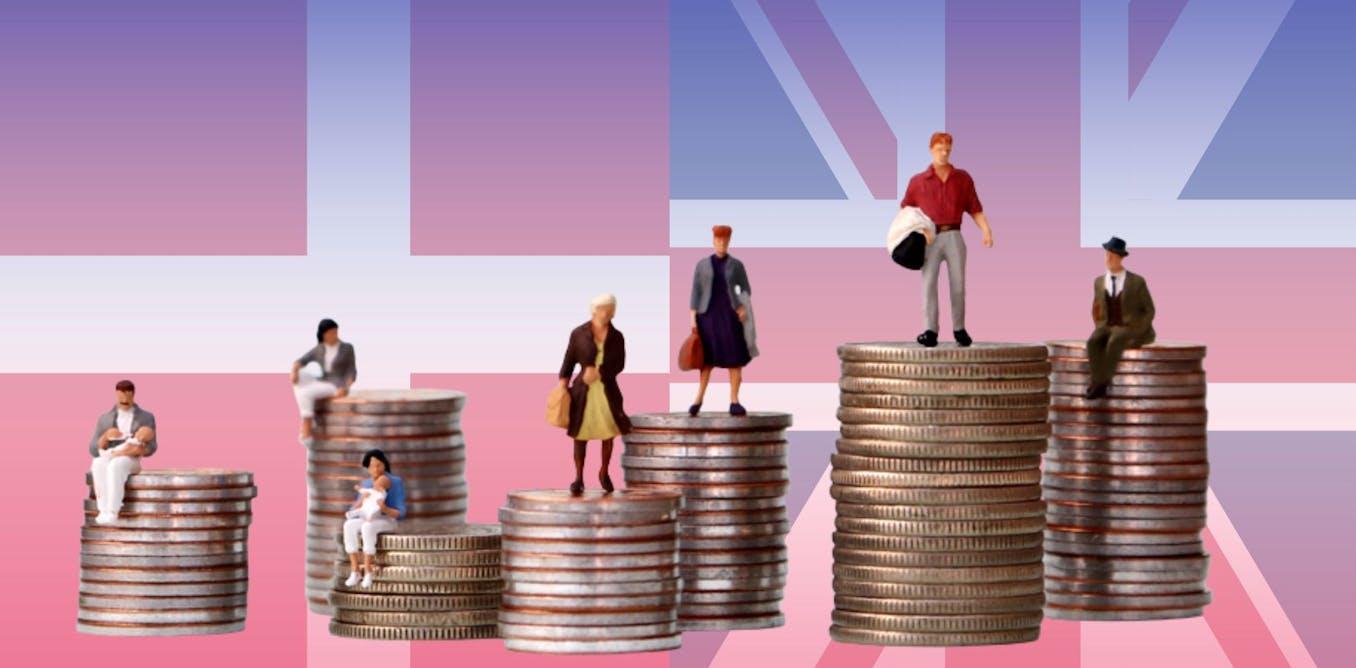
Denmark spends more per person on healthcare than the UK and achieves better health outcomes, including longer life expectancy, higher infant survival, and improved cancer survival rates. Although the UK spends a larger GDP share on healthcare, its per capita spending is lower. Denmark's success stems from earlier diagnosis and treatment, greater investment in diagnostic equipment, higher participation in cancer screening, and healthier lifestyles with lower obesity and diabetes rates. Additionally, Denmark's inclusive welfare system reduces social inequalities and supports overall health, whereas the UK faces more financial stress and less equitable social welfare, impacting health outcomes.
Health
Denmark versus UK: which country gets more health for their money?