Conflict is the greatest danger facing the world, with armed conflicts reaching an all-time high. Global cooperation is crucial to mitigate the risks of escalating conflicts and prevent wars. The increasing internationalization and interconnectedness of conflicts make them difficult to end. Wars come in various forms, including international conflicts, hybrid conflicts, internal conflicts, and criminal conflicts. The threat of global war is being taken seriously, particularly in Europe. The geopolitical recession, amplified by tensions between major powers, is exacerbating the risk of war.
Financial services
Why global cooperation is more important than ever in a world at war
Meta's decision to remove factcheckers from its platforms has sparked controversy. However, the real threat lies in the rise of AI and neurotechnology, which have the potential to reshape online discourse and our understanding of truth. Advanced AI models can generate human-like language and present ethical questions regarding authorship and accountability. Neurotechnology, which reads and interacts with the brain, raises concerns about mental privacy and control over thoughts. The lack of rules to manage these technologies is alarming, highlighting the need for strong legislation and cooperation to protect human rights and ensure these tools serve humanity rather than exploit it.
Meta’s factchecker cut has sparked controversy – but the real threat is AI and neurotechnology
China may need to strengthen its relationships with the rest of the West as Donald Trump takes office, given his tough stance on China. China has been preparing for a potentially more hostile US climate by increasing trade with Southeast Asia, Latin America, and the Middle East. China may seek economic resources from countries like Canada and Australia, but it ultimately needs to maintain and improve its ties with the EU, its second-largest trading partner. China could ease tensions with the EU by lowering barriers for European businesses in the Chinese market and reducing subsidies for Chinese firms competing in Europe. China could also alleviate Western fears by helping resolve geopolitical issues like the Ukraine-Russia war. Ultimately, China will continue to engage with the US due to its technological, economic, and military power.
Why China might need the rest of the west more as Trump arrives in the White House

Donald Trump and Elon Musk represent a radical dual power, unrestrained by traditional constraints, prompting the EU to consider proactive strategies rather than retreat. Both figures exemplify American cultural traits, embracing a confrontational stance against traditional alliances. Their rhetoric combines showmanship with nationalist sentiments, echoing themes of revenge and resentment towards perceived betrayal by allies. Despite Trump's portrayal of decline, the U.S. remains a powerhouse driven by innovation and resources, creating challenges for Europe amidst faltering multilateralism. A coherent response from Europe is essential to navigate this shifting geopolitical landscape.
France | Financial services
[Trump II] - Trump and Musk Challenge Europe to Rise or Submit
The article discusses the importance of preserving human connection in the Intelligent Age. It emphasizes the need to protect the human moments that make work better and highlights generative AI as a solution for enhancing human connection. The article also mentions the demographic forces at play, including an aging workforce and the rise of younger talent. It stresses the importance of preparing the workforce for technological advancements and the benefits of upskilling. The article concludes by emphasizing the value of people-centric innovation in human capital management.
Solving for human connection in the Intelligent Age
Fragmentation is a barrier to optimizing the potential of artificial intelligence (AI). To fully reap the benefits of AI, there needs to be a reduction in data fragmentation both internationally and within companies. This can be achieved by adopting cloud technology, establishing economic networks and ecosystems across industries, and creating common international rules for AI governance. Fragmentation limits the positive impact of AI by restricting access to data. Overcoming fragmentation requires steps at the company-level, creating industrial ecosystems, and building international frameworks that promote trust and collaboration. By reducing fragmentation, the potential of AI can be maximized for the benefit of many.
Why we must overcome fragmentation to optimize AI for the benefit of all
The World Economic Forum's Global Risks Report 2025 highlights that the biggest risk facing the world this year is state-based armed conflict, closely linked to rising threats of cyber warfare and misinformation. Climate change and environmental threats are seen as the biggest risks for the coming decade. Experts warn that the increase in conflict and defense spending will impact economies and could exacerbate societal polarization. Furthermore, the shift in demographics, with aging populations and declining birth rates, raises questions about the idea of nationhood.
Mexico, Norway, Saudi Arabia, Sweden, Switzerland, Venezuela | Financial services
'Turning ploughshares back into swords' – experts dissect the Global Risks Report 2025, on Radio Davos
Business leaders need to shift from simply managing change to inspiring and driving effective change in their organizations. This requires investing in digital skills training, setting a clear vision for change, modeling new mindsets and behaviors, building a network of influencers, investing in upskilling and reskilling, personalizing change efforts, and measuring impact and iterating. Successful change is measurable and attainable, but leaders must be intentional with their actions to drive tangible business results.
From managing to inspiring: How business leaders can drive effective change
The gap is widening between super-ageing and youthful populations, according to the World Economic Forum's Global Risks Report. Super-ageing populations, defined as countries with over 20% of their population over the age of 65, pose risks to economies, societies, and workplaces. The demographic divergence between super-ageing and youthful populations will have implications for global income inequality, unemployment rates, and financial sustainability of pension and retirement systems. However, if addressed proactively, this demographic transition presents opportunities for improved social systems, infrastructure, financial equality, and intergenerational equity.
Financial services
The gap is widening between super-ageing and youthful populations. Experts explain the implications
The rise of interventionist industrial policies around the world presents both risks and opportunities for businesses. Governments now view international companies as crucial to their security, foreign relations, and economic goals. In order to succeed, businesses must effectively position themselves to address these changes by adopting long-term strategies. Since 2009, over 15,000 interventions related to industrial policy have been implemented globally. This escalation comes amidst geopolitical volatility, rising national rivalries, and the shift to global multipolarity. The new era of industrial policy requires businesses to anticipate and adapt to sector-driven, cost-driven, and capability-driven changes. Collaboration between the public and private sectors will be essential in pursuing new opportunities.
Financial services
Risk or opportunity: How businesses can win in the new era of industrial policy
Tradeable impact markets are emerging as a framework to value and trade societal outcomes, potentially reshaping global economies. These markets allow for the exchange of verified improvements in areas such as education, healthcare, and the environment. Private sector engagement and market-building coalitions are accelerating the adoption of this concept. Foundations, development finance institutions, and companies are already paying for realized social impacts through mechanisms like outcome-based funding. To fully unlock the potential of tradeable impact, foundational elements such as demand and supply, verification and measurement systems, standardization and price transparency, strong governance frameworks, and policy support are needed. These markets offer novel financing mechanisms for positive social impact.
Financial services
Tradeable impact: an emerging framework for growth through social and environmental value
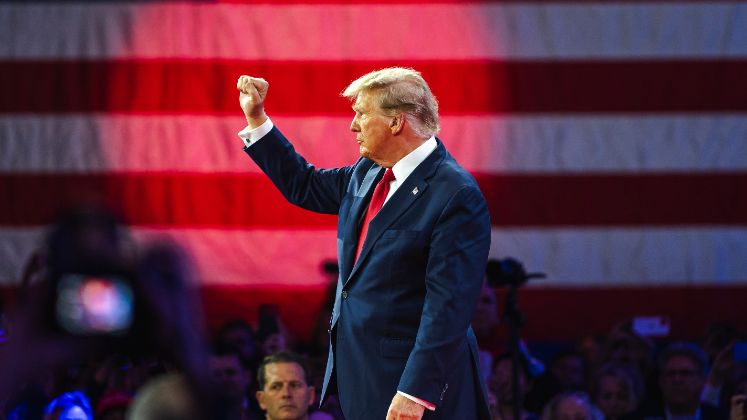
Donald Trump's second term is likely to result in a combination of policies that benefit both the poor and the super-rich. Trump's promises of reducing immigration and imposing tariffs on imports align with the interests of working-class Americans, but may be opposed by wealthy campaign donors. However, in exchange for these policies, the rich can expect tax cuts, relaxed regulations, and greater opportunities to exploit consumers and workers. These policies will negatively impact the bottom 50% of Americans by reducing government services, increasing prices, lowering wages, and compromising environmental standards. UK and European businesses will also feel the effects of Trump's tariffs, with potential redirection of exports and increased competition in affected sectors.
Italy | Financial services
The likely economic implications of Trump’s second mandate
Work is no longer just seen as a source of income, but also as providing fulfillment, purpose, and meaning. Aligning work with personal values and fostering a sense of belonging is crucial for social cohesion. Companies should cultivate a values-based culture that encourages personal and organizational growth. Artificial intelligence (AI) has the potential to support an aging and shrinking workforce and increase productivity, but ethical and security concerns must be addressed. Humans and machines should collaborate to empower people rather than replace them. A commitment to responsible and secure AI use is necessary for stability and prosperity for all.
Education
Why it’s time to revisit the value and meaning of work in the age of AI
Combining predictions from multiple artificial intelligence (AI) systems, known as large language models (LLMs), can achieve accuracy on par with human forecasters. This breakthrough in AI predictions, referred to as the "wisdom of the silicon crowd," is changing the way we think about forecasting. By pooling predictions from multiple LLMs, organizations can access high-quality and cost-effective forecasting. The key to the success of AI predictions lies in how errors are balanced out, similar to how human crowds average out biases. Human input still plays an important role in creating accurate forecasts, with the best results coming from averaging human and AI predictions.
Can AI Predict the Future?
The UK government has released an AI opportunities action plan to boost economic growth and improve public services. The plan includes 50 recommendations aimed at maintaining the UK's position as an "AI superpower." The focus is on building the necessary computing infrastructure, freeing up data assets for AI training, improving skills, and refining regulatory approaches. However, challenges such as fragmentation in government procurement and competition from leading AI nations like China must be addressed. Concerns over AI safety, security, and privacy are also highlighted, particularly regarding the sharing of medical data with AI companies.
The UK government wants to unleash AI’s huge potential. While welcome, we need to carefully consider the risks
Asian markets are facing changes in demand and trade, driven by factors such as trade tensions and shifts in global demand. Asian supply chains are adapting to tariffs and seeking new regional partners. The region is home to major GDP engines and a significant amount of intellectual property filings. Multilateral trade pacts are deepening connections, and intra-regional trade is projected to continue rising. Asian leaders are focusing on boosting incomes and spreading wealth, which will impact the global economy. Changes in consumer spending patterns will also affect demand for goods and services. Ultimately, Asian trade partners will engage more with developed economies, leading to a more dynamic and innovative Asia.
Armenia, Australia, Austria, Bermuda, Burundi, Cambodia, Canada, Chile, Denmark, Finland, India, Indonesia, Italy, Japan, Kazakhstan, Malaysia, Malta, Mauritius, Mexico, Morocco, Nepal, New Zealand, Peru, Philippines, Republic of Korea, Romania, Rwanda, Saudi Arabia, Singapore, South Africa, Sri Lanka, Taiwan, China, Tajikistan, Thailand, Türkiye, United Arab Emirates, Viet Nam | Financial services
How Asian markets will respond to changes in demand and trade
The U.S. government has developed the U.S. Framework for Artificial Intelligence Diffusion to address the challenge of maintaining leadership in AI, managing security risks, and enabling global diffusion of beneficial AI technologies. This framework aims to carefully control how AI technology is diffused while achieving these objectives.
Understanding the Artificial Intelligence Diffusion Framework
AI agents are experiencing a resurgence due to advancements in large language models (LLMs). This has led to the need for improved safety and governance processes for these agents. The World Economic Forum and Capgemini have published a white paper discussing the capabilities and implications of AI agents. These agents use LLMs to understand natural language and make decisions. Mitigation strategies are available to reduce risks such as implementing rules for agent decisions and pairing agents with safeguard agents. Multi-agent systems, which involve communication and coordination among agents, are also becoming more prevalent. Overall, LLM-based AI agents have the potential to improve productivity and flexibility in software systems.
How to ensure the safety of modern AI agents and multi-agent systems
Leveraging AI and collaboration can strengthen supply chains for humanitarian aid by managing complex supply chain data and improving risk management. AI can enhance supply chain efficiency but collaboration across sectors is still necessary. Global supply chain disruptions caused by geopolitical tensions and natural disasters severely impact the humanitarian sector. AI can provide predictive and prescriptive capabilities for future risk management. The Global Supply Resilience Initiative promotes shared intelligence and visibility to enhance global supply chain resilience. A pilot global supply system dashboard with AI capabilities was deployed to improve visibility and decision-making in the distribution of life-saving goods. AI can manage the volume and fragmentation of supply chain data and provide actionable intelligence. Federated approaches and modern AI solutions are emerging to address data sharing and accessibility challenges. While AI is part of the solution, collaboration remains crucial.
How leveraging AI and collaboration can strengthen supply chains for humanitarian aid
The Global Alliance for Trade Facilitation is working to simplify and streamline cross-border trade in developing and least-developed countries. By implementing the World Trade Organization's Trade Facilitation Agreement (TFA), the Alliance aims to remove obstacles to trade and support economic growth. It has engaged global business partners and local Micro, Small, and Medium Enterprises (MSMEs), resulting in significant contributions. The Alliance has successfully delivered 25 projects addressing challenges such as food security and disaster resilience. However, there is still a need for urgent action to bridge the gaps in TFA implementation, particularly in poorer countries. The Alliance's public-private partnership model has shown real-world impact in improving trade processes and empowering MSMEs and women-led enterprises.
The Global Alliance for Trade Facilitation: Removing Barriers to Growth