
Over the past 25 years, the UK's life expectancy saw two key shifts: a slowdown in improvements starting around 2011 and a sharp decline during the COVID-19 pandemic in 2020. Despite this, UK mortality trends closely mirrored those of other high-income countries. Cardiovascular disease, cancer, respiratory disease, and dementia cause most deaths, with cardiovascular mortality declines stalling since 2019. Smoking rates have halved since 2001, but obesity has risen from 20% to 30% of adults, increasing risks for chronic diseases and disability. Chronic pain affects 26% of adults, with low back pain leading in disability. Mental health disorders have also risen steadily, particularly among younger adults.
Africa, Latin America | ICT, Health
Britain’s quarter century: experts in sex, mental health, nutrition and addiction assess the nation’s changing wellbeing

Effective governance of AI agents requires understanding their core properties, specifically autonomy, efficacy, goal complexity, and generality. Different gradations within these dimensions highlight unique design, operational, and governance challenges. By creating "agentic profiles" based on these dimensions, governance can be tailored to various AI types, from narrow task-specific assistants to highly autonomous general-purpose systems. These profiles aid developers, policymakers, and the public in addressing both technical and non-technical issues to ensure responsible AI deployment.
Agentic profiles for effective AI governance
Science is currently undergoing a revolution where AI enables unprecedented predictive capabilities without requiring full understanding of underlying mechanisms. AI “oracles” have already facilitated breakthroughs such as designing new drugs and restoring speech to paralyzed individuals. This shift challenges traditional scientific aims by demonstrating that improving lives through prediction alone may redefine the purpose of science. Grace Huckins, in The Prediction Revolution, examines how AI is transforming the dynamic between prediction and understanding and prompts reflection on science’s evolving role.
Education
The Prediction Revolution
Oil spills along Iran’s southern coast have contaminated the Hara mangrove forests on Qeshm Island, a critical ecological zone near the strategic Strait of Hormuz. These mangroves, vital for coastal protection and marine ecosystems, trap pollutants making oil contamination difficult to mitigate. The war between the US and Iran has increased the frequency and extent of oil pollution in the Gulf, complicating containment and cleanup efforts. Immediate priorities include stopping further oil from entering mangroves, identifying pollution sources, and comprehensive environmental monitoring. The environmental damage risks long-term ecological and economic consequences, emphasizing that ecological health is inseparable from geopolitical stability in this vital region.
Iran oil spill: the war is leaving environmental scars that ceasefires cannot heal
A citizens’ jury of 20 UK members explored public views on neurotechnology—devices that read or influence brain signals—beyond medical uses into consumer applications like wellbeing and education. Deliberations focused on balancing the benefits of neurotechnology with risks, particularly concerning data protection and regulatory oversight. Participants emphasized the need for clear guidelines to prevent misuse and maintain public trust as the technology evolves.
A citizens’ jury exploring public views on neurotechnology and neurodata
Using ADP payroll data, researchers found no widespread job displacement due to AI but identified a growing employment gap for young workers in AI-exposed roles. Employment for workers aged 22–25 in highly AI-affected occupations is about 19% lower than expected compared to peers in less-exposed jobs, a gap that has widened steadily since mid-2025. This gap results mainly from reduced hiring rather than layoffs and is concentrated in jobs where AI automates tasks. In roles where AI complements workers, employment remains steady or grows, especially for experienced workers, with no significant changes in base pay so far.
No Widespread Displacement, but the AI Employment Gap for Young Workers Has Widened to 19%
This paper by Jasper Roe and Mike Perkins critically examines how generative artificial intelligence (GenAI) influences learner agency and autonomy in education. Through a thematic review framed by critical digital pedagogy, it finds that while GenAI can enhance personalized learning and support learner control, it also risks reinforcing educational inequalities and undermining autonomy. The study highlights the complex interplay between AI technologies, power structures, and pedagogical beliefs, emphasizing potential unintended consequences such as shifts in concepts of agency, authorship, and autonomy. It calls for responsible deployment of AI in education to avoid entrenching inequality.
Education
Agency in the age of generative AI: a critical review of educational implications
The current oil crisis presents an opportunity to accelerate the shift toward renewable energy and recycled plastics to reduce plastic pollution. Mandating recycled content in products can create stable demand, encouraging innovation and investment by global brands. Recycling, although currently limited globally, can play a major role in a circular economy by keeping plastics in use and reducing virgin plastic demand. Rather than focusing on difficult production caps or bans, practical policies like recycled content mandates, combined with cross-border trade in recyclable plastics and treating plastics as resources rather than waste, can effectively transform supply chains and significantly curb plastic pollution.
To cut plastic pollution, mandate recycled content and allow for trade and global circularity
Route-based approaches in international refugee and migration policy focus on key migration corridors instead of individual countries, offering better analysis of transnational mobility dynamics. These approaches appeal politically by bridging different views, enhancing operational coordination, and optimizing resource allocation. However, they present a tension: they can enhance protection for migrants along routes or facilitate outsourcing of migration control to origin and transit countries. The impact of route-based approaches depends largely on their implementation, determining whether they bring meaningful change or simply reinforce control mechanisms.
Africa, Latin America
Migration Routes in Focus
Kevin Werbach, Wharton professor of legal studies and business ethics, highlights the challenges of AI governance, including accountability, safety, and cross-border regulatory difficulties. He argues that AI companies cannot effectively self-regulate and stresses the necessity for governments to take a proactive and constructive role in managing the risks posed by increasingly powerful AI technologies.
Can AI Companies Regulate Themselves?

Scientists have used AI to design complete genetic codes for bacteriophages that infect bacteria, producing viable viruses in the lab. These AI models, such as Evo 2, incorporate safety measures by excluding viruses targeting humans or other complex organisms from their training data. While AI-generated sequences require multiple steps—including physical assembly and testing—to become real entities, each step offers a checkpoint for risk mitigation. Additional biosecurity layers include screening DNA synthesis orders, assessing lab containment and access, funding agencies managing research risks, and enhancing global public health surveillance systems capable of detecting novel pathogens. Challenges remain, such as balancing open science with security, uneven international preparedness, and evolving safeguards to handle increasingly sophisticated AI tools in biological design.
Africa | Health
AI-designed viruses are a test of whether biosecurity can keep pace
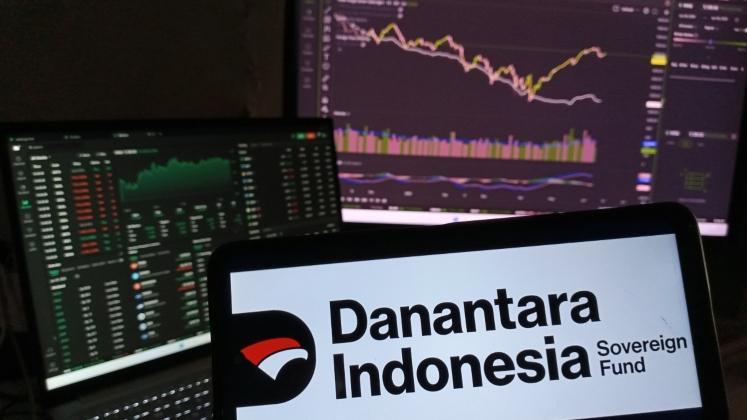
Policy courage and financial capacity are key factors shaping governments’ willingness to innovate. Indonesia’s risk-averse approach, where new policies are only pursued if previously tested elsewhere, limits its innovation potential, reflected in its absence from the top 100 Global Innovation Index countries. Sovereign wealth funds like Indonesia’s Danantara, established to support state-owned enterprises, provide an opportunity to invest in high-risk, high-reward innovations with long-term public value. By prioritizing such transformative projects—such as AI-assisted solutions for informal workers—Danantara could break Indonesia’s cycle of cautious policymaking, boost economic growth, and foster a culture of original problem-solving beyond traditional fiscal constraints.
ASEAN | Financial services
Can sovereign wealth funds break Indonesia’s risk-averse innovation cycle?
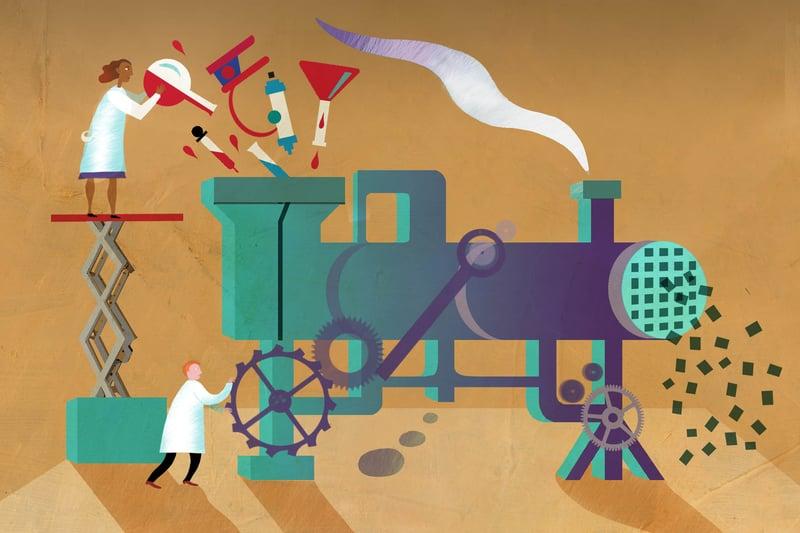
Scientists increasingly use AI tools to draft research grant proposals, which leads to proposals that align more closely with previously funded ideas and exhibit less novelty. Analysis of NIH and NSF proposals from 2021 to 2025 shows AI-assisted proposals have a higher chance of funding and result in more publications, but these papers are less likely to be groundbreaking. Although AI's help improves funding success rates, especially at NIH, it may inadvertently promote safer, less innovative research directions, potentially limiting scientific breakthroughs by favoring conventional ideas over novel, high-risk concepts.
AI Could Help Researchers Get Funding—But at What Cost?

AI regulation is evolving through diverse philosophies influencing business practices worldwide. Greece focuses on embedding human dignity and social prosperity within constitutional law, establishing enduring principles. California adopts rapid executive actions, using procurement rules to enforce AI safeguards proactively. The EU employs a risk-based approach, assigning compliance obligations relative to AI system impact. Businesses face challenges adapting to these varied frameworks, necessitating internal understanding of AI’s effects and risks. Waiting for regulatory convergence is costly; proactive literacy, risk management, and clear governance are essential as regulations emerge unevenly across regions.
Education
The Different Philosophies Driving AI Regulation Today
Policy bubbles refer to sustained periods of policy overinvestment or overreaction driven by psychological dynamics, institutional routines, and strategic actions that create positive feedback loops, locking policymakers into persistent overproduction. Moshe Maor examines these bubbles throughout their full life cycle—emergence, maturation, and termination—using case studies such as NATO expansion and U.S. crime policy to illustrate how these phenomena develop and endure. Understanding policy bubbles is crucial for designing balanced, evidence-based policies and improving governmental responses to long-term policy distortions.
Policy Bubbles
Field farming dominates UK agriculture due to its scale and reliance on natural sunlight and rainfall, essential for staples like wheat and barley, though it is vulnerable to climate change impacts such as drought. Greenhouses provide better environmental control and water efficiency by regulating temperature, irrigation, and humidity, supporting crops like tomatoes and cucumbers on smaller land areas, but still depend on external water sources and energy-intensive climate management. Vertical farms maximize control over growing conditions and use minimal land and water, ideal for leafy greens, yet they require significant infrastructure and energy inputs. Each method balances trade-offs between scale, control, resource use, and climate resilience in adapting food production to a changing climate.
Fields, greenhouses or vertical farms: what is the best way to grow food in a changing climate?
The UNDP report, based on engagements with eleven countries, reveals that key AI governance decisions often occur outside formal policy frameworks—in procurement, contracts, software updates, and day-to-day institutional practices. Effective AI governance requires embedding trust and safety measures directly within these operational contexts rather than relying solely on overarching regulations. The report highlights existing decision-making processes, emerging risks, and practical governance strategies under real-world constraints without ranking countries or prescribing universal models.
Health
Small States, Big Signals: What adoption in practice reveals about trust, safety, and AI performance globally
Artificial intelligence is overwhelming the British state by enabling citizens to flood bureaucracies with objections, appeals, and claims at unprecedented levels, a phenomenon termed "agentic flooding." This surge, affecting areas from tax appeals to welfare claims and parking tickets, has caused a 55% rise in employment tribunal backlogs and a 100-fold increase in emergency injunctions. While AI empowers citizens to assert their rights more effectively, this inundation threatens to cripple government functions, risking a collective loss as public systems become unable to manage the escalating demands.
How AI is breaking the British state
Bacteriophages, viruses that infect bacteria, have evolved over billions of years to overcome bacterial defenses and hold potential as alternatives to antibiotics. Scientists face challenges understanding why certain phages infect specific bacteria and how they function in complex human environments. Recent research demonstrated that AI can design a complete phage genome, producing a viable virus in the lab, highlighting AI’s ability to learn biological systems. AI tools like AlphaFold help predict protein structures of phage genes, advancing the study of their diverse and complex biology. By linking DNA sequence, protein structure, and function, AI could uncover patterns to improve phage therapies, identify promising candidates, and suggest enhancements, though experimental validation remains essential.
Nature has spent billions of years fighting bacteria – AI could help us learn its secrets

Allowing AI to dominate communication and research writing threatens humanity’s fundamental right to self-expression rooted in diverse realities, particularly impacting the Global South. AI-driven writing standardizes language, suppresses risk-taking, cultural nuances, and experimentation, flattening unique linguistic identities. It reinforces existing power monopolies by favoring Global North perspectives and lowering standards for expertise, undermining authentic knowledge production. This risks reversing decolonization gains, marginalizing Global South narratives, and devaluing their expertise, with profound social and economic consequences. Language and storytelling remain political acts that demand human choice and agency.
Africa | Education
The Politics of Writing: How AI is Stealing Power from Communications and Research