Democracy, despite its flaws, remains the most favored political system for most countries in the world. The year 2024 saw numerous elections globally, with a record number of voters participating. However, not all elections resulted in stable power transitions, as seen in Bangladesh. Europe witnessed gains by populist and far-right parties, causing uncertainty. The United States' presidential election was considered a model of democratic propriety, but division and discord were still prevalent. Overall, democracy is under stress, but it is not on the brink of collapse and there are reasons for guarded optimism.
The lesson from the year of elections? Democracy for the moment remains the political system of choice
The real estate market in Lebanon faces the challenge of reconstruction in the aftermath of the 70-day September 2024 war. Mireille Korab, a leading figure in Lebanon's real estate sector, discusses the impact of the war on the industry and the potential for investment opportunities. Despite the current instability, there have been isolated cases of real estate purchases, particularly in unaffected areas by buyers with high purchasing power. The rental prices in Beirut have surged due to people leaving the city. The market is expected to stabilize and new projects will begin once the ceasefire becomes permanent.
Lebanon
Real estate in the interim: Resettling and reconstruction
Economic growth in developing Asia and the Pacific remains steady, but changes in US policy under the incoming Trump administration may impact the region. Changes to US trade, fiscal, and immigration policies could affect growth and boost inflation in developing Asia, although the effects are expected to materialize beyond the 2024-2025 forecast horizon. The growth forecast for developing Asia in 2024 and 2025 has been trimmed to 4.9% and 4.8% respectively, with adjustments made based on recent data releases. Inflation forecasts have also been adjusted down due to softening global commodity prices. Risks remain tilted to the downside, including larger and more rapid US policy shifts, geopolitical tensions, and property market fragility in the People's Republic of China.
Asian Development Outlook (ADO) December 2024: Steady Growth Amid a Shifting Global Policy Landscape
The United Nations is exploring how artificial intelligence (AI) can accelerate progress towards the Sustainable Development Goals (SDGs). AI tools, such as synthetic data generated through algorithms and simulations, can help train machine learning models on large and diverse datasets. However, there are risks associated with using synthetic data, including the propagation of biases from initial datasets. Guidelines for responsible use of synthetic data in SDG-related research have been proposed, including the use of diverse data, disclosure of synthetic data sources, and prioritizing non-synthetic data. The environmental impact of AI systems and concerns about inequitable access to AI tools and data are also highlighted.
Will artificial intelligence help or hinder progress on the SDGs?
Utilities are under increasing pressure to enhance grid resilience due to more frequent natural disasters and rising electricity demand from electrification and data centers. The aging infrastructure faces significant challenges, including prolonged lead times and inflated costs for critical components like transformers. Effective supply chain management is essential; utilities should strengthen supplier relationships, adopt agile procurement processes, and implement collaborative strategies to address immediate needs. By diversifying suppliers, fostering regional partnerships, and committing to long-term contracts, utilities can mitigate risks and improve operational efficiency while preparing for future demands.
Financial services
Plugging in: To supercharge electric grid hardening, utilities must address supply chain challenges
Manufacturing companies are facing an increasingly complex geopolitical landscape as they seek to optimize their value chains. A new report highlights seven critical factors that influence decision-making, including infrastructure development, commitment to renewable energy, technology innovation, labor and skills, market access and demand, regulatory environment, and resilience to global disruptions. These factors are shaping the global manufacturing landscape and influencing where companies choose to operate. With shifting trade patterns, geopolitical rivalries, and the need to adapt to post-pandemic challenges, manufacturers must carefully assess these factors when making location decisions.
Algeria, Angola, Austria, Bahrain, Belgium, Benin, Bolivia, Botswana, Brazil, Burkina Faso, Burundi, Cambodia, Canada, Chad, Chile, Costa Rica, Croatia, Denmark, Ecuador, Egypt, Estonia, Eswatini, Ethiopia, Finland, France, Germany, Ghana, Greece, Guinea, Hungary, India, Indonesia, Israel, Italy, Japan, Jordan, Kazakhstan, Kenya, Kuwait, Lesotho, Lithuania, Luxembourg, Malawi, Malaysia, Mali, Mauritania, Mauritius, Mexico, Mongolia, Morocco, Mozambique, Namibia, Nepal, Netherlands, Norway, Oman, Panama, Peru, Philippines, Poland, Portugal, Qatar, Republic of Korea, Rwanda, Saudi Arabia, Senegal, Singapore, Slovakia, South Africa, Spain, Sri Lanka, Sweden, Switzerland, Taiwan, China, Tajikistan, Tanzania, Tunisia, Türkiye, Uganda, Ukraine, United Arab Emirates, Viet Nam | Financial services
These 7 factors are reshaping the global manufacturing landscape
Large language models (LLMs), such as OpenAI's ChatGPT chatbot, are based on language models that estimate the likelihood of word sequences. LLMs use neural networks to represent connections between words and have the ability to predict missing words or determine if one sentence should follow another. Transformers, a type of neural network introduced in 2017, process all words simultaneously, allowing for parallel training and the ability to train on vast amounts of data. Today's LLMs are trained on trillions of words, making them more powerful than previous models.
Large language models: how the AI behind the likes of ChatGPT actually works
Global South governance is crucial for international security, and this think piece explores why. It is part of the Global South Perspectives initiative, which aims to bring Global South viewpoints into policy research for sustainable development.
[Think Piece] Why does Global South governance matter for international security?
African policy institutes gathered to discuss borrower coordination in a knowledge sharing session. The session highlighted the fragmented nature of borrowing countries and the need for better coordination and information sharing. More than 30 organizations have aspects of borrower coordination, and pooling resources could enhance bargaining power for debt relief and access to new loans. The session also focused on the importance of working at various levels, pushing decision-makers for debt restructuring, and addressing vulnerabilities tied to regional affiliations. There was a call to merge initiatives and pinpoint overlapping themes to strengthen coordination among borrowers.
Africa | Financial services
Strengthening Coordination Among Borrowing Countries

The article presents an enhanced formula for assessing national power and applies it to Azerbaijan, analyzing multiple factors like population, economy, and military strength. The methodology incorporates fuzzy assessment techniques for a more precise evaluation, aiming to quantify both tangible and intangible aspects of national power.
Armenia, Azerbaijan
AND ASSESSMENT OF THE NATIONAL POWER OF THE REPUBLIC OF AZERBAIJAN ANALYSIS
Climate change is beginning to impact geopolitics, leading to a vicious cycle that hinders climate action, according to experts. This "doom loop" can cause increasing geopolitical instability, exacerbating climate change, and vice versa. For example, climate-driven inflation, particularly in food prices, can lead to political unrest and the rise of populism. Worsening climate impacts also divert resources away from decarbonisation and adaptation efforts, exacerbating the climate-debt doom loop. To avoid the worst climate outcomes, it is vital to recognize and address the derailment risks posed by climate change and take decisive action to rapidly phase out fossil fuels.
Financial services
A ‘doom loop’ of climate change and geopolitical instability is beginning
The EU has integrated the Western Balkan states into its policies despite the lack of progress towards their full membership. This has allowed the EU to maintain its system of regional integration during times of crisis. The EU has used a strategy called "external differentiated cooperation" to involve the Western Balkan states in various policies and address crisis-induced dependencies. However, there have also been times when the EU has reaffirmed the commitment to full membership for these countries. The integration into EU policies before accession could be a useful strategy to balance the need for swift action and a merit-based enlargement process.
How the EU has integrated the Western Balkans into EU policies
Negotiations for a global treaty to address plastic pollution were stalled at the recent meeting in South Korea, as a small group of oil-producing countries opposed restrictive measures. This resulted in the failure to draft a treaty by the agreed deadline. The meeting was meant to be the final one in a series of meetings established in 2022. The contentious issue of plastic production was a major point of disagreement, with some countries calling for downstream measures instead of production controls. However, a bloc of 102 countries called for a reduction target for global plastic production and the phase-out of harmful plastics and chemicals.
INC-5: ‘dark arts’, filibusters, and the final meeting that wasn’t
In Bangladesh, efforts are being made to integrate artificial intelligence (AI) into the education sector. A recent survey and training workshop with primary education teachers aimed to understand their perceptions and gather opinions on AI-enabled automation in teaching. The study provides insights into the potential benefits and challenges of AI in education, offering recommendations for implementation. With Bangladesh having one of the world's largest education systems, the adoption of AI has the potential to transform the teaching and learning landscape, preparing students for an automated future.
Bangladesh | Education
Artificial Intelligence for Education in Bangladesh: Insights from the First Small-Scale Artificial Intelligence Needs Assessment and Training for Primary Education Teachers
Turkish-American relations have deteriorated under President Biden, with President Erdoğan noting that he has had no meaningful dialogue with Biden. The Turkish government believes this is due to the Biden administration's focus on democracy and human rights. However, the problems between the two countries run deeper, including Erdoğan's liabilities, waning political credibility, and diverging interests with Washington. This downturn has implications for the European Union, which must take a leading role in engagement with Turkey. Biden's approach to Erdoğan has been unfavorable, emphasizing democracy and opposing authoritarian leaders, which led to negative reactions from Turkey. Ankara has sought to mend relations with the US, but Biden remains distant, representing a more disengaged era in US-Turkey relations.
Türkiye
From Biden to Trump: Waning Turkish‑American Relationship Demands Greater European Engagement
Generative AI is revolutionizing business operations by offering instant results and high-quality output without high costs or delays. This AI technology is capable of generating text, images, ideas, and even complex code in response to user prompts. Businesses can leverage generative AI for tasks such as creating menus, providing customer support through chatbots, analyzing social media sentiment, automating marketing and content creation, and handling routine inquiries and scheduling. Generative AI tools like GPT-4, GeminiAI, and Co-Pilot are becoming more accessible and affordable, enabling small firms to benefit from advanced capabilities. This technology enables businesses to achieve both speed and accuracy, streamlining operations, lowering costs, and improving competitiveness. By embracing generative AI, organizations can transform efficiency, productivity, and accessibility, enhancing their chances of survival in challenging economic environments.
Generative AI is making traditional ways to measure business success obsolete
Imogen Heap, a British musician known for her innovative approach to music-making, is using AI to enhance her music and connect with fans. Through her AI-powered digital twin, named Mogen, Heap demonstrates how AI can amplify human creativity rather than replacing it. Mogen assists her in various aspects of music production, while embodying her unique style. Heap sees AI as a collaborator, not a competitor, and envisions it as a tool to push creative boundaries. She also addresses ethical concerns by championing the Creative Passport platform, which ensures fair compensation for artists. Heap's approach sets an example for responsible AI use in the music industry.
Imogen Heap’s AI revolution: how one British musician is shaping the future of music
The United Nations Development Programme (UNDP) is utilizing artificial intelligence (AI) in crisis response efforts. AI tools, such as GIS technology, satellite imagery, and social media data, are being used to provide quick insights into impacted locations, populations, and infrastructure after a crisis. AI is also being employed to match skilled personnel with needs on the ground and to offer customized training and learning experiences. Additionally, the UNDP has created a Crisis Response Hub, which includes an AI chatbot and a digital assistant to improve efficiency in tasks such as resource mobilization and documentation.
Financial services
5 ways AI can help crisis response around the world
A new global carbon trading market could be hindered by speculators and fraud, similar to the EU Emissions Trading System (ETS). While the details of the UN carbon credit market are still unclear, it is expected to follow the cap-and-trade model used by the EU ETS. Speculators and dishonest market participants can cause price volatility and crashes, which would have severe consequences for developing countries heavily reliant on the market. Existing cap-and-trade markets, including the EU ETS, have had limited success in cutting emissions. Implementation and regulation of the global carbon credit market will determine its effectiveness in addressing greenhouse gas emissions.
A new global carbon trading market could be held hostage by speculators
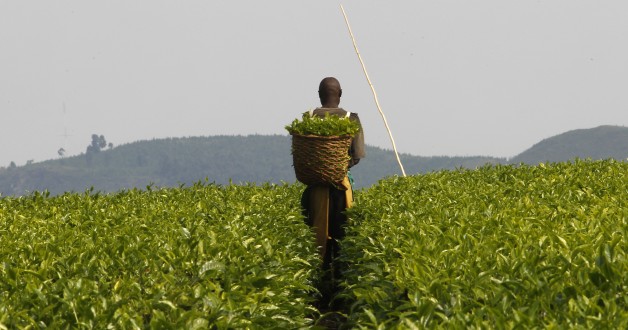
Africa's economic future is bright and will be led by Africans, according to Mavis Owusu-Gyamfi, President and CEO of the African Center for Economic Transformation. Owusu-Gyamfi emphasizes the importance of growth with depth, encompassing diversification, export competitiveness, productivity, technology upgrade, and human well-being. However, she acknowledges that transformation on the continent is moving in the wrong direction in terms of diversification, export competitiveness, and productivity. To address these issues, Owusu-Gyamfi advocates for intentional economic transformation, developing sectors with a comparative advantage, investing in skills and infrastructure, and ensuring sound policies and regulations.
Algeria, Angola, Benin, Botswana, Burkina Faso, Cambodia, Chad, Egypt, Eswatini, Ethiopia, Ghana, Guinea, Kenya, Lesotho, Malawi, Mali, Mongolia, Morocco, Mozambique, Nepal, Rwanda, Senegal, South Africa, Tanzania, Uganda | Financial services
Africa’s economic future is bright, and it will be led by Africans: in conversation with Mavis Owusu-Gyamfi