Following Donald Trump's victory in the US presidential election, the stock market experienced a surge, including Bitcoin reaching a record high price and the value of the global crypto market surpassing $3 trillion. The surge was attributed to investor expectations of tax cuts, tariffs, corporate tax cuts, and deregulation promised by Trump. However, the economic backdrop has changed since Trump's previous presidency, with inflation and interest rates rising, which could make his proposed policies riskier or costlier. There may also be implications for the UK and EU in terms of trade relations and climate initiatives if Trump is re-elected.
Financial services
Why Donald Trump’s election win fuelled a stock market surge
Human-first design is crucial for the future of the internet, which will be driven by immersive, data-driven experiences. This design approach integrates human perspectives, emotions, and wellness into the technology value chain. It goes beyond human-centered design by considering human rights and shared values like privacy, transparency, and education. Human-first design requires businesses, developers, and designers to consider the ethical implications and trade-offs in creating technology products. It also involves embedding educational content, ensuring accessibility, and establishing governance practices and enforcement mechanisms. Collaboration between stakeholders is necessary to create human-first metaverse experiences that respect human rights, inclusivity, and ethical implications.
Why is human-first design essential to the future of the internet?
Central Asian states are navigating the complex and shifting geopolitical landscape caused by the Russia-Ukraine conflict. These countries are adopting a multi-vector foreign policy approach, balancing their historic ties with Russia while expanding partnerships with global powers such as China, the West, and Türkiye. Economic reliance on Russia, the presence of Central Asian migrants in Russia, and membership in Russian-led institutions are factors that shape their cautious approach. Despite these challenges, Central Asian states are actively engaging with other global players and strengthening partnerships, drawing increased attention from the international community.
Austria, Kazakhstan, Russian Federation, Tajikistan, Türkiye, Ukraine
Shifting Geopolitics of Central Asia: The Regional Impact of the Russia-Ukraine War
Tech strategy leaders are emphasizing the importance of accountability and oversight in promoting digital trust. Transparency, redressability, and auditability are identified as critical dimensions for achieving accountability and oversight. Leaders from Dell Technologies and Microsoft share their approaches, which include designating chief AI officers, operationalizing oversight through governance boards, and implementing responsible AI standards and frameworks. They highlight the need to balance technological advancements with human qualities like critical thinking and empathy for long-term trust and success.
We asked 4 tech strategy leaders how they're promoting accountability and oversight. Here's what they said
The Roland Berger Future of Health study explores the transformative impact of artificial intelligence (AI) on healthcare. Over the next five to six years, AI is predicted to trigger significant changes, enhancing quality and economic efficiency. The study, involving 100 executives, indicates that while many companies utilize AI, few have fully integrated it into operations. Key potential benefits include reduced decision-making time and improved diagnostic support. However, challenges such as technical expertise gaps and infrastructure limitations exist. To succeed, healthcare leaders should focus on patient-centricity, strategic thinking, workforce empowerment, and securing technical foundations.
Future of health 6 - The AI (r)evolution in health
AI tools could potentially be used to create virtual leaders and figures as replacements for real-life leaders who have died. Theoretical scenarios and ethical implications surrounding the idea of digital immortality have been explored in literature and media. Technological advancements, such as AI-assisted strategic planning tools, already exist and could pave the way for the creation of AI-generated leaders based on historical data and information. The AI leader could potentially assume leadership roles within an organization and possess enhanced strategic and technical capabilities. While this concept is currently fictional, it raises questions about the future possibilities and ethical considerations of digital immortality.
Will politicians and terrorist leaders live forever in the age of AI?
Advances in artificial intelligence (AI) and the metaverse are transforming the fields of history and religion in several ways. Firstly, AI is enabling the restoration of ancient texts and damaged sites by using machine-learning algorithms to decipher illegible fragments or reconstruct spaces based on old descriptions. Secondly, AI is making ancient languages more accessible through translation software and chatbots that engage in discussions about religious scriptures. Thirdly, young people are engaging with cultural heritage through virtual experiences, such as role-playing demigods or participating in virtual religious services. Lastly, AI is creating anthropomorphic characters and chatbots that mimic human interaction, enhancing the immersive experience of engaging with heritage and religion in the metaverse.
Four ways in which history and religion are being transformed by the metaverse and AI
Ghanaian cocoa farmers have been unable to take advantage of record-high cocoa prices due to a combination of factors. Poor harvests in Ghana and the Ivory Coast, caused by El Niño weather events and years of underinvestment, led to a hike in international cocoa prices. However, the prices farmers receive for their cocoa remained below international market prices. This is largely due to a long-standing forward sales strategy employed by the Ghana Cocoa Marketing Company (CMC), which hedges against falling prices but limits farmers' ability to benefit from price increases. Additionally, the CMC's financing structure, reliant on a syndicated loan, requires locking in prices early, preventing farmers from capitalizing on spot market price increases.
Ghana
Why Ghanaian farmers have been unable to capitalise on record cocoa prices
Early warning systems for extreme weather events are crucial for preventing conflict and promoting climate action. Natural disasters can exacerbate vulnerabilities and create opportunities for non-state armed groups (NSAGs) to gain control over resources. Cooperation in the aftermath of disasters is short-lived without good governance. Expanding the use of climate early warning systems can increase governments' preparedness and responsiveness, stifling the conditions that enable NSAGs. However, only 50% of countries have multi-hazard early warning systems, leaving billions of people vulnerable. The U.N. has established Early Warnings for All (EW4A) to provide universal access to these systems by 2027, but barriers remain to meeting this target. Countries experiencing conflict and instability face even greater challenges.
Why Early Warnings Are Critical for Climate Action and Conflict Prevention
Public-private partnerships (PPPs) are crucial in ensuring ethical, sustainable, and inclusive development of artificial intelligence (AI). Rapid advancements in AI, growing awareness of its societal impact, and the urgent need to harness AI for good make bridging the "AI divide" essential. PPPs bring together governments, private companies, civil society, and other stakeholders to bridge resource and expertise gaps, foster cross-border collaboration, and ensure multi-stakeholder engagement. These partnerships can address AI bias and inequality by developing ethical guidelines, promoting equal access to AI technologies, and enhancing AI literacy and skills training. Furthermore, PPPs can leverage AI for sustainable solutions by promoting energy efficiency and sustainable infrastructure.
Health
How public-private partnerships can ensure ethical, sustainable and inclusive AI development
China dominates the refining of critical minerals but also faces vulnerabilities in its supply chains. To address concerns and reduce geopolitical tensions, China is implementing a national strategy that balances robust industrial policies with international cooperation. While China may not have the majority of global mineral resources, it is the largest importer and processor of critical minerals, supplying the rest of the world. Other major economies are also increasing their imports and exports of critical minerals. The challenges of dependency, supply disruption, and price fluctuation are of concern to China given its position as a major manufacturing hub. To secure access to critical minerals, governments are implementing various policy responses, including increasing domestic production, recycling, and building partnerships. While China's foreign policy stance and previous export restrictions have caused concern, a nuanced understanding of China's multifaceted strategies is necessary. Balancing narratives and including China in efforts to reform critical mineral supply chains is crucial as it remains a key player in the global economy.
Financial services
Why China’s critical mineral strategy goes beyond geopolitics
Donald Trump's second presidency will have profound implications for Europe. Effie G. H. Pedaliu argues that if the EU and UK wish to navigate the turbulence ahead, they will have to learn to cooperate, especially on trade and defense. The new Trump presidency raises concerns about trade wars, the impact on Europe's security, the potential abandonment of Ukraine, and the withdrawal of the US from international collaboration on climate action. Europe now faces a grimmer security environment as wars rage in its borderlands. Trump's second term is expected to be different from his first, with his dislike of NATO and multilateralism, fondness for tariffs, and lack of moderating influences likely shaping his foreign policy decisions.
Europe in the age of Trump 2.0
The world is currently facing a poly-crisis characterized by wars, pandemics, economic shocks, and social strain. This poly-crisis is driven by interconnected factors such as rapid technological innovation and changing social values, making outcomes unpredictable. However, leaders have the power to change the course of history and shift the global narrative towards peace. Examples include Nelson Mandela's leadership in South Africa and his commitment to reconciliation. There are currently opportunities for leaders like President Xi Jinping, President-elect Donald Trump, Vladimir Putin, and Ayatollah Khamenei to redirect the tide of history towards peace in areas such as the Taiwan Strait, Ukraine, and Iran. Achieving peace would have significant positive implications for international trade, stability, and human well-being.
Poly-crisis or poly-peace?
The World Economic Forum and Accenture have collaborated on a white paper that explores the importance of good governance for the future internet. The paper advocates for shared commitments to ensure governance standards are maintained amidst rapid technological innovation. The authors call for alignment on eight core commitments and emphasize the need to address governance in relation to non-technical outcomes and utility. With the internet evolving rapidly, it is imperative for governance to keep up with these changes.
ICT
Shared Commitments in a Blended Reality: Advancing Governance in the Future Internet
Field Marshal William Slim, known as 'Uncle Bill', led the XIVth Army to victory in the Second World War. Despite leading a diverse force, including troops from various nations, he successfully maintained order and discipline. His ability to integrate air warfare into his campaign served as an exemplar for future air-land battles. Admiral Lord Louis Mountbatten praised Slim as the finest leader of fighting men in the war. Dr. Robert Lyman MBE, a former British Army officer and author, also agrees with this assessment.
Episode 4: Turning Around a Defeated Army: Field Marshal Viscount William Slim
AI has immense promise for society, but it is not a panacea. It is a prediction machine trained on large datasets, but its strength in processing data is also its weakness as it can fall into the "confidence trap". AI can overlook problems and make decisions without human intervention, potentially leading to disastrous consequences. Furthermore, AI may hinder radical innovation as it primarily mirrors the past. While AI can improve existing innovations, its current form limits its ability to spark new ideas.
AI feels like an unstoppable force. But it is not a panacea for businesses or society
The US government has finalized new restrictions on American venture capital firms investing in Chinese tech startups for national security reasons. The restrictions, which will come into effect in January, prohibit investments in Chinese AI companies developing technology solely for sensitive uses and set a threshold for determining investments in consumer AI companies. The Treasury Department's threshold of 1025 flops for AI models is expected to have limited immediate financial impact but may deter Chinese AI companies from seeking future help from the US. The incoming Trump administration may also make the restrictions even stricter.
Taiwan, China
Why the US Government Banned Investments in Some Chinese AI Startups
Membership in NATO positively impacts export levels in Europe, while a US withdrawal from NATO or a deepening of the Shanghai Cooperation Organisation (SCO) would have negative effects on trade and welfare. These findings highlight the economic implications of political alliances and the potential reshaping of the geopolitical and economic landscape. The accession of smaller countries to NATO is economically beneficial, outweighing the defense spending requirement, while the disintegration of NATO would have severe economic repercussions. Understanding the role of political alliances in shaping trade patterns and economic outcomes is important for policymakers and scholars.
How political alliances shape trade and welfare in Europe
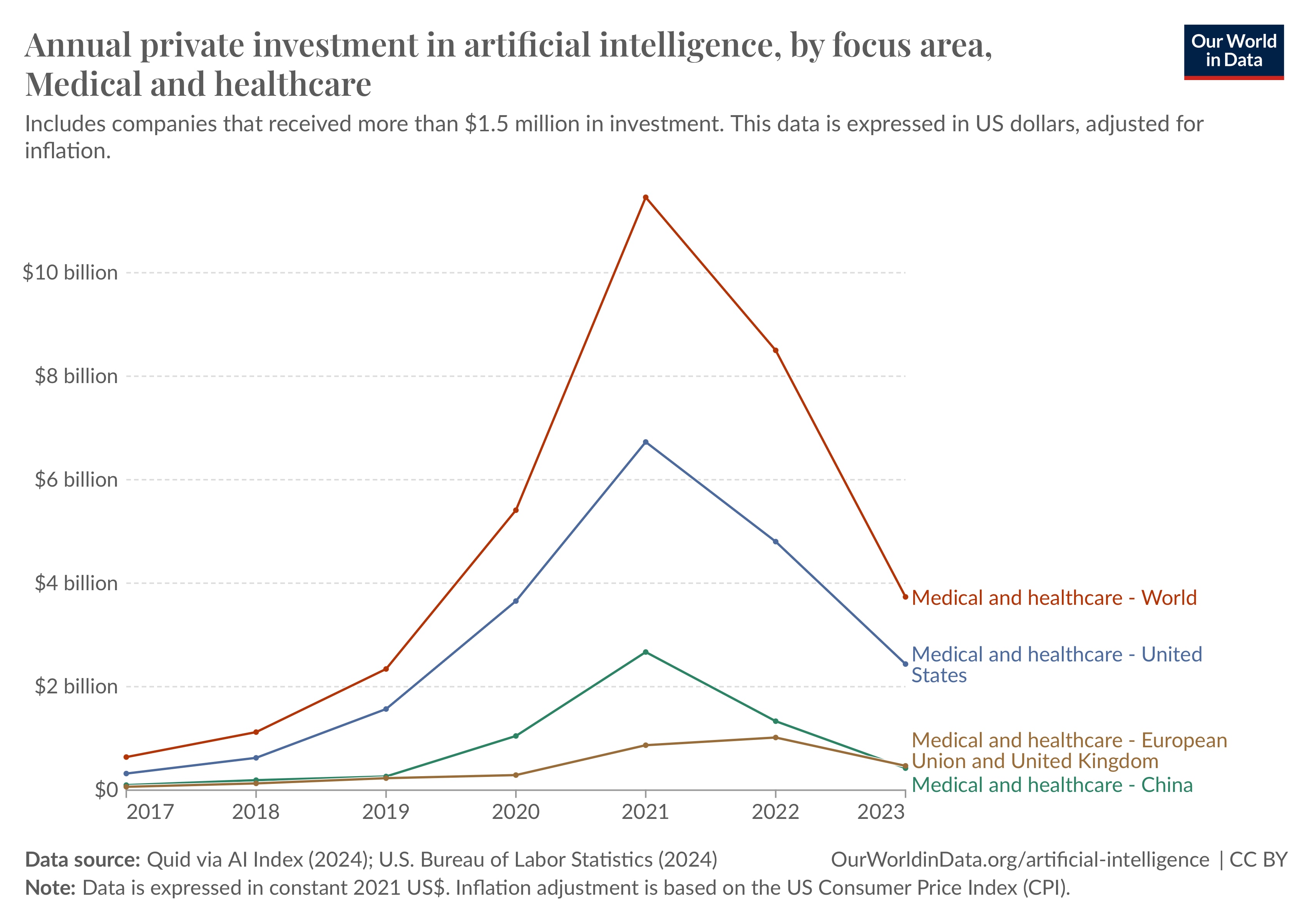
AI is transforming healthcare in four main ways. Firstly, AI can accurately spot bone fractures, reducing the need for unnecessary X-rays and missed diagnoses. Secondly, AI can assist in assessing ambulance needs, predicting which patients require hospital transfer with high accuracy. Thirdly, AI can detect early signs of diseases before symptoms appear, improving early diagnosis and treatment. Finally, AI-powered clinical chatbots can provide useful and evidence-based information to guide medical decisions and help triage patients. While AI has the potential to revolutionize healthcare, it is crucial to have proper training, regulation, and human oversight to mitigate risks and ensure responsible use.
Health
4 ways AI is transforming healthcare
AI data science agents are offering a solution to the talent shortage in the field of artificial intelligence. These agents automate data processing and causal analysis, allowing organizations of all sizes to access the benefits of AI. They can process and analyze large amounts of data, uncover meaningful patterns, and predict the impact of future actions. By leveraging these agents, under-resourced sectors such as underprivileged communities and small manufacturers can optimize their operations and make data-driven decisions. This has the potential to bridge the divide between organizations that can afford AI talent and those that cannot.
How we can bridge the AI divide with accessible AI data science agents