International relations scholars should approach AI with caution, according to an article in the RUSI Journal. The article discusses the impact of AI on geopolitics and questions whether current theories of international relations can provide insights into this issue. The author emphasizes the need for careful consideration and examination of the potential implications of AI in the context of international relations.
Why International Relations Scholars Should Approach AI with Caution
North Korea's recent alignment with Russia and escalation of tensions in Northeast Asia has put it in the global spotlight. In a book called "Engaging North Korea," 12 international experts analyze the country's relations and offer insights for dealing with it. The book highlights the need for a comprehensive approach to address North Korea's nuclear program, economic sanctions, humanitarian crisis, and other interlinked issues. It also discusses the role of countries like Sweden, which has served as a diplomatic protecting power for several nations in their relations with North Korea. While engaging with North Korea is challenging, the authors emphasize the importance of working collectively, patiently, and purposefully towards world peace. However, recent policy shifts make this task even more difficult in the short term.
Russian Federation, Ukraine
From the bookshelf: ‘Engaging North Korea’
The healthcare industry faces a critical cybersecurity crisis, with 2023 marking its 13th consecutive year as the sector with the highest data breach costs, averaging nearly $11 million per incident. Cybercriminals increasingly target healthcare due to valuable patient data. Ransomware attacks are particularly rampant, affecting 91% of breaches, and notable incidents in 2024 have resulted in massive data exposures. Other threats include vulnerabilities from IoT and cloud devices, insider threats with rising costs, and politically motivated hacktivism. Comprehensive cybersecurity strategies are essential to protect patient care and institutional integrity.
From life-saving to life-threatening: The cybersecurity crisis in healthcare
The liberal international order, which has been challenged by the Trump administration's withdrawal from international agreements, may require reform to survive the US elections. If Donald Trump is re-elected, there are concerns that he could further undermine international organizations like NATO and the IMF. However, even if Joe Biden wins, there is no guarantee that the US will actively champion multilateralism. The current liberal international order has overreached in many ways and has not taken into account the interests of powerful states. To safeguard multilateralism, the LIO should embrace a strategy of liberal restraint, allowing powerful states more flexibility and control over their international policies.
Financial services
The liberal international order will only survive the US elections if institutions are reformed to not work against the interests of powerful states

Social media and generative AI consume a significant amount of energy, contributing to carbon emissions. Social media platforms transfer data from servers to devices, and the larger the file (e.g., high-resolution images, long videos), the more energy is required. Server farms around the world house this data, and the energy needed for data transfer comes from fossil fuels. TikTok is found to be the least eco-friendly platform, while LinkedIn uses less data due to its text-based nature. Generative AI also consumes a lot of energy, with more powerful AI requiring more energy. To reduce carbon footprints, individuals can limit screen time, use energy-saving settings on devices, choose less energy-demanding social media, and prioritize using wifi over mobile data.
Social media and generative AI can have a large climate impact – here’s how to reduce yours
Gerrymandering could potentially help deliver the presidency to Donald Trump in a contingent election. Gerrymandering has increased Republican representation in the House of Representatives, allowing them to control 26 state delegations. If neither candidate in the November 5th US presidential election can gain the required 270 Electoral College votes to win, a contingent election could be triggered, and the House of Representatives would decide the outcome. With Republican control of the House, this could result in Donald Trump becoming president. Gerrymandering, the process of redrawing district boundaries to favor one party, has disproportionately given Republicans an advantage in key states.
How gerrymandering could help deliver the presidency to Donald Trump
Summary:
A Palestinian writer, who has experienced the conflict between Israelis and Palestinians firsthand, believes there is still hope for a two-state solution if both sides are willing to change their thinking and leadership. The writer emphasizes the importance of understanding the fears and needs of both Israelis and Palestinians, and the necessity of direct negotiation rather than relying on pressure tactics or outside intervention. The core desires in resolving the conflict are security and dignity, and addressing these needs is vital to reaching a peaceful resolution.
Israel
How to Salvage a Two-State Solution
Thomson Reuters emphasizes the importance of professional-grade generative artificial intelligence (GenAI) in regulated sectors such as legal, tax, accounting, and risk. They have partnered with Morgan Lewis, a global law firm, to provide a professional-grade GenAI solution that is accurate, transparent, and accountable. The solution leverages Thomson Reuters' extensive content library and is designed specifically for professionals in regulated industries. The company focuses on AI benchmarking and works with customers to understand the immediate value and long-term transformation potential of AI technologies. A webinar and summary report are available for further information.
Webinar: The Importance of Professional-Grade GenAI in Regulated Sectors - SPONSOR CONTENT FROM THOMSON REUTERS
Business leaders are facing increased geopolitical risk and the use of economic sanctions by governments. Sanctions are now seen as a tool for both economic and national security. Enforcing sanctions is challenging due to evasion tactics used by bad actors and the involvement of non-state actors. The expanded use of sanctions presents challenges and risks for businesses, who must navigate complex regulations and compliance obligations. Companies should adopt wargaming exercises, similar to cybersecurity practices, to ensure compliance and mitigate risks.
Russian Federation, Ukraine | Financial services
How Business Can Manage Geopolitical Risk And Sanctions
Non-violent resistance movements and the non-traditional institutions they create are critical in building sustainable peace and security. Kleptocratic networks, authoritarian governance, and kleptocracy are key drivers of violence and conflict. Autocratic governments are more likely to harbor violent extremists and undermine the rule of law. Non-violent resistance movements have great potential in addressing conflict drivers and advancing democratic aims. They inspire dignity and agency, and are twice as effective as armed struggles. Engaging these movements can reduce the risk of atrocities and promote non-violent pathways to peace. Inclusive strategies and cross-sectoral partnerships are needed to support these movements and challenge insecurity and violence.
To reduce violent conflict, support non-violent resistance movements
UNTOC's potential impact is hindered by limited involvement of civil society, as demonstrated at the recent COP 12. While civil society participation has increased, their contributions are restricted, preventing them from making substantive changes. The conference also saw political wrangling over environmental crime negotiations, resulting in a weakened response that lacks specific measures for combating these crimes. However, a resolution on firearm trafficking faced less opposition, suggesting that issues with active involvement of civil society are not universal.
Can the UNTOC work without civil society’s active involvement?
Large language models (LLMs) have the potential to revolutionize productivity, but they also come with flaws such as hallucinations, logical inconsistencies, and harmful outputs. Many managers struggle to identify use cases where the benefits outweigh the costs and risks of LLMs. To effectively utilize LLMs, a systematic approach is recommended: disaggregate processes into tasks, assess each task based on the generative AI cost equation, launch pilot projects, evaluate results, and make improvements. Understanding the strengths and weaknesses of LLMs is essential for cost-benefit analysis and risk assessment. Despite emerging protections, challenges like inaccuracies, irrelevance, bias, and data exposure persist.
A Practical Guide to Gaining Value From LLMs
The Women, Peace, and Security (WPS) Working Group for Arab States held its second meeting in Geneva to establish a regional mechanism for shaping WPS policies in the Arab region. Discussions focused on key areas for the WPS agenda in the next decade and the challenges faced by women in the region. A white policy paper with recommendations for implementing the WPS agenda was also discussed. The aim is to present the paper to the UN Security Council in anticipation of the 25th anniversary of UNSCR 1325. The working group emphasizes collaboration and advocating for policy change to amplify women's voices.
On the 24th anniversary of UNSCR 1325, the Women, Peace and Security (WPS) Working Group for Arab States Meets in Geneva to Advance Regional Vision and Policies
The European Parliament will hold hearings for new European Commission nominees from 4-12 November. The nominees will face parliamentary scrutiny before their appointments to the EU executive can be approved. The hearings have evolved over time, becoming more transparent and comprehensive. Candidates now provide detailed documentation and answer written questions prior to the public Q&A sessions. MEPs focus on candidates' integrity, skills, and policy plans and may request specific promises for future actions. After the hearings, the European Parliament evaluates each candidate based on suitability, integrity, and policy plans. Negative assessments may lead to the replacement of a nominee.
What to expect from this week’s EU commissioner hearings
Indonesia aims to become a high-income country by 2045, using trade and investment as tools for growth. As a leading exporter of soft commodities linked to sustainable development, such as palm oil and rubber, the country is also associated with deforestation risks and rising emissions. However, Indonesia can leverage investment to decarbonize exports, create sustainable livelihoods, and participate in low-carbon value chains. The country's steel industry, for example, could adopt innovative technologies to achieve deep emissions reductions. Additionally, efforts are being made to boost emissions measurement skills and provide information along the supply chain. Sustainable land-use practices and traceability in the soft commodity trade are also essential for reaching climate targets.
Bangladesh, Belgium, Benin, Bolivia, Brazil, Burundi, Cambodia, Canada, Chile, Costa Rica, Croatia, Denmark, Ecuador, Egypt, Estonia, Eswatini, Ethiopia, Finland, India, Indonesia, Israel, Japan, Jordan, Kazakhstan, Kenya, Lesotho, Lithuania, Malawi, Malaysia, Mauritania, Mauritius, Mozambique, Namibia, Nepal, Netherlands, Norway, Oman, Panama, Peru, Philippines, Portugal, Republic of Korea, Rwanda, Saudi Arabia, Senegal, Singapore, Slovakia, Sri Lanka, Sweden, Tajikistan, Tanzania, Tunisia, Türkiye, Uganda, Viet Nam | Financial services
Sustainable trade could be an opportunity for Indonesia. Here’s how
Technology is now driving scientific discoveries, with artificial intelligence (AI) playing a key role. AI is accelerating research and development (R&D) processes, enabling faster predictions of protein structures and speeding up drug discovery. This reversal presents opportunities for improved medications, smarter devices, and cleaner energy solutions. AI is also democratizing R&D by providing access to specialized knowledge and tools and facilitating global collaboration. To leverage this technology-driven innovation, leaders should foster a culture of experimentation, make strategic investments in AI and other advanced technologies, and build interdisciplinary teams that combine scientific expertise with AI skills.
Science once drove technology – but now the reverse is true. Here's how we can benefit
The book "Information Technology for Peace and Security," edited by Christian Reuter, explores the role of information technology (IT) and artificial intelligence (AI) in addressing questions of peace and security. The textbook covers topics such as cyber conflicts, cyber arms control, and the use of IT in peace and conflict. It provides insights from natural, technical, and computer science perspectives. The second edition of the book has been extended and updated to reflect the latest developments in the field.
Information Technology for Peace and Security
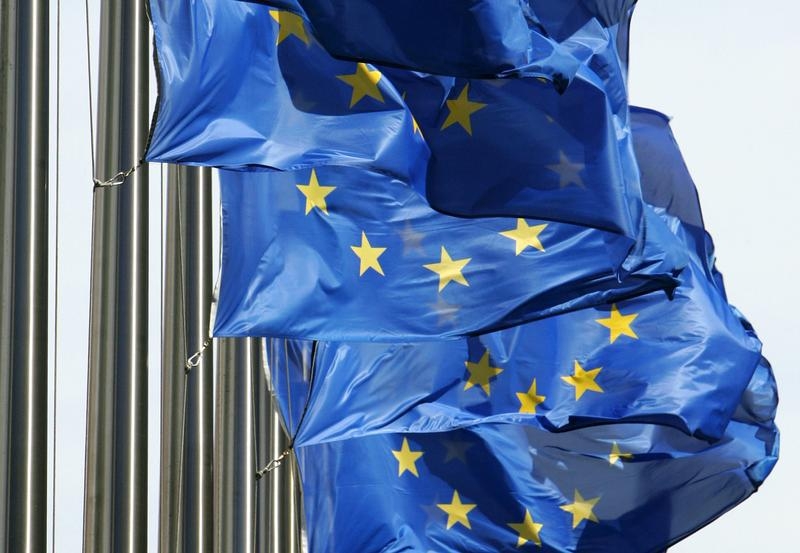
The EU is focusing on algorithmic management to protect workers' rights in a tech-driven workplace. The European Commission has directed the Vice-President-designate for People, Skills, and Preparedness to prioritize the impact of digitalization in the world of work, including an initiative on algorithmic management. Although the AI Act recognizes the risks posed by automated decision-making, there are still gaps that need to be addressed. A dedicated directive is needed to fill these gaps, including prohibitions on harmful practices, transparency obligations, and rights for workers to challenge and rectify automated decision-making. This directive will protect workers' rights and ensure socially beneficial innovation.
Open Letter: Algorithmic Management and the Future of Work in Europe
Sri Lanka is set to hold snap elections for a new Parliament on November 14th, following the election of President Anura Dissanayake in September. Dissanayake's National People's Power (NPP) alliance, which currently holds only three seats in Parliament, aims to gain a legislative majority to push forward its agenda of cracking down on corruption, providing justice for the victims of the 2019 Easter attacks, and creating a more just and prosperous economy. The NPP's electoral platform focuses on a liberal-progressive agenda, with promises of good governance, economic justice, and constitutional reform. The outcome of the parliamentary vote will determine the NPP's chances of success and their ability to consolidate power in the country. The NPP's rise in popularity is attributed to the economic crisis, public discontent with mainstream parties, and the transformation of Sri Lanka's two-party system.
Sri Lanka
Sri Lanka Goes to the Polls (Again)

The Israeli parliament has voted to expel the UN Relief and Works Agency (UNRWA) from the country, effectively banning it from providing any services inside Israel, including in East Jerusalem, Gaza, and the West Bank. UNRWA's ability to conduct its humanitarian operations would be severely limited, exacerbating an already dire humanitarian situation in Gaza. The move is part of Prime Minister Benjamin Netanyahu's plan to remove obstacles to his government's regional strategic plans. The international community has expressed deep concerns about the ban, and there are doubts about Israel's ability to ensure continued humanitarian aid to Gaza.
UNRWA’s Expulsion and What it Means