
The UK government's decision to dissolve the Department for Science, Innovation and Technology and merge its functions into the new Department for Business, Innovation, Science and Trade has sparked concern but reflects a historical pattern of shifting science responsibilities within business-focused departments. Despite initial alarm, the UK's research and development budget remains protected with a £58.5 billion pledge through 2030, and UKRI maintains a clear strategic plan. Compared to the US, where science faces severe budget cuts and political interference, the UK's system remains stable. The integration of science with business aligns with regional innovation hubs and may address the country's longstanding challenge of low private-sector R&D investment and commercializing research outcomes.
Education
What the sudden demise of the UK’s department of science means for the future of research

AI companies are increasingly purchasing old printed books as training data because these books, especially those published before 2022, are free from AI-generated content. This makes them valuable for developing more accurate AI models, as online data scraped today often contains AI-produced text, risking "model collapse" where AI models degrade in quality. Printed books offer curated, peer-reviewed, authoritative knowledge that cannot be replicated by web crawls. Additionally, authors can now intentionally manipulate AI training by producing text designed to sabotage AI models.
Education
AI Companies Are Buying Tons of Old Books Because They’re Free of AI Slop

Tensions between Addis Ababa and the Tigray Region continue to rise, with the risk of another large-scale war despite neither side actively seeking it. Since the November 2022 end of the northern Ethiopia conflict, no stable political order has been established, leaving Tigray in a fragile state between war and peace. The Tigray People’s Liberation Front (TPLF) struggles with internal divisions and authoritarianism after losing national power in 2018, while the Ethiopian government has failed to ensure displaced persons' return or restore Tigray’s territorial integrity. Renewed conflict could entangle Eritrea, Sudan, and other regional actors. Germany and the EU are urged to focus on crisis prevention to avoid further escalation in the volatile Red Sea region.
Africa, Latin America
The Tigray Region in the Grey Zone between War and Peace
More than 60% of Google searches in the U.S. end without users clicking links, as AI tools like Google’s summaries, ChatGPT, and Claude provide quick answers. This shift shortens the exploratory phase of information seeking, reducing website engagement and undermining curiosity. Neuroscience research shows that curiosity—a state triggered by a knowledge gap—activates brain reward circuits and enhances memory formation not only for the sought-after answer but also for unrelated information. By providing instant answers, AI may diminish the biological drive to explore, threatening deeper learning and broad understanding.
We Are Losing the Ability to Discover What We Didn’t Know to Ask
Audrey Tang argues that the core challenge is not whether AI will become more human but whether humans will be reduced to entities easily evaluated by machines. Digital systems have long shaped human behavior by sorting attention and rewarding machine-like interaction. While AI can facilitate meaningful dialogues by bridging language and cultural gaps, many systems encourage superficial engagement and reactive behavior. A humane technological future requires designing tools and institutions that preserve uniquely human capacities such as deep understanding, enduring commitments, self-reflection, accountability, and care beyond measurable benchmarks.
Education
AI and democracy: the right to resist optimization
Rapid deployment of advanced technologies like AI into labor markets, public institutions, and information systems poses risks if institutional reforms lag. Key failure modes include productivity gains without widespread prosperity due to slow workforce adaptation; execution of tasks without proper verification, leading to accountability and trust deficits; and increased organizational capacity paired with centralized control absent safeguards for contestability and civil liberties. Addressing these challenges requires proactive institutional innovation to enable equitable benefits, maintain social trust, and protect democratic governance.
Education
What Humanity Needs To Flourish In The Next Decade

Greater Manchester has become Europe’s fastest-growing digital economy, with a tech ecosystem valued at $4.2 billion and the UK's largest AI sector outside London. This growth is tied to a broader strategy known as "Manchesterism," which links digital expansion to inclusive local benefits through initiatives like the Good Growth Fund and the Greater Manchester Baccalaureate skills program. The planned relocation of 9,000 civil servants to a new digital campus will further solidify the cluster. While aspects like linking growth to place and skills development could be replicated nationally, challenges remain due to uneven job benefits across boroughs and the localized nature of tech clusters.
Education
Manchester’s digital transformation could be a blueprint for other parts of the UK
Scholars at Stanford’s Institute for Human-Centered AI and RegLab have developed an AI tool analyzing 500 million words of state statutes to identify outdated "policy sludge"—obsolete provisions and reporting requirements that slow government functions. Partnering with states like New York, California, and Maryland, they aim to eliminate these burdensome rules to improve government efficiency. This initiative inspired New York Governor Kathy Hochul to issue an Executive Order for a "regulatory reset" to remove outdated regulations and restore public confidence in government service delivery.
How AI is helping states cut through decades of red tape
Open science has expanded accessibility, transparency, and collaboration in scientific research, prompting critical examination of equity, justice, and fairness in these practices. It has also reshaped contemporary science by challenging traditional boundaries of what counts as science and who is recognized as a scientist. Changing notions of "good" scientific practice now reflect evolving expectations influenced by open science, fostering greater inclusivity and reducing unwarranted assumptions about scientific legitimacy. However, achieving openness and equity remains context-dependent and complex, requiring nuanced approaches beyond simply democratizing access to data and publications.
Health
How Has ‘Opening Up’ Science Changed Scientific Practices?

Ed Miliband's appointment as UK foreign secretary suggests a willingness to defy Donald Trump’s disapproval and maintain a strong, though measured, relationship with Israel. New PM Andy Burnham is likely to focus less on foreign policy initially, despite pressures to engage internationally. His approach to the EU may be cautious, reflecting domestic concerns, while his rapport with the US—especially Trump—could be cordial despite ideological differences. UK foreign policy remains anchored by a longstanding, though informal, grand strategy emphasizing NATO membership, transatlantic ties, and global presence, with prime ministers influencing but not radically shifting this framework.
What Ed Miliband’s appointment does and doesn’t mean for the UK’s foreign policy
The Chinese economy is experiencing a slowdown domestically while simultaneously boosting its export activities. Despite internal economic challenges, China has intensified efforts to increase exports, positioning itself strongly in international trade. This dynamic reflects a strategic adaptation to counterbalance stalling growth within its own market through expanded external demand.
Africa, Latin America
The Chinese Economy: Stalling—and in Export Overdrive

Since the global financial crisis, much credit, liquidity, and risk-taking have shifted outside traditional banks to non-bank financial institutions such as asset managers and hedge funds, which now hold over half of global financial assets. As a result, financial shocks may originate in markets through mechanisms like margin calls, collateral changes, or fund redemptions before affecting banks. The March 2020 market turmoil demonstrated vulnerabilities in non-bank finance and market liquidity, emphasizing that stronger banks alone do not ensure financial stability. This dynamic is particularly critical for emerging markets, where external investor behavior can trigger financial stress independent of domestic fundamentals.
Latin America | Health, Financial services
Strong banks do not guarantee financial stability
AI’s growing ability to handle data-driven problems increases the value of humanities skills like critical and creative thinking. Humanities subjects, offering insights into human nature, history, and ethics, remain crucial, especially as AI development raises questions about responsible usage. Despite this, universities face cutbacks in humanities research and teaching, driven by financial pressures from fewer international students and tuition fee erosion. This trend risks making humanities education less accessible, disproportionately affecting poorer students and reducing early-career academic positions by 20% in the past decade, potentially undermining society’s thoughtful progress.
Health, Education
We need humanities more than ever in the age of AI
Pakistan pursues a nuanced foreign policy by maintaining strong strategic ties with China while managing a tactical relationship with the United States. China remains Pakistan’s steadfast "all-weather" ally, aiding its stance against India and collaborating on regional issues like the Iran conflict, with Pakistani leaders regularly consulting Beijing. Conversely, Pakistan's U.S. relationship is transactional, offering strategic services in exchange for aid and military support, though historically marked by periods of abandonment and sanctions when U.S. interests diverge. This balancing act allows Pakistan to leverage its relations with both powers amid shifting geopolitical dynamics.
[Pakistan’s Great Game]- Between the United States and China: Tactics and Strategy
Pakistan is increasingly viewed by Middle Eastern countries as a guarantor of regional security and a more reliable ally than the United States. Historically close to Saudi Arabia through military and financial cooperation since the 1970s, Pakistan has maintained a balanced stance, avoiding siding against Iran despite Saudi and UAE expectations. Pakistan’s refusal in 2015 to join the Saudi-led coalition against Yemen’s Houthis strained relations but highlighted Islamabad’s effort to remain neutral. In 2026, Pakistan condemned attacks on Iran and upheld its mutual defense agreement with Saudi Arabia, aiming to prevent escalation. This strategic middle ground enhances Pakistan’s regional significance amid shifting alliances and the evolving Middle East conflict.
ASEAN
[Pakistan’s Great Game] - At the Heart of Strategic Realignments in the Middle East
Scientific evidence significantly influences global policies, businesses, health outcomes, and economies, but its reliability is increasingly compromised. The traditional system managing scientific claims has been disrupted by bad ideas, financial interests, flawed incentives, and questionable research. The internet and digital culture, particularly notions like "move fast and break things" and "information wants to be free," have corrupted science's commitment to truth, accountability, and transparency. Scientific publishers have often abdicated responsibility, allowing misinformation and malicious actors to proliferate. To restore science as a trustworthy driver of progress, the field must return to its self-correcting practices and foundational values.
Education, Health, ICT, Financial services
How the Internet Disrupted Science
Climate vulnerability and gender inequality in Southeast Asian smallholder agriculture interact to cause significant welfare and productivity losses. Household-level interventions often fail due to unequal resource allocation between male- and female-managed plots within the same household. Agricultural innovations—biological, digital, and financial—can simultaneously address these challenges. Immediate actions include increasing investment in research on women’s crops, expanding digital price information for female farmers, and directing subsidies to women’s mobile accounts. Medium-term reforms involve formalizing women’s land rights and integrating gender markers into regional climate finance to improve climate resilience and gender equity.
Latin America | Health
Agricultural Innovation and Women’s Empowerment Can Improve Climate Resilience in Southeast Asia
Maternal mortality in Asia and the Pacific has significantly declined due to stronger health services, increased numbers of trained midwives, improved antenatal care, and technological advances like telemedicine. Countries such as Laos, India, and Bangladesh have cut maternal deaths by over 70% through sustained national efforts. Successful strategies include expanding access to skilled birth attendants, establishing rural birthing centers, and providing conditional cash transfers to overcome economic barriers. Supporting and training traditional birth attendants bridges gaps in remote areas, while comprehensive programs addressing social and medical factors, as seen in Bhutan, further reduce maternal deaths. Despite progress, Central and South Asia still bear a substantial share of global maternal mortality, highlighting the need to extend care to every woman.
Latin America | Health
Asian Development Blog: Why Maternal Deaths Are Falling—and How to Go Further
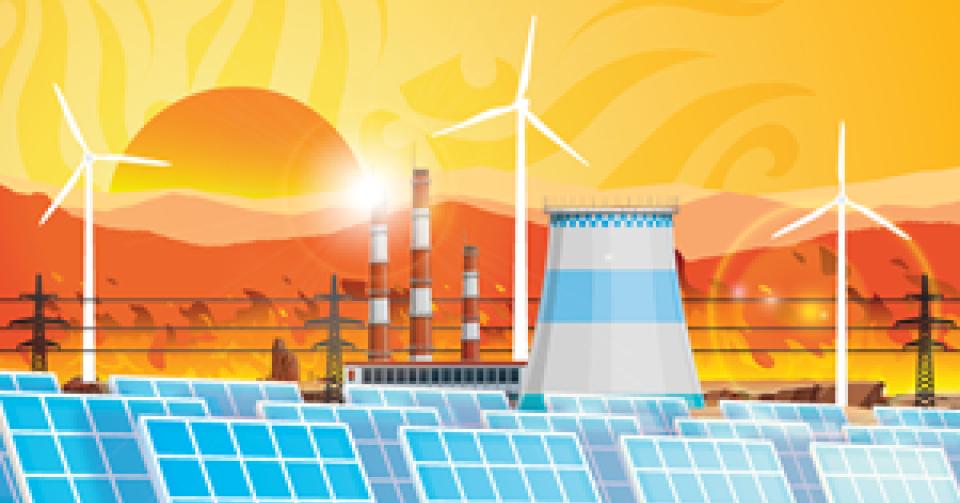
The energy sector in Asia and the Pacific faces increasing challenges from climate change affecting supply and demand. Key barriers to building climate-resilient energy systems include limited climate impact data, underemphasis on adaptation versus mitigation, inadequate adaptation funding, and slow uptake of innovative technologies. Addressing these requires coordinated efforts among governments, suppliers, and consumers to improve climate data, integrate resilience into policies, increase financing, and adopt new technologies. Strengthening energy systems this way will protect livelihoods and support sustainable growth across the region.
Health
The Climate-Resilient Energy Imperative: Adaptation Benefits and Actions for All
The cultural heritage sector can play a pivotal role in advancing Public AI by offering high-quality, traceable, and interpretable data that enhances AI reliability and transparency. It ensures fair and reciprocal management of data access to prevent value extraction and protect public resources. The sector also influences the development and governance of smaller, domain-specific AI systems, promoting transparency, accountability, and alignment with democratic values. Additionally, it strengthens Public AI literacy by upskilling professionals and helping society critically engage with AI technologies.
Education, Health
Making Public AI reality: How cultural heritage can lead the way