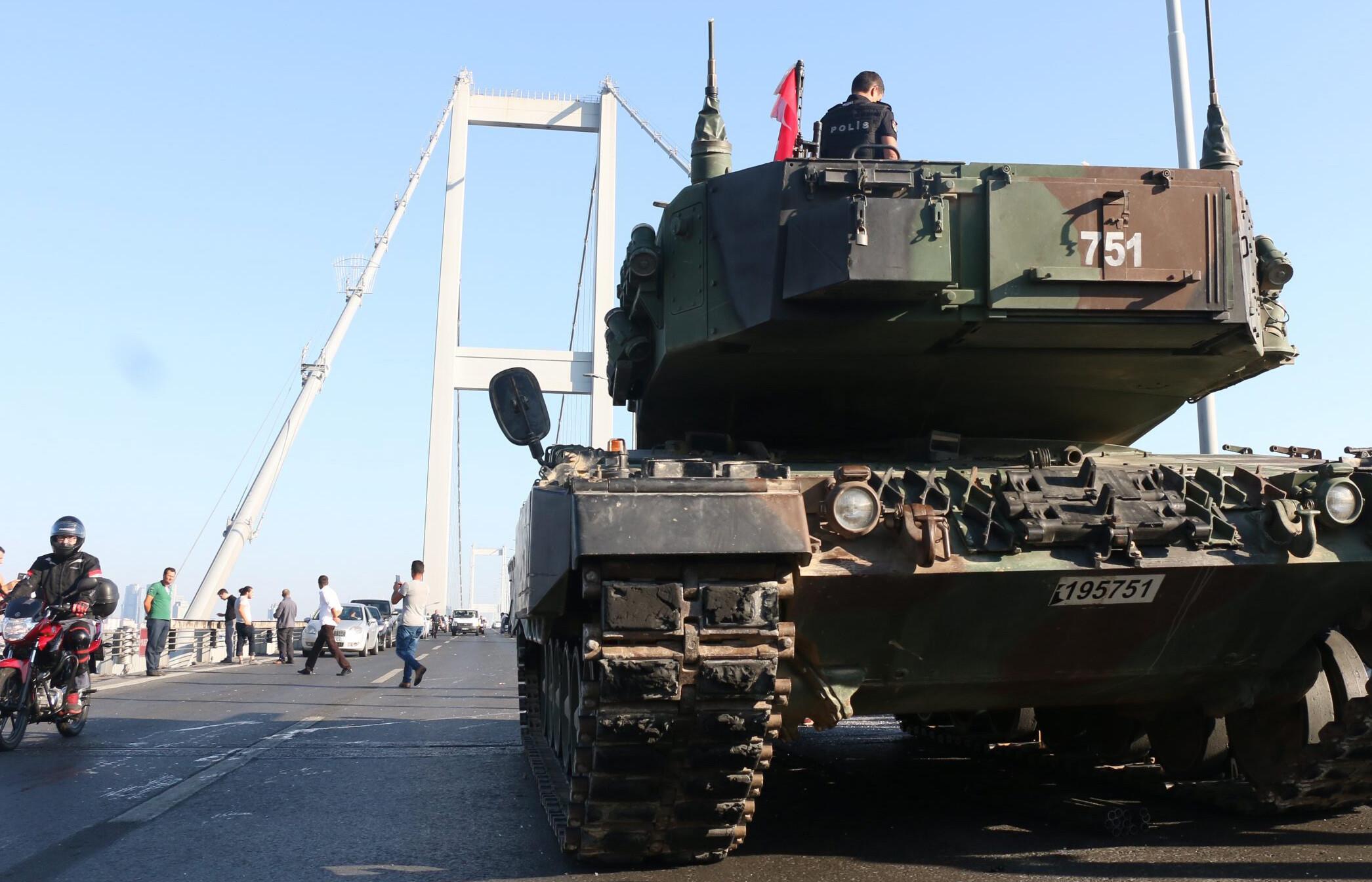
On 15 July 2016, a failed military coup in Turkey allowed President Recep Tayyip Erdoğan to implement extensive purges and restructure the political system under a state of emergency lasting until 2018. Approximately 130,000 public employees were dismissed, thousands arrested, and numerous media outlets and institutions shut down. A controversial 2017 referendum expanded presidential powers, weakening parliamentary oversight and judicial independence, leading to Turkey’s shift from a competitive authoritarian regime toward autocracy. This autocratization eroded democratic institutions and economic stability, causing a slowdown in GDP growth, declining foreign investment, rising inflation, and currency depreciation. Ongoing political repression and instability continue to hamper economic recovery and investor confidence.
The failed coup and Turkey’s path towards autocracy

Football’s integrity, the sport’s most valuable yet fragile asset, faces significant challenges at high-profile events like the FIFA World Cup 2026 due to pressures from commercial interests, media scrutiny, and human psychology affecting refereeing decisions. Controversies around inconsistent refereeing, such as complaints by Egypt and Switzerland and differing disciplinary actions for similar red cards, highlight how referee bias can subtly manifest not from corruption but from subconscious responses to intense observation and narrative pressures. Behavioral economics shows that technology and scrutiny often shift rather than eliminate bias, encouraging risk-averse decisions as referees manage the enormous commercial and emotional stakes of world tournaments.
Financial services
Football’s billion-dollar integrity problem

Germany's growing recognition of Southeast Asia's importance is highlighted by the Federal President’s 2026 visit to Indonesia and the Philippines. While German engagement with Northeast Asia and India has been more prominent, Southeast Asia remains underdeveloped, primarily focused on economic ties aimed at reducing China dependence. Beyond economics, Southeast Asia holds significant strategic value as a center of great-power rivalry, a global supply chain hub, and an active participant in multilateral forums. To ensure long-term stability and uphold a rules-based international order in the Indo-Pacific, Germany must deepen cooperation with Southeast Asia amid increasing competition for regional influence.
Africa, ASEAN, Latin America
Southeast Asia – More Than Just a Side Issue in the Indo-Pacific
The UK Government Office for Science developed AI 2030 scenarios in 2023, published in 2025, to help policymakers manage uncertainties and prepare for AI’s risks and opportunities. These scenarios have been widely adopted across government. Due to rapid advances in AI capabilities, investment, adoption, and geopolitical shifts since 2023, GO-Science has updated these scenarios to reflect the evolving landscape and better guide future AI policy planning.
AI Scenarios 2030: Helping policymakers plan for the future of AI

Rapid aging in China strains healthcare systems, with those over 60 projected to increase from 18% in 2020 to 35% by 2050, intensifying chronic disease burdens. Traditional family support is weakened by urbanization and migration, prompting development of a three-tier care system—home-based, community, and residential care—with demand outpacing supply. Fragmented care delivery causes inefficiencies; thus, integrated, data-driven approaches are needed. ADB has supported innovative programs like Yichang's public–private partnership creating integrated care complexes and Tianjin's AI-based chronic disease management, enhancing service quality and coordination. Similar initiatives in Pakistan and Georgia focus on workforce expansion and gender-responsive care, highlighting investment in the care economy as crucial for sustainable aging support.
Africa, Latin America | Health
Aging Before Affluence: Why Investing in the Care Economy Matters
The Lao People's Democratic Republic's 10th National Socio-Economic Development Plan aims to expand the economy, improve skills and health, and build resilience post-least developed country status. Success depends on aligning priorities with available budgets, focusing initially on key human development areas like education and health, and executing a few impactful reforms to improve government delivery and oversight. Additionally, developing a pipeline of investable, environmentally sustainable projects is crucial for resilience against climate shocks. Early, focused actions in the first year will build credibility, attract investment, and transform ambitious goals into tangible progress for the plan's five-year horizon.
Milestone to Momentum: Making the First Year of the Lao PDR’s 10th Plan Count
Private developers are increasingly building "smart compounds," integrating smart city technologies like automated home systems, app-based access, and centralized resource management into gated residential and mixed-use developments. This trend, often supported by city officials aiming to transfer the costs and complexities of digital infrastructure to private capital, operates largely outside municipal governance. The phenomenon merges smart city and gated community concepts but has received limited scholarly attention. It raises unique opportunities, risks, and data governance challenges distinct from publicly managed infrastructure, warranting focused research to guide planners, regulators, and scholars.
Financial services
The Rise of the Smart Compound: Privately Governed Urban Intelligence and Its Research Agenda
AI adoption in the Global South faces significant challenges due to resource constraints, limited state capacity, and fragile institutions. Success depends less on advanced model capabilities and more on aligning AI with local workflows and social contexts. Adoption requires a society-wide approach beyond technical solutions. Resource scarcity drives innovative practices like frugal engineering, edge deployment, and participatory data collection, which may have broader applicability. However, adoption gaps disproportionately affect marginalized groups, especially women, compounding existing inequalities.
Education
Closing the Adoption Gap: How AI Is Being Built in the Global South

Tech billionaire Peter Thiel leads a secret society uniting CEOs and political leaders who share apocalyptic worldviews, framing global politics and technology in terms of existential threats like nuclear war and AI-driven Armageddon. This "end-times politics" has spread beyond Silicon Valley to influence US military rhetoric and political strategies, notably within the Trump administration's engagement with evangelical Christianity and aggressive foreign policies like attacks on Iran. Such narratives fuel radical politics by amplifying fears of civilizational collapse amid rapid technological and environmental changes. Increasingly, tech elites wield significant geopolitical power, intertwining disruptive innovation with visions of survival and dominance, fundamentally shaping national and global political directions.
Financial services
How apocalyptic worldviews are moving from the fringes to the corridors of power

AI is revolutionizing healthcare by enhancing precision, prediction, and personalization across diagnosis, drug development, and patient management. However, to ensure trust, fairness, and effectiveness, AI models must be aligned with medical knowledge through close collaboration between AI developers and doctors. This alignment mitigates biases, improves explainability, and prevents errors or deskilling of clinicians. Key steps include involving doctors in problem definition, data annotation, ongoing solution monitoring, and seamless integration into clinical workflows. Such partnerships are essential for creating robust, ethical AI tools that support real-world medical practice.
Education
Doctors must drive the alignment of medical AI solutions
Neurotechnologies, including invasive and non-invasive neural interfaces, wearables, and neuromarketing tools, are rapidly advancing due to medical progress and commercial growth. These civilian technologies have significant dual-use potential, as they can be adapted for defense purposes. As cognitive capabilities become central to modern warfare, defense actors are exploring neurotechnologies for applications ranging from cognitive enhancement and restoration to advanced human–machine integration. Despite promising benefits, these technologies introduce new risks and vulnerabilities. The early stage of development offers an opportunity to address emerging political, ethical, and legal challenges through responsible governance and regulation, particularly for European stakeholders.
Education
The Brain as a Battlefield: Current Status, Opportunities, and Challenges of Defence-Relevant Neurotechnologies
Washington’s alliances face severe challenges as allies confront growing threats and question U.S. reliability. In response, both the U.S. and its partners are expanding their defense industries to enhance power projection, deterrence, and warfighting capabilities. However, treating defense buildups as isolated domestic efforts undermines effectiveness. The conflict with Iran showed that American military platforms alone could not eliminate threats, rapidly depleting critical munitions and exposing vulnerabilities to inexpensive Iranian drones and missiles. No single nation can independently produce sufficient advanced systems or sustain an innovative defense base needed to win protracted, high-intensity conflicts, underscoring the necessity for pooled resources and coordinated innovation among allies.
Health
How to Win the Defense Innovation Contest
Financial sector jobs are a key driver of income inequality in global cities across 10 countries in Europe, North America, and Asia. Cities hosting major financial markets account for 65% of the national income growth among top earners, with top 1% earners being 1 to 3.6 times more likely to work in these financial hubs. The study finds that rising earnings are due to profit distribution within firms clustered in financial cities, rather than an increase in finance employment. National contexts, such as economic centralization and other high-income sectors, influence these patterns. Unlike globalization or skill clustering, the presence of a financial sector best explains the high concentration of top earners in these cities.
Latin America | Financial services
How finance-sector jobs drive income inequality in global cities

Climate change poses catastrophic risks, including the potential submersion of London by 2200 due to ice sheet collapse and rising sea levels, among threats like food supply collapse and heat-related deaths. These worst-case scenarios, while not most likely, remain plausible and avoidable if greenhouse gas emissions are reduced. Current scientific communication often downplays these risks, creating public complacency or despair. A new, comprehensive global climate-risk assessment is needed to present both best and worst outcomes, empowering informed decisions and fostering "stubborn hope"—the determination to drive positive change despite uncertainties. Such transparency is vital for navigating and mitigating humanity's existential climate challenges.
Antarctica | Financial services
Why climate scientists need to talk more about the very worst‑case scenarios

The UK’s security reforms in response to Russian hostile actions evolved over more than a decade, catalyzed by two poisonings. The 2006 murder of Alexander Litvinenko marked an early warning but prompted limited action amid a post-9/11 security focus on terrorism. Over subsequent years, escalating Russian aggression and interference gradually eroded the tolerance for inaction. The 2018 Skripal poisoning became the tipping point, occurring after accumulated pressure, expert advocacy, and a shift in public opinion. This convergence drove rapid legislative overhaul, culminating in the National Security Act 2023—the most significant revision of UK national security law in a century—alongside other measures targeting espionage, illicit finance, and electoral interference.
Financial services
From Alexander Litvinenko to Sergei Skripal: the long road to reforming UK security

The US economy continues to outperform Europe, with faster GDP growth and higher job creation despite trade tariffs and geopolitical tensions. Key factors include larger budget deficits that stimulate demand, greater investment in business and AI-driven R&D, and superior labor productivity growth. The US also benefits from lower energy costs due to abundant fossil fuels and expanding renewables. Additionally, the US dollar's global reserve status allows it to finance deficits without currency devaluation or inflation. While immigration restrictions and environmental policies pose risks, America's flexible innovation environment and financial advantages sustain its economic resilience.
France, Germany, United Kingdom | Financial services
Why the US economy stays strong even when its policies shock the rest of the world
L’Union européenne vise la neutralité carbone d’ici 2050, avec des objectifs intermédiaires de réduction des émissions de gaz à effet de serre de 55 % d’ici 2030 par rapport à 1990, portés par le paquet législatif "Fit for 55". La réalisation de ces ambitions nécessite une transformation structurelle des systèmes énergétiques, intégrant au-delà des énergies renouvelables et de l’efficacité énergétique, tous les outils disponibles. Cependant, des défis importants subsistent, notamment la mise en place d’un cadre de gouvernance pragmatique, qui respecte la neutralité technologique et permet de mobiliser efficacement les leviers nationaux tout en évitant les blocages institutionnels.
Achieving the EU’s Energy Ambitions
Russia’s 2022 invasion of Ukraine led to a notable shift in attitudes towards the EU, particularly among previously Eurosceptic exclusive nationalists—those who identify strongly with their nation and not Europe. Survey data from 16 countries showed that perceiving Russia as a threat increased European pride and support for a common EU army most significantly among these nationalists, indicating a reframing of the EU from a sovereignty threat to a protective force. This shift challenges theories that strong national identity inherently opposes European integration and suggests that external security threats can foster greater support for deeper EU cooperation.
The unlikely Europeans – how the threat of Russia won over Eurosceptics
Federal economic data are crucial for public and private decision-making, enabling the monitoring of economic performance, informed policy development, and sound business choices. As the economy evolves—with factors such as AI, gig work, and digital assets—data users increasingly demand more timely, localized, and detailed statistics. To remain relevant, federal economic statistics must innovate continuously, especially in key areas like employment, prices, income, and wealth, reflecting changing labor markets and complex income sources.
Financial services
Measuring a dynamic economy: What should data users expect from the federal statistical system?

Nepal’s digital payment system is evolving with efforts to enhance infrastructure and regulatory frameworks to create secure, resilient, and inclusive financial services. Challenges include technical integration, limited small business adoption, and skills shortages. Upgrades focus on interoperable payment systems, digital identification, and cross-border trade solutions to boost regional market access and economic growth. Investment in infrastructure and capacity building is essential for advancing Nepal’s digital payments and facilitating trade.
Nepal | Financial services, ICT
Advancing Digital Payments in Nepal: Infrastructure Upgrades and Policy Development for Enhanced Trade Facilitation