
Primary school children are capable of serious political thinking about democracy, rights, and fairness. Research using the picturebook "Dreams of Freedom" shows children aged five to nine can engage in discussions about equality, freedom with responsibility, and social justice, linking these ideas directly to their own lives. Children are aware of power dynamics and the dismissal of their voices, expressing a desire for greater participation in decision-making. Effective citizenship education should build on these abilities by encouraging dialogue, debate, and participation rather than merely teaching approved knowledge. Creating spaces for children's voices fosters democratic trust and social cohesion from an early age.
Education
Citizenship education: primary school children are already able to think politically

A decade after Brexit, the UK ended EU free movement and gained formal control over migration, yet net immigration rose sharply before falling again, creating a boom-bust cycle. While EU migration declined due to changing political signals, non-EU migration surged through work, student, and humanitarian routes facilitated by a relatively liberal points-based system designed to support the economy and universities. This policy choice conflicted with Brexit’s pledge to reduce immigration, leading to public concern despite high migration levels. Recent government measures aim to tighten controls, but Labour’s 2025 White Paper, while emphasizing skills and fairness, primarily seeks to reduce immigration numbers amid ongoing economic and system challenges.
Latin America
Control without credibility – the post-Brexit migration paradox
Human attention is a relational and context-dependent capacity shaped by social, economic, and technological environments. Data-attention platforms like Facebook, YouTube, TikTok, and AI companions extract and commodify attention and data to drive engagement and advertising revenue, creating a harmful cycle that erodes human time and experience. Regulatory approaches focused solely on individual choice, privacy, or competition fail to address these systemic issues. Effective solutions require infrastructural changes to platform incentives and design, legal reforms, taxation, and measures protecting offline time as a collective good, emphasizing societal well-being over individual autonomy in the attention economy.
Education
The Data-Attention Imperative
Fully autonomous production lines are now active in automotive, electronics, and semiconductor industries, with advanced robotics, machine learning, and intelligent control systems replacing manual human tasks from five years ago. While the technology is available, many organizations lack a clear plan to prepare their workforce for this shift, limiting their ability to fully realize value. The Human-Machine Collaboration Activation Playbook offers a framework to redesign work by leveraging the strengths of both humans and machines, shifting human roles toward judgment, accountability, and exception handling in manufacturing and supply chain operations.
Education
Human Machine Collaboration in Industrial Operations: Activation Playbook

Fully autonomous production lines in automotive, electronics, and semiconductor sectors utilize advanced robotics, machine learning, and intelligent control systems to perform tasks previously done manually. Although the technology exists, many organizations lack a clear strategy to prepare their workforce for this shift, limiting value capture. Human roles evolve to focus on judgment, accountability, exception handling, and governance, complementing machines' abilities in speed, scale, and pattern recognition. The playbook offers a practical framework to redesign work and enable effective human-machine collaboration in manufacturing and supply chain operations.
Education
Human Machine Collaboration in Industrial Operations: Activation Playbook
Despite over $250 billion invested in AI globally in 2025, only 25% of companies report transformative impacts, often because they add AI to existing processes instead of redesigning operations around intelligence. The AI-First Operating System framework identifies five key components for success: intelligence engines, adaptive technology stacks, operations redesign, human-AI collaboration, and new value creation. Insights from over 50 organizations and case studies from Indeed, Gamma, and Cognizant demonstrate how embedding AI at scale drives faster innovation, higher productivity, and novel value creation.
Education
The AI-First Operating System: A Blueprint for Operating and Business Model Innovation

Despite over $250 billion invested in AI globally in 2025, only 25% of companies report transformative impact, as many merely add AI to existing processes without redesigning for intelligence. The World Economic Forum and Kearney identify five key elements for AI-first success: intelligence engines, adaptive technology stacks, operations redesign, human-AI collaboration, and new value creation. Case studies from companies like Indeed, Gamma, and Cognizant demonstrate how embedding AI at scale drives faster innovation, higher productivity, and novel business value.
Education
The AI-First Operating System: A Blueprint for Operating and Business Model Innovation

Three simple, low-tech interventions—fall-proofing homes, increasing physical activity, and expanding hearing aid use—could save global healthcare systems over $5.8 trillion and boost productivity by $645 billion by 2040. These measures generate significant returns when viewed within the broader longevity economy. Coordinated strategies that integrate health improvements with financial resilience present multitrillion-dollar economic opportunities worldwide, benefiting both younger and older populations by enhancing lifelong physical and financial well-being.
Health
The Longevity Dividend: The Business Case for Linking Health and Wealth

Three simple, low-tech interventions—fall-proofing homes, increasing physical activity, and expanding hearing aid use—could save global healthcare systems over $5.8 trillion and generate $645 billion in productivity by 2040. These measures are cost-effective and yield significant returns within the broader longevity economy. An analysis across 21 countries highlights longevity as a key, yet often overlooked, driver of economic growth, emphasizing that integrating health improvements with financial resilience presents multitrillion-dollar opportunities worldwide for both younger and aging populations.
Health
The Longevity Dividend: The Business Case for Linking Health and Wealth

The Top 10 Emerging Technologies of 2026 highlight advances poised to transform energy, materials, health, and computing sectors. Key innovations include everything-to-grid energy systems that enable real-time power sharing; direct lithium extraction offering faster, eco-friendly resource recovery; passive radiative cooling materials reducing energy use; and PFAS destruction methods tackling persistent pollutants. Precision fermentation and exosome drug delivery present breakthroughs in sustainable food and targeted medicine. Personalized mRNA cancer vaccines and quantum simulation advance cancer treatment and drug discovery. AI world models enhance reasoning about complex environments, while lattice-based cryptography provides robust post-quantum encryption. These technologies are transitioning from research to real-world impact, with success dependent on strategic investments, regulatory frameworks, and scaling efforts.
Financial services, ICT, Education, Health
Top 10 Emerging Technologies of 2026
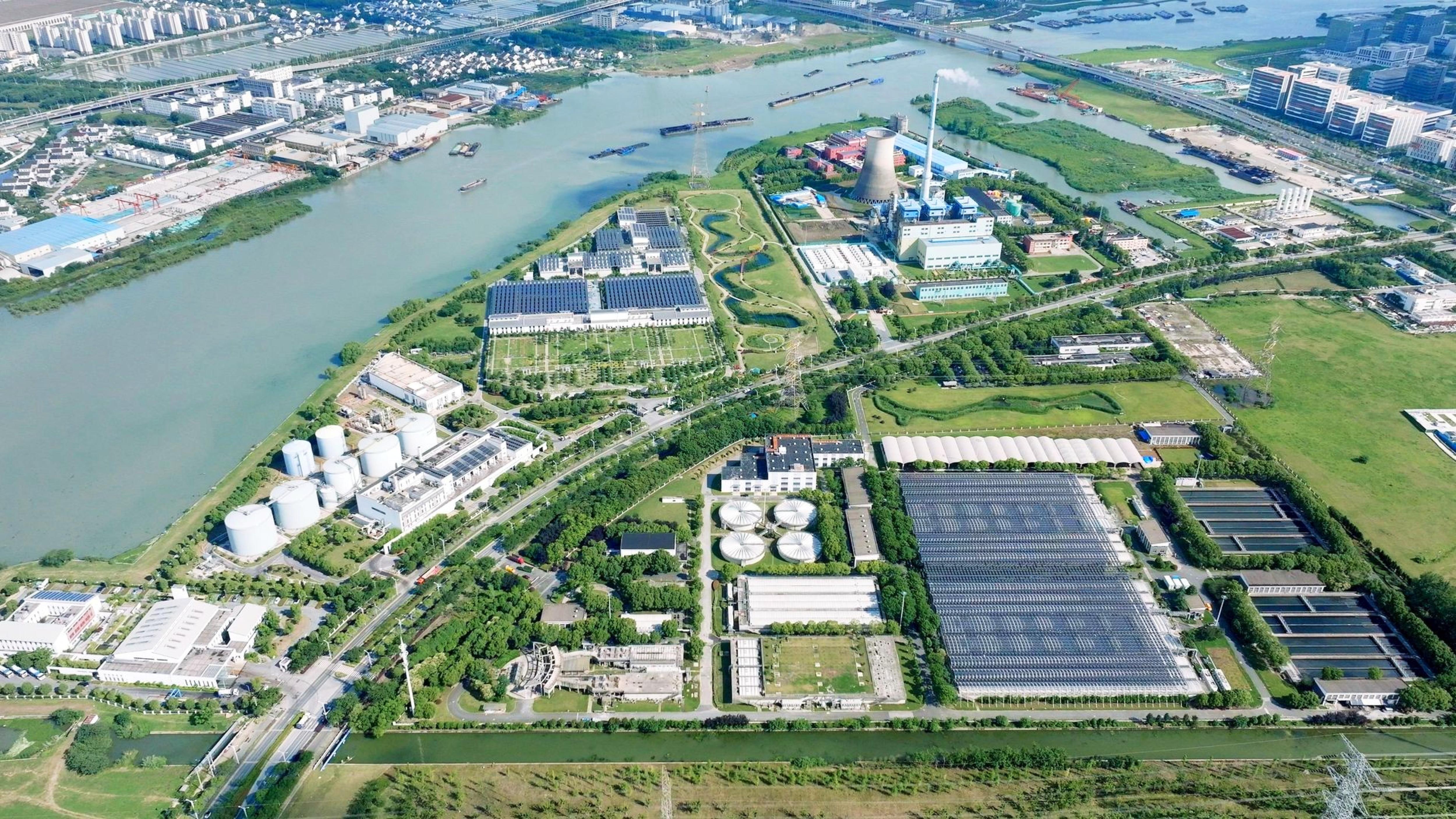
China's industrial transformation is guided by a multi-tiered policy framework aimed at sustaining economic growth while promoting inclusivity, sustainability, and resilience amid geopolitical and technological challenges. The approach emphasizes digital empowerment, greening, decarbonization, integration, and collaboration, illustrated through case studies from five industrial parks and 12 enterprises. Gradual progress, multidimensional innovation, market integration, and broad benefit diffusion across regions and sectors are key to achieving economic growth, industrial expansion, environmental improvement, and job creation.
Education, ICT
Inside China's Industrial Transformation: Policy, Practice and the Path to Scale

Bangladesh’s Coastal Towns Environmental Infrastructure Project addresses climate vulnerabilities in coastal municipalities by upgrading sanitation, water supply, drainage, and emergency infrastructure with climate-resilient designs based on 2040 projections. The project constructed integrated sanitation facilities, community latrines, multipurpose cyclone shelters, and improved water systems, benefiting over 14,700 households and increasing potable water quality from 40% to 90%. It also strengthened local governance and community awareness through training to enhance adaptive capacities. These interventions reduce flooding risks, pollution, and waterborne diseases while supporting marginalized communities vulnerable to climate impacts.
Bangladesh
How Bangladesh is Climate-Proofing Toilets and Water Systems
Spain faces a shortage of intermediate-skill workers in technical fields, which dual vocational training (combining education and on-the-job experience) can address by improving youth employability and strengthening business talent pipelines. Companies like Repsol and Nestlé value these programs for developing practical skills, easing workforce integration, and supporting succession planning. However, barriers include lack of awareness in SMEs, curriculum-job market mismatches, social stigma, and bureaucratic complexity. To maximize success, businesses should collaborate with educational centers, provide trained mentors, and treat training as strategic talent development. Education and government sectors must update curricula, improve perceptions, streamline regulations, and support SMEs, creating a coordinated approach to build an attractive, flexible vocational training system.
Education
How to build a homegrown talent pool with dual vocational training
Participatory institutions seek to provide policymakers with useful information about public preferences, problems, or solutions. As these institutions scale up, often through technology, effectively processing large volumes of public input into interpretable and actionable outputs becomes crucial. Different types of information relate to various policy stages, requiring tailored processing approaches. Processing can be delegated to experts, the public, or automated algorithms depending on the specificity and novelty of the desired outputs. Recognizing these distinctions helps clarify the strengths and limits of participatory institutions across contexts and goals.
Information Processing in Participatory Institutions

Ten years after the Brexit referendum, the UK remains divided into Leavers and Remainers, identities that extend beyond EU membership to broader values and beliefs. This divide has fostered a political culture dominated by emotional and character-based appeals rather than logical debate, intensifying uncivil rhetoric. Brexit highlighted a populist narrative pitting "the people" against "the elite," making identity the central political issue over economic self-interest. The resulting polarized landscape challenges politicians like Keir Starmer, whose pragmatic approach struggles to connect emotionally with voters. The enduring Leave-Remain faultline continues to shape UK politics in 2026, underscoring the difficulty of political reconciliation in a deeply identity-driven environment.
Ten years on from the Brexit vote, the UK is still a country of Leavers and Remainers
Brexit has negatively affected the British food industry by disrupting imports, exports, increasing food prices, and threatening jobs. While many farmers initially supported Brexit, expecting better agricultural policies, they later felt let down by underfunded and narrowly focused government schemes that failed to consider food production as a public good. Food processors and retailers were skeptical from the start, concerned about supply and pricing challenges, which intensified post-Brexit alongside other factors like the pandemic and global shocks. Trade deals with countries such as Australia, New Zealand, and India have been limited, with continued tension over imports like chlorinated chicken. UK exports to the EU dropped by 34% due to increased regulatory costs, although a “Brexit reset” deal in 2025 aims to ease trade tensions.
United Kingdom
The impact of Brexit on the British food industry

Ten years after the Brexit referendum, Britain remains unclear about its desired relationship with Europe. Despite intense political debate since joining the EU, British European policy continues to be defined by dissatisfaction rather than a clear vision. The UK has historically been an "awkward partner," torn between engagement and distance. Post-Brexit, Britain manages EU relations reactively, lacking strategic intent or deep understanding of EU workings. This unresolved stance fuels ongoing uncertainty and highlights the challenge of establishing stable, mutually agreeable policies amid political divisions and shifting priorities.
United Kingdom
Ten years on from the Brexit referendum, Britain still has no idea what it wants from Europe
Sexual violence in armed conflict is a serious violation of international humanitarian law (IHL) that continues to impact individuals and communities globally. Despite established legal prohibitions and commitments under the Women, Peace, and Security Agenda, effectively preventing and responding to such violence remains challenging. Strengthening implementation of IHL obligations requires embedding prevention and response measures into military structures, doctrine, operational planning, and training. Key actions include assigning clear responsibilities throughout the chain of command, integrating sexual violence prevention from the outset of operations, and enhancing collaboration between legal and gender advisers. These measures enable armed forces to better anticipate risks, protect affected populations, and ensure accountability in conflict settings.
Implementing IHL obligations to prevent and respond to sexual violence in armed conflict

The Caspian Sea is shrinking significantly, losing an area nearly the size of Sicily and dropping about two meters in water level since the mid-1990s. This decline is mainly caused by human activities, including extensive damming, water diversion (notably through the Volga–Don canal), irrigation, and industrial use, rather than decreased rainfall. Although rising temperatures increase evaporation, this accounts for only about 40% of the water loss. The shrinking threatens critical northern Caspian ecosystems and harms fisheries, while also impacting regional shipping, ports, and economic activities. Fragmented governance among the five bordering countries exacerbates the problem, with limited cooperation and transparency hindering effective water management and environmental protection.
Antarctica
The Caspian Sea has lost an area nearly the size of Sicily: human activities are a major reason why

Artificial intelligence (AI) is transforming entry-level jobs, with over one-third of young workers globally in roles highly susceptible to AI-driven changes. This evolution impacts organizational performance, workforce participation, and economic mobility. A collaborative report with PwC presents a framework focused on four key areas—job access, job design, talent pipelines, and education system alignment—to guide organizations, educators, workers, and policymakers in addressing challenges and proactively safeguarding and reinventing early-career pathways amid AI integration.
Education
Artificial Intelligence and the Future of Entry-Level Work: A Framework for Safeguarding and Reinventing Early Career Pathways