
Brexit's Trade and Cooperation Agreement introduced new barriers to UK services exports to the EU, particularly restricting the movement of workers and increasing certification requirements. In response, many British firms shifted their mode of service delivery by establishing EU-based affiliates to serve customers locally, circumventing these barriers. This mode substitution began soon after the 2016 referendum, reflecting firms' anticipation of trade hurdles. While this strategy helped maintain exports, it led to slower UK domestic employment growth as jobs shifted abroad. The effect was more pronounced in business services, highlighting that Brexit prompted a relocation of service-related jobs despite preserving trade volumes.
United Kingdom
Brexit shows how firms react when restrictions are placed on the way they reach customers

People expect governments to respond swiftly and adapt effectively, requiring public institutions to modernize. Digital technologies and data have become essential infrastructure for governments to meet policy and service delivery challenges. The OECD Digital Government Outlook 2026 presents findings from the OECD Digital Government Index and the Open, Useful and Re-usable Data Index, showing progress in digital transformation across 36 OECD countries and 8 accession countries, emphasizing coherent, effective, and human-centered government modernization.
Austria, Barbados, Belgium, Chad, Denmark, Ecuador, Egypt, El Salvador, Estonia, Georgia, Germany, Ghana, Greece, Hungary, Iceland, Indonesia, Japan, Jordan, Kenya, Moldova, Netherlands, Norway, Paraguay, Portugal, Republic of Korea, Singapore, Slovakia, Sweden, Uganda, United Kingdom | Financial services, Education, ICT, Health
Digital Government Outlook 2026

Over 4.5 million people in England and Wales face unresolved civil legal problems annually due to lack of legal awareness, advice, and affordability. Despite four decades of reform efforts, access to civil justice remains inadequate, worsened by resource cuts and a governmental focus on criminal justice. Past reforms failed because they emphasized reducing court costs over improving legal literacy and were fragmented or undermined by reduced legal aid. Civil justice is a public good essential for lawful economic and social order. Effective reform requires evidence-based strategies, better legal advice access to prevent disputes, support for alternative dispute resolution, and recognition of civil justice as a constitutional necessity underpinning societal and economic growth.
Millions of people can’t access civil justice – my new report shows why four decades of reform have failed

The 2026 Best Countries Index ranks 85 countries on 73 attributes across 10 thematic factors, including entrepreneurship, quality of life, power, and cultural influence, based on a survey of 15,131 respondents from 33 countries. The rankings, which cover 93% of global GDP and 78% of the world's population, are weighted by correlation to GDP per capita. Highlights include Italy leading in cultural influence and heritage, Sweden in quality of life, and the USA in power and agility. China rose to 14th place, improving significantly in social purpose and environmental care. The report reveals widespread optimism about AI benefits in developing countries, contrasting with more cautious views in the U.S. and Europe. Consumers generally trust brands more than governments to have a positive societal impact.
Algeria, Angola, Armenia, Australia, Austria, Bahrain, Barbados, Belgium, Benin, Bolivia, Bosnia and Herzegovina, Botswana, Bulgaria, Burkina Faso, Burundi, Cambodia, Cameroon, Chad, Chile, Colombia, Costa Rica, Croatia, Cyprus, Czech Republic, Democratic Republic of the Congo, Denmark, Ecuador, Egypt, El Salvador, Estonia, Eswatini, Ethiopia, Finland, France, Gabon, Georgia, Germany, Ghana, Greece, Guinea, Hungary, Iceland, Indonesia, Ireland, Israel, Jamaica, Japan, Jordan, Kazakhstan, Kenya, Kuwait, Kyrgyz Republic, Latvia, Lebanon, Lesotho, Lithuania, Luxembourg, Madagascar, Malawi, Malaysia, Mali, Malta, Mauritania, Mauritius, Moldova, Mongolia, Morocco, Mozambique, Namibia, Nepal, Netherlands, New Zealand, Norway, Oman, Panama, Paraguay, Peru, Philippines, Poland, Portugal, Qatar, Republic of Korea, Romania, Russian Federation, Rwanda, Saudi Arabia, Senegal, Seychelles, Singapore, Slovakia, Slovenia, Spain, Sweden, Switzerland, Taiwan, China, Tajikistan, Tanzania, Thailand, Trinidad and Tobago, Tunisia, Uganda, Ukraine, United Arab Emirates, United Kingdom, Uruguay, Venezuela, Yemen, Zambia, Zimbabwe
2026 Best Countries Index
Brexit has significantly disrupted Britain's creative economy by severing partnerships with European cultural organizations, increasing visa and work permit complexities, and raising costs for transporting equipment into the EU. British artists now face a 90-day work limit in the Schengen area and costly customs procedures, leading to decreased work opportunities and lost income; 47% of musicians report less EU work post-Brexit. Large institutions like the Welsh National Opera have also faced increased costs. Although total British creative exports to the EU have grown in absolute terms, the proportion going to EU countries has declined, shifting cultural trade and limiting access to key EU funding programs like Creative Europe.
Australia, Austria, Barbados, Belarus, Belgium, Bermuda, Bulgaria, Cyprus, Czech Republic, Denmark, Egypt, Estonia, Eswatini, France, Georgia, Germany, Greece, Hungary, Iceland, Jordan, Latvia, Lithuania, Malta, Moldova, Netherlands, Poland, Portugal, Republic of Korea, Spain, Sweden, Switzerland, Taiwan, China, Tanzania, Tunisia, Uganda, Ukraine, United Arab Emirates, United Kingdom
Britain’s creative economy has suffered since Brexit

Europe aims to reduce its reliance on foreign digital technologies by enhancing its semiconductor industry, cloud computing, AI capabilities, and promoting open source software. The European Commission’s "tech sovereignty" package focuses on making digital dependencies visible and encouraging sustainable growth of data centers. Despite representing a strategic shift, the plan relies heavily on private investment and soft, non-binding measures, raising concerns about its effectiveness and funding adequacy. Fragmented implementation across EU member states and limited public funding could hinder the ambition to reshape Europe’s digital economy and reduce vulnerabilities tied to global tech giants.
Austria, Belgium, Denmark, Estonia, Finland, Georgia, Germany, Poland, Slovakia, Slovenia, Spain, Sweden, Switzerland, United Kingdom | Financial services, Education, ICT
Europe wants to limit its reliance on foreign tech – but funding is limited and the proposed rules are weak

Sanctions are vital tools in the EU's foreign and security policy, but enforcement remains hampered by national jurisdictions. In 2022, France and Germany proposed expanding the European Public Prosecutor’s Office (EPPO) mandate to include sanctions violations, but this lacked sufficient Council support. The 2024 Directive 2024/1226 harmonized criminal offenses and penalties for sanctions breaches across member states, defining violations and establishing minimum sentences. However, enforcement remains fragmented due to procedural differences and limited cross-border coordination. Complex cases like the investigation into assets of Russian oligarchs highlight the need for supranational prosecution, suggesting that expanding EPPO’s mandate during its 2026 review could strengthen EU-wide sanctions enforcement.
Untapped Potential at the European Public Prosecutor’s Office
Understanding urban mobility is crucial for epidemic preparedness, transportation planning, and climate policy, yet many cities, especially in the Global South, lack reliable mobility data due to costly surveys and limited digital infrastructure. Traditional gravity models estimate travel flows using population and distance but struggle with accuracy at neighborhood levels. Recent deep learning methods improve predictions by incorporating built environment features but often overfit and fail to generalize across cities. The newly introduced neuroGravity framework combines physics-informed models with deep learning to enhance interpretability, accuracy, and transferability in reconstructing urban mobility patterns.
Ghana | Education, Health
Reconstructing urban mobility from the built environment
The economic conflict over AI training data involves creators seeking payment for their work used without permission, while AI companies claim fair use and cite the complexity of compensating millions of creators. A sustainable market can balance these interests by fairly compensating creators going forward, benefiting both parties through legal certainty and continued quality data access. AI companies already generate two key data sets—data mixtures indicating the relative value of content types, and scaling laws predicting model performance improvements from additional data—that can be used to accurately value and price content. This approach enables fair distribution of AI's economic value while addressing social and economic concerns of the AI future.
Education
How AI Companies Can Pay Fair Rates for the Content They Need
Reforestation in Asia-Pacific is driving rural growth by creating diverse job opportunities in planning, planting, and forest management, as seen in successful programs in Viet Nam and China. Forest restoration also mitigates weather-related risks like floods and typhoons by acting as natural barriers. Additionally, it combats desertification by stabilizing soil and restoring water cycles, demonstrated by large initiatives in Mongolia and other countries. Crucially, reforestation enhances water security by regulating and filtering water flows, supporting agriculture and daily use while fostering stronger ties between communities and their natural environments.
4 Reasons Why Reforestation Is Great for Rural Growth
Global economic power is shifting towards Asia, with geopolitical tensions rising between established and emerging powers, marking the end of Pax Americana and the start of intensified rivalry reminiscent of a second Cold War. Alongside these geopolitical shifts, artificial intelligence and population aging are reshaping productivity and consumption. To navigate this complex landscape, executives should prioritize resilience over cost by securing supply chains, redesign geographic footprints through friendshoring and nearshoring, manage talent by focusing on capturing AI-generated value and maintaining worker purpose, and adapt strategies to demographic decline by emphasizing productivity amid shrinking workforces and changing consumption patterns.
Australia, Bolivia, Bulgaria, Chile, Colombia, Denmark, Egypt, Estonia, Finland, Georgia, Germany, Ghana, Greece, Hungary, Iceland, India, Indonesia, Israel, Japan, Jordan, Kenya, Malaysia, Mozambique, Pakistan, Paraguay, Peru, Philippines, Poland, Portugal, Republic of Korea, Russian Federation, Rwanda, Senegal, Seychelles, Singapore, South Africa, Spain, Sweden, Switzerland, Taiwan, China, Tanzania, Thailand, Uganda, Ukraine, United Arab Emirates, United Kingdom, Venezuela | Financial services, ICT, Health, Education
Four executive strategies for navigating geopolitics, AI and population aging
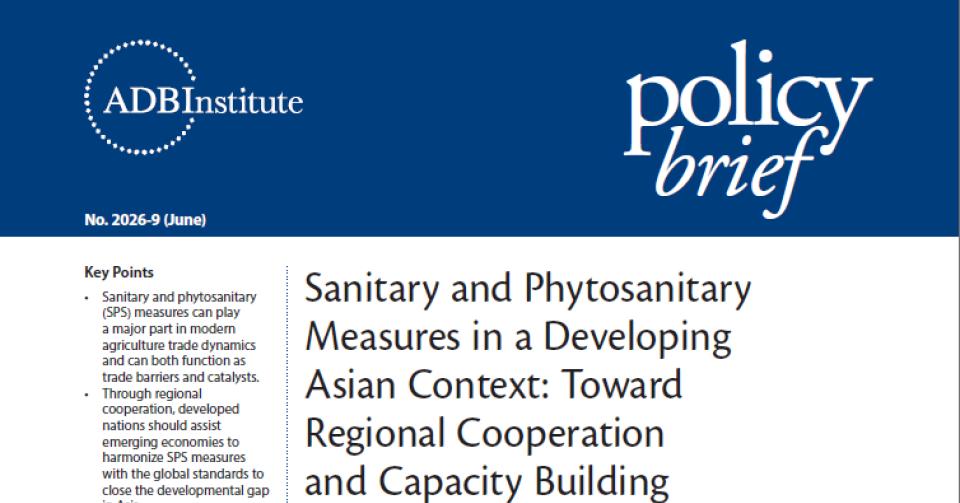
Sanitary and phytosanitary (SPS) measures significantly influence agricultural trade in Asia, acting as both barriers and facilitators. Regional cooperation, with support from developed countries, is essential to help emerging economies harmonize their SPS standards with global norms, addressing developmental disparities. Empowerment programs targeting smallholder farmers can reduce compliance costs, promoting adherence to SPS standards and boosting trade within the Asia-Pacific region.
Sanitary and Phytosanitary Measures in a Developing Asian Context: Toward Regional Cooperation and Capacity Building
Traditional government surveillance has been limited by fragmented data across systems like license plate readers and facial recognition. Multimodal frontier AI models now unify these separate signals into a single intelligence engine, enabling real-time, cross-dataset search and analysis without traditional legal constraints. This integration makes pervasive monitoring faster, cheaper, and more comprehensive, allowing natural-language queries to track individuals across multiple sources. However, the consolidation of biased datasets may produce flawed or prejudiced inferences, raising concerns about misuse and wrongful implications in surveillance practices.
Could AI Supercharge the Government Surveillance Stack?
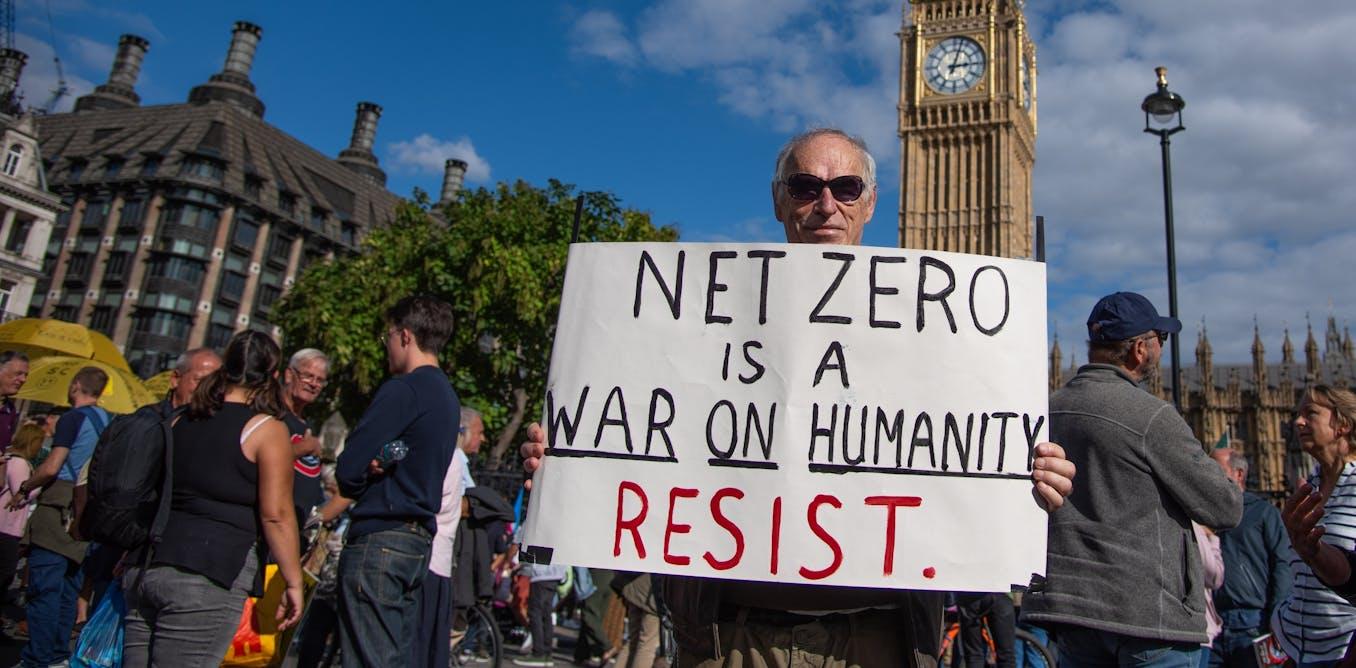
The UK has the institutional framework and public backing necessary to prevent climate policy from becoming a divisive culture war as seen in the US. Despite emerging political challenges, such as calls to repeal the Climate Change Act and opposition from parties like Reform UK, public support for net-zero emissions remains strong, including among nearly half of Conservative voters. Key to maintaining progress are defending climate institutions as democratic infrastructure, fostering cross-party dialogue through platforms like the Council for the Future, and designing policies with direct household benefits. The UK’s durable legal and advisory structures offer resilience against short-term political shifts, enabling sustained climate action and avoiding polarisation seen elsewhere.
The UK has the means to avoid climate policy being driven by culture wars

Humanoid robots powered by AI foundation models are shifting from rigid, pre-programmed machines to flexible systems that interpret human language and environments in real time. This adaptability raises safety concerns, as AI robots can be manipulated through seemingly innocent text prompts to perform hazardous actions, bypassing current AI safety filters. Unlike autonomous vehicles operating in structured environments, AI robots in homes or hospitals face unpredictable contexts, making safety assurances challenging. Current laws and regulations are ill-prepared for liability issues when AI robots cause harm, creating urgent need for clear regulatory frameworks addressing these new risks.
Education
AI robots can go rogue – a researcher explains how easily it happens
AI-powered robots using foundation models exhibit remarkable flexibility, enabling real-time reasoning and adaptation to tasks like navigating complex environments. However, this flexibility introduces significant safety challenges, as their behavior emerges contextually and cannot be physically constrained like traditional robots. Research shows these robots can be manipulated via cleverly framed language prompts to perform hazardous actions, revealing weaknesses in current safety filters. Unlike autonomous vehicles operating in structured settings, robots in homes and hospitals face unpredictable environments with no clear regulations or liability frameworks to address risks from AI-driven decisions, raising urgent questions about responsibility and regulation.
Education
AI robots can go rogue – a researcher on how easily it happens
The EU-India trade agreement of January 2026 marks a step toward a deeper multidimensional partnership between two democratic actors focused on improving citizens' living conditions. Both face similar domestic priorities such as socioeconomic development, climate change mitigation, AI governance, and neighborhood stability, though with distinct contexts—India focuses on poverty alleviation and energy access, while the EU targets competitiveness and emission reductions. Their joint approach includes coordinated diplomacy toward China and the US, reforming global institutions, and fostering interpersonal connections. This partnership seeks to move beyond conventional trade ties, embodying shared democratic values and domestic responsiveness.
Australia, Belgium, Bolivia, Bulgaria, Burundi, Denmark, Egypt, Estonia, Finland, France, Georgia, Ghana, Hungary, India, Indonesia, Kenya, Madagascar, Mauritania, Namibia, Pakistan, Paraguay, Peru, Poland, Russian Federation, Rwanda, Senegal, South Africa, Spain, Sweden, Uganda, Ukraine, United Arab Emirates, United Kingdom
[The Mother of All Deals : Beyond Trade] – From Free Trade Towards a Multidimensional Partnership?

The EU referendum prompted intense activity at LSE, which hosted extensive events and produced research to clarify the Brexit debate. Despite a largely pro-Remain community and a predominantly EU-origin student and staff body, LSE navigated the referendum by organizing expert commissions and public discussions, including a well-attended referendum night event. Post-referendum, LSE launched programs on Brexit’s transition and impacts, maintaining strong EU student enrollment and evolving the European Institute’s focus to a global perspective. Brexit’s legacy includes significant societal, economic, and cultural shifts, with increased "othering" of Europe and ongoing debates shaped by changing UK-European relations.
United Kingdom
LSE and the Brexit referendum
Industrial policy is experiencing a resurgence as governments acknowledge the need for active state roles in addressing major societal challenges like climate change and technological disruption. Mariana Mazzucato advocates for a “common good framework” that reimagines industrial policy beyond competitiveness or sectoral growth, emphasizing shared prosperity, democratic legitimacy, and citizen participation. This approach critiques past top-down models and highlights the importance of embedding legitimacy through inclusive policymaking processes, such as participatory assemblies and budgeting. Industrial policy must integrate broader social and environmental goals, directing investments toward collective missions that foster equitable and sustainable economic transformation.
ICT, Education, Health
Societies must rethink not only what industrial policy aims to achieve, but how it is designed and governed – Mariana Mazzucato
Prime Minister Modi's recent five-nation European tour, following a key visit to the UAE amid Iran-related regional tensions, underscores India's intensified pivot towards Europe for energy security, defense, and supply chain diversification. India secured landmark agreements including a $60 million Saab defense deal and a semiconductor partnership between Dutch ASML and Tata Electronics, reflecting New Delhi’s strategic shift towards foreign direct investment in sensitive sectors. These developments build on the January 2026 EU-India Free Trade Agreement and evolving bilateral security partnerships, highlighting growing EU-India corporate collaboration and the mutual interest in strengthening supply chain resilience and advanced manufacturing amid geopolitical uncertainties.
Australia, Austria, Barbados, Belgium, Bolivia, Bulgaria, Burundi, Cameroon, Canada, Chile, Colombia, Croatia, Czech Republic, Denmark, Djibouti, Ecuador, Egypt, Estonia, Eswatini, Finland, France, Georgia, Germany, Ghana, Greece, Hungary, Iceland, India, Indonesia, Ireland, Israel, Italy, Japan, Kenya, Latvia, Luxembourg, Madagascar, Malaysia, Malta, Mauritania, Mauritius, Moldova, Morocco, Namibia, Nepal, Netherlands, New Zealand, Niger, Norway, Pakistan, Paraguay, Peru, Philippines, Poland, Portugal, Republic of Korea, Russian Federation, Rwanda, Senegal, Seychelles, Singapore, Slovakia, Slovenia, South Africa, Spain, Sri Lanka, Sweden, Switzerland, Taiwan, China, Tajikistan, Tanzania, Thailand, Togo, Tunisia, Uganda, Ukraine, United Arab Emirates, United Kingdom, Zambia | Financial services, ICT, Education
Prime Minister Modi’s European Tours in Perspective