
The Inflation Reduction Act (IRA) was the largest U.S. climate policy investment, aiming to cut carbon emissions by 40% by 2030 through tax credits, rebates, and incentives for clean energy and green technologies. It also sought to support fossil-fuel-reliant regions by promoting renewable energy jobs there to secure broader political backing. However, despite these efforts, climate policies have proven fragile and reversible amid changing administrations; major provisions of the IRA were rolled back in 2025 by a new bill, illustrating the challenges of sustaining climate policy in a politically divided U.S.
Financial services
Podcast: Does Climate Policy Stand a Chance?
Geopolitical disruptions are threatening Europe's critical clean energy supply chains, prompting a shift from open markets to strategic interventions that enhance energy resilience, national security, and economic growth. The EU and UK have introduced policies to build more robust, diversified supply chains and bilateral partnerships with trusted allies. The Clean Technology Partnership Initiative identifies key vulnerable sectors—such as batteries, offshore wind, grid equipment, nuclear, geothermal, heat pumps, green steel, and green ammonia—where targeted international partnerships, combined with public-private finance, can reduce risks effectively. Coordinated, prioritized action is urgently needed to address these chokepoints and secure Europe's energy transition.
Austria, Belgium, Bolivia, Bulgaria, Canada, Chile, Colombia, Cyprus, Czech Republic, Denmark, Egypt, Estonia, Finland, France, Georgia, Germany, Ghana, Greece, Hungary, Iceland, India, Indonesia, Israel, Jamaica, Japan, Jordan, Kenya, Kyrgyz Republic, Latvia, Lithuania, Malaysia, Moldova, Mozambique, Netherlands, Norway, Pakistan, Paraguay, Peru, Philippines, Poland, Portugal, Republic of Korea, Romania, Russian Federation, Rwanda, Senegal, Seychelles, Singapore, Slovakia, South Africa, Spain, Sweden, Switzerland, Taiwan, China, Tanzania, Thailand, Tunisia, Türkiye, Uganda, Ukraine, United Arab Emirates, United Kingdom, Venezuela, Zambia | Financial services, Health, ICT
Managing the geopolitics of Europe’s energy transition
Artificial intelligence (AI) has the potential to revolutionize concussion care in sports by enhancing detection, monitoring, and personalized management of brain injuries. AI can analyze diverse data—from brain scans and blood tests to wearable sensor inputs—to map brain damage and tailor rehabilitation, helping prevent premature returns to play. However, risks include incorrect assessments, bias from non-representative training data, ethical concerns about data ownership, and potential negative impacts on scientific inquiry. While AI won't replace expert judgment, when developed transparently and trained on diverse data, it can significantly improve long-term brain health protection for athletes.
Education
AI could revolutionise concussion care in sport – but risks remain
Ukraine's strategic security plan centers on NATO accession as the foundation of its policy amid Russia's ongoing invasion and its goal of Euro-Atlantic integration. The country has advanced technical interoperability with NATO by replacing Soviet-era systems and aligning its defense industry with NATO standards. Challenges persist in institutional reforms, leadership culture, and consistent NATO practice implementation across its armed forces. Ukraine emphasizes democratic oversight, human rights, and transparency while modernizing its defense sector domestically. Concurrently, it expands external security cooperation to strengthen its European security role and avoid isolation. NATO membership remains a long-term aim, with ongoing reforms and partnerships crucial to enhancing Ukraine’s resilience and credibility as a Euro-Atlantic partner.
Russian Federation, Ukraine
Post-war security sector reform in Ukraine’s strategic horizon: Navigating war realities and post-war challenges
The Leiden Declaration highlights how recent AI advancements, including symbolic and neural methods, are transforming mathematical practice, eliciting varied reactions from enthusiasm to concern. It warns that AI threatens core mathematical values and may distort incentive systems, disadvantaging those without access or those unwilling to adopt AI driven by conflicting organizational values. AI-generated proofs can be plausible but unreliable, challenging traditional standards for correctness and transparency. Additionally, AI models often produce outputs lacking proper attribution, and their training raises copyright and licensing concerns, posing risks to the discipline's integrity and long-term future.
Education
Leiden Declaration on Artificial Intelligence and Mathematics
Post-war Security Sector Reform (SSR) in Ukraine is informed by lessons from Finland, South Korea, and Taiwan, whose experiences provide guidance on balancing defense effectiveness with democratic accountability under security threats. Finland emphasizes national consensus, territorial defense, and political oversight; South Korea highlights alliance management, defense reform, and civilian control; Taiwan focuses on strategic deterrence, transparent governance, and civil society engagement. Ukraine seeks to maintain strong civil-military oversight, modernize its defense industry, attract foreign investment, and strengthen international military partnerships to enhance post-war resilience.
Ukraine
Post-war security sector reform in Ukraine: An interpretation of insights from Finland, South Korea and Taiwan
Taiwan’s post-war Security Sector Reform (SSR) highlights a dual strategy of internal and external balancing to counter ongoing security threats from China. The island has developed effective civil–military relations that uphold civilian control while building a strong military deterrent. Since 1949, Taiwan has strengthened democratic mechanisms overseeing defense, supported by sustained security cooperation with the United States through arms sales, training, and defense diplomacy. Internally, Taiwan invests in domestic arms production, reforms military doctrine toward asymmetric defense, and ensures transparency via legislative oversight and civil society engagement. This approach maintains democratic norms and offers valuable lessons for other frontline states managing external threats within a democratic framework.
Taiwan, China
Post-war security sector reform in Taiwan
South Korea’s post-war Security Sector Reform combined external reliance on a US military alliance with internal shifts from a troop-heavy to a technology-driven defense, alongside gradual institutionalization of civilian control and democratic accountability. This approach enabled strategic deterrence against North Korean threats while supporting economic growth and avoiding militarization extremes. South Korea’s transformation from war devastation to a major economic and military power demonstrates how external support and internal reforms can sustain sovereignty and democracy after conflict. Its experience offers valuable lessons for post-war states facing similar security and governance challenges.
Republic of Korea
Post-war security sector reform in South Korea
Post-war Security Sector Reform in Finland has been shaped by dual strategies of external and internal balancing amid ongoing geopolitical pressures. Externally, Finland maintained peaceful relations through diplomacy, neutrality, and strategic restraint before formally aligning with Western security structures, culminating in NATO membership in 2023. Internally, it strengthened national defense via universal conscription, territorial defense planning, and fostering broad consensus on security, supported by societal reforms enhancing democracy, economic stability, rule of law, and public trust in state institutions. Finland's experience illustrates how a small frontline state can effectively balance defense capability with democratic accountability, preserving sovereignty and governance without militarization, offering key lessons for similar security contexts.
Finland
Post-war security sector reform in Finland

Marine ecosystems are rapidly degrading due to warming seas, rising tides, pollution, and overuse, threatening the communities and economies reliant on them. Approximately 40% of the global population lives near the coast, an area producing 30-50% of global GDP and hosting critical industries like ports, energy, aquaculture, desalination, and tourism. Transitioning to a regenerative blue economy involves leveraging integrated ocean governance, equitable finance, human capacity building, and technological advances to restore ecosystems and enhance resilience. This approach prioritizes long-term ecological health and equitable prosperity over short-term economic gains, promoting sustainability and well-being for current and future generations.
The Regenerative Blue Economy: Pathways to Prosperity
Marine ecosystems are degrading due to climate change, pollution, and overuse, threatening coastal communities and economies. About 40% of the global population lives near coasts, areas that generate 30-50% of global GDP and host key industries like ports, energy, aquaculture, and tourism. Transitioning to a regenerative blue economy involves integrated ocean governance, innovative finance, human capacity building, and technological advancements to restore ecosystems, enhance resilience, and promote equitable prosperity within planetary limits. Success is measured by ecological restoration, fairness, and long-term well-being, not just economic gains.
Financial services, Health
The Regenerative Blue Economy: Pathways to Prosperity
Four Futures for Powering Growth in the New Economy: Energy and Competitiveness in 2035 analyzes how the interaction between traditional and emerging energy systems will influence economic growth, business competitiveness, and the global distribution of economic advantages. Amid growing geoeconomic fragmentation, technological advances, and evolving security and energy challenges, it outlines four possible scenarios for 2035. Success in these futures hinges on access to critical resources and technologies, as well as the capacity to integrate, scale, and deploy them within complex and interconnected economic systems. The report, part of the World Economic Forum’s Scenarios for the Global Economy Dialogue Series, offers strategic insights and risk assessments to help leaders future-proof strategies, tap new growth, and enhance resilience.
Belgium, Bolivia, Bulgaria, Chile, Colombia, Denmark, Ecuador, Egypt, Estonia, Finland, Georgia, Germany, Ghana, Greece, Hungary, India, Indonesia, Jamaica, Japan, Jordan, Kenya, Kuwait, Kyrgyz Republic, Malaysia, Mozambique, Namibia, Netherlands, Paraguay, Peru, Philippines, Poland, Qatar, Republic of Korea, Russian Federation, Rwanda, Senegal, Seychelles, Singapore, Sweden, Switzerland, Taiwan, China, Tanzania, Thailand, Tunisia, Uganda, Ukraine, United Arab Emirates, United Kingdom, Uruguay, Venezuela, Yemen, Zimbabwe | Health, ICT, Education
Four Futures for Powering Growth in the New Economy: Energy and Competitiveness in 2035
Demand for digital skills in Asia and the Pacific is expanding across a wide range of occupations, not just those traditionally requiring advanced or ICT-intensive roles. Analysis of millions of job postings from 2019 to 2024 reveals that intermediate and advanced digital skills command higher wage premiums than many established high-paying skills like leadership, decision-making, and analytical abilities. This highlights the significant economic value of digital competencies, including artificial intelligence skills, across multiple sectors and job levels.
ICT, Education
Skills That Pay: Digital Skills Demand and Wage Premia in Asia and the Pacific
Economic growth without increasing raw material consumption, or "decoupling," remains largely unachieved despite some positive examples. A 50-year study of over 100 countries, plus 150 years of UK data, shows three key issues: (1) Resource use declines in some rich countries are insufficient, with per capita usage still well above sustainable levels. (2) There is no global turning point; material use generally rises with income, and reported "successes" often result from economic crises or unique circumstances rather than systemic green growth. (3) Longer-term historical data reveal recent reductions are temporary blips, not lasting trends. Genuine progress requires absolute reductions in material consumption, especially in high-consuming nations.
Barbados, Belgium, Democratic Republic of the Congo, Denmark, Ecuador, Egypt, Estonia, Georgia, Ghana, Greece, Hungary, Jamaica, Malaysia, Morocco, Namibia, Netherlands, Norway, Poland, Singapore, Sweden, Tunisia, United Arab Emirates, United Kingdom, Venezuela, Yemen
Green growth claims are overstated – our study shows three reasons why
Starting in 2027, the UK Home Office will use AI-driven facial age estimation to assess asylum seekers' ages, particularly to determine if individuals are under 18, which grants them crucial legal protections. The technology estimates age by analyzing facial features trained on extensive datasets but produces probabilistic ranges rather than exact ages. While leading algorithms have a mean error of under three years—better than human estimates—accuracy diminishes notably near the critical 16-to-18 age threshold and varies by gender and ethnicity, raising concerns about fairness given most migrants come from underrepresented regions. To ensure responsible use, the AI must be validated on the actual population, demographic accuracy data must be transparent, and final decisions must rest with trained human officers rather than the algorithm alone.
UK Home Office to use AI age estimation on asylum seekers – how accurate is the technology?
A Bocconi student team won third place at the 2026 futurEU Competition in Berlin for their policy proposal addressing Europe's electricity grid challenges amid the energy transition. Their brief, "From Bottlenecks to Backbone: Rethinking EU Electricity Grid Regulation," identified fragmented national regulations and poor investment planning as obstacles to a resilient, integrated European electricity network and proposed regulatory reforms. The competition gathered 328 students from 10 CIVICA universities to develop policy ideas on Europe's security and defence resilience. First and second places went to Sciences Po teams focusing on defence capacity and drone technology integration.
Bocconi Students Awarded at futurEU 2026 for Innovative EU Energy Policy Proposal
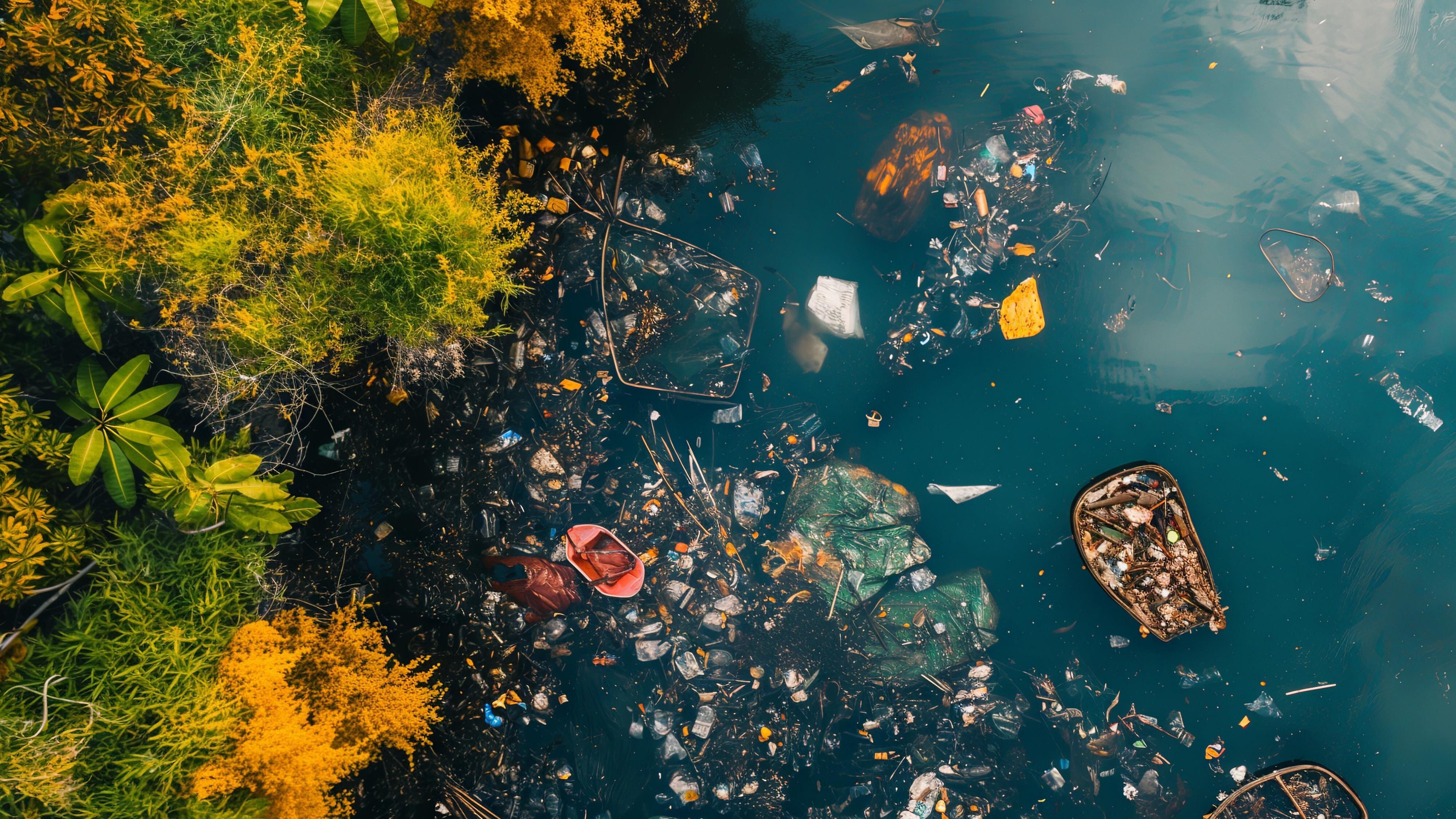
An estimated 130 million tonnes of plastic waste are improperly discarded annually, polluting ecosystems and threatening biodiversity, which underpins economies and human well-being. Plastic pollution severely impacts fisheries, agriculture, and tourism, highlighting that biodiversity loss and plastic pollution pose economic and resilience risks. Over half of global GDP depends on healthy nature, making ecosystem degradation a critical issue amid climate and geopolitical challenges. Field assessments across nine regions provide a detailed evidence base linking plastic pollution to biodiversity harm. The report calls for coordinated action by governments, corporations, investors, and communities to protect nature, people, and economies.
Plastic Pollution and Biodiversity: a Global Overview
Every year, approximately 130 million tonnes of unmanaged plastic waste pollute soils, waterways, and oceans, severely impacting biodiversity and ecosystem services vital to fisheries, agriculture, and tourism. These sectors highlight that plastic pollution and biodiversity loss pose significant environmental, economic, and resilience challenges, with over half of global GDP reliant on healthy nature. Degraded ecosystems increase risks amid climate change and geopolitical uncertainty. Drawing on detailed field assessments across nine geographies on three continents, the World Economic Forum's Global Plastic Action Partnership offers recommendations for coordinated actions by governments, corporations, investors, and communities to protect nature, people, and economies.
Plastic Pollution and Biodiversity: a Global Overview
This analysis compares Pakistan and Türkiye to explore how various structural factors influence the level of inflation an economy can sustain while supporting growth. It finds that beyond inflation rates, elements such as logistics efficiency, productivity levels, governance quality, and fiscal capacity play critical roles in enhancing long-term economic resilience and stability.
Bulgaria, Finland, Germany, Ghana, Indonesia, Jordan, Kyrgyz Republic, Pakistan, Panama, Paraguay, Philippines, Poland, Republic of Korea, Russian Federation, Tanzania, Tunisia, Türkiye, Uganda, Ukraine
Beyond Inflation: Industrial Capability and External Resilience in Pakistan and Türkiye
Asia and the Pacific face record internal displacement due to conflict, violence, and disasters, with nearly 11.3 million people displaced by end of 2025. Disasters prompted 22.3 million displacements, especially in countries like the Philippines. Stronger data reveals larger displaced populations than previously estimated. Internal displacement hinders education, livelihoods, and economic contributions, especially in less developed countries. Addressing this requires long-term development strategies including disaster-resilient infrastructure, inclusive essential services, digital ID systems, and workforce integration for displaced people. Improved data, coordinated development efforts, and tailored solutions are crucial to transforming displacement from a crisis into a sustainable development priority.
Bangladesh | Health
Turning Record Internal Displacement Into a Development Priority