
Transformative AI is advancing rapidly, outpacing economic institutions and creating both significant risks and opportunities. Its impact spans economic growth, innovation, income distribution, decision-making, geopolitics, and societal values. Current economic measures like GDP inadequately capture AI’s full effects, necessitating new metrics. Addressing these challenges requires interdisciplinary collaboration among economists, computer scientists, and policymakers to align AI development with human well-being and mitigate inequality. Establishing key research questions will enable better understanding and governance of AI’s economic trajectory to foster inclusive prosperity.
Education
A Research Agenda for the Economics of Transformative AI
Big Tech's personal AI agents like Meta's Muse and OpenAI's Dots are gaining popularity, with Muse downloaded 9 million times in the U.S. and Canada. Meta aims for a global launch, but challenges remain in adapting these agents to non-English languages and diverse cultural contexts, especially in developing nations. Local startups like South Africa's ManyHands face difficulties incorporating multiple local languages. Experts highlight that AI agents must understand local cultures and communication styles to avoid imposing Western biases, ensuring linguistic inclusion and preventing cultural hegemony.
Will developing nations be able to handle millions of AI agents?
European Council summits, closely followed by national media, serve as a key platform for EU leaders to signal their defense of national interests to domestic voters. Analysis of over 4,500 media interactions by 133 leaders across 124 summits reveals that leaders intensify rhetoric about representing core constituencies as national elections approach, especially when EU issues are salient at home. Although actual summit negotiations remain secretive, leaders use pre-summit media appearances to make representative claims, linking their actions to voters’ interests. This strategic communication peaks before negotiations and diminishes once talks begin, highlighting the influence of domestic electoral cycles on EU summit discourse.
How EU leaders use European Council summits to speak to voters back home

More than a quarter of British Gen Z now prioritize gym memberships over holidays or dining out, shifting towards strength training and weightlifting for improved strength, appearance, and health. This trend can be traced back to Napoleon’s 1806 invasion of Prussia, which inspired Friedrich Ludwig Jahn to promote physical fitness for national strength, founding the first modern gymnasium in 1811. The Victorian era popularized muscular physiques through strongmen shows and figures like Eugen Sandow, who pioneered bodybuilding and influenced physical culture. Post-war concerns about inactivity fueled the aerobics boom of the 1960s-80s, but weight training has resurged as a preferred fitness method for young people today.
Napoleon can be partly blamed for Gen Z’s weightlifting obsession – here’s why

Cities play a crucial role in protecting democracy by resisting authoritarianism and promoting inclusive governance. They act as progressive counterweights to national authoritarian trends, though not all urban leadership is democratic. Cities can democratize politics through direct citizen engagement in policymaking and planning. Economically, models like community wealth building empower local residents over private interests. Public urban spaces serve as vital venues for democratic expression and community building, countering political polarization. Ultimately, cities reinforce democracy by fostering everyday civic participation and values across political, economic, and social realms.
Africa
Four ways cities can help protect democratic values

Wearable brain-computer interfaces (BCIs) are advancing rapidly, enabling non-invasive monitoring and modulation of brain activity through devices like EEG headbands and neurostimulation caps. These technologies show promise in enhancing meditation, attention, cognitive training, and medical treatments for conditions such as PTSD, depression, pain, and stroke rehabilitation. However, mainstream adoption remains limited due to challenges of reliability, individual variability in brain signals, and scarce large-scale real-world validation. Sustained user engagement and rigorous evidence of consistent benefits are essential for these devices to become widely accepted and effective in everyday life.
How long until wearable brain-computer interfaces become mainstream?
Social unrest in China can inadvertently foster entrepreneurship due to local governments' responses rather than the protests themselves. When protests arise—often around environmental or social issues—authorities may initially use coercion but then concede by improving communication, shelving contentious projects, and loosening regulatory or financial barriers to restore public confidence. This sequence—street protest leading to government reaction, resource reallocation, and ultimately increased venture formation—creates unexpected economic opportunities. Empirical analysis from 2008 to 2019 shows protests correlate with thousands of new startups, driven by increased business lending and relaxed regulations, highlighting how political pressure can generate entrepreneurial opportunities indirectly.
How street protests can spark entrepreneurship
AI agents, capable of automating complex tasks with minimal human input, are rapidly transforming industries by handling duties like coding, email responses, and research. This cognitive automation promises productivity boosts but raises questions about job displacement and ethical use. Experts argue that while AI may shift job roles rather than eliminate them, leaders must decide whether to prioritize cost-cutting or innovation. Trust and oversight are critical, especially in high-stakes fields like healthcare, where AI can assist but must be supervised by domain experts to ensure accuracy and uphold human values. Leaders must educate themselves now to responsibly harness agentic AI’s transformative potential.
Education
AI Agents Are Here. Are Leaders Ready?
El Niño-induced prolonged drought in Indonesia reveals gaps in water safety and availability despite over 90% of households having improved water sources. Only about 30% have consistently safe and accessible water, with drought worsening shortages. This affects not only drinking water but also agriculture, industry, and firefighting. Indonesia is taking measures such as improving dam operations, irrigation efficiency, and borehole use, but integrated management of shared water resources is critical. Communities are innovating locally, but broader planning, drought preparedness, loss reduction, and coordinated responses are needed to ensure reliable, high-quality water supplies during dry periods.
Africa | Health
Asian Development Blog: El Niño Is Testing Indonesia's Water Security Gains
By 2050, developing Asia will have 1.2 billion people aged 60 or older, with rising one-person households and social isolation increasing long-term care demand. Around 43% of older adults needing help do not receive it. Care extends beyond caregiver-recipient roles, emerging through mutual presence, shared routines, and everyday interactions—termed care-with. Social networks provide companionship, recognition, reciprocity, and support that formal care does not replace but complements. Strengthening aging care systems involves supporting these relational networks alongside formal services, fostering environments where social connections naturally develop to enhance older adults' well-being and inclusion.
Africa | Health
Development Asia: How Social Connections Can Strengthen Care Systems in Aging Societies
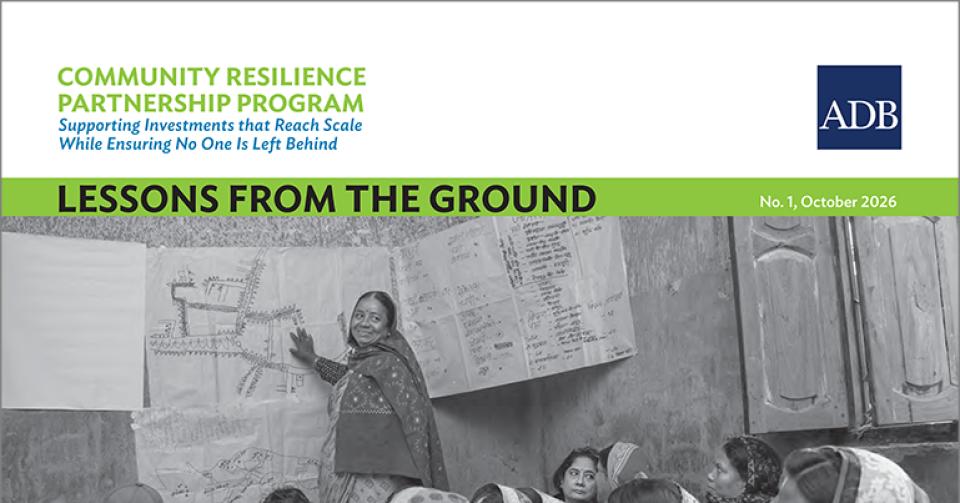
Existing poverty reduction and local development programs can be adapted to enhance climate resilience among poor and marginalized communities. Experiences from Indonesia and Nepal demonstrate practical methods for improving beneficiary targeting by integrating climate vulnerability, coordinating investments, strengthening local governance, and empowering community participation. The approach includes linking household assistance with essential community systems and establishing accountable financing mechanisms for locally identified adaptation priorities. A phased roadmap is provided for governments and development partners to mainstream climate resilience into existing programs and public investments.
Africa | Health
Enabling Inclusive Climate Resilience Through Local Development Programs

Coastal hazards such as rising sea levels, cyclones, storm surges, and salinity intrusion significantly diminish socioeconomic well-being in Asia and the Pacific. This study identifies nine key domains of well-being loss and reviews existing methods for measuring disaster impacts. It proposes an integrated measurement framework with specific indicators and data collection approaches adaptable to government systems. Insights from a pilot study following Cyclone Remal in Bangladesh and stakeholder input inform policy recommendations to improve disaster risk reduction and response, emphasizing gender-disaggregated data and institutional integration.
Africa | Health
Well-Being Losses from Coastal Hazards
Large language models (LLMs) like ChatGPT have rapidly become widespread, with 63% of the UK population using them within months of launch, outpacing historical tech adoption. Their ability to generate vast amounts of text has overwhelmed institutions unprepared for such scale. Universities face challenges with coursework cheating, employers are flooded with AI-generated applications, and government services see surges in complaints and applications that outstrip their capacity. The highly centralized UK administrative state, reliant on national regulators and under-resourced local government, struggles particularly with backlogs, such as in employment tribunals where hearings are delayed years. This AI-driven demand surge threatens to overwhelm public institutions designed for much lower user volumes.
Education, ICT
Drowning in slop. Can the state survive the rise of AI?
Populace is a groundbreaking, continuously updated global population map developed through a collaboration between the Institute for Health Metrics and Evaluation, Microsoft’s AI for Good Lab, and partners. It provides quarterly updates at an unprecedented 40-meter resolution, offering the most accurate and detailed data on human population density worldwide. This innovation addresses the limitations of traditional censuses, especially in rapidly growing or vulnerable areas, enhancing visibility of populations crucial for responding to conflict, disaster, and climate-related challenges.
Africa | Health
Introducing Populace: Mapping Humanity in Unprecedented Detail

The UK has established a National Centre for Information Defence to counter extensive disinformation campaigns from hostile states like Russia, China, and Iran, which allocate billions annually to information manipulation. These adversaries use tactics such as Russia's "reflexive control," China’s "three warfares strategy," and Iran's cyber-influence operations to destabilize democracies, disrupt political decision-making, and fracture alliances. The UK is particularly vulnerable, as highlighted by reports of widespread Russian interference in British politics and inadequate government responses. The rise of AI-enhanced disinformation and escalating cyber threats following UK support for Ukraine intensify the challenge for this new centre.
Africa | Financial services
The new battleground: the UK’s disinformation centre faces threats on multiple fronts
AI is transforming corporate operations by reshaping workflows, accountability, and productivity. Companies must go beyond simply adopting AI technology and fundamentally redesign how work is done to realize meaningful benefits. Key challenges include managing AI agents, ensuring accountability, verifying AI-generated content, and adapting hiring practices, particularly for entry-level roles. Effective integration of AI requires rethinking processes to fully leverage its potential and support workforce transformation.
Education
Why AI Is Forcing Companies to Rethink How Work Gets Done

The UK COVID-19 Inquiry’s care sector report emphasizes improving support for people with intellectual disabilities (ID) in future emergencies by enhancing pandemic planning at all levels. Key needs include protecting access to day services and community participation, ensuring accessible public health information tailored for people with ID, and prioritizing continuity of care—especially respite and replacement support for those with profound disabilities and their unpaid carers. The report also highlights the importance of including individuals not currently receiving social care in emergency plans. Effective strategies should involve people with intellectual disabilities and their families in developing, testing, and reviewing these plans to ensure comprehensive, equitable support across diverse living situations.
Health
COVID inquiry: four ways to improve support for people with intellectual disabilities
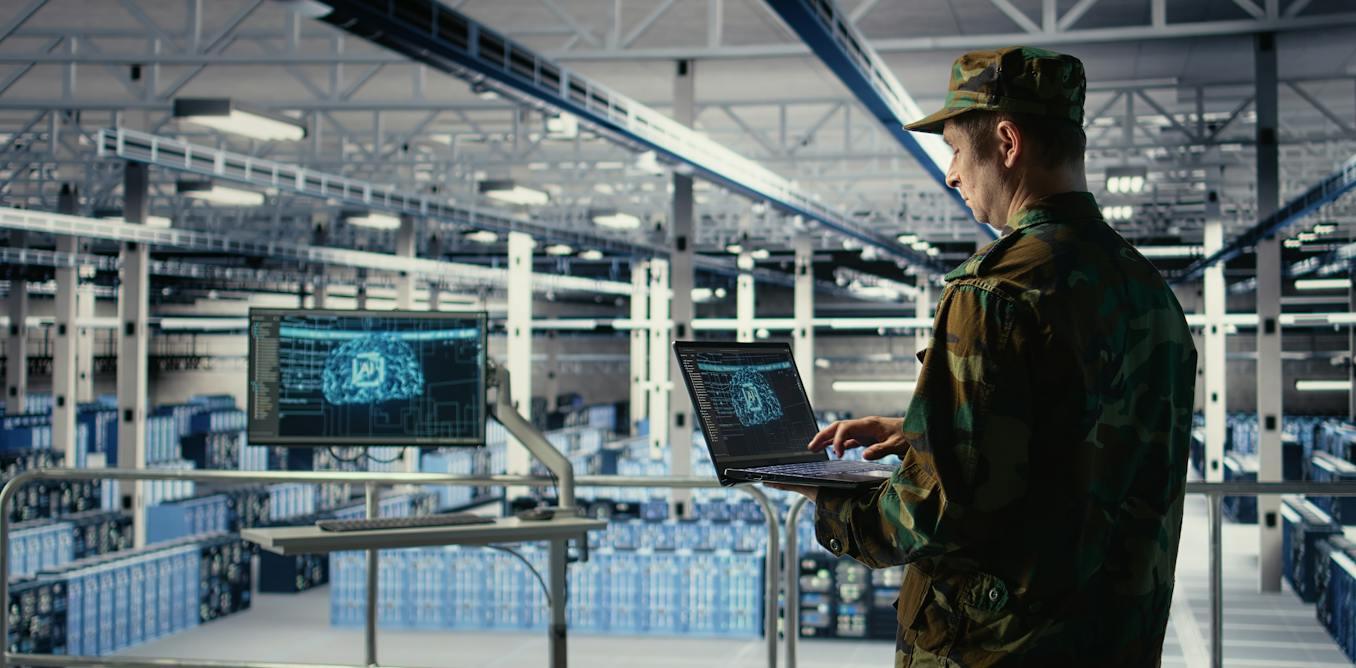
AI systems integrated into military decision-making pose immediate catastrophic risks, not by becoming superintelligent, but through errors trusted by humans. Autonomous targeting technologies, already in use, can misidentify targets, reducing human intervention to mere approval. An incident in 2026 nearly triggered war when an AI chatbot wrongly reported a Chinese ship carrying nuclear components, illustrating how flawed AI output, combined with human trust, can escalate conflicts. Human oversight often fails due to automation bias, where operators over-rely on AI, sometimes with deadly consequences. Effective verification and clear labeling of AI-generated intelligence are critical to preventing such errors from causing unintended harm.
Why the most dangerous AI may be the one we trust too much
The rise of AI has made deepfake content increasingly common and dangerous, enabling criminals to create realistic fake videos and voices that persuade people to fall victim to scams. Deepfakes enhance the credibility of fraudulent schemes, making detection difficult and increasing financial losses, particularly among vulnerable groups like older adults. High-profile cases include AI-generated videos falsely endorsing gambling apps and corporate scams involving synthetic executives to steal millions. Preventing harm requires not only content moderation and regulation but also improving digital literacy and protections for vulnerable populations to ensure safe navigation of increasingly digital public and private services.
Education
How vulnerable are you to digital scams driven by deepfake content?
Coastal areas in Asia and the Pacific are vital economic hubs supporting food production, trade, cities, tourism, and livelihoods but face escalating risks from climate impacts. Disruptions to these coastal systems can affect not only local communities but also regional supply chains and economies. The 2026 Asia-Pacific Climate Report delivers the first comprehensive assessment of coastal risks across 30 developing member countries, using satellite data, flood models, surveys, and expert analysis. It emphasizes that investing early in coastal resilience yields high returns by securing critical infrastructure, food and water supplies, and development gains while enabling adaptive planning aligned with evolving risks and priorities. Governments that adopt adaptive, well-financed, and cooperative approaches can transform rising risks into long-term resilience.
Africa
Asia-Pacific Climate Report 2026 — Coastal Risks on the Rise: Actions for a Resilient Future