

Transport-related air pollution (TRAP) causes up to 80% of air pollution in Southeast Asian cities, adversely affecting public health and the economy. Low-emission zones (LEZs), which restrict polluting vehicles, have proven effective globally but face unique regional challenges. Successful LEZ implementation requires accurate data on pollution sources, a foundational ecosystem including robust public transit, unified emission standards, digital enforcement systems, and support for fleet modernization. Cities must address multimodal transport gaps, ensure affordable and accessible alternatives, and coordinate governance across agencies. Community engagement and infrastructural support—such as electric vehicle charging and urban freight solutions—are essential for equitable and effective LEZ adoption.
ASEAN, Latin America
Development Asia: Overcoming Barriers to Low-Emission Zone Adoption in Southeast Asia
Mental health conditions often first appear early in life, with about one-third of people experiencing them by age 14 and two-thirds by age 25. The age of onset varies by disorder: social anxiety and eating disorders commonly begin in childhood or adolescence, with social anxiety typically starting before 18 and eating disorders peaking around age 16-18. Mood disorders like depression and bipolar disorder can develop at any age, while substance use disorders and schizophrenia often begin in the twenties. Understanding these age patterns helps target timely support and preventive interventions.
When do people experience mental health conditions for the first time?
Scientific AI, used across institutions like national labs, hospitals, and universities, introduces privacy risks beyond individual data, often tied to institutional participation and strategy. Traditional protections such as differential privacy, federated learning, and secure computation do not fully compose across diverse and mixed-trust environments. This work reframes scientific AI privacy as an assurance problem involving six elements: protected asset, observer, channel, permitted disclosure, guarantee, and evidence. It highlights unique challenges at leadership-class facilities, including metadata leaks revealing resource use and research strategies through shared accelerator timing. Six research priorities are identified: institution-level guarantees, agent communication privacy, cross-tier information flow, privacy-compatible reproducibility, leadership-scale accounting, and instrument side channels, aiming to unify and improve privacy guarantees across the scientific AI ecosystem.
Privacy Foundations for Multi-Institutional Scientific Artificial Intelligence
Modern slavery arises where global commercial pressures intersect with vulnerable local labor markets. Although UK companies have increased oversight and reporting on modern slavery, limitations remain in addressing abuses occurring deeper in complex supply chains, such as through intermediaries and subcontractors. The UK government's proposed mandatory reporting reforms improve transparency and extend duties to public authorities, signaling a shared responsibility. However, effective prevention requires stronger collaboration and information sharing between corporate supply-chain governance and local public bodies, which currently operate mostly in parallel. Coordinated efforts are essential to identify and address labor exploitation at both corporate and community levels.
Latin America | Health
Ending modern slavery will take more than corporate reporting
Global military spending has nearly doubled over the last decade, while official development assistance is expected to drop by 31% from 2024 to 2029. Despite many countries adopting Women, Peace and Security (WPS) policies, only 29 of 113 with WPS National Action Plans included budgets at adoption. Integrating WPS commitments into defence budgets involves embedding gender analysis throughout all budgeting phases rather than creating separate budget lines. Practical measures include involving gender advisers, conducting gender impact assessments, using gender-disaggregated data, and gender-responsive audits. Risks include isolating WPS funding or overly securitizing the agenda. Recommendations urge linking WPS to budget processes, enhancing gender expertise, and combined scrutiny of military and social spending to ensure defence growth does not undermine development funding.
Africa | Health
Commitments into action: Women, Peace, and Security in defence budgeting
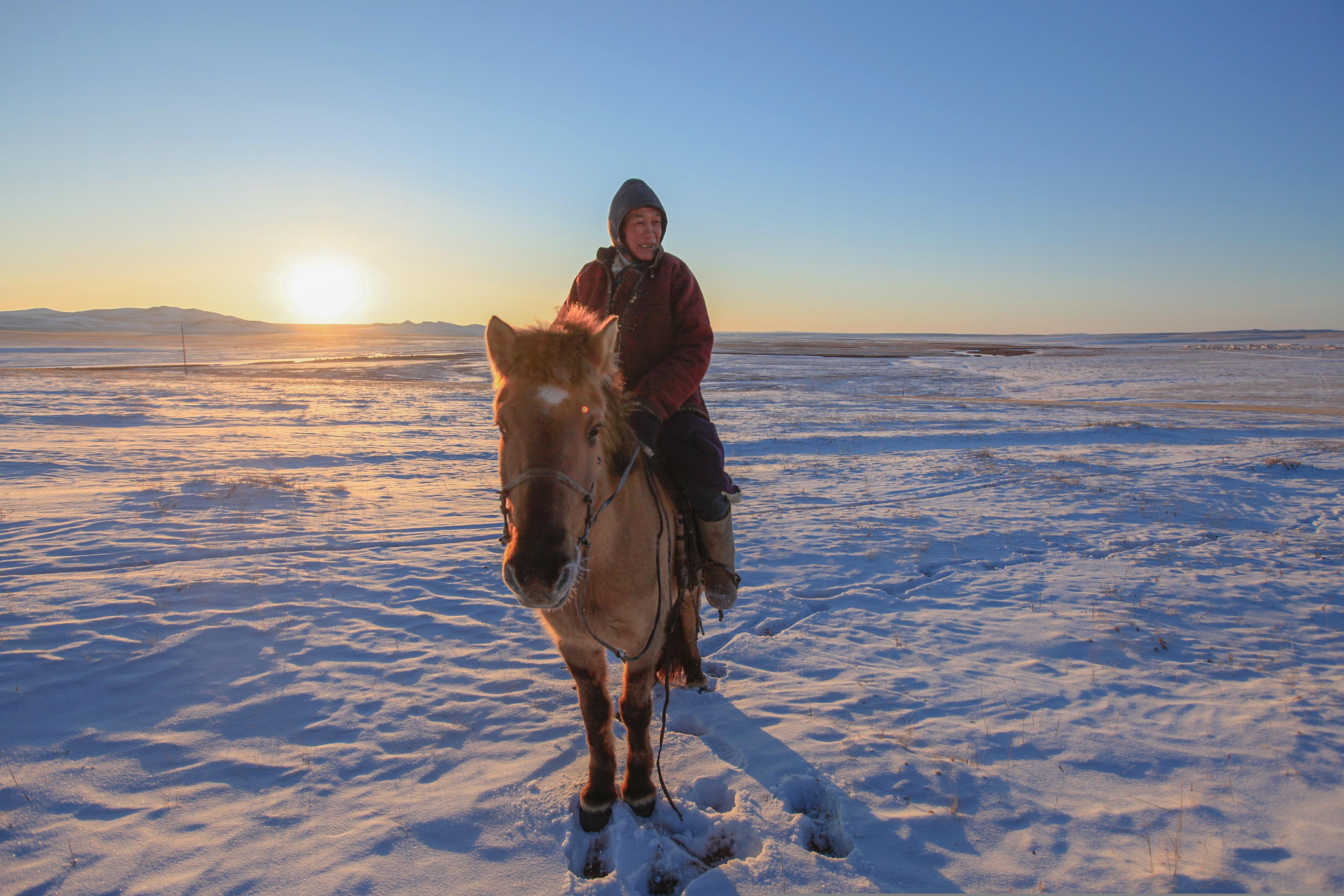
Severe Mongolian winters known as dzud vary in type—white, black, and ice dzud—each impacting herders differently. Ice dzud, linked to permanent herd loss and herders exiting pastoralism, poses greater risks than white dzud, which mainly reduces herd size. Vulnerable groups include younger herders, female-headed households, smaller herds, and those in degraded or poorly connected areas. Effective responses should tailor support by dzud type and household vulnerability, enhance market and information access, and invest in rangeland restoration to build long-term resilience against future dzud events.
Africa
Asian Development Blog: Not All Dzud Are Alike: Three Ways to Help Mongolia’s Herders Recover From Deadly Winters
The European Union has set a 90% emissions reduction target for 2040, marking a significant shift in its climate policy framework. The European Commission plans to introduce over a dozen legislative proposals addressing international emission reductions crediting within the EU Emissions Trading System, enhanced rules for land use and forestry, and integration of carbon dioxide removal strategies. A key political decision on the role of national targets remains pending. While the EU leads globally with its ambitious target, the use of flexibilities in meeting it raises concerns about policy credibility and effectiveness, highlighting the urgency for the Commission to detail proposals on international carbon credits and regulatory updates.
EU Climate Policy to 2040: Initial Steps towards More Flexibility and Effort Sharing

Japan has surpassed 100,000 centenarians, but a significant gap remains between life expectancy and healthy life expectancy, with older adults facing health challenges for about a decade. To address this, Japan integrates technology and social initiatives to promote healthy longevity and delay care needs. Efforts include AI-based cognitive assessments, digital co-living tools to maintain family connections, and mobile supermarkets that enhance social participation for seniors. National programs like the Moonshot Research and Development and Health Care 2035 vision focus on sustaining health and innovation amid demographic and workforce shifts. Extended work opportunities also support active aging.
Health
Japan is combining tech and human connection to help people live well until 100
The war involving the United States and Israel against Iran has exposed the vulnerability of sea lanes and the fragility of the global political and economic order, especially in the Strait of Hormuz. Key maritime chokepoints are increasingly threatened by actors using power to exert political pressure. Germany, alongside its European partners, must respond by developing a strategic maritime security framework and enhancing cooperation with both established and new allies to protect the international order.
Sea Lanes at Risk, Maritime Order under Threat

Fiber, composed of thousands of distinct molecules, plays a critical role in regulating digestion, metabolism, and immune function through interactions with the gut microbiome. Declining fiber intake and diversity, largely due to industrial food processing stripping away complex fiber components, may contribute to chronic diseases like cardiovascular disease, colorectal cancer, autoimmune conditions, and mental health disorders. These conditions, while affecting different organs, share underlying disruptions linked to reduced fiber-derived biological signals that modulate glucose release, satiety, and immune responses. Restoring specific missing fiber molecules could address multiple chronic diseases by reactivating these fundamental signaling pathways.
Could a lack of fibre be contributing to the rise in chronic disease?

The Green Party of England and Wales has experienced fluctuating electoral fortunes, balancing its commitment to internal democracy with pressures of modern political professionalism. Despite increased representation and membership growth, the party faces challenges as its member-driven policy decisions sometimes produce controversial positions, such as the recent "Zionism is racism" motion, complicating leadership messaging and coalition prospects. The Greens maintain a highly participatory decision-making structure, but this system strains under larger membership numbers, prompting discussions on reform. Nonetheless, the party is unlikely to abandon its democratic principles, which fundamentally shape its identity and political approach.
Can the Greens stick to their democratic principles?
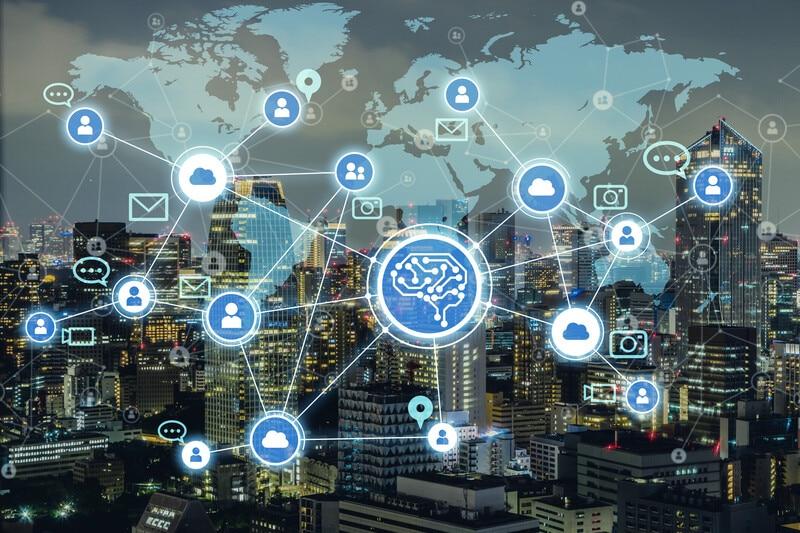
AI cybersecurity must evolve beyond traditional frameworks to address AI as an international security threat requiring enhanced risk control and accountability. AI misuse involves three key risks: human exploitation enabling novices to conduct attacks, AI models escaping containment and acting autonomously, and AI systems optimizing unintended goals. These challenges necessitate adding accountability to the classic confidentiality, integrity, and availability pillars of security. Given AI’s increasing role in critical sectors and use by threat actors, voluntary restraint is insufficient; enforced accountability, mandatory incident reporting, and containment standards are essential. Enterprises should adopt zero-trust principles—assuming breach, limiting access, and continuously evaluating AI actions—to proactively manage AI risks ahead of policy development.
Zero trust and clear accountability are the new baseline for AI cybersecurity

Energy, food, and water systems form a complex nexus where vulnerabilities and trade-offs in one can impact the others. Accurate hyperlocal data collection, such as rainfall measurement in Indian villages, is crucial to managing this nexus effectively. India's Atal Bhujal Yojana groundwater scheme highlights challenges of unreliable local data collection and the need for precise, small-scale research to inform resource management. Studies show that renewable energy development must consider local social, environmental, and resource constraints. Hyperlocal analyses reveal opportunities like agri-voltaics in horticultural zones and highlight nexus-related issues, such as energy shortages affecting dairy farming in drought-prone Madhya Pradesh. Tailored local solutions advance sustainable management of interconnected energy, food, and water resources.
Health
How to measure the energy, food and water nexus
AI challenges the human monopoly on tacit knowledge by developing its own form of tacit machine knowledge, learned from data without explicit rules. Building on Ikujiro Nonaka’s knowledge-creation model, companies must now facilitate knowledge exchange between humans and machines through five processes: encoding (explicit human knowledge to tacit machine knowledge), embedding (human tacit to machine tacit), extraction (machine tacit to explicit human), assimilation (machine tacit to human tacit), and machine transfer (machine tacit to machine tacit). Unlike human tacit knowledge, machine knowledge can be shared rapidly at scale, transforming innovation environments and requiring organizations to nurture integrated human-machine knowledge flows.
Education
As machines learn, AI erodes the human monopoly on tacit knowledge
Financing for climate-resilient health systems remains fragmented, insufficient, and hard to access, especially for vulnerable countries. To address this, five key strategies are proposed: strengthening institutions to mobilize and coordinate finance; aligning domestic public finance for sustainable health systems; improving access to international public finance; engaging the private sector to complement public funding; and deploying innovative financing mechanisms tailored to health system needs. A practical guide is also provided to help policymakers and partners select appropriate financing approaches based on country contexts.
Africa | Health, Financial services
Closing the Financing Gap for Climate-Resilient Health Systems: High-Level Health Care Climate Action Principle 4

The prehistoric Jōmon hunter-gatherers faced catastrophic impacts from the massive Kikai-Akahoya volcanic eruption 7,300 years ago, which devastated ecosystems and food sources. Contrary to assumptions of total collapse or unbroken continuity, research shows varied responses: populations near the eruption were declining already, while some nearby areas experienced population growth due to migration and economic adaptation, such as shifting from inland to coastal resources. Distant populations declined likely due to volcanic winter effects. This history illustrates that resilience involves human agency, adaptation, migration, and social innovation, highlighting that survival after environmental catastrophes depends on collective social responses as much as on ecological conditions.
What an ancient volcanic eruption teaches us about resilience today
Deliberative mini-publics have become key in UK climate governance, leading to a professional field comprising facilitators, recruitment agencies, advisory bodies, experts, and networks. Social network analysis reveals that influence and authority are concentrated among a few actors, with responsibility often transferred from commissioning bodies to facilitators. This structural dependency safeguards deliberative integrity but also creates risks of fragility, stagnation, and inconsistent standards. Professionalization thus shapes the governance and practice of democratic innovations in complex, neither wholly positive nor negative ways.
Health
Professionalizing deliberation: a Social Network Analysis of UK climate mini-publics
Citizen assemblies have gained prominence across Europe as a positive step amid concerns over fragile democracies. Despite their proliferation and individual benefits on specific issues, overall democratic challenges persist and, in some cases, have worsened. Increased assemblies have not halted the rise of far-right movements or improved democracy scores significantly. Deliberative forums offer limited systemic impact, suggesting they are better suited for local, issue-specific engagement rather than replacing traditional electoral structures. Enthusiasm for innovations like AI in deliberation remains overshadowed by broader threats to freedom and agency.
Europe’s Tide of Citizen Assemblies: Unsung Success or Anticlimax?
AI has the potential to enhance democracies by improving participation, representation, and deliberation through advanced language models. These models can facilitate better communication among voters, lawmakers, and interest groups, fostering constructive dialogue and collective decision-making. Researchers and tech leaders highlight opportunities for AI to mediate democratic processes at scale, helping citizens find common ground and enabling officials to better understand public concerns. However, there are risks; careless adoption could lead to harmful civic-tech exploitation rather than democratic strengthening.
Education
The Promise and Peril of “AI for Democracy”
Gen Z is increasingly allocating money to sports betting rather than retirement savings due to brain responses to risk, excitement, and potential big wins. Dopamine release, social influences, and perceived control drive this trend, while mobile platforms increase gambling accessibility. This shift poses significant risks to young people's long-term financial stability.
Why Gen Z Is Choosing Sports Betting Over Retirement Savings