
European states remain cautious and largely peripheral in the Iran conflict, prioritizing stability in the Gulf while avoiding direct military involvement. Despite quick diplomatic responses and support to U.S. efforts, Europe acts as a strategic spectator, balancing restraint with low-visibility engagement. National interests and political hesitations hinder collective action, and structural limitations within the EU impede unified security measures. France shows some strategic flexibility, Germany focuses on crisis management without direct military roles, and Spain openly criticizes U.S.-led operations. Europe's diminished diplomatic leverage over Iran and dependence on the U.S. further constrain its role, resulting in limited influence over the unfolding conflict.
United Arab Emirates, United Kingdom | Financial services, Health
Europe has become a strategic spectator in the Iran war
Rapid advancements in technologies like AI raise concerns about negative labor market effects. A theoretical framework identifies qualities that make innovations beneficial to workers, such as complementarity to labor, workers' income levels, and labor's share in production. Policy tools include robot taxation and guiding technological progress to enhance labor demand and job quality. Benefits of steering technology are higher when social safety nets are weak, but beyond a certain point, focus shifts from productivity to human well-being and increased redistribution as labor’s economic value declines.
Education
Steering Technological Progress
The Asian Development Review Volume 43, Number 1 addresses diverse development issues across Asia. Key topics include the influence of industrial competition on women's employment in Vietnam, productivity impacts of technology imports in India, property value changes due to Jakarta's Mass Rapid Transit, and the role of compensation in entrepreneurship post-housing demolition in China. Other studies focus on financial services in Malaysia, promoting local currency use in dollarized economies, the relationship between piped water access and food security in Pakistan, and the limited role of Asian countries in global debt-for-nature swaps, accounting for only 13% of such transactions.
Australia, Bangladesh, Burkina Faso, Cambodia, Chile, Colombia, Egypt, Ethiopia, Germany, Ghana, India, Indonesia, Japan, Jordan, Kenya, Malaysia, Mozambique, Pakistan, Paraguay, Peru, Philippines, Republic of Korea, Russian Federation, Rwanda, Saudi Arabia, Senegal, South Africa, Sri Lanka, Switzerland, Tanzania, Thailand, Tunisia, Ukraine, United Arab Emirates, Viet Nam | ICT, Financial services
Asian Development Review: Volume 43, Number 1
Oil price uncertainty (OPU), not just high prices, significantly impacts the global economy by disrupting planning and investment decisions for businesses and households. The OPU index, which measures uncertainty through news analysis, has surged to levels last seen during the 1970s Iranian Revolution due to Middle East conflicts threatening critical supply routes like the Strait of Hormuz. Elevated OPU slows industrial production, raises risk aversion, restricts borrowing, and can trigger capital outflows, especially in vulnerable economies. Policymakers should respond with monetary and fiscal measures and strengthen social protections. Transitioning to diversified, renewable energy sources can reduce future vulnerability to oil price shocks.
How Oil Price Uncertainty, Not Just High Prices, Shapes Economic Decisions
Researchers differentiate between "cognitive offloading," where a discrete task is delegated to a tool, and "cognitive surrender," where users relinquish cognitive control to AI's judgment. Cognitive surrender can lead to skill atrophy or hinder skill development. Using AI often causes a reinforcement of certain self-perceptions through its attentive, sometimes intrusive, connection-making, which may limit personal growth and obscure less obvious parts of one’s identity. While AI "knows" users imperfectly and can both reveal and constrain patterns of thought, deeper reliance risks diminishing unexplored aspects of the self, raising concerns about how younger generations will engage with AI compared to older ones.
I Saw Something New in San Francisco
Generation Z in rural north-west Wales deeply values their local slate landscape and cultural heritage but faces pressure to leave due to limited education, employment, and public services. This “brain drain” threatens the region's economic and community vitality. Young people want meaningful involvement in shaping sustainable tourism and local development, proposing ideas like heritage walks, sensory routes, and cultural events in slate caverns. Addressing rural depopulation requires creating vibrant communities with genuine opportunities, not just encouraging youth to stay, to ensure these areas thrive and retain their younger generations.
Education
Brain drain in rural Wales isn’t inevitable ‑ we asked gen Z what would make them stay
Young people show significant openness to reducing meat consumption, with nearly half of UK young adults having considered stopping meat-eating during school, and about half of them actually doing so for varying durations. Parental support is crucial in enabling young people to sustain these dietary changes, while family inconvenience and social influences often lead them to resume meat consumption. Encouraging sustainable eating habits in youth requires support at home and in schools, including teaching families affordable, adaptable plant-based cooking. Plant-based diets, when well-planned, can support healthy growth in children and teenagers, though monitoring is needed to ensure adequate intake of key nutrients.
Young people more open to ditching meat than previously thought – new study
Fifty years after the Swedish Trade Union Confederation’s (LO) Meidner plan proposed that unions acquire shares in companies through "wage-earner funds" to achieve economic democracy, the plan was never realized and was later scrapped. Intended as a "third pillar" of democracy following political and social democracy, economic democracy aimed to give workers greater control over workplaces and reduce reliance on wealthy owners for investment. Its failure led to neoliberal policies, increased inequality, and weakened social and political democracy in Sweden. Renewed interest in economic democracy highlights its potential to stabilize democratic systems and improve productivity in worker-influenced firms, suggesting the need to revisit and adapt such approaches today.
What will it take to revive economic democracy 50 years after the Meidner plan?
Research shows that when citizens consider AI decision-making, they become more critical of human decision-makers, particularly regarding potential biases and limitations. A large survey across eight European countries found that thinking first about AI increases concerns about discrimination by human recruiters in public-sector hiring. Conversely, focusing on human bias first reduces worries about AI discrimination. These comparison effects suggest that AI raises the bar for evaluating human decisions, as algorithms are often perceived as more consistent and impartial. As AI becomes a visible alternative, citizen expectations may shift, leading to greater scrutiny of human decision-makers in public administration.
Education
In the age of AI, citizens may become more critical of human decision-makers
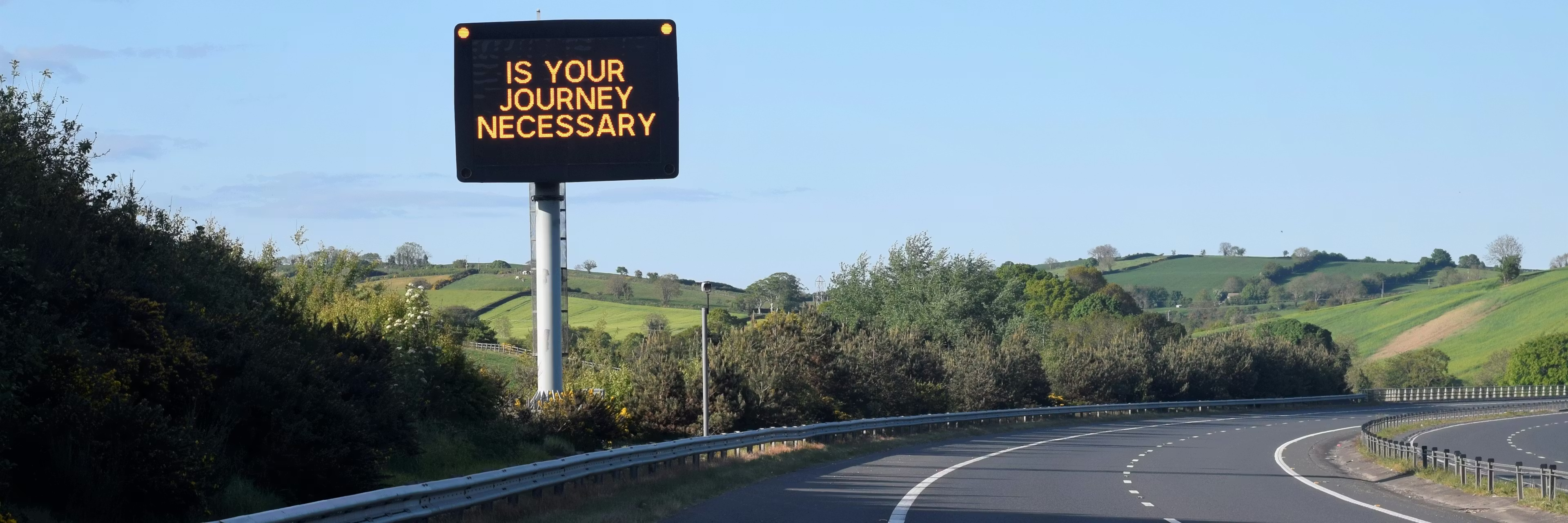
The Strait of Hormuz closure is causing a loss of about 11 million barrels per day, over 10% of global oil supply, creating a major supply shock unlike the 2020 COVID demand collapse. This inflexible short-term supply reduction will drive significant price increases, raising transport costs and slowing economic activity worldwide. Developed countries can temporarily mitigate impact using emergency reserves, but these are limited, and developing nations face severe risks of inflation, food price spikes, and economic instability. Diesel and jet fuel shortages would appear first, disrupting transportation, agriculture, and trade. Protectionist measures, such as export restrictions, risk worsening the crisis by tightening global markets further. Prolonged disruptions could have broad economic consequences beyond fuel, affecting petrochemicals, food production, and industrial sectors, potentially causing a deeper global economic shock than COVID-19.
Could this energy crisis be worse for the global economy than COVID?
The February 2026 parliamentary elections in Bangladesh marked a pivotal shift following Prime Minister Sheikh Hasina's 2024 removal and exile. An interim government led by Nobel laureate Muhammad Yunus successfully organized credible elections after two years of uncertainty, underscoring institutional resilience. The Bangladesh Nationalist Party (BNP) won decisively, maintaining governance by one of the country's two historic political dynasties. However, a rise in support for Muslim fundamentalist groups alongside the BNP victory raises concerns about the future of democratic pluralism, the role of women, and Bangladesh’s improving relations with India.
Bangladesh, Pakistan
Bangladesh’s Political Realignment after the Parliamentary Elections
AI design for business must prioritize integration into real work practices and decision-making structures, not just model accuracy. As generative AI models increasingly mediate interpretation and influence judgment, trust requires embedding governance, accountability, and human-centered design into the AI architecture. This involves tailoring systems to specific user roles, communicating uncertainty, and allowing meaningful control. Effective AI adoption demands a governance layer—such as the proposed CALM framework—that ensures responsible deployment by aligning AI outputs with human responsibility and context, moving beyond mere technical performance to support trustworthy, practical use.
Education
AI must be designed for the way that people actually use it
Russia and China have expanded their Middle East influence through arms sales, energy deals, and diplomacy, aiming to challenge Western dominance. However, their responses to US-Israeli actions against Iran remain limited to diplomatic condemnation without concrete intervention. Russia’s involvement is constrained by the war in Ukraine, while China pursues cautious engagement due to economic concerns and a desire to maintain its global image. Both countries maintain strategic partnerships with Iran—Russia through military cooperation and economic ties, China primarily through economic initiatives like the Belt and Road Initiative. The recent conflict reveals a credibility gap, as neither power is willing or able to decisively defend Iran, threatening their long-term influence and multipolar ambitions in the region.
Are Russia and China losing their grip on the Middle East?
Pakistan’s state-owned enterprises (SOEs) have struggled with governance and financial issues, largely due to unfunded public service obligations (PSOs) requiring them to provide non-commercial services without compensation. This has led to significant losses, cash flow problems, asset deterioration, and increased government bailouts, creating fiscal strain. To address this, Pakistan enacted the State-Owned Enterprises Governance and Operations Act 2023, establishing a formal PSO framework. Under this law, PSOs must be fully costed, contracted through performance-based agreements, aligned with SOEs’ commercial mandates, and fully funded by the government. This framework enhances transparency, accountability, and financial sustainability, allowing better management of public service costs and improving SOE service delivery.
Republic of Korea | Financial services
How Pakistan’s Public Service Obligations Framework Improves Service Delivery
The 2026 conflict in the Middle East poses significant macroeconomic risks for Asia and the Pacific, impacting economic growth and inflation under various scenarios. To address these challenges, policies should prioritize macroeconomic stability, reduce energy consumption, and diversify energy sources. Broad energy subsidies and price controls should be replaced with targeted, time-bound fiscal support. Monetary policy should emphasize targeted liquidity provision and maintain inflation expectations through clear communication.
Africa, Latin America | Financial services
The 2026 Conflict in the Middle East and Macroeconomic Risks for Asia and the Pacific
Significant reductions in tailpipe emissions in Asia-Pacific contrast with rising pollution from non-exhaust sources like brakes, tires, and road wear, now comprising 38% of PM2.5 from road transport. Economic growth and vehicle ownership increased, but strict fuel and emission standards have helped reduce harmful pollutants, although gains are fragile due to rising vehicle numbers and used high-emission imports. Diesel trucks disproportionately contribute to air pollution and health impacts. Domestic shipping, largely unregulated, is the fastest-growing source of transport pollution, emitting more particulates than many trucks combined. Electrification of rail and vehicles helps only if paired with cleaner electricity grids. Comprehensive policies must target non-tailpipe emissions, shipping pollution, and adopt data-driven governance for systemic transport sustainability and clean air outcomes.
Latin America
The Clean Air Blind Spot: Shipping and Non-Exhaust Emissions
Timor-Leste's accession to ASEAN offers a pathway to enhance its development by leveraging regional integration. Drawing parallels to Cambodia, Laos, and Vietnam, the country aims to utilize reforms, investment, and cooperation to bridge its development gap. Despite progress in health, electrification, financial infrastructure, and women's representation, challenges persist. Sustainable, inclusive growth for Timor-Leste depends on infrastructure investment, economic diversification, stronger institutions, and human capital development, supported by ASEAN engagement.
Indonesia
Timor-Leste Joins ASEAN: Can It Close the Development Gap?
China’s economic growth, driven by an investment-and-export-led model supported by high domestic savings and subsidized infrastructure, faces significant challenges including declining returns on investment, a troubled property market, and weak domestic demand. The 15th Five-Year Plan's ‘AI Plus’ Initiative aims to integrate artificial intelligence across the economy to transform China into a modernized socialist state by 2035. However, issues such as an aging population, low productivity growth, and high youth unemployment raise doubts about the sustainability of this growth model and AI’s ability to fulfill political ambitions. Experts analyze these economic pressures and the potential of AI as a new growth driver.
Australia, Taiwan, China | Financial services, Education, ICT
Same engine, new fuel? China's economic model and the AI bet
Emotional resilience is crucial in climate change education to address the unique mental health impacts on young people. Research involving over 200 students and educators in England reveals that current climate education often leaves students feeling disconnected, powerless, and anxious. These emotional challenges, compounded by climate denial and stigma, hinder engagement and wellbeing. Both students and educators advocate for curriculum reforms that integrate mental health support, foster connection with nature, and provide meaningful climate action opportunities. Supporting educators with resources and training is essential. Embedding psychologically informed approaches can empower youth, enhance wellbeing, and promote impactful climate action necessary for societal transformation.
Education
Why emotional resilience should be at the heart of climate change education
Retirement planning is increasingly challenging due to rapid global ageing and inadequate pension coverage, with significant inequality in retirement income linked to wage, age, gender, financial literacy, and investment confidence. Inflation reduces the value of cash savings, making long-term investment essential for retirement security. However, many face barriers including low financial literacy—especially among younger and minority groups—limited access to employer pensions, and affordable investment options. Women disproportionately experience retirement income disparities due to career breaks, the gender pay gap, and lower investment confidence. Younger generations often prioritize immediate financial needs over retirement savings, risking loss of compound growth benefits. Addressing these divides requires improved financial education, inclusive investment opportunities, and default participation in long-term investment programs.
Financial services
Ageing, inequality and the fight for retirement security