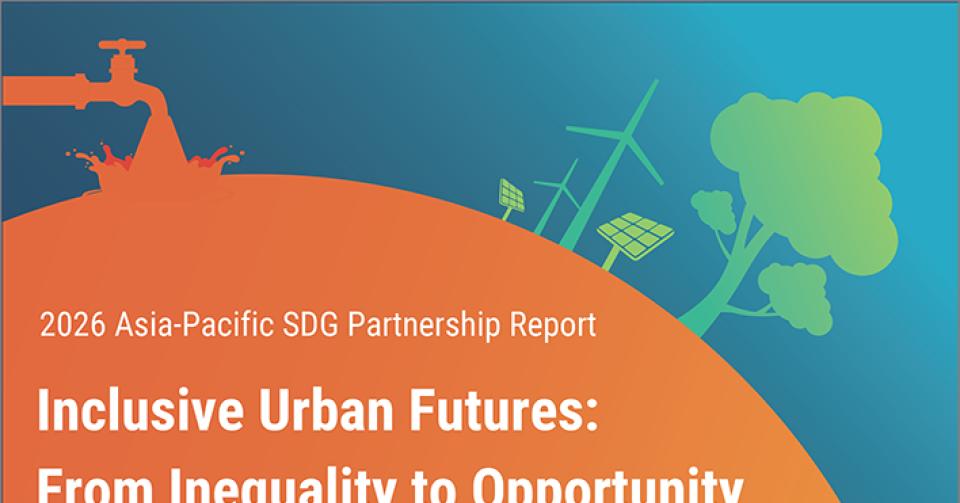
The 2026 Asia-Pacific SDG Partnership Report addresses urbanization as a means to build equitable, inclusive, and sustainable futures across Asia and the Pacific. It identifies three key inequalities: unequal access to housing and services, widespread informal employment, and environmental vulnerabilities. The report highlights innovative, community-led solutions such as improved housing, expanded decent work and social protections for informal workers, and enhanced environmental measures like air quality and climate resilience. It proposes policy actions to scale these approaches, fostering greener, more resilient, and inclusive urban growth.
Africa, Latin America | Health
2026 Asia-Pacific SDG Partnership Report—Inclusive Urban Futures: From Inequality to Opportunity

Asia and the Pacific continue to deepen economic integration despite global uncertainties. Trade remains the primary driver, supported by adaptation to shifting policies and supply chains. Intraregional investment stays resilient due to rapid digital growth and AI opportunities. Financial integration advances slowly, requiring improved infrastructure, risk management, and cross-border payments. Remittances and tourism are robust, while high-skilled migration is mainly directed outside the region. The report emphasizes policy priorities to enhance resilience and promote inclusive, sustainable integration.
Africa, ASEAN, Latin America | Financial services, ICT, Health
Asian Economic Integration Report 2026: Leveraging Regional Cooperation and Integration to Navigate Global Uncertainties
Building strong public institutions requires shifting from isolated, event-based training to integrated learning systems that embed continuous, contextual learning into the practice of reforms. Traditional training often fails as knowledge is disconnected from implementation, institutional memory fades with staff turnover, and capacity-building efforts are duplicated without creating shared, adaptable assets. A learning system approach emphasizes sustained engagement, problem-solving, and knowledge as an evolving resource supported by digital tools for accessibility and post-training support. Success depends on fostering a culture of reflection and collaboration, leveraging local institutions for credibility, and investing in small pilot projects to adapt and refine learning approaches. This system-based model ensures lasting institutional capability beyond individual training events.
Financial services, Education
Shift From Training Events to Learning Systems to Strengthen Public Institutions
Food Policy Councils (FPCs) in 12 European cities coordinate values-based urban food networks, facilitating deliberation, collaboration, and multi-stakeholder engagement beyond formal policy outputs. These councils exist on a spectrum between bottom-up and government-mandated models, blending civil society, municipal administrations, businesses, and researchers. Operating at the urban scale, FPCs enhance food system sustainability, democracy, and governance by linking community initiatives with formal policies. Early-stage FPCs improve participation, cross-sector coordination, and incremental system changes, offering durable frameworks for resilient, values-driven urban food systems.
“We are beautiful.” Creating political and societal traction through multi-stakeholder participation.

Controversy erupted over Grok, an AI chatbot on social media platform X, for generating sexualized images of women and children, prompting investigations by UK and EU regulators amid tightening digital regulation. The case highlights challenges in relying on voluntary safeguards by platforms, emphasizing the need for legal obligations under frameworks like the UK’s Online Safety Act and the EU AI Act to proactively identify and mitigate foreseeable harms beyond illegal content, including misinformation and abuse. Grok’s AI integration into a high-velocity social media context complicates moderation, as AI can privately and repeatedly engage users, potentially escalating harm. Regulators now have new powers to enforce changes globally, but fragmented oversight and the intertwined nature of sexualized abuse, misogyny, and extremist content call for coordinated approaches to managing AI risks.
The furore over Grok’s sexualised images has begun an AI reckoning

Islamic finance offers an ethical alternative for green finance by ensuring a direct link between capital and tangible economic activities that benefit society and the environment. Its principles prohibit earning profit solely from lending money and emphasize transparency, social responsibility, and avoiding speculation. Green sukuk (Islamic bonds) exemplify this by representing ownership in real, environmentally focused projects like renewable energy and clean technologies, ensuring investments directly support sustainable initiatives. Islamic fintech further enhances this model by providing cost-effective, transparent access to ethical investments. The UK, with its strong fintech and Islamic finance sectors, is well-positioned to leverage these tools, potentially improving credibility and impact in green finance.
Financial services
Why Islamic finance could provide an ethical model for funding the green transition

Immigration to Britain, historically linked to its empire and colonialism, accelerated after World War II with workers from the Caribbean, South Asia, and Europe easing labor shortages. Initial imperial identity gave way to tightening immigration controls as migrants were recast as "immigrants," fueling local anxieties. A rhetoric of invasion emerged from national myths about defending a homogenous British identity, exemplified by Enoch Powell's 1968 "Rivers of Blood" speech and legislative acts restricting Commonwealth migration. Recent immigration continues to meet economic needs but faces growing anti-immigration sentiment, with fears about immigration often based on misinformation and fueling harmful narratives likening migrants to colonizers or invaders, which risk legitimizing far-right conspiracy theories.
Latin America
How immigrants hoping for a better life in Britain came to be viewed as ‘colonisers’ or ‘invaders’

Liverpool's older adults demonstrate that ageing well depends more on lifestyle choices than geographic location. Despite Liverpool's low healthy life expectancy, many seniors maintain strength, mobility, and independence through regular, committed physical activity, even while managing chronic illnesses. Research shows muscle function, crucial for overall health, declines from the 30s but remains adaptable with use. Studies using dynamic proteome profiling reveal older muscles retain the ability to rebuild and respond to exercise. Community fitness spaces like Ray’s gym foster supportive environments that empower older adults to stay active, challenging the idea that longevity and healthy ageing depend mainly on living in designated "blue zones."
Liverpool’s ‘blue people’: the older adults redefining what ageing looks like

Five years after the military coup in Myanmar and amid ongoing civil war, recently held elections were neither free nor fair, serving primarily to transition military rule to a nominally “civilian” government that legitimizes continued military dominance. The junta claims these elections aim to restore stability and end international isolation, particularly addressing EU sanctions. However, the military retains significant constitutional power, including control over key ministries and emergency powers, while opposition groups—including ethnic armed organizations—continue armed resistance. Fighting persists across the country with the junta controlling only about 30–40 percent of the territory, highlighting ongoing conflict and instability.
ASEAN
Sham Elections amid the War in Myanmar
The European Commission, viewing global instability driven by China's technological rise, regional conflicts, and doubts about US reliability, has transformed into a Geopolitical Commission focused on Europe’s digital and technological sovereignty. It aims to regain control over technology regulation by setting standards, securing microchip access, regulating online platforms, and establishing rules for industrial data and AI. This strategy combines strengthened domestic regulatory oversight with efforts to export the EU’s regulatory framework internationally.
Health, Education, Financial services, ICT
Geopolitical Union: Europe’s Attempt to Take Back Control of Technology Regulation
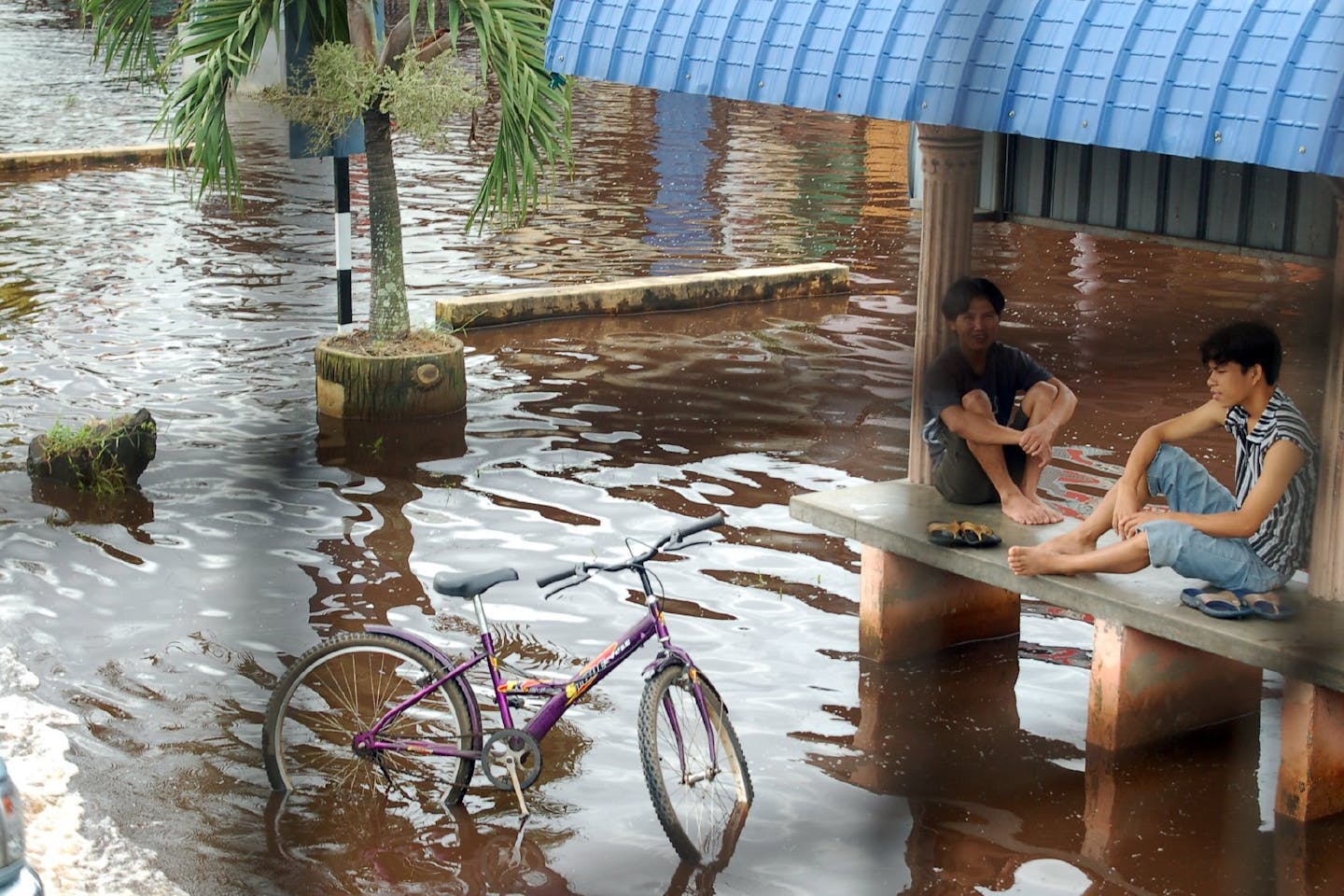
Malaysia faces challenges in local climate adaptation due to insufficient detailed, actionable data at the local government level, hindering effective response to extreme weather risks. Experts highlight the need to integrate disaster risk reduction with climate adaptation and emphasize that while national climate data exists, local authorities require technical support to implement solutions. The forthcoming Climate Change Bill aims to establish a National Integrated Climate Data Repository to centralize and improve data accessibility, aiding localized action. Additionally, Malaysia plans to publish its first National Adaptation Plan and is exploring regular climate risk assessments to inform policy and mobilize investment for resilience.
Financial services
National data repository must help Malaysia with local climate adaptation, say policymakers

Weather disruptions at the Winter Olympics demonstrate how climate volatility threatens global supply chains, particularly in Asia Pacific, a key manufacturing hub vulnerable to extreme weather. Climate change-induced events like flooding and storms jeopardize infrastructure and suppliers, with Scope 3 emissions—those from supply chains—exceeding direct emissions by over 20 times. Despite these risks, many companies lack visibility or reduction targets for supply chain emissions, exposing them to significant financial liabilities. However, Asia Pacific firms are increasingly addressing environmental impacts, showing improved sustainability performance, though challenges in accurate carbon data persist amid complex supplier networks.
Financial services, Health
Climate volatility at Winter Olympics highlights risks to Asia supply chains

South Korea's climate change response sector is projected to become a major job creator, with the workforce growing by 41.6% from 284,000 in 2022 to 402,000 by 2032. This growth, averaging 3.6% annually, contrasts with a decline in manufacturing jobs, expected to shrink by 0.3% yearly. Jobs in mitigation technologies—especially power-generation efficiency and solar/thermal energy—are expanding rapidly, while adaptation technology employment grows modestly, mainly in water management and agriculture. The study emphasizes the importance of investment in training and reskilling to support this transition, noting that employment closely follows revenue growth and depends on government policies and funding.
Education
Climate response sector could become South Korea’s next major job engine, says study

AI and open banking are transforming finance by enabling greater data sharing between banks and fintechs, leading to innovative, personalized financial services. AI-driven tools include intelligent credit scoring based on broader payment data, debt rehabilitation services tracking spending patterns, automated savings trackers, account aggregation for financial overview, and predictive finance that anticipates needs for money-saving advice. These advances promote financial inclusion and resilience, while fintechs emerge as key service providers behind the scenes. However, increased data openness raises security, privacy, and trust challenges, highlighting the need for transparent regulations to protect consumers as banks and fintechs collaborate in this evolving landscape.
ICT, Financial services, Education
Five ways that AI could be reshaping your relationship with money

Rapid advancements in AI, especially autonomous agentic systems, have outpaced traditional manual compliance approaches in the financial sector, creating a "velocity trap" where regulatory oversight lags behind AI-driven operations. Regulators now mandate continuous, automated monitoring rather than periodic human audits, recognizing that manual review cannot keep up with high-frequency AI decisions. To address this, a shift to "living compliance" is essential—embedding real-time governance directly into AI systems through frameworks like automated regulatory synchronization and integrated compliance engines. These innovations enable adaptive, proactive control of AI behaviors, ensuring operational safety, regulatory alignment, and building institutional trust in an era of rapid AI evolution.
Financial services, Education
AI governance must move from “point-in-time” audits to “living” compliance
The European Commission has introduced measures to protect Europe’s steel industry from high costs, weakening demand, and competition from subsidized Chinese imports, which dominate 54% of global steel production. The plan includes increased tariffs and reduced import quotas, aiming to counter unfair subsidies and market distortions. Germany, the EU's largest steel producer, supports these protectionist policies, signaling a shift from traditional free-market principles toward strategic economic intervention. This marked turn reflects growing geopolitical tensions and prioritizes preserving the steel sector despite economic criticisms and potential cost increases for downstream industries. These efforts could catalyze renewed European integration similar to the foundations laid by the original Coal and Steel Community 75 years ago.
Latin America | Financial services
A protectionist steel bloc could once again forge European integration

Global CEOs increasingly accept disruption as a constant in business, with nearly half reporting significant impacts over the past year. The 2026 AlixPartners Disruption Index shows a slight decline in overall disruption but highlights ongoing challenges such as energy prices, inflation, tariffs, geopolitics, and cybersecurity. Artificial intelligence (AI), business-model innovation, and geopolitical shifts are key tools for turning disruption into advantage. China, while the most disrupted market, is adapting by accelerating technology adoption and expanding overseas. Chinese executives are notably optimistic about AI, heavily investing in automation and robotics despite concerns about workforce reductions and skill degradation. Firms leading growth focus on diversification, compliance, and strategic agility to thrive amid persistent volatility.
Financial services, ICT, Health, Education
CEOs see disruption as the norm, AI as an advantage: survey

China plays a pivotal role in driving Asia's transition to sustainable agriculture by leveraging its significant palm oil imports and burgeoning green procurement policies. Indonesia and Malaysia dominate palm oil production, often linked to environmental harm, but sustainability certifications like RSPO are gaining traction, with nearly 500,000 tons of China's imported palm oil certified. China can further catalyze green agriculture in developing Asian nations by expanding demand for sustainable products and enhancing green finance mechanisms. Challenges include limited buyers for green products, weak sustainability standards, scarcity of investment, and fragmented agricultural projects. Strengthening green finance, improving certification alignment, and mobilizing private investment through blended finance could accelerate environmentally sound agricultural growth in Asia.
China can drive Asia’s transition to green agriculture
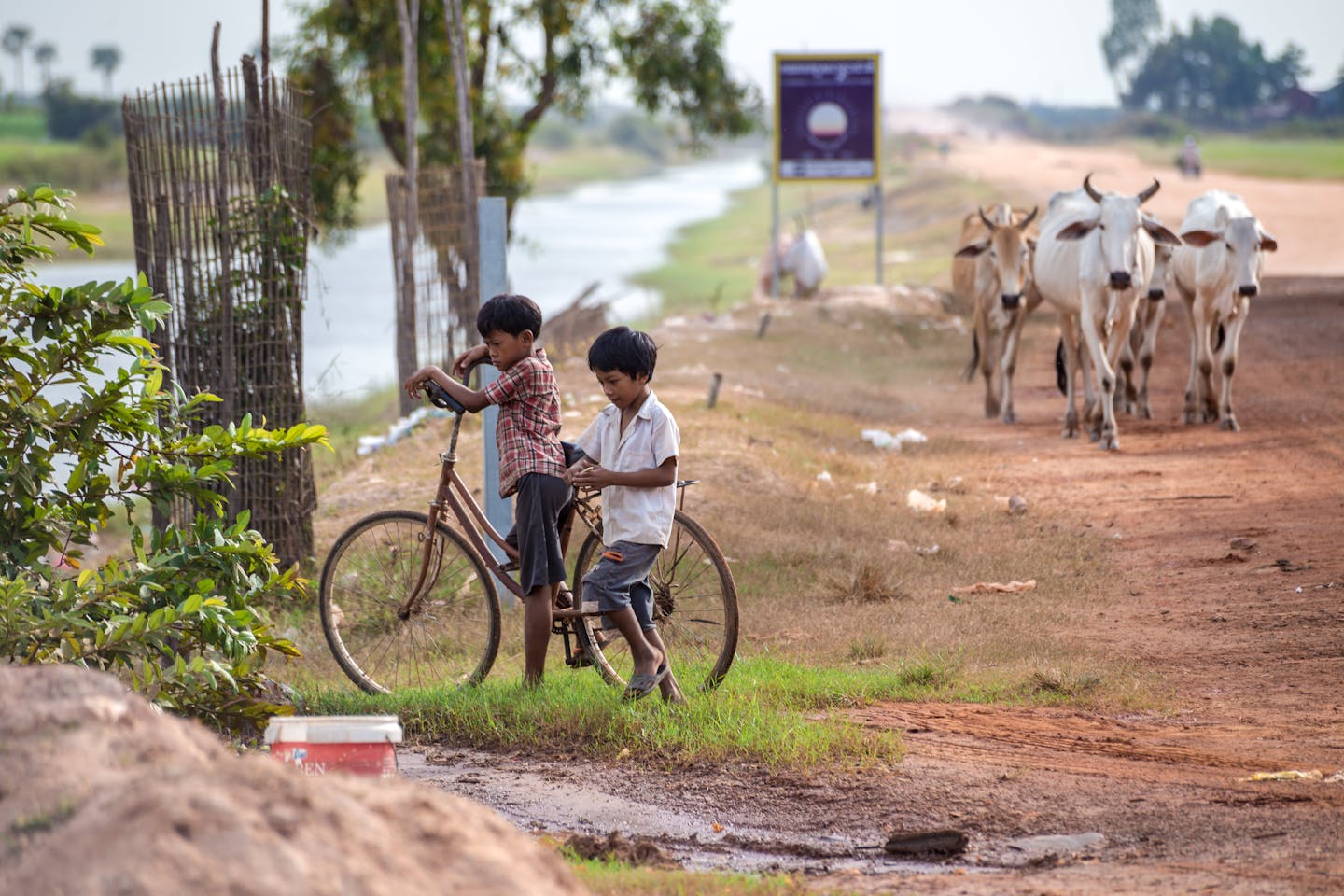
The Asia-Pacific region is projected to miss 103 of 117 measurable UN Sustainable Development Goals (SDGs) targets by 2030, primarily due to worsening environmental decline. Critical setbacks include reversing progress on climate action, marine conservation, biodiversity, and urban resilience, alongside a faltering energy transition with declining renewable energy shares. These environmental challenges exacerbate the human and economic impacts of natural disasters, threatening poverty reduction gains. While health and education access have improved, issues like noncommunicable diseases and declining learning outcomes persist. Water resource sustainability is at risk due to ecosystem degradation and high stress. ESCAP calls for urgent systemic transitions in food systems, energy, education, welfare, and environment to reverse negative trends and ensure sustainable development.
Africa, ASEAN, Latin America | Health
Asia-Pacific set to miss most UN development goals as environmental decline deepens, report warns
Local plan consultations generate thousands of responses that require extensive manual review by planning teams, causing delays. The UK government is testing artificial intelligence to accelerate this process without reducing analysis quality or citizen engagement. Supported by the PropTech Innovation Fund, Greater Cambridge Shared Planning partnered with the University of Liverpool to develop PlanAI, a large language model trained on 15 years of local consultation data. In trials, PlanAI summarized three consultations in 16 minutes versus 18.5 hours manually, delivering clear thematic insights and significantly speeding up local plan preparation.
Stress-testing an AI tool to explore its potential for faster local plans and greater citizen engagement