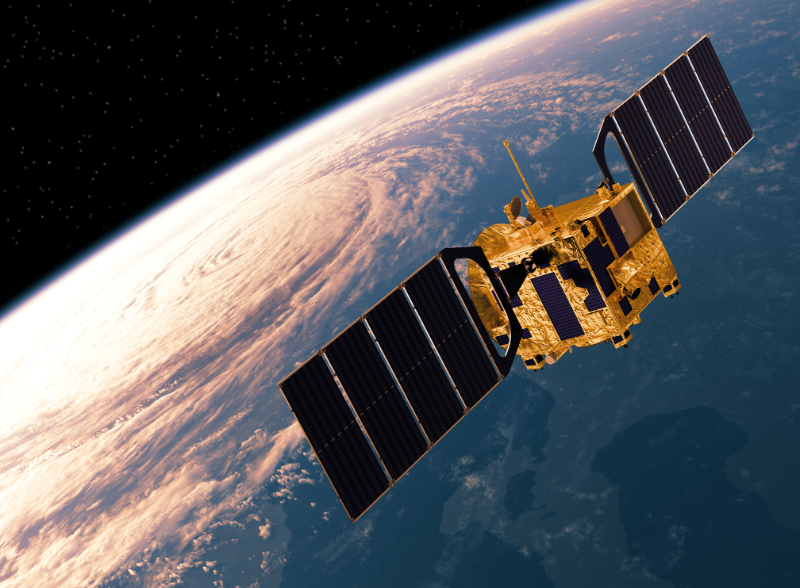
The UAE Space Agency funded a 3U CubeSat (MeznSat) to detect greenhouse gas (GHG) concentrations. The project aims to provide the UAE space industry with well-trained graduates through hands-on experience, while also opening opportunities for advanced space-oriented research relevant to the UAE.
Prerequisites:
• Access to EO data
• Capability to process, integrate and analyse EO data
• Satellite Manufacturing capabilities
• Ground segment capabilities
• Secure necessary orbital slots and frequency bands internationally for satellite operations
• Partner launch broker / rideshare slot
Cost:
• Ballpark: USD 50k–3M per mission
A simple CubeSat (typically designed for educational purposes) could be built and launched for as low as a few dozen thousand dollars, up to above one hundred thousand USD.
A more sophisticated CubeSat, packed with cutting-edge tech for intricate research or commercial purposes, could cost up to a few million USD (can vary substantially based on its complexity)
• Includes: satellite payload and bus procurement or in-house design, assembly/integration/verification (AIV) and testing, licensing and frequency allocation, launch services and insurance, ground station support, training and capacity building
Timeframe:
• Overall: 24–48 mo
• Phase: requirements definition & program setup (6–12 mo), design & procurement (6–12 mo), assembly, integration & testing (9–18 mo), launch & early operations (3–6 mo)
Pros:
• Upskilling - Fosters education and public engagement
• Enables Exploratory Research - By providing an opportunity to venture into undeveloped segments of the value chain
• Cost Effectiveness - Improves allocation of financial resources, maximizing impact while minimizing waste
Considerations:
• Limited Duration - CubeSats have a limited lifespan and capability
• Cost and Complexity - Need to consider launching costs and ways if to be sent to orbit, along with related regulatory processes
• Reliability - CubeSats are often less reliable than bigger satellites