
Context
According to UNICEF, in Mexico, 43% of girls and adolescents who menstruate regularly miss school during their period. The main reason for this, they report, is because they prefer to stay at home due to inadequate washrooms with limited access to running water and unavailability of period products. Consequently, girls in Mexico miss one month of school each year on average because of their period. This creates educational disparity and places them on unequal footing with boys in terms of educational attainment, creating a gap that is challenging to bridge in the future.
Objectives
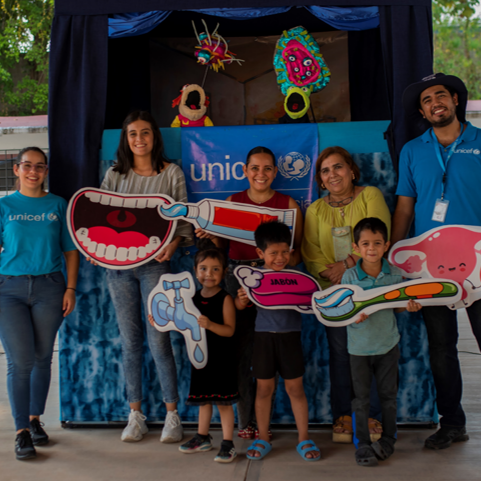
Aiming to narrow the divide, Essity partnered with the United Nations Children’s Fund (UNICEF) in Mexico in an initiative called “Hygiene is our Right”. This initiative aims to advance access to menstrual health education, clean water and appropriate sanitation facilities, and period products. The program is running since 2019, and raises awareness on hand washing, importance of clean and safe toilets, and addresses misinformation and stigma surrounding menstrual health. A census mapping out access to water and sanitation facilities in schools was undertaken to identify critical needs. Training material on menstrual health was developed for teachers in support of the educational curricula, but also for children, adolescents, and parents. Together with Essity´s leading period care brand Saba, Oky, a smartphone app, was co-created by girls and young women to enable tracking of menstrual cycles and to provide access to reliable health and hygiene information. V-Land, a groundbreaking video game about menstruation was also developed.
Essity’s efforts to promote menstrual health extend beyond public schools. In 2021, a far-reaching alliance with “Menstruación Digna México”, a Mexican non-governmental organization that plays a vital role in raising public awareness on menstrual health and period equity was stablished with the purpose to have available data on menstrual health. Therefore, Essity, Menstruación Digna Mexico and UNICEF conducted the first-ever National Survey on Menstrual Health Management. This nationwide poll provided information on how adolescents, adult women, and people who menstruate experience and manage menstruation, as well as its impact on various aspects such as physiological, psychosocial, economic, social, and cultural dimensions.
This study shows that women and girls still lack access to menstrual health to a large extent. Approximately 15% of girls and women in Mexico do not have access to adequate infrastructure to manage their menstruation and 70% do not know what is happening to them when they experience their first period.
The survey has been celebrated by public, private and social actors as an impactful tool to drive the needed change, as it provides crucial insights on how to shape law and policy to prioritize investments to close gaps in menstrual health.
Contact details
Palmira Camargo, Vice President Communications (palmira.camargo@essity.com)
Julia Fäldt Wahengo, Global Public Affairs Director (julia.faldt.wahengo@essity.com)