Which of the four domains of health equity action (organization, offerings, community, ecosystem) does the initiative target? For additional context, please visit the GHEN website.
· Organization
· Offerings
· Community
· Ecosystem
What health inequity does your initiative aim to address? Which specific regions, populations, health disparities?
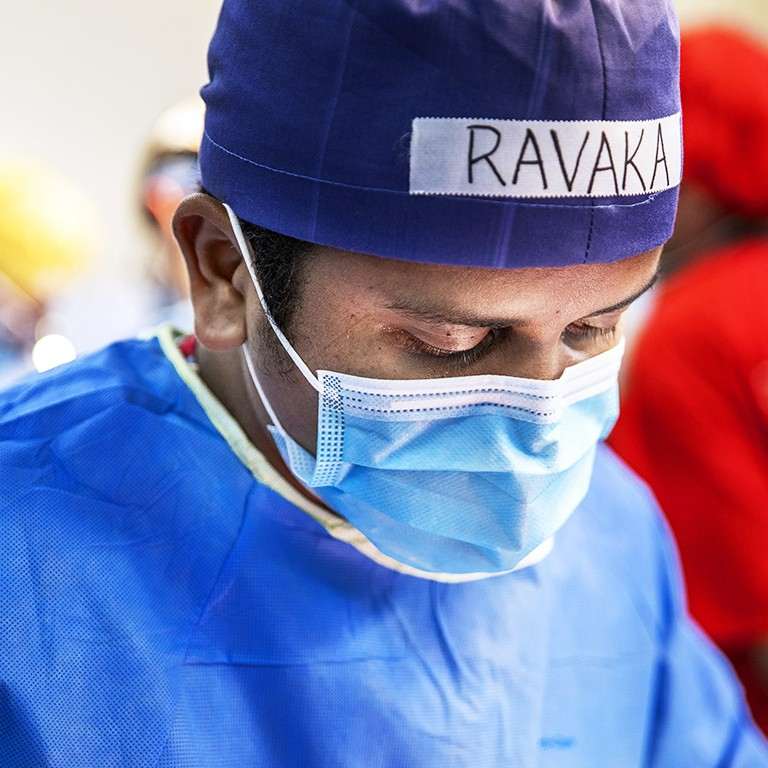
The goal of the Operation Smile (OS) Cleft Surgical Training Program (CSTP) is to improve global surgical equity by increasing access to essential surgery, specifically cleft lip and palate surgeries in the 35 plus low- and middle-income countries where Operation Smile has an established local support structure and hospital-based partnerships. This will occur through increasing, training and strengthening the local cleft surgical workforce capacity.
As an example, Malawi, with a population of 20 million, 3 plastic surgeons & 1 paediatric surgeon provide cleft care in two of the four central hospitals in the central and southern region of the country. Mzuzu Central Hospital (MCH) in northern Malawi has no cleft-trained surgeons. Patients with cleft conditions face either no care or long journeys to seek and reach care in Lilongwe or Blantyre. CSTP is preparing a surgeon to provide cleft care in Mzuzu Central Hospital in northern Malawi which will offer critical access to the Northern Population.
CSTP surgeons in training will similarly improve access in the following countries: The Philippines, Ghana, Madagascar, Ethiopia, The Democratic Republic of Congo, Kenya, Zimbabwe, and the Dominican Republic.
Please provide an overview of your initiative / approach.
Local surgeons are trained in cleft surgery by expert local, regional and international surgeons through intensive surgical training programs and partnerships with local hospitals organized in low- and middle-income countries, organized and supported by the non-governmental organization Operation Smile.
Local surgeons are paired with cleft surgeon educators (from local, regional and international centers). who mentor and supervise the acquisition of technical skills over a 1–2-year period.
Asynchronous virtual academic training is provided through webinars, case-based discussion sessions, and access to an online cleft education learning platform.
Once surgeons complete training their skills are measured through a validated tool, and they continue to receive support from mentors and their local in-country Operation Smile Foundation to provide cleft surgical care in their local setting. Local Operation Smile Foundations provide multidisciplinary comprehensive support to patients complementing the surgical services provided by the newly trained surgeon (oral health, nutrition, psychosocial, speech and language pathology, anesthesia, nursing, biomedical engineering and pediatrics).
Why did your organization choose to prioritize this specific inequity/initiative for action?
· Organizational capabilities best suited to address need
· Location is area of focus
· Desire to improve access in rural, peripheral areas of LMIC countries
What impact has the initiative achieved?
The 2023 cohort of surgeons in Operation Smile Cleft Surgical Training Program (CSTP) includes 17 surgeons from 9 countries. Four of these surgeons have already completed training. One each from Madagascar, and the Philippines, and two surgeons from Ghana.
Prior to the COVID pandemic, two surgeons completed CSTP training (one surgeon from Blantyre, Malawi and one from Antananarivo, Madagascar)
Both surgeons are currently delivering cleft surgical care locally with an approximate output of over 50 patients per year. They receive ongoing support to provide cleft care in a multidisciplinary team setting through local Operation Smile Foundations.
Based on the performance of the previous CSTP cohort, the expected impact of training the current cohort of 17 surgeons will be 850 cleft surgeries per year with attendant follow-up and multidisciplinary comprehensive care for children in their home communities.
How was the impact measured (e.g., metrics used, tools employed, relevant standards)?
Cleft surgery outputs by surgeons in their own practice after completion of cleft surgery training with Operation Smile. Averages of these outputs are used to model the future impacts of current and future trainees.
What organizations did you partner with to complete this initiative? How did these partners contribute throughout the initiative’s lifecycle? What role in this partnership does your organization play (e.g., funder, convener)?
Organizations partnered with: 1. Stryker – provides donor funding for some surgeons training in cleft through OS; 2. COSECSA (College of Surgeons of Eastern, Central and Southern Africa) – partnership through which 10 plastic surgeons in COSECSA countries are being trained in cleft surgery through Operation Smile. 3. Ethiopian Society of Plastic and Reconstructive Surgery – Provide accreditation for Continuing Education Units (CEUs) for selected virtual cleft surgery webinars provided by OS for the surgeons training in cleft; 4. Cleft Lip and Palate Association of Pakistan (CLAPP) – CLAPP Hospital in Lahore hosts surgeons training in cleft surgery through Operation Smile; 5. Partnerships with various Hospitals in countries where cleft surgical training is taking place: Dominican Republic, Ghana, Democratic Republic of Congo, Malawi, Ethiopia, Kenya, Malawi, Madagascar, India, Pakistan.
How is the initiative actively involving impacted communities (e.g., in identifying the health gap, co-creating the initiative or measuring impact) throughout the initiative lifecycle?
1. Identifying the health gap: Areas of need identified by in-country Operation Smile Foundation Teams and frontline health workers. Some Operation Smile Country Foundations (eg. Operation Smile Malawi) have conducted country-wide outreach programs to establish the prevalence of cleft conditions in different regions to understand the need by geographic location.
2. Co-creating the Initiative: Local multidisciplinary teams are heavily involved in designing and delivery comprehensive care to patients treated by CSTP trained surgeons. These comprehensive care programs include nutritional support, speech therapy, psychosocial support, dental care, local advocacy and follow up.
3. Measuring impact: Case logs are maintained by CSTP graduates and reviewed by Operation Smile CSTP support staff to track impact. These measurements are used to predict future impact. Impact predications are updated based on surgical case logs on an ongoing basis.
What is the future vision for the initiative? Will it scale to other regions or translate to other drivers of health?
The vision is to expand CSTP participation across the 35 plus countries in which OSI is present. As CSTP trained surgeons mature their cleft lip and palate surgical output will increase. Continued mentorship will also enhance outcomes. Impact will scale as the trained train their own residents. Private-public partnerships will continue to be established to provide financial and in-kind support, such as head lamps and operating room space. For example, in Malawi. The head of surgery in Northern Malawi’s Mzuzu Central Hospital will provide cleft care to the region’s population on completion of her Operation Smile cleft surgery training. This will occur in alignment with the Operation Smile Malawi business plan. Appropriate Ministry of Health buy-in is necessary for such an initiative to be sustainable and not reliant on donor funding long-term. Recruitment is underway to onboard surgeons for cleft training in various countries across Latin America, Africa, The Middle East and Asia.
Vision strategy and tactics: 1. Align with country Operation Smile Foundation business plans 2. Include necessary support to build multidisciplinary cleft teams 3. Obtain Ministry of Health buy-in to support sustainability of cleft care provision not reliant on donor funding long-term.