
Our insights on responsible governance and integrity

Articles

Videos

Creating Certainty in an Uncertain World: The Evolving Role of Gatekeepers.

OECD Global Anti-corruption and Integrity Forum 2025

Powering the Future: Integrity to Drive Net Zero

World Economic Forum - Strategic Intelligence 2025

The Integrity Advantage: A Blueprint for SMEs

World Economic Forum - Strategic Intelligence 2024

Business integrity in real estate: Tackling illicit financial flows

World Built Environment Forum 2024

Navigating Compliance Amidst Global Uncertainty

World Economic Forum - Strategic Intelligence 2024

Being Honest about Governance

World Economic Forum - Annual Meeting 2024

Defending Transparency

World Economic Forum - Annual Meeting 2023

Investing Responsibly in Sustainable Governance 

World Economic Forum - Annual Meeting 2022

The Role of Anti-Corruption Amid the ESG Revolution

International Anti-Corruption Conference (IACC) 2022

What’s Next for Tech for Integrity: Emerging Opportunities, Persisting Challenges & Potential Risks

International Anti-Corruption Conference (IACC) 2022

Uniting Gatekeepers Against Illicit Financial Flows – A Framework for Action

UN Special session of the General Assembly against corruption 2021

In Good Governance We Trust 

World Economic Forum - Sustainable Development Impact Summit 2021

Corruption and Democracy

World Economic Forum - Annual Meeting 2020

Publications

Investing in Integrity in an Increasingly Complex World: The Role of Anti-Corruption amid the ESG Revolution

June 2022

Defining the ‘G’ in ESG: Governance Factors at the Heart of Sustainable Business

June 2022

The Role and Responsibilities of Gatekeepers in the Fight against Illicit Financial Flows: A Unifying Framework

June 2021

Podcasts

Transformation maps

Transformation Maps are the World Economic Forum’s dynamic knowledge tool  driven by an intelligent system that lets users explore and make sense of complex and interlinked forces that are transforming economies, industries and global issues. The map below present insights on governance topics written by experts.

Learn more 

Government accounting rules significantly impact public understanding and management of national finances. While many governments use cash accounting, which records transactions only when cash changes hands, this method can obscure unpaid bills, aging infrastructure, and future commitments. Accrual accounting, in contrast, records costs and obligations when they occur, providing a fuller financial picture that reveals risks and long-term liabilities. Though more common in wealthier countries, adoption in developing nations is crucial for transparency, informed decision-making, stronger accountability, increased public trust, and efficient use of resources. Comprehensive accounting helps prevent hidden fiscal problems that could undermine future services and infrastructure.
Asian Development Blog: Why Government Accounting Rules Matter to Everyone

Elections significantly impact systemic risk in national banking systems, with risk typically dipping before elections due to pre-election spending and information control, then rising during and remaining elevated for up to 12 months after, especially when incumbents lose. Brazil's unexpected re-election of Lula triggered sharp market reactions despite political continuity, while Israel's inconclusive election heightened uncertainty and systemic risk. Snap elections further increase systemic vulnerability, as seen in Israel's frequent polls. Strong economic growth, public trust, and robust macroprudential regulations help mitigate these risks, but political pressures often lead to pre-election loosening of financial safeguards, increasing long-term fragility.
Africa, Latin America | Financial services
How different election results affect bank stability – global study
Liberal democracies assumed political development was complete, expecting markets to promote freedom and technology to expand markets while governments became mainly administrative. This approach left democratic institutions unprepared for powerful companies that control public infrastructure, information, and political decision-making. The book examines this failure, identifying who now holds power and why traditional political language no longer fits the current reality.
Africa, Latin America | Health
The Tectonic Shift: Power, Tech, and the End of Nations
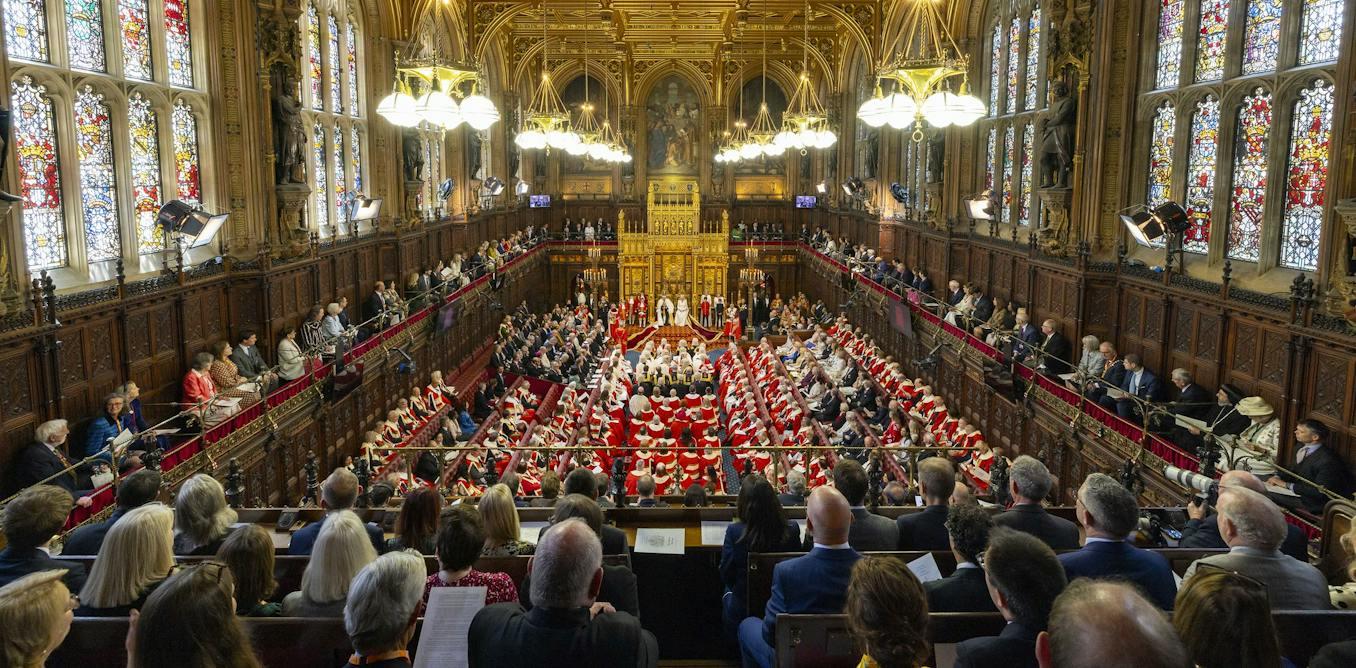
The House of Lords has transformed from aristocratic dominance to a new "assetocracy," where wealth and asset-based power prevail. By 2026, all hereditary peers were removed, replaced by life peers, many of whom hold substantial financial assets, including shareholdings exceeding £100,000 and extensive property portfolios. Over 260 peers have significant investments, with some possessing combined wealth in the tens of millions, and 14 peers appear on the UK Rich List with a total net worth of £27.8 billion. Nearly half of peers are privately educated, highlighting ongoing social privilege. Despite reforms, the Lords remain an elite institution, with wealthy members often less active in parliamentary duties. The influx of wealthy Conservative peers since 2010 marks a shift toward financial elites controlling this legislative body.
From aristocracy to ‘assetocracy’ – how wealth has transformed the House of Lords

Cities play a crucial role in protecting democracy by resisting authoritarianism and promoting inclusive governance. They act as progressive counterweights to national authoritarian trends, though not all urban leadership is democratic. Cities can democratize politics through direct citizen engagement in policymaking and planning. Economically, models like community wealth building empower local residents over private interests. Public urban spaces serve as vital venues for democratic expression and community building, countering political polarization. Ultimately, cities reinforce democracy by fostering everyday civic participation and values across political, economic, and social realms.
Africa
Four ways cities can help protect democratic values
Social unrest in China can inadvertently foster entrepreneurship due to local governments' responses rather than the protests themselves. When protests arise—often around environmental or social issues—authorities may initially use coercion but then concede by improving communication, shelving contentious projects, and loosening regulatory or financial barriers to restore public confidence. This sequence—street protest leading to government reaction, resource reallocation, and ultimately increased venture formation—creates unexpected economic opportunities. Empirical analysis from 2008 to 2019 shows protests correlate with thousands of new startups, driven by increased business lending and relaxed regulations, highlighting how political pressure can generate entrepreneurial opportunities indirectly.
How street protests can spark entrepreneurship

Between 2020 and 2025, over 8,900 individuals under 30 were arrested for money laundering in England and Wales, representing more than 60% of such arrests. Organised crime groups exploit young people, especially students and international students, recruiting them as "money mules" to transfer illicit funds, often through deceptive job offers and social media recruitment. Many young recruits are unaware they are involved in criminal activity. Universities, handling large financial flows, may unknowingly facilitate laundering but currently lack stringent regulatory obligations to monitor money laundering, unlike banks or law firms. Police report resource constraints and inconsistent cooperation with universities, hindering efforts to address complex criminal networks beyond low-level participants.
Financial services
More young people are being recruited as ‘money mules’ by organised crime groups, new analysis reveals

The UK has established a National Centre for Information Defence to counter extensive disinformation campaigns from hostile states like Russia, China, and Iran, which allocate billions annually to information manipulation. These adversaries use tactics such as Russia's "reflexive control," China’s "three warfares strategy," and Iran's cyber-influence operations to destabilize democracies, disrupt political decision-making, and fracture alliances. The UK is particularly vulnerable, as highlighted by reports of widespread Russian interference in British politics and inadequate government responses. The rise of AI-enhanced disinformation and escalating cyber threats following UK support for Ukraine intensify the challenge for this new centre.
Africa | Financial services
The new battleground: the UK’s disinformation centre faces threats on multiple fronts
Modern slavery arises where global commercial pressures intersect with vulnerable local labor markets. Although UK companies have increased oversight and reporting on modern slavery, limitations remain in addressing abuses occurring deeper in complex supply chains, such as through intermediaries and subcontractors. The UK government's proposed mandatory reporting reforms improve transparency and extend duties to public authorities, signaling a shared responsibility. However, effective prevention requires stronger collaboration and information sharing between corporate supply-chain governance and local public bodies, which currently operate mostly in parallel. Coordinated efforts are essential to identify and address labor exploitation at both corporate and community levels.
Latin America | Health
Ending modern slavery will take more than corporate reporting

The UK faces significant challenges in effectively supporting survivors of modern slavery, particularly migrant workers who constitute over 90% of labour exploitation cases. Current policies in immigration, labour market regulation, and criminal justice operate in silos, often working against each other rather than providing cohesive protection. Recent immigration laws risk undermining victim identification and protection, hindering recovery and prosecution efforts. Additionally, reliance on corporate reporting without strong regulatory enforcement weakens efforts to combat exploitation in supply chains. Addressing modern slavery requires a unified, evidence-based "whole-systems" approach that integrates immigration, labour, business accountability, and criminal justice to better protect victims and hold perpetrators accountable.
Latin America
Are the UK authorities letting down survivors of modern slavery?
Tech sovereignty refers to a government's ability to control technology within its borders and maintain autonomy from foreign technologies. Governments adopt various policies to achieve this, categorized as cost (investing in domestic capacity), exit (ensuring the ability to disengage from unfavorable technology partnerships), and leverage (holding strategic assets sought by others). Open government principles—transparency, public oversight, and participation—are crucial in these areas to ensure policies deliver autonomy, value, security, and jobs effectively.
Why Open Government Matters for Getting Tech Sovereignty Right
Small business owners in Europe, who constitute 93% of non-financial firms and employ about 30% of the workforce, are disproportionately drawn to radical right parties due to rising market concentration. As large firms dominate markets—driven by technology and weakened competition enforcement—small firms face revenue loss and market exit risks. This economic pressure undermines trust in institutions among small business owners, who perceive governments as aligned with dominant corporations. Consequently, they turn to radical right parties promising protectionism, economic nationalism, and lower taxes, which address both economic and status concerns. Empirical analysis across 14 EU countries shows that major mergers reducing small firms’ market share lead to increased radical right voting and decreased support for governing parties.
Rising market power is pushing small business owners towards the radical right
Public administration is central to addressing the global democratic crisis, requiring a foundational public philosophy beyond managerial skills. Curtis Ventriss and Tina Nabatchi propose a philosophy built on four key thinkers: Judith Shklar’s liberalism of fear emphasizes resisting institutional cruelty; Alasdair MacIntyre’s internal goods highlight cultivating virtue within practice; Isaiah Berlin’s concept of value conflicts stresses acknowledging inevitable democratic tensions; and Hannah Arendt’s enlarged mentality advocates for perspective-taking to support defensible judgment. Together, these principles guide administrative judgment, organizational culture, and institutional courage in democracy’s challenge.
Health
A Public Philosophy for Public Administration in Times of Democratic Crisis

Digital finance has significantly expanded financial inclusion globally but faces major risks from scams and cybercrime, costing around $1 trillion annually and undermining trust. Thailand exemplifies this challenge, where rapid adoption of digital payments and financial services has been accompanied by organized fraud, causing billions in losses and deterring users from the system. The 2026 IMF-World Bank Annual Meetings in Bangkok will spotlight “safe and inclusive digital finance,” addressing three key issues: cyber fraud, operational resilience vulnerabilities due to dependency on large tech providers, and fairness concerns as AI-driven decisions may exclude marginalized groups. Thailand’s multi-faceted response, including shared responsibility among banks, telecoms, and platforms, aims to rebuild trust by holding providers accountable and combating digital crime, showing that safety and inclusion must advance together.
Africa, ASEAN | Financial services, Health, ICT
Digital finance is reaching billions. Can we make it safe enough to trust?
Pakistan’s rapidly growing population exposes the limitations of its current administrative system, which struggles to serve vastly uneven and large provincial populations, such as Punjab’s 128 million versus Balochistan’s fewer than 15 million. Decentralization efforts, like the 18th Constitutional Amendment, have devolved responsibilities and resources to provinces, yet local decision-making remains distant from many communities, worsening service delivery gaps, especially in education. Effective reform requires aligning boundary changes with fiscal capacity, clear mandates, and accountability. Lessons from countries like Kenya show that creating smaller, well-funded, and politically empowered local units can improve governance, while fragmented or underfunded units, as seen in Lebanon, hinder service delivery. Pakistan’s reform options range from moderate to ambitious, balancing governance efficiency with local responsiveness.
Africa, Latin America | Health, Financial services
What Pakistan reveals about administrative reform for fast-growing populations

Nick Couldry highlights how modern economies rely on extracting data from everyday activities such as education, workplace surveillance, and fitness apps, where user information is collected and often shared with third parties. Cookies and other tracking technologies facilitate extensive data gathering, which is then linked across databases to create detailed personal profiles. While personalized ads rely on such targeting, there are significant long-term risks, especially concerning sensitive health data, which can affect insurance and employment opportunities. Despite these risks, people continue using these technologies because systems are designed around default data sharing, and users rarely change settings due to complexity or indifference.
ICT, Health, Education
Is your phone listening to you? “Everything is organised around the assumption that you will give up this data.”
Liberal democracy in the United States is in deep crisis, with nearly 70% of Americans doubting its effectiveness and widespread mistrust in governing elites and institutions. This "anti-system age" has led many to reject the democratic process or support dangerous alternatives. Despite ongoing political debates and policy campaigns, relying on traditional governance methods within a broken system risks further entrenching authoritarianism and oligarchy. Without a fundamentally different approach, future elections alone will not prevent a potential authoritarian breakthrough, highlighting the urgent need for transformative change in governance.
Africa, Latin America
Governance in an Anti-System Age

The RAF Fairford incident highlights the critical yet complex role of the public in the UK’s counter-terrorism efforts. Ordinary citizens act as the “eyes and ears,” reporting suspicious activities for trained authorities to assess, as seen when a local farmer’s alert led to arrests. This approach, central to strategies like Prevent and the Channel programme, broadens responsibility beyond security agencies to include everyday institutions and the public. However, it raises challenges around avoiding profiling and stigmatization, particularly of certain communities. Effective public vigilance depends on reporting specific concerning behavior without investigation or confrontation, ensuring security without fostering distrust or infringing on civil liberties.
RAF Fairford: the power (and risks) of making the public the ‘eyes and ears’ of counter-terrorism
Data sovereignty has emerged as a key governance issue in the digital era, with diverse definitions from governments, individuals, indigenous groups, tech companies, and regional blocs. True sovereignty involves aligning legal authority with technical control over data storage, computation, models, and identity, rather than relying solely on data localization. Achieving credible data sovereignty requires balancing legitimate control with the need for trusted, equitable cross-border collaboration among multiple stakeholders.
Africa | ICT, Health
Data Sovereignty in Practice
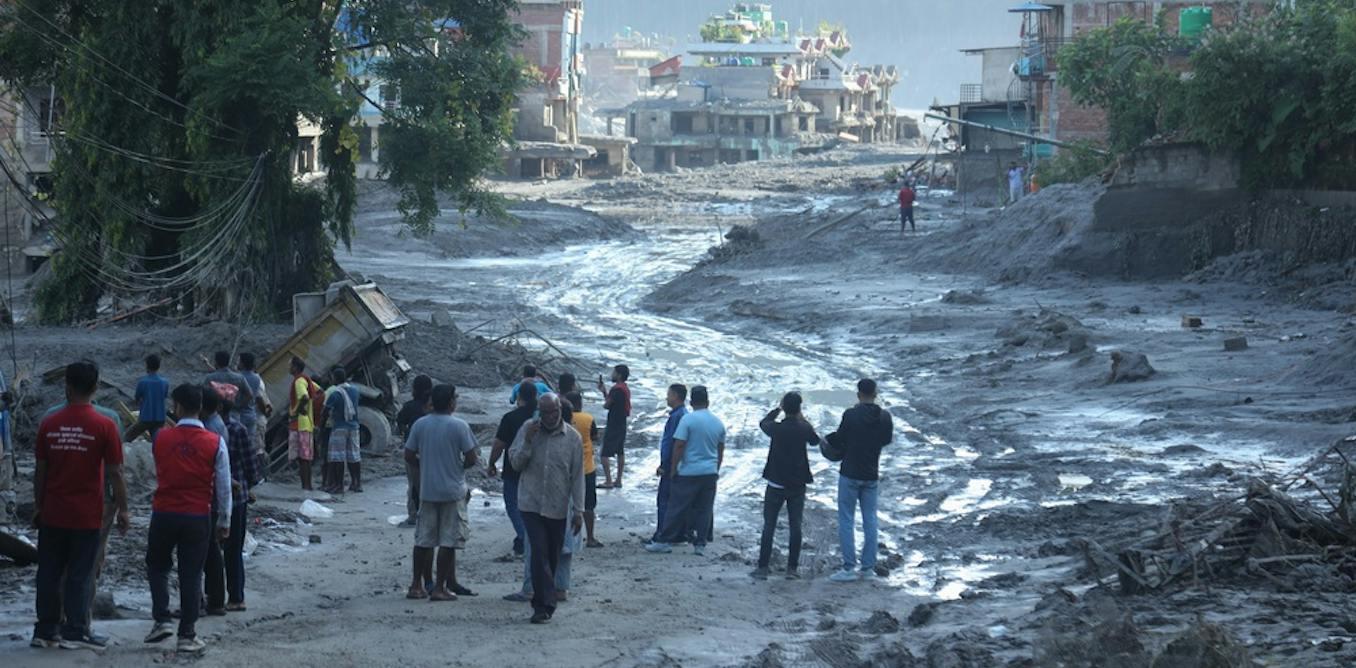
Authoritarian regimes often conceal information about escalating climate and natural disasters, risking harm to their own citizens and neighboring countries. Recent examples include China's censorship of Nepal-Tibet flood reporting and Russia's concealment of Siberian flood damage. Historical cases, like Ethiopia’s 1984 famine and the 1986 Chernobyl disaster cover-up, illustrate deadly consequences of secrecy. Such regimes also restrict international aid and block disaster data to protect their image, worsening humanitarian crises and regional stability. Suppressing information about climate-driven events and shared resources undermines collective safety, increasing vulnerability amid rising climate threats.
Africa | Health
Climate disasters are getting worse – risks escalate when authoritarian regimes keep neighbours in the dark

PACI Community

A World Economic Forum Initiative