Solution: Offer a low-interest revolving line of credit at portfolio level where up to half the loan can fund immediate capital repairs but the remainder must be directed to a resilience component, paired with expert technical assistance to identify the highest-impact measures.
Key challenge: Property owners borrow to repair damage after an event and to meet immediate capital needs, but almost never to reduce the risk of the next one - so finance repeatedly reinstates the same exposure and resilience remains an unfunded discretionary addition.
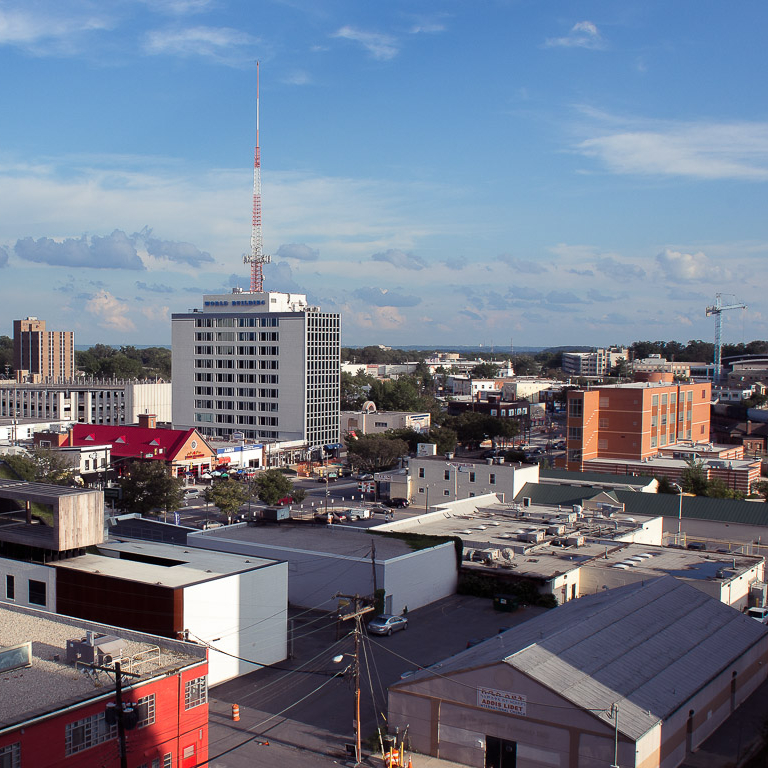
Context: The fund operates in Montgomery County, Maryland, across urban and suburban residential and commercial property, developed with the Urban Land Institute. It responds to the barriers identified across the Financial Innovations Lab: significant upfront capital needs, projects spanning years, complex multi-stakeholder coordination, and difficulty quantifying total return on investment across environmental, social and economic benefits.
Solution in practice: The Green Bank provides a low-interest line of credit through a revolving loan fund, with disbursal, investment and repayment handled at parent or portfolio level rather than project level, which reduces risk for the borrower and enables multiple projects without seeking separate funding each time. Loans are interest-only, sized at $3-5 million, priced between 2.5% and 9% with the low end reserved for high-impact projects, on a three-year extendable term. The defining feature is conditionality: up to half the loan can go towards capital improvements, but the rest must be directed to a resilience component, and that resilience investment is also made at portfolio level rather than necessarily at the property where repairs are happening. Expert technical assistance is provided with a partner to identify high-impact resilience investments, and data collection is intentional, building evidence on baselines and avoided losses to support lower insurance premiums and faster financing in future. Projected three-year outcomes are 20-plus properties with resilience upgrades, an average 20% reduction in utility costs, operational savings and reduced insurance premiums, alongside a replication toolkit for green banks and CDFIs nationwide.
Impact / outcome: Projected over three years: 20+ properties upgraded, average 20% cut in utility costs, lower premiums, and a replication toolkit.
Next steps: The explicit aim is to position resilience as a bankable asset class, and the replication toolkit for green banks and CDFIs is the mechanism for doing so - which speaks directly to the playbook call under action area 2b for standardized structures that, once developed in one municipality, can be adopted elsewhere rather than rebuilt deal by deal. The design principle worth testing more widely is the split mandate: pairing immediate needs with mandatory ex ante resilience investment is what prevents recovery finance from simply restoring prior risk, and it is the feature missing from the post-disaster lending product at row 24. The intentional data collection is the second transferable element, since it builds the avoided-loss evidence base insurers require before adjusting terms.
Organizations involved:
Authoring: Urban Land Institute (ULI)
Actors: Montgomery County Green Bank
Implementation partners: Investors & Banks; Local Governments; Property value chain stakeholders; Insurers