Solutions

This repository, built in collaboration with Marsh, brings together practical approaches, initiatives, and case studies showing how strengthening resilience in specific places can reduce physical risk, protect assets and communities, and support continued access to affordable insurance. 

As extreme weather events intensify, insurability is shaped not only by the resilience of individual assets, but also by the resilience of the places where those assets are located. Resilient assets therefore need resilient places, supported by local government, businesses, investors, insurers, and communities working together to manage physical risk, strengthen place-based resilience, and improve insurability.

Mapped across four intervention types — (1) data sharing, (2) financing structures, (3) recognizing resilience, and (4) realizing co-benefits — the repository highlights approaches spanning risk assessment, finance, infrastructure, and risk reduction. Together, these interventions and associated targeted actions can strengthen the business case for resilience and generate measurable insurance outcomes. 

For more information, see the World Economic Forum and Marsh Report: Addressing Insurability: A Playbook for Investing in Place-Based Resilience.

Solution: Use high-resolution flood and loss models with detailed property exposure data to quantify how coastal wetlands reduce storm-surge flood damages and annual flood losses, enabling these risk-reduction benefits to be reflected in insurance-standard risk modelling. Key challenge: Wetlands’ risk-reduction benefits are often not measured in ways that meet insurance-sector modelling standards, making it harder to align conservation with risk reduction and insurability goals. Context: With increasing exposure to coastal hazards in the northeastern USA, interest is growing in nature-based solutions for risk reduction. Hurricane Sandy (2012) caused devastating storm-surge flooding and was the second costliest hurricane in US history; damages in the northern Atlantic are largely driven by storm surge and are aggravated by population growth, urban development, and sea-level rise. In New Jersey’s Barnegat Bay, more than 25% of salt marshes have been lost over the past century due to infilling and development, though losses have been limited since the 1970s by the New Jersey Coastal Wetlands law, and structural defenses like shoreline armoring can be costly and harm ecosystems. Solution in practice: The study applies high-resolution flood and loss models and an extensive property exposure database (tools widely used by the insurance sector) to estimate the protective value of temperate coastal wetlands. Regionally, it finds wetlands avoided about $625 million in direct flood damages during Hurricane Sandy. Locally in Barnegat Bay (Ocean County, NJ), it pairs the modelling with a database of synthetic storms to estimate an average 16% reduction in annual flood losses from salt marshes, with higher reductions at lower elevations, thereby quantifying wetlands’ ecosystem service as measurable flood-risk reduction. Impact / outcome: Wetlands avoided about USD 625m in flood damage during Hurricane Sandy; salt marshes cut annual flood losses by 16% on average in Barnegat Bay.Next steps: Advance collaboration between ecological modelling and the risk modelling industry so wetland risk-reduction benefits are consistently modelled to industry standards, improving the accuracy of risk assessment and supporting decisions that align conservation with flood-risk reduction where appropriate. Organizations involved: Authoring: Scientific Reports (Nature Portfolio) - peer-reviewed study Implementation partners: Data Providers; Regulators & Policymakers; Civil Society Organizations
USA
Coastal wetlands flood damage reduction valuation — Northeastern USA
Solution: Develop an integrated coastal flood risk management system combining elevated parkland, flood barriers, deployable gates, and drainage improvements across a waterfront neighborhood Key challenge Flood risk crosses neighborhood boundaries, so local protection works must connect to wider systems rather than operate as isolated barriersContext: Following Hurricane Sandy in 2012, Battery Park City advanced a set of interrelated projects as part of the Lower Manhattan Coastal Resiliency effort. The area includes vulnerable waterfront open space, community facilities, and edge conditions where floodwaters can enter from surrounding low points.Solution in practice: The Battery Park City Authority is advancing three linked projects: the South Battery Park City Resiliency Project, the North/West Battery Park City Resiliency Project, and the completed Ball Fields and Community Center Resiliency Project. Together they combine continuous flood barriers, raised and redesigned public space, deployable barriers, and drainage improvements, with connections to adjacent neighbourhoods.Impact / outcome: Ball Fields and Community Center Resiliency Project completed; South and North/West projects in progress. Next steps Support cross-boundary coordination so neighborhood-scale flood protection connects into a wider Lower Manhattan resilience system, maintain joint planning across agencies and adjacent communities, and sustain structured community engagement through design, delivery, and long-term operations.Organizations involved: Authoring: Urban Land Institute (ULI)Actors: Battery Park City AuthorityImplementation partners: Local Governments; Infrastructure Owners & Operators; Property value chain stakeholders; Civil Society Organizations
USA
Battery Park City resilience projects — Lower Manhattan, New York
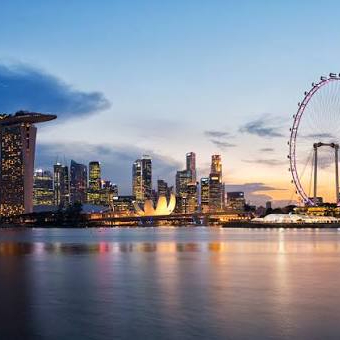
Solution: Integrate stormwater management, drainage, water quality improvement, and public realm design through blue-green infrastructure across the urban environment.Key challenge: Conventional drainage systems alone are not sufficient to address land constraints, intense rainfall, water quality, and the need for attractive, usable urban space.Context: Singapore combines long-term drainage planning with the ABC Waters Programme and a Source-Pathway-Receptor framework for flood resilience. This approach has helped reduce flood-prone areas from about 3,200 hectares in the 1970s to fewer than 25–30 hectares today, while expanding the use of blue-green infrastructure across the city.Solution in practice: Singapore has transformed canals, drains, reservoirs, and development sites through naturalized waterways, rain gardens, vegetated swales, detention systems, and integrated waterfront design. The programme is supported by design guidelines and has been applied in projects such as Bishan-Ang Mo Kio Park, Marina Barrage, and Punggol. Impact / outcome Flood-prone areas cut from about 3,200 hectares in the 1970s to fewer than 25-30 hectares today.Next steps: Use clear design standards and certification to scale blue-green infrastructure beyond flagship projects, connect site-level interventions to a wider Source-Pathway-Receptor flood management system, and set measurable rollout targets and outcome tracking across the portfolio.Organizations involved: Authoring: PUB, Singapore's National Water AgencyImplementation partners: Local Governments; Infrastructure Owners & Operators; Regulators & Policymakers; Property value chain stakeholders
Singapore
ABC Waters Programme — Singapore

Solution: Provide businesses with a free, transparent open platform to assess their exposure and model operational impacts across perils and regions, so that non-damage losses enter business decisions.Key challenge: Hazard maps, claims experience, infrastructure records, planning codes, building design details and exposure data sit with different institutions, and smaller businesses in particular have no affordable, transparent route to assess their own exposure or the operational impacts that follow.Context: The playbook identifies two complementary routes to aligning place-based data across the property value chain: open platforms that give all stakeholders the same baseline data, and consistent standards that make proprietary data comparable even where it cannot be shared. Open platforms matter most for actors without in-house risk analytics, including SMEs, across urban, peri-urban and rural areas.Solution in practice: Resilience Arc is one of the open platforms beginning to close this gap, giving businesses a free, transparent way to assess their exposure and model operational impacts across perils and regions, so that non-damage losses enter business decisions rather than remaining invisible until an event occurs.Impact / outcome: Free, open platform for businesses to assess exposure and operational impacts across perils and regions.Next steps: The playbook pairs open platforms with standards alignment: collaboration with organizations such as the Carbon Disclosure Project (CDP), which is expanding its disclosure frameworks to include extreme weather risk and resilience metrics, allows for broader standard alignment over definitions and formats. Alongside this, policy-makers and regulators can provide oversight over who owns, updates, validates and can access critical datasets, with guidance on their appropriate use, and progress requires engagement with reinsurers and catastrophe model vendors to agree common standards for how place-based resilience is reflected across key datasets.Organizations involved: Authoring: Resilience ArcImplementation partners: Data Providers; Civil Society Organizations; Insurers; Regulators & Policymakers
Global
Resilience Arc
Solution: Apply neighborhood-scale wildfire mitigation standards to new housing developments so that home design, spacing, defensible space, and perimeter treatment work together to reduce ignition and structure-to-structure fire spreadKey challenge: Wildfire losses are driven not only by individual home vulnerability but also by neighborhood layout, perimeter exposure, ember intrusion, and fire spread between structures Context IBHS expanded its Wildfire Prepared program to include a Neighborhood designation aimed at reducing conflagration risk at community scale. KB Home’s Dixon Trail in Escondido became the first new-home community to achieve the designation, while Mercury partnered with IBHS to support insurance discounts for certified wildfire-prepared homes.Solution in practice: The designation requires mitigation at both home and neighborhood scale. At Dixon Trail, homes were built to the IBHS Wildfire Prepared Home Plus standard and the neighborhood design incorporated features such as Class A fire-rated roofs, ember- and flame-resistant vents, non-combustible zones, defensible space, and separation between structures. Mercury Insurance introduced premium incentives tied to IBHS wildfire-prepared designations for eligible homes.Impact / outcome: Dixon Trail (Escondido) was the first new-home community to earn the Wildfire Prepared Neighborhood designation; Mercury offers premium incentives for designated homes.Next steps: Expand neighborhood-scale wildfire standards beyond pilot developments, strengthen insurer recognition of verified mitigation measures, and build stronger links between subdivision design, resilience certification, and long-term insurability.Organizations involvedAuthoring: Insurance Institute for Business & Home Safety (IBHS)Actors: KB Home; Mercury InsuranceImplementation partners: Civil Society Organizations; Property value chain stakeholders; Insurers; Local Governments
USA
IBHS Wildfire Prepared Neighborhood designation — KB Home and Mercury Insurance
Solution: Provide households with a standardized way to assess the bushfire resilience of their homes and identify actions that improve protection across building design, landscaping, and maintenanceKey challenge: Households often lack a clear, consistent way to understand their current resilience level or which mitigation measures most effectively reduce riskContext: The Bushfire Resilience Rating was developed by the Resilient Building Council with government support in response to calls for better ways to identify actions that measurably improve the resilience of individual homes. It takes a whole-property approach covering the building, surrounding landscape, and ongoing maintenance.Solution in practice: Households can use the Bushfire Resilience Rating Home Self-Assessment app to assess their property, receive a resilience rating, and identify actions to improve it. The system is also being linked to certified ratings and, in some cases, premium or mortgage incentives from insurers and lenders.Impact / outcome: Household self-assessment app gives a resilience rating; being linked to certified ratings and some insurer and lender incentives.Next steps: Expand certification uptake, strengthen links between verified resilience measures and insurance pricing, and increase use of the rating as a practical tool for household risk reduction in bushfire-prone areas.Organizations involved: Authoring: Resilient Building CouncilImplementation partners: Civil Society Organizations; Regulators & Policymakers; Insurers; Investors & Banks
Australia
Australia’s Bushfire Resilience Rating
Solution: Establish a cross-jurisdictional public entity to plan, coordinate, and advance resilience projects for flooding, sea level rise, and other water-related climate risks across an entire countyKey challenge: Climate risks do not align with city boundaries, but planning, funding, and delivery are often fragmented across jurisdictionsContext: One Shoreline was established in 2020 as an independent public agency to address the water-related impacts of climate change across San Mateo County. It provides a regional platform for planning, project development, funding, and coordination where no single city can address the full risk alone.Solution in practice: One Shoreline advances shoreline resilience plans, creek and flood resilience projects, planning policy guidance, early warning systems, and multi-jurisdictional project development across the county. Its work includes Brisbane, the southern Bayside cities, San Bruno Creek, and other shoreline and flood-prone areas.Impact / outcome: County-wide agency (since 2020) advancing shoreline, creek and flood resilience projects across San Mateo County.Next steps: Advance multi-jurisdictional shoreline resilience plans, develop future-conditions guidance for public infrastructure, build funding-ready project pipelines, and test links between property-level risk reduction and improved insurability.Organizations involved:Authoring: One Shoreline (San Mateo County Flood and Sea Level Rise Resiliency District)Implementation partners: Local Governments; Investors & Banks; Regulators & Policymakers; Civil Society Organizations
USA
One Shoreline — San Mateo County Flood and Sea Level Rise Resiliency District
Solution: Introduce incentives for developers to incorporate rainwater harvesting and reuse systems into new housing developments, particularly for non-potable uses such as toilet flushingKey challenge: The current regulatory framework is fragmented, alternative water sources are not required under Building Regulations, and developers face additional cost, risk, and delivery complexity when considering shared reuse systemsContext: The proposal responds to rising surface water flood risk and growing water stress in the UK. It highlights the case for using rainwater for non-drinking purposes to reduce demand for treated water, improve resilience, and lower household water use.Solution in practice: The proposal sets out three mechanisms to accelerate adoption: faster water utility connection approvals for developments that include rainwater reuse, tax treatment that supports investment in water-related resilience measures, and matched funding from insurers and water companies for preventative action.Organizations involved: Authoring: UK Parliament (Julia Buckley MP)Implementation partners: Infrastructure Owners & Operators; Property value chain stakeholders; Regulators & Policymakers; Insurers
United Kingdom
Rewarding rainwater reuse in new housing developments — UK
Solution: Physical risk assessment and resilience upgrades linked to improved insurance terms Key challenge Adaptation investments require upfront spending while benefits are often uncertain and not always reflected in insurance pricing.Context: Following severe extreme weather including the Haikui Typhoon and Black Rain of 2023, Link assessed its Hong Kong portfolio and identified flooding and typhoons as dominant acute risks.Solution in practice: Link invested HKD 8 million in targeted flood and typhoon resilience measures, including detachable flood barriers, flood sensors, drainage improvements, relocating electrical switchboards, flood-response protocols, monitoring systems, and emergency drills. AXA modelled the financial benefits, and Link secured improved insurance terms including an 11.7% premium reduction for 2025.Impact / outcome: HKD 8m of flood and typhoon measures secured improved insurance terms, including an 11.7% premium reduction for 2025.Next steps: Expand resilience-linked insurance approaches across larger real estate portfolios, strengthen the evidence base linking asset-level resilience measures to improved underwriting outcomes, and encourage broader insurer recognition of verified risk reduction measures.Organizations involved:Authoring: Glasgow Financial Alliance for Net Zero (GFANZ)Actors: Link REIT; AXAImplementation partners: Insurers; Asset Owners & Managers; Property value chain stakeholders
Hong Kong SAR, China
Securing property insurance premium reductions through building resilience — Hong Kong
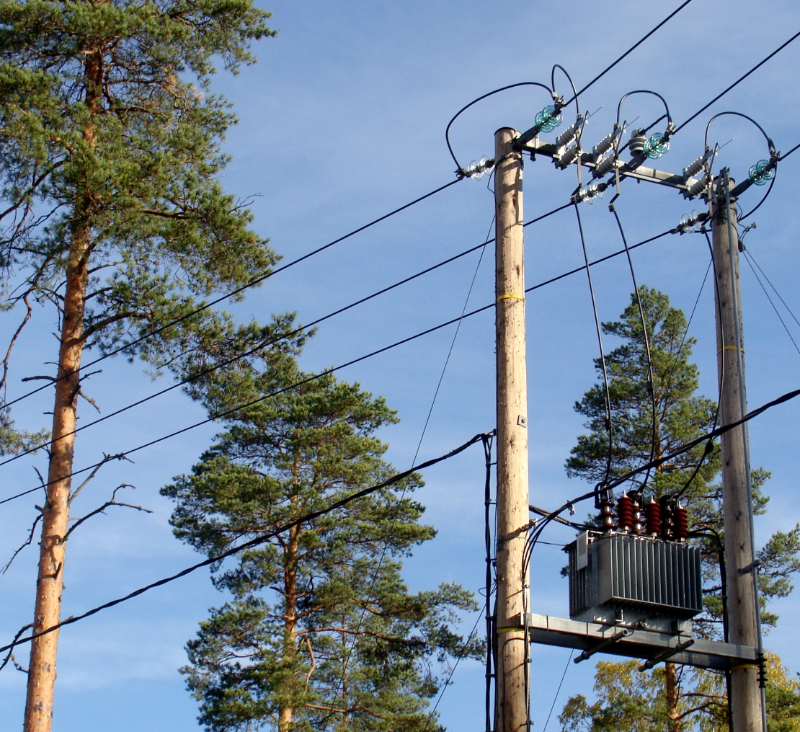
Solution: Long-term capital investment in underground cabling, grid automation, and digital systems to improve resilience Key challenge Distribution networks remain highly exposed to recurring weather-related disruption without sustained investment in resilience upgrades.Context: Finland’s electricity distribution system includes extensive overhead lines exposed to high-wind storms, snow, ice loading, and falling trees.Solution in practice: Since acquiring Elenia, Macquarie supported a multiyear resilience strategy including undergrounding critical lines, reinforcing network segments, automation, remote monitoring, and digital grid management. Underground cabling increased from 41% to 66% by end-2025.Impact / outcome: Underground cabling increased from 41% to 66% of the network by end-2025.Next steps: Embed resilience upgrades into long-term utility capital programs, use performance evidence from extreme weather events to prioritize future investment, and support regulatory frameworks that enable continued grid hardening.Organizations involved: Authoring: Glasgow Financial Alliance for Net Zero (GFANZ)Actors: Elenia; MacquarieImplementation partners: Investors & Banks; Infrastructure Owners & Operators; Regulators & Policymakers
Finland
Strengthening Finland’s electricity grid against extreme weather through multiyear capital investment — Finland
Solution: Long-term blended debt financing for climate-resilient bulk water infrastructure.Key challenge: EMDE infrastructure projects face affordability, preparation, and bankability constraints, especially when resilience features are added.Context: Kigali needed to expand and secure potable water supply while reducing climate exposure and diversifying away from sole reliance on groundwater.Solution in practice: EAAIF acted as lead arranger for the Kigali Bulk Water Supply Project, structuring long-tenor financing. The project incorporated climate-resilient design features including elevated control centers, flood-resilient cabling, riparian buffer revegetation, and treatment capacity designed for heavier rainfall and sediment loads.Impact / outcome: Long-tenor blended financing arranged for the Kigali Bulk Water Supply Project, with climate-resilient design built in.Next steps: Replicate long-tenor blended financing structures for climate-resilient urban water systems, strengthen project preparation for resilient infrastructure in emerging markets, and build a broader pipeline of bankable city-scale water resilience projects.Organizations involved: Authoring: Glasgow Financial Alliance for Net Zero (GFANZ)Actors: Emerging Africa & Asia Infrastructure Fund (EAAIF)Implementation partners: Investors & Banks; Infrastructure Owners & Operators; Regulators & Policymakers; Civil Society Organizations
Rwanda
Mobilizing debt financing for climate-resilient water infrastructure — Kigali, Rwanda
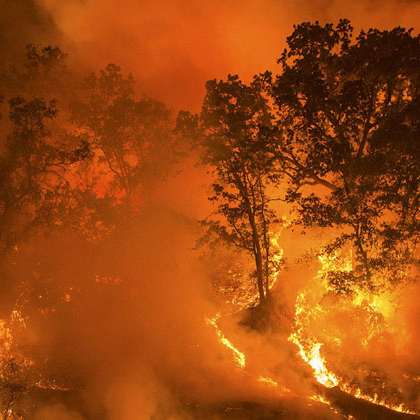
Solution: Use a voter-approved wildfire mitigation tax to fund on-site home assessments and subsidized contractor work, then issue a certificate that named insurers accept as proof of proper fire mitigation, so that public money buys both risk reduction and continued insurability.Key challenge: Homeowners in unincorporated, low-density wildfire-exposed areas face non-renewal, but have no affordable way to identify the right mitigation measures, no subsidy to pay for them, and no document an insurer will accept as evidence that the work was done properly.Context: The Program operates in unincorporated and mostly low-density rural and peri-urban areas of Boulder County, Colorado. It is funded by a Wildfire Mitigation Sales Tax approved by Boulder County voters in 2022, alongside grant funding from the Colorado State Forest Service and Boulder County. It sits alongside Colorado HB 1182, passed in 2025, which requires insurers to account for property, community and landscape-scale mitigation in pricing and coverage decisions, to share the information and impacts with policyholders and the state insurance regulator, to publish mitigation-related incentives, and to provide annual risk scores and classifications.Solution in practice: Wildfire Partners provides on-site home assessments producing a report with action items, a mitigation checklist and visuals, with the explicit intent of helping homeowners secure insurance renewals. It provides financial assistance to subsidize the cost of hiring a Wildfire Partners Forestry Contractor to carry out the work. On completion the homeowner receives a Wildfire Partners certificate, which Allstate, State Farm (for existing customers) and USAA accept as proof of proper fire mitigation.Impact / outcome: Certificate accepted by Allstate, State Farm (existing customers) and USAA as proof of proper fire mitigation.Next steps: This closes the loop most mitigation programs leave open: the tax funds the work, the assessment specifies it, and the certificate converts it into an insurance outcome with named carriers. Two questions determine how far it travels. First, breadth of carrier acceptance - three carriers is a start, and the Colorado HB 1182 requirement to account for community and landscape-scale mitigation gives a regulatory route to widen it. Second, whether the certificate can be made interoperable with the other recognition systems in this repository, particularly the IBHS Wildfire Prepared designation and Australia's Bushfire Resilience Rating, which the playbook identifies under action area 3b as necessary for portfolios and investors operating across jurisdictions.Organizations involved: Authoring: Boulder CountyActors: Colorado State Forest Service; Allstate; State Farm; USAAImplementation partners: Local Governments; Insurers; Regulators & Policymakers; Civil Society Organizations
USA
A mitigation certificate carriers accept, funded by a wildfire sales tax - Wildfire Partners, Boulder County
Solution: Insurer-led flood risk assessment, site visits, and policy-supported resilience planning for port-adjacent assets.Key challenge: Port resilience is difficult because risks are systemic and interdependent across neighboring assets.Context: Japan’s ports are highly exposed to sea-level rise, storm surge, coastal flooding, and typhoon-related impacts, while interdependence across assets complicates incentives for individual investment.Solution in practice: After heavy losses at a major vehicle storage yard, Tokio Marine assessed the site’s flood risk and recommended raising ground levels. The company implemented the investment, and later experiences showed no comparable severe losses. The case also informed wider MLIT-led guidance for coordinated port resilience planning.Impact / outcome: Raising ground levels at the storage yard - no comparable severe losses since; informed MLIT-led port resilience guidance.Next steps: Standardize port and coastal risk assessment methods, strengthen coordination across neighboring port assets and operators, and connect insurer-led analytics more directly to investment planning and public policy frameworks.Organizations involved: Authoring: Tokio Marine; Glasgow Financial Alliance for Net Zero (GFANZ)Actors: Ministry of Land, Infrastructure, Transport and Tourism (MLIT), JapanImplementation partners: Insurers; Regulators & Policymakers; Infrastructure Owners & Operators; Local Governments
Japan
Applying insurance analytics and policy frameworks to enable port resilience investments — Japan
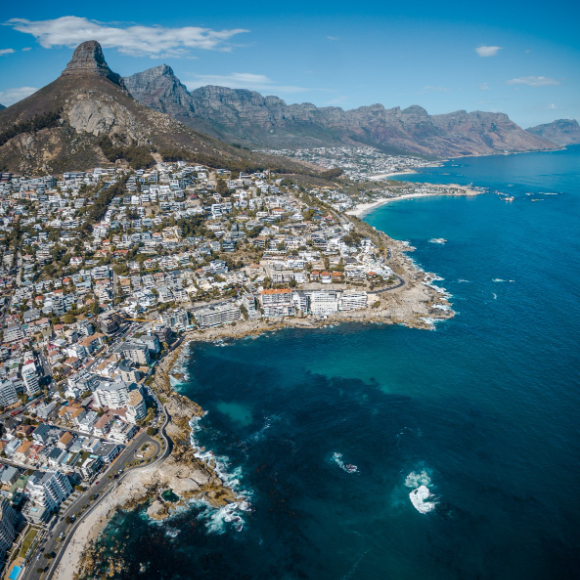
Solution: Performance-based bond linked to ecological restoration and verified invasive alien plant clearing.Key challenge: Conservation and ecosystem restoration are often seen as donor-dependent and hard to finance commercially.Context: South Africa faces growing water insecurity; invasive alien plants reduce streamflow into dams, degrade ecosystems, and increase wildfire risk.Solution in practice: FirstRand issued the R2.5 billion Cape Water Performance-Based Bond. The transaction linked investor returns to verified invasive alien plant clearing, while keeping bond financing separate from project funding and connecting them through a performance-based payment mechanism.Impact / outcome: R2.5bn performance-based bond linking investor returns to verified invasive alien plant clearing.Next steps: Relevant model for watershed-scale resilience and nature-based water-security financing.Organizations involved: Authoring: Glasgow Financial Alliance for Net Zero (GFANZ)Actors: FirstRandImplementation partners: Investors & Banks; Civil Society Organizations; Insurers; Regulators & Policymakers
South Africa
Structuring a performance-based bond to finance water resilience through ecosystem restoration — South Africa
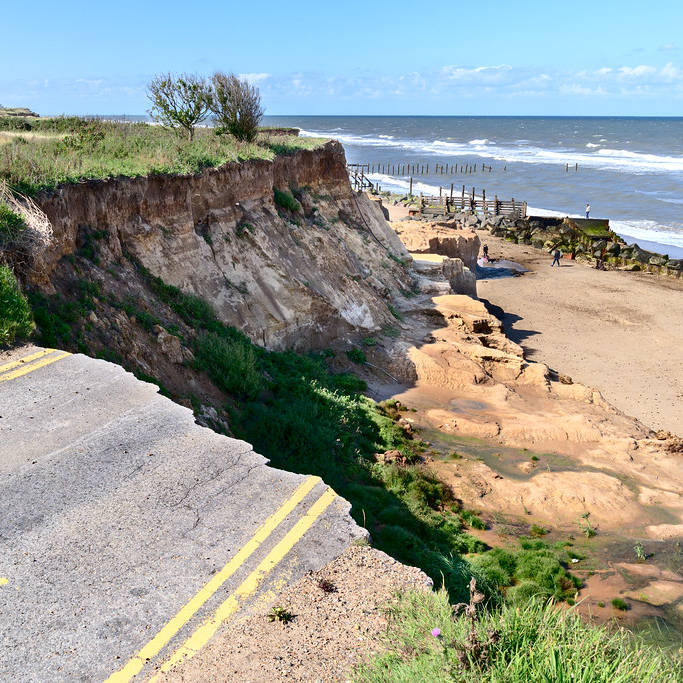
Solution: Design a public-private Coastal Adaptation Fund and property-linked levy mechanism, held within local authorities, that pays out to homeowners as coastal properties become uninhabitable and funds long-term adaptation rather than reactive disaster recovery.Key challenge: Unlike flood risk, homeowners and businesses in coastal erosion zones cannot buy insurance against the loss of their property, so exposed communities face an intensifying protection gap with no financial safeguard while local authorities carry a growing coastal management deficit.Context: About 1,500km of England's coastline is at risk of erosion, threatening communities, economies and infrastructure. The National Coastal Erosion Risk Management (NCERM) assessment shows that even with government coastal protection schemes, roughly 19,700 properties remain at risk by 2055 because of climate change; without ongoing investment the number exposed could exceed 100,000 by 2105. For many communities it is not technically, economically or environmentally practical to keep defending against erosion. Because erosion is excluded from property insurance, affected homeowners have no risk transfer route at all. The affected areas are rural and small coastal settlements along the Norfolk and Suffolk coast, among the fastest eroding in Europe, with over 2,500 homes at direct coastal risk. Defra, the Environment Agency and several local authorities led by East Suffolk Council commissioned a series of studies with Marsh to design innovative risk financing mechanisms that could offer additional fiscal support to authorities and communities exposed to erosion. The most recent is delivered through the Resilient Coasts Program, led by East Suffolk Council with delivery partner Great Yarmouth Borough Council, one of 25 pilots under Defra's GBP 200 million Flood and Coastal Innovation Program, running to 2027.Solution in practice: Marsh first ran a scoping study to shortlist risk financing mechanisms against an appraisal framework covering national government priorities, alignment to local authority funding models, operational risk management approaches and financial viability. Two mechanisms were recommended: a Coastal Adaptation Fund (CAF), ring-fenced capital managed through local authorities to encourage public-private investment supporting exposed residential communities; and a levy model, property-linked financial products funded through a levy-style mechanism such as property insurance, designed to pay out once coastal properties become uninhabitable. Marsh then developed a target operating model for the CAF covering 173km of coastline in East Suffolk and Great Yarmouth, assessing fund structures, government administration responsibility, private investment opportunities, and payout designs that enable voluntary relocation and reduce erosion exposure. The fund is designed to finance long-term measures including shoreline management, property roll-back, nature-based coastal protection and sustainability-linked investment into carbon credits and biodiversity net gain. Technical analysis found that without the CAF, erosion costs to local authorities and homeowners could exceed GBP 100 million by 2100; pre-emptive direct-to-community payouts could save East Suffolk and Great Yarmouth GBP 10-20 million by 2100 against current-state disaster recovery costs; and long-term resilience interventions could generate GBP 13,000-21,000 per home per annum into the fund, creating recurring cash flow for ongoing coastal risk management.Impact / outcome: Pre-emptive payouts could save GBP 10-20m by 2100; resilience interventions could generate GBP 13,000-21,000 per home a year into the fund.Next steps: The Resilient Coasts Program is now looking to implement the Coastal Adaptation Fund, as there is strong evidence it will help achieve the strategic and operational objectives of East Suffolk and Great Yarmouth councils to address funding gaps, improve longer-term plans for community protection and develop improved financial resilience. Marsh's work has been shortlisted for the UK's national Flood and Coast roundtable, to improve visibility across national government, the Environment Agency and local authority senior leadership. The wider Resilient Coasts project, which runs to 2027, is continuing to: explore funding and financial mechanisms enabling those whose homes are likely to be lost in the immediate future to move in a planned way; work with infrastructure providers to understand and agree risk and develop robust investment plans to secure funding for the resilience of their assets and the communities they serve; and gather evidence to identify and influence policies that need to change to allow adaptation to take place, raised at government level through the Local Government Association Coastal Special Interest Group, All-Party Parliamentary Groups and key influencers.Organizations involved: Authoring: East Suffolk CouncilActors: Great Yarmouth Borough Council; Department for Environment, Food & Rural Affairs (Defra); Environment Agency; MarshImplementation partners: Local Governments; Regulators & Policymakers; Insurers; Investors & Banks; Civil Society Organizations
United Kingdom
Designing a Coastal Adaptation Fund for eroding coastlines - Resilient Coasts, Norfolk and Suffolk
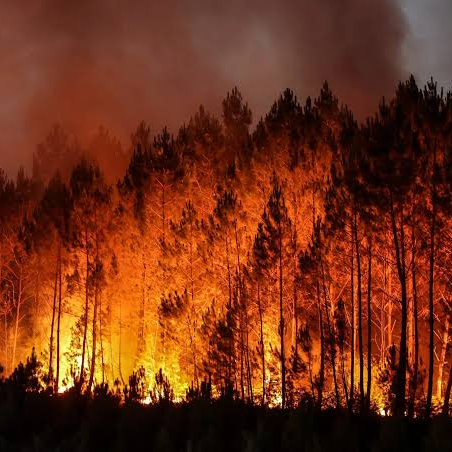
Solution: Require insurers by regulation to recognize a nationally administered community wildfire designation and provide discounts for it, with an independent non-profit maintaining the designation and pushing updated community boundary data to insurers twice a year through commercial data providers.Key challenge: Voluntary place-level designations only change outcomes if insurers actually use them, and in a market under stress - California insurers shed more than 350,000 policies, 25% of them in Los Angeles County, with non-renewals in high-risk areas rising around 800% - there is no commercial incentive to do so without a requirement.Context: California insurance is among the most heavily regulated in the country: Proposition 103 requires the Department of Insurance to approve all rate changes, increases above 7% can trigger lengthy and costly public hearings, rate filings take around 10-12 months against a national average of 2-3 months, and the inclusion of climate risk and reinsurance costs in forecasting and rate-setting is forbidden. The FAIR Plan is now the largest residual insurance market in the country, having overtaken Florida, with exposure up 317% since September 2021 and a record 35.8% rate increase requested in September 2025. The Program covers communities from as small as 8 units to as large as 2,500, across peri-urban and rural wildland-urban interface areas, focusing on retrofits for older existing homes and complementing CAL FIRE wildfire building standards that apply to new development.Solution in practice: 2022 legislation, Safer From Wildfires, requires insurance companies to recognize Firewise USA designated communities and provide discounts. The designation itself is administered independently: the National Fire Protection Association, a global non-profit, processes Firewise USA applications, provides information on communities earning the designation to companies that supply data to home insurers, and updates boundary data for all communities in good standing twice a year, making it available to insurers through those data providers. In May 2025 Table Mountain Rancheria became the 1,000th Firewise USA community in the state. The arrangement is delivered as an interagency partnership.Impact / outcome: Insurers must give discounts for Firewise USA communities; California reached its 1,000th Firewise USA community in May 2025.Next steps: The design solves two problems the Community Rating System also solved for flood: an independent body owns the standard, so recognition does not depend on any single carrier; and boundary data flows automatically to insurers through existing commercial data pipes, so the designation is machine-readable at the point of underwriting rather than a document a homeowner has to produce. The playbook identifies interoperability as the next step - mutual recognition between Firewise USA, the IBHS Wildfire Prepared designation and Australia's Bushfire Resilience Rating would support consistent assessment of portfolios spanning countries. The open constraint in California specifically is that the same regulatory environment which mandates recognition also suppresses risk-based pricing, so any discount available for a designation is set within a system where premiums are, on the Lab’s assessment, artificially low.Organizations involved: Authoring: National Fire Protection Association (NFPA)Actors: California Department of Insurance; Table Mountain RancheriaImplementation partners: Regulators & Policymakers; Insurers; Civil Society Organizations; Data Providers; Local Governments
USA
Mandating insurer recognition of community wildfire designations - Firewise USA and Safer From Wildfires, California
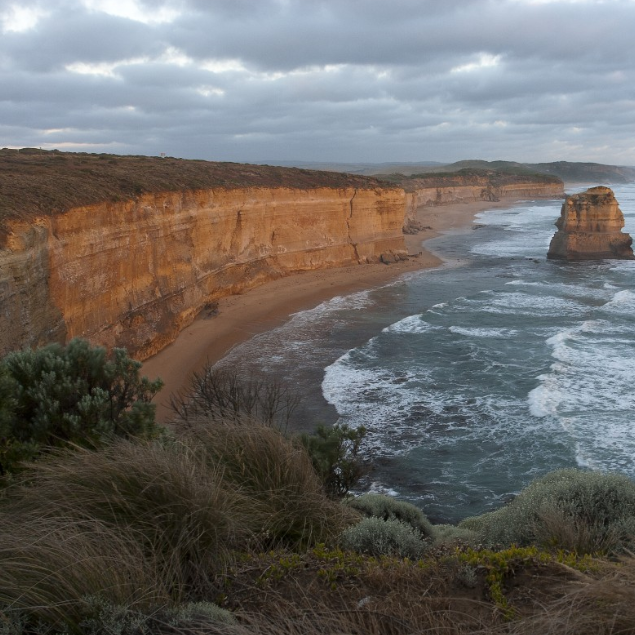
Solution: Create a mandatory reinsurance pool for a concentrated regional peril, backed by a standing government guarantee, that collects premiums consistent with expected claims and pays claims from reserves - lowering the cost of cover and restoring insurer appetite in the exposed region.Key challenge: Where a severe peril is geographically concentrated, insurers price for the concentration rather than the individual property, so cover in the exposed region becomes unaffordable or unavailable regardless of what any one owner does to reduce their own risk.Context: The pool operates Australia-wide but targets support to the Northern Australian coastline, which carries a high risk of cyclones. It covers insured residential, mixed-use and commercial properties insured for under AUD 5 million, across urban, peri-urban and rural coastal areas. Australia faces average property insurance premium increases of around 14% and a projection that 1.3 million properties will be uninsurable by 2100.Solution in practice: The Cyclone Reinsurance Pool, operated by the Australian Reinsurance Pool Corporation (ARPC), collects reinsurance premiums from insurers consistent with expected claims and operating expenses, and pays claims from those reserves. It is supported by an annually reinstated AUD 10 billion government guarantee backstop to cover extreme losses, which is increased to meet all obligations if exceeded in any year. Participation is mandatory for general insurers, with some exceptions. The data used in pricing includes geography, building characteristics and mitigation efforts, so property-level risk reduction is reflected rather than averaged away. Data published in 2025 confirms the pool has succeeded in lowering premiums: reductions of over 30% for small and medium enterprises, and greater insurer appetite to provide home insurance, with quote success rates rising from 66% to 84%.Impact / outcome: Premiums down over 30% for SMEs; home insurance quote success rose from 66% to 84%.Next steps: The measured outcomes make this unusually useful evidence: a mandatory pool with a sovereign backstop demonstrably restored both affordability and availability, and the quote success rate is a more direct measure of availability than premium alone. Two features are worth carrying into other designs. The pool prices on mitigation as well as geography and building characteristics, so it does not blunt the incentive to reduce risk - a common criticism of pooling. And the guarantee is annually reinstated and open-ended rather than capped, which is what allows private insurers to participate without holding capital against the tail. The playbook notes under action area 3b that both existing and new natural catastrophe risk pools could go further by incorporating place-level recognition, along the lines of the Community Rating System, into their design.Organizations involved: Authoring: Australian Competition and Consumer Commission (ACCC)Actors: Australian Reinsurance Pool Corporation (ARPC); Australian GovernmentImplementation partners: Regulators & Policymakers; Insurers; Investors & Banks; Data Providers
Australia
A government-backed cyclone reinsurance pool with measured premium outcomes - Australia

Solution: Offer a low-interest revolving line of credit at portfolio level where up to half the loan can fund immediate capital repairs but the remainder must be directed to a resilience component, paired with expert technical assistance to identify the highest-impact measures.Key challenge: Property owners borrow to repair damage after an event and to meet immediate capital needs, but almost never to reduce the risk of the next one - so finance repeatedly reinstates the same exposure and resilience remains an unfunded discretionary addition.Context: The fund operates in Montgomery County, Maryland, across urban and suburban residential and commercial property, developed with the Urban Land Institute. It responds to the barriers identified across the Financial Innovations Lab: significant upfront capital needs, projects spanning years, complex multi-stakeholder coordination, and difficulty quantifying total return on investment across environmental, social and economic benefits.Solution in practice: The Green Bank provides a low-interest line of credit through a revolving loan fund, with disbursal, investment and repayment handled at parent or portfolio level rather than project level, which reduces risk for the borrower and enables multiple projects without seeking separate funding each time. Loans are interest-only, sized at $3-5 million, priced between 2.5% and 9% with the low end reserved for high-impact projects, on a three-year extendable term. The defining feature is conditionality: up to half the loan can go towards capital improvements, but the rest must be directed to a resilience component, and that resilience investment is also made at portfolio level rather than necessarily at the property where repairs are happening. Expert technical assistance is provided with a partner to identify high-impact resilience investments, and data collection is intentional, building evidence on baselines and avoided losses to support lower insurance premiums and faster financing in future. Projected three-year outcomes are 20-plus properties with resilience upgrades, an average 20% reduction in utility costs, operational savings and reduced insurance premiums, alongside a replication toolkit for green banks and CDFIs nationwide.Impact / outcome: Projected over three years: 20+ properties upgraded, average 20% cut in utility costs, lower premiums, and a replication toolkit.Next steps: The explicit aim is to position resilience as a bankable asset class, and the replication toolkit for green banks and CDFIs is the mechanism for doing so - which speaks directly to the playbook call under action area 2b for standardized structures that, once developed in one municipality, can be adopted elsewhere rather than rebuilt deal by deal. The design principle worth testing more widely is the split mandate: pairing immediate needs with mandatory ex ante resilience investment is what prevents recovery finance from simply restoring prior risk, and it is the feature missing from the post-disaster lending product at row 24. The intentional data collection is the second transferable element, since it builds the avoided-loss evidence base insurers require before adjusting terms.Organizations involved: Authoring: Urban Land Institute (ULI)Actors: Montgomery County Green BankImplementation partners: Investors & Banks; Local Governments; Property value chain stakeholders; Insurers
USA
A revolving loan fund that ties repair finance to resilience investment - Montgomery County Green Bank
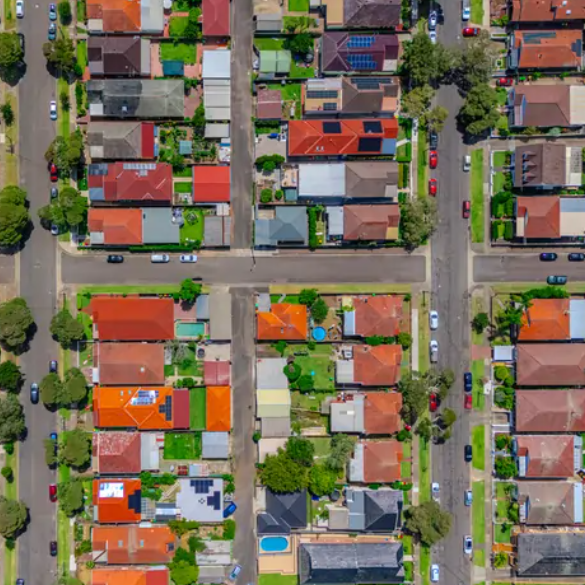
Solution: Use concessional public wholesale finance to fund a below-market retail loan product that lets existing mortgage customers borrow specifically for defined bushfire, flood, storm and cyclone resilience upgrades alongside energy efficiency measures.Key challenge: Mortgage lenders hold the longest financial relationship with any property, often 25 years or more, yet play almost no role in funding resilience; homeowners face concentrated upfront costs for bushfire, flood and storm hardening with no dedicated affordable financing route, at a time when 1.3 million Australian properties are projected to be uninsurable by 2100.Context: Australia faces rising property insurance costs, with average premiums up around 14%, and a projection that 1.3 million properties will be uninsurable by 2100. Much of the housing stock predates modern standards: the minimum energy standard for new homes is currently 7 stars, but homes built before 2003 have an average rating of just 1.5 stars. The product is available nationally across urban, peri-urban and rural residential property. Retrofit costs are typically funded from savings or unsecured credit. The Australian Government's AUD 1 billion Household Energy Upgrades Fund (HEUF), managed by the government-owned Clean Energy Finance Corporation (CEFC), was created to make retrofit finance cheaper at scale and is expected to help a total of 110,000 households. A Lonergan Research survey of more than 1,000 Australians commissioned by Westpac found nine out of ten who aim to renovate in the next five years would consider a sustainable upgrade to their home.Solution in practice: In August 2024 Westpac became the first bank supported by the HEUF, launching Sustainable Upgrades home and investment loans at a variable rate of 4.49% p.a. (comparison rate 4.87%), materially below its standard basic variable rate - a customer with a AUD 30,000 balance saves roughly AUD 3,475 in interest over ten years. The CEFC committed AUD 160 million of wholesale finance, expected to support at least AUD 320 million of discounted lending. Eligible customers are owner-occupiers and investors with an existing or approved Westpac home or investment loan of at least AUD 150,000 secured on the property being upgraded, with no lenders mortgage insurance applicable; they can borrow AUD 4,000-50,000 over up to ten years with no establishment or monthly account fees, and funds are paid directly to the supplier or installer against an invoice. Critically, the eligible upgrade list is not confined to energy efficiency: it includes defined climate-resilience measures such as roofing with non-combustible materials, sarking, framing and external finishes; non-combustible or fire-rated window frames, metal flyscreens or shutters and toughened glazing; doors of non-combustible material or solid timber; fencing within 1.5m of the property using non-combustible materials; and storm and flood-resilient electricals - with non-combustibility defined against National Construction Code 2022 Volume 2 Class 1.Impact / outcome: AUD 160m CEFC finance expected to support at least AUD 320m of discounted loans at 4.49% p.a.Next steps: The CEFC has committed AUD 160 million towards the product, which is expected to support at least AUD 320 million in discounted loans to eligible Westpac home loan customers; the CEFC states that its wholesale finance, combined with a significant contribution by Westpac, delivered a low rate intended to improve accessibility and drive further take-up of green home loan products across the market. Westpac was the first bank supported by the HEUF, following the CEFC’s first HEUF investment with non-bank lender Plenti. This is a direct instance of the playbook action area 2a on bringing lenders into resilience finance, where the playbook identifies the remaining opportunity as exploring loan terms that recognize documented resilience measures, and closer data sharing between lenders and insurers so that both view the same risk in the same way.Organizations involved: Authoring: WestpacActors: Clean Energy Finance Corporation (CEFC)Implementation partners: Investors & Banks; Regulators & Policymakers; Property value chain stakeholders
Australia
A discounted home loan for climate-resilience retrofits - Westpac Sustainable Upgrades, Australia
Solution: Provide step-by-step instructions for supplementing historic climate data with specific, regional, forward-looking climate change projections in the design of city facilities, applied consistently across nearly all municipal capital projects.Key challenge: Codes and standards that regulate the design of facilities already incorporate historic weather data to determine how to design for today’s conditions, but historic data does not accurately represent the projected severity and frequency of future storms, sea level rise, heat waves and precipitation - threatening to undermine capital investments and impede critical services over the full useful life of facilities designed today.Context: New York City faces challenges resulting from a rapidly changing climate. Many capital projects, including infrastructure, landscapes and buildings ("facilities"), will experience extreme flooding, precipitation and heat events, and the intensity and severity of these events will increase over the 21st century. With 520 miles of coastline across its five boroughs, several low-lying locations across the dense urban area will experience monthly tidal inundation resulting from higher seas. The New York City Panel on Climate Change (NPCC) prepares and regularly refines projections for the metropolitan region, covering temperature and extreme heat events, precipitation and sea level rise by the 2050s and 2080s.Solution in practice: The Climate Resiliency Design Guidelines, developed by the Mayor’s Office of Climate & Environmental Justice (previously the Mayor’s Office of Resiliency and, before that, the Mayor’s Office of Recovery and Resiliency) in collaboration with city agencies that oversee capital project development, provide a consistent methodology for engineers, architects, landscape architects and planners to design facilities that are resilient to changing climate conditions. They complement the use of historic data in existing codes and standards, and are built on NPCC projections with the intent that they are updated as those projections are refined. An initial version was released in April 2017; Version 2.0 followed in April 2018 after a year-long expert testing and review phase; Version 4.0 was published in September 2020 and Version 4.1 in May 2022. The Guidelines are used throughout the design process - from capital planning initiation, as a reference in requests for proposals, through a conceptual or study phase to final design - for all new construction and substantial improvements, and apply to all City capital projects except coastal protection projects such as sea walls, bulkheads and levees, for which the City is developing separate guidance. All new projects and substantial improvements assess risks to climate hazards in the context of the project’s purpose. More than 20 City agencies contributed, including Environmental Protection, Transportation, City Planning, Buildings and Design & Construction.Impact / outcome: Consistent forward-looking design methodology applied across City capital projects, developed with 20+ City agencies (v4.1, May 2022).Next steps: Future versions of the Guidelines will explore additional climate stressors as the science evolves, in coordination with the New York City Panel on Climate Change. NYC is undertaking a study to assess projected changes to extreme wind hazards and identify risks to the city’s built environment, as firm projections on future wind conditions have not yet been developed. The City is separately developing guidance for coastal protection projects, which currently sit outside the scope of the Guidelines.Organizations involved: Authoring: NYC Mayor's Office of Climate & Environmental JusticeActors: New York City Panel on Climate Change (NPCC)Implementation partners: Local Governments; Regulators & Policymakers; Data Providers; Property value chain stakeholders
USA
Climate Resiliency Design Guidelines - NYC Mayor’s Office of Climate & Environmental Justice

Resilient Futures Initiative

A World Economic Forum Initiative